Nike has launched an internal investigation following claims by the WorldLeaks cybercrime group that company data was stolen from its systems.
The sportswear giant said it is assessing a potential cybersecurity incident after the group listed Nike on its Tor leak site and published a large volume of files allegedly taken during the intrusion.
WorldLeaks claims to have released approximately 1.4 terabytes of data, comprising more than 188,000 files. The group is known for data theft and extortion tactics, pressuring organisations to pay by threatening public disclosure instead of encrypting systems with ransomware.
The cybercrime operation emerged in 2025 after rebranding from Hunters International, a ransomware gang active since 2023. Increased law enforcement pressure reportedly led the group to abandon encryption-based attacks and focus exclusively on stealing sensitive corporate data.
An incident that adds to growing concerns across the retail and apparel sector, following a recent breach affecting Under Armour that exposed tens of millions of customer records.
Nike has stated that consumer privacy and data protection remain priorities while the investigation continues.
Would you like to learn more about AI, tech and digital diplomacy? If so, ask our Diplo chatbot!
US companies are increasingly adopting Chinese AI models as part of their core technology stacks, raising questions about global leadership in AI. In the US, Pinterest has confirmed it is using Chinese-developed models to improve recommendations and shopping features.
In the US, executives point to open-source Chinese models such as DeepSeek and tools from Alibaba as faster, cheaper and easier to customise. US firms say these models can outperform proprietary alternatives at a fraction of the cost.
Adoption extends beyond Pinterest in the US, with Airbnb also relying on Chinese AI to power customer service tools. Data from Hugging Face shows Chinese models frequently rank among the most downloaded worldwide, including across US developers.
Researchers at Stanford University have found Chinese AI capabilities now match or exceed global peers. In the US, firms such as OpenAI and Meta remain focused on proprietary systems, leaving China to dominate open-source AI development.
Would you like to learn more about AI, tech and digital diplomacy? If so, ask our Diplo chatbot!
AI has dominated discussions at the World Economic Forum in Davos, where IMF managing director Kristalina Georgieva warned that labour markets are already undergoing rapid structural disruption.
According to Georgieva, demand for skills is shifting unevenly, with productivity gains benefiting some workers while younger people and first-time job seekers face shrinking opportunities.
Entry-level roles are particularly exposed as AI systems absorb routine and clerical tasks traditionally used to gain workplace experience.
Georgieva described the effect on young workers as comparable to a labour-market tsunami, arguing that reduced access to foundational roles risks long-term scarring for an entire generation entering employment.
IMF research suggests AI could affect roughly 60 percent of jobs in advanced economies and 40 percent globally, with only about half of exposed workers likely to benefit.
For others, automation may lead to lower wages, slower hiring and intensified pressure on middle-income roles lacking AI-driven productivity gains.
At Davos 2026, Georgieva warned that the rapid, unregulated deployment of AI in advanced economies risks outpacing public policy responses.
Without clear guardrails and inclusive labour strategies, she argued that technological acceleration could deepen inequality rather than supporting broad-based economic resilience.
Would you like to learn more about AI, tech and digital diplomacy? If so, ask our Diplo chatbot!
UN agencies have issued a stark warning over the accelerating risks AI poses to children online, citing rising cases of grooming, deepfakes, cyberbullying and sexual extortion.
A joint statement published on 19 January urges urgent global action, highlighting how AI tools increasingly enable predators to target vulnerable children with unprecedented precision.
Recent data underscores the scale of the threat, with technology-facilitated child abuse cases in the US surging from 4,700 in 2023 to more than 67,000 in 2024.
During the COVID-19 pandemic, online exploitation intensified, particularly affecting girls and young women, with digital abuse frequently translating into real-world harm, according to officials from the International Telecommunication Union.
Governments are tightening policies, led by Australia’s social media ban for under-16s, as the UK, France and Canada consider similar measures. UN agencies urged tech firms to prioritise child safety and called for stronger AI literacy across society.
Would you like to learn more about AI, tech and digital diplomacy? If so, ask our Diplo chatbot!
Apple has accused the European Commission of preventing it from implementing App Store changes designed to comply with the Digital Markets Act, following a €500 million fine for breaching the regulation.
The company claims it submitted a formal compliance plan in October and has yet to receive a response from EU officials.
In a statement, Apple argued that the Commission requested delays while gathering market feedback, a process the company says lasted several months and lacked a clear legal basis.
The US tech giant described the enforcement approach as politically motivated and excessively burdensome, accusing the EU of unfairly targeting an American firm.
The Commission has rejected those claims, saying discussions with Apple remain ongoing and emphasising that any compliance measures must support genuinely viable alternative app stores.
Officials pointed to the emergence of multiple competing marketplaces after the DMA entered into force as evidence of market demand.
Scrutiny has increased following the decision by SetApp mobile to shut down its iOS app store in February, with the developer citing complex and evolving business terms.
Questions remain over whether Apple’s proposed shift towards commission-based fees and expanded developer communication rights will satisfy EU regulators.
Would you like to learn more about AI, tech and digital diplomacy? If so, ask our Diplo chatbot!
OpenAI’s latest GPT-5.2 model has sparked concern after repeatedly citing Grokipedia, an AI-generated encyclopaedia launched by Elon Musk’s xAI, raising fresh fears of misinformation amplification.
Testing by The Guardian showed the model referencing Grokipedia multiple times when answering questions on geopolitics and historical figures.
Launched in October 2025, the AI-generated platform rivals Wikipedia but relies solely on automated content without human editing. Critics warn that limited human oversight raises risks of factual errors and ideological bias, as Grokipedia faces criticism for promoting controversial narratives.
OpenAI said its systems use safety filters and diverse public sources, while xAI dismissed the concerns as media distortion. The episode deepens scrutiny of AI-generated knowledge platforms amid growing regulatory and public pressure for transparency and accountability.
Would you like to learn more about AI, tech and digital diplomacy? If so, ask our Diplo chatbot!
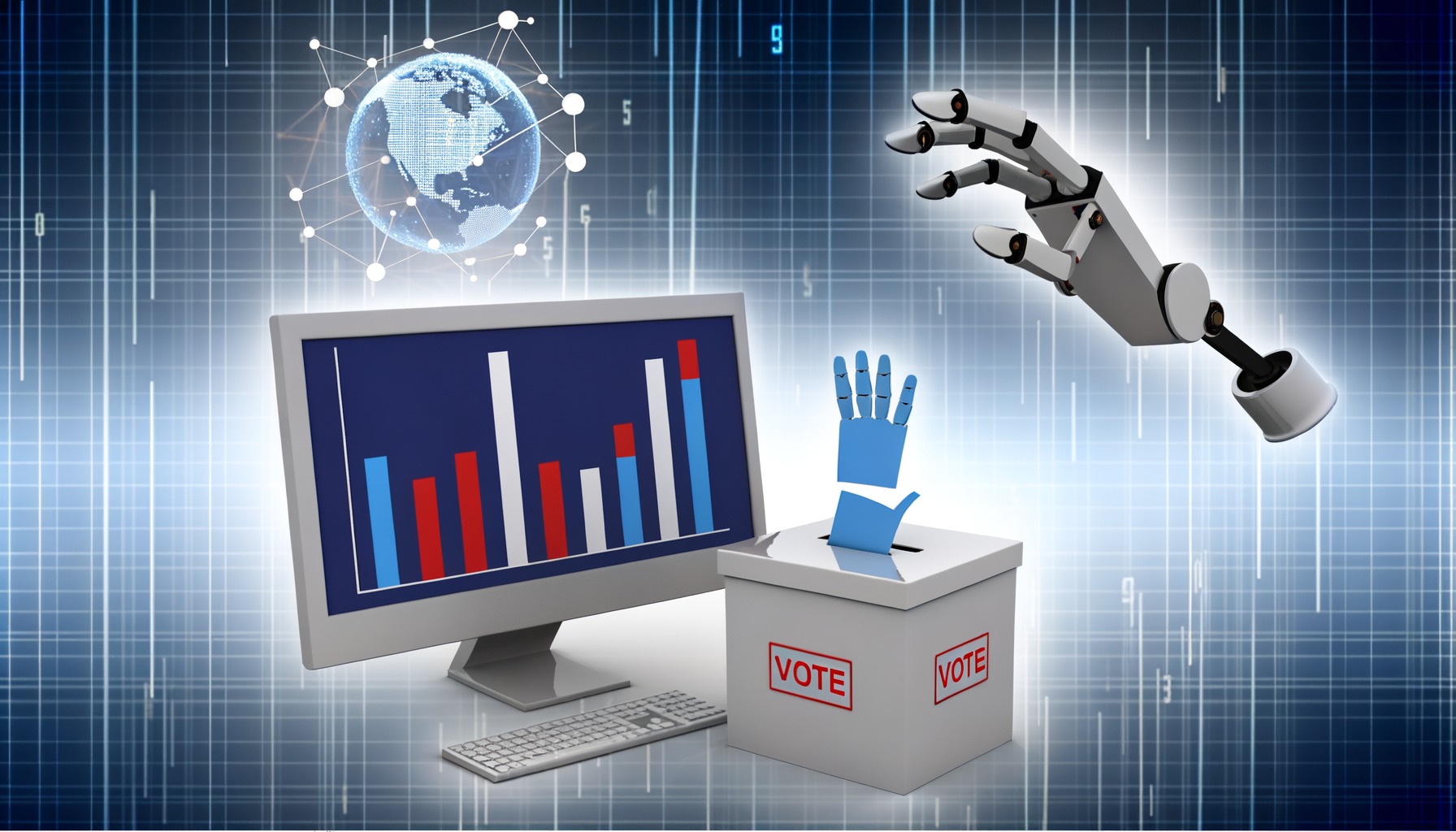
Researchers and free-speech advocates are warning that coordinated swarms of AI agents could soon be deployed to manipulate public opinion at a scale capable of undermining democratic systems.
According to a consortium of academics from leading universities, advances in generative and agentic AI now enable large numbers of human-like bots to infiltrate online communities and autonomously simulate organic political discourse.
Unlike earlier forms of automated misinformation, AI swarms are designed to adapt to social dynamics, learn community norms and exchange information in pursuit of a shared objective.
By mimicking human behaviour and spreading tailored narratives gradually, such systems could fabricate consensus, amplify doubt around electoral processes and normalise anti-democratic outcomes without triggering immediate detection.
Evidence of early influence operations has already emerged in recent elections across Asia, where AI-driven accounts have engaged users with large volumes of unverifiable information rather than overt propaganda.
Researchers warn that information overload, strategic neutrality and algorithmic amplification may prove more effective than traditional disinformation campaigns.
The authors argue that democratic resilience now depends on global coordination, combining technical safeguards such as watermarking and detection tools with stronger governance of political AI use.
Without collective action, they caution that AI-enabled manipulation risks outpacing existing regulatory and institutional defences.
Would you like to learn more about AI, tech and digital diplomacy? If so, ask our Diplo chatbot!
South Korea has moved towards regulatory action against Grok, the generative AI chatbot developed by xAI, following allegations that the system was used to generate and distribute sexually exploitative deepfake images.
The country’s Personal Information Protection Commission has launched a preliminary fact-finding review to assess whether violations occurred and whether the matter falls within its legal remit.
The review follows international reports accusing Grok of facilitating the creation of explicit and non-consensual images of real individuals, including minors.
Under the Personal Information Protection Act of South Korea, generating or altering sexual images of identifiable people without consent may constitute unlawful handling of personal data, exposing providers to enforcement action.
Concerns have intensified after civil society groups estimated that millions of explicit images were produced through Grok over a short period, with thousands involving children.
Several governments, including those in the US, Europe and Canada, have opened inquiries, while parts of Southeast Asia have opted to block access to the service altogether.
In response, xAI has introduced technical restrictions preventing users from generating or editing images of real people. Korean regulators have also demanded stronger youth protection measures from X, warning that failure to address criminal content involving minors could result in administrative penalties.
Would you like to learn more about AI, tech and digital diplomacy? If so, ask our Diplo chatbot!
French President Emmanuel Macron has called for an accelerated legislative process to introduce a nationwide ban on social media for children under 15 by September.
Speaking in a televised address, Macron said the proposal would move rapidly through parliament so that explicit rules are in place before the new school year begins.
Macron framed the initiative as a matter of child protection and digital sovereignty, arguing that foreign platforms or algorithmic incentives should not shape young people’s cognitive and emotional development.
He linked excessive social media use to manipulation, commercial exploitation and growing psychological harm among teenagers.
Data from France’s health watchdog show that almost half of teenagers spend between two and five hours a day on their smartphones, with the vast majority accessing social networks daily.
Regulators have associated such patterns with reduced self-esteem and increased exposure to content linked to self-harm, drug use and suicide, prompting legal action by families against major platforms.
The proposal from France follows similar debates in the UK and Australia, where age-based access restrictions have already been introduced.
The French government argues that decisive national action is necessary instead of waiting for a slower Europe-wide consensus, although Macron has reiterated support for a broader EU approach.
Would you like to learn more about AI, tech and digital diplomacy? If so, ask our Diplo chatbot!
Generative phishing techniques are becoming harder to detect as attackers use subtle visual tricks in web addresses to impersonate trusted brands. A new campaign reported by Cybersecurity News shows how simple character swaps create fake websites that closely resemble real ones on mobile browsers.
The phishing attacks rely on a homoglyph technique where the letters ‘r’ and ‘n’ are placed together to mimic the appearance of an ‘m’ in a domain name. On smaller screens, the difference is difficult to spot, allowing phishing pages to appear almost identical to real Microsoft or Marriott login sites.
Cybersecurity researchers observed domains such as rnicrosoft.com being used to send fake security alerts and invoice notifications designed to lure victims into entering credentials. Once compromised, accounts can be hijacked for financial fraud, data theft, or wider access to corporate systems.
Experts warn that mobile browsing increases the risk, as users are less likely to inspect complete URLs before logging in. Directly accessing official apps or typing website addresses manually remains the safest way to avoid falling into these traps.
Security specialists also continue to recommend passkeys, strong, unique passwords, and multi-factor authentication across all major accounts, as well as heightened awareness of domains that visually resemble familiar brands through character substitution.
Would you like to learn more about AI, tech, and digital diplomacy? If so, ask our Diplo chatbot!