The UK‘s competition regulator, the Competition and Markets Authority (CMA), announced it may accept remedies proposed by Synopsys and Ansys to address concerns over their $35 billion merger. The deal, announced in January of last year, involves Synopsys acquiring Ansys, a company known for its software used in industries like aerospace and sports equipment manufacturing.
The CMA outlined the proposed remedies, which include the sale of Ansys’ power consumption analysis product for digital chips and Synopsys’ global optics and photonics software business. The regulator has until March 5 to decide whether to accept these remedies, though it can extend the deadline to 6 May.
Synopsys expressed satisfaction with the CMA’s progress and reiterated its commitment to working closely with the authority. The outcome of the regulator’s review could significantly impact the completion of the merger, which aims to enhance the companies’ capabilities in chip design software.
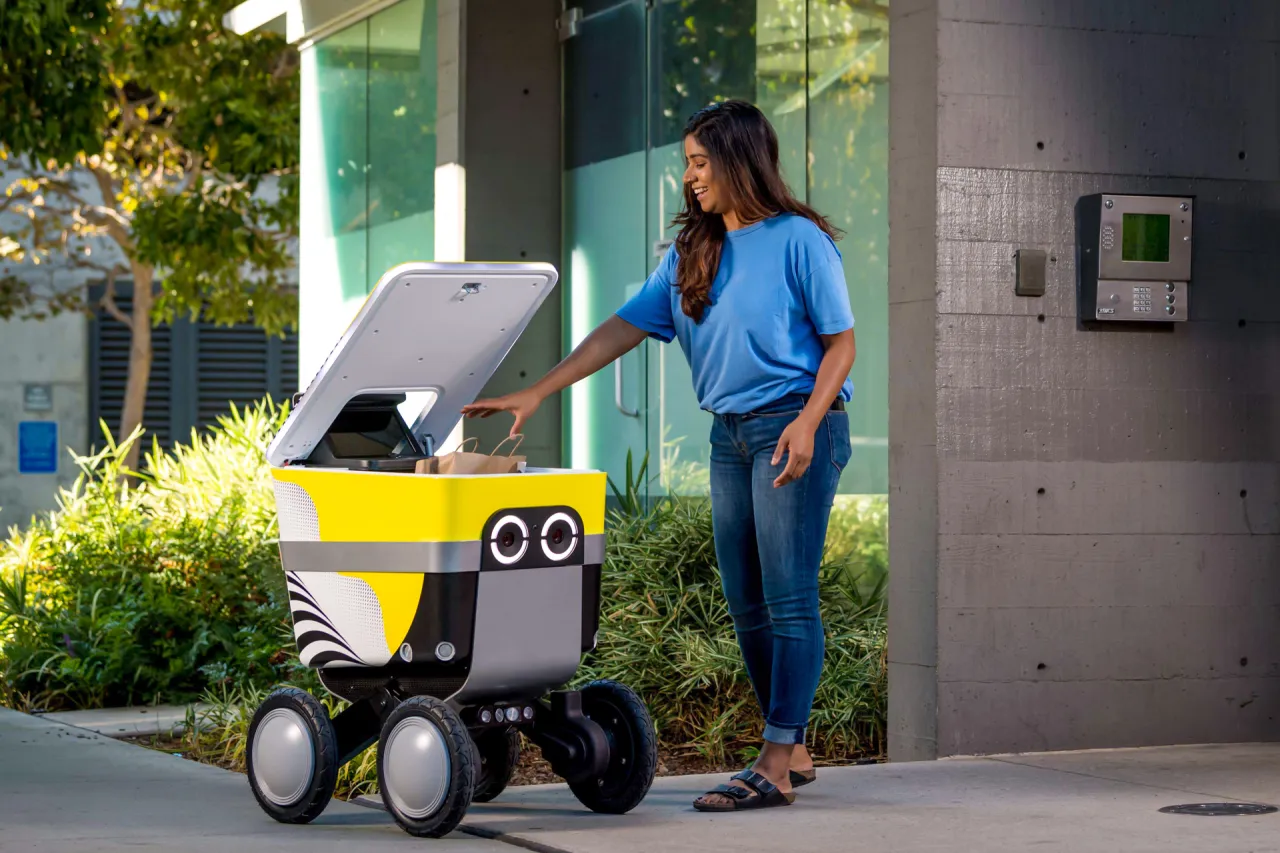
Serve Robotics, backed by Nvidia and Uber, has secured $80 million through a direct stock offering to institutional investors. The funding will support the expansion of its autonomous delivery robot fleet, with plans to scale from 100 robots in Los Angeles to 2,000 across multiple US cities by the end of 2025. CFO Brian Read stated that the investment is intended for long-term growth rather than short-term expenditure, positioning the company for sustained financial stability beyond 2026.
The fresh capital follows $86 million raised in December 2024, bringing Serve’s total funding to over $247 million in the past year. The company aims to use its reserves to self-finance equipment investments, reducing reliance on external financing and improving cash flow. Read highlighted that full ownership of the robots would provide greater financial flexibility and lower operational costs as the fleet expands.
Currently, Serve operates around 100 robots in Los Angeles, delivering for Uber Eats and 7-Eleven. A trial in Dallas, launched in partnership with Wing, is exploring hybrid drone and sidewalk robot deliveries. The company plans to deploy 250 additional robots in Los Angeles in early 2025, with the goal of achieving cash-flow positivity once the 2,000-robot fleet reaches full utilisation.
GlobalFoundries and IBM announced on Thursday that they have resolved their legal dispute over alleged contract breaches and misuse of trade secrets. The confidential settlement ended lawsuits in which IBM accused GlobalFoundries of violating a $1.5 billion contract for high-performance chips. At the same time, GlobalFoundries countered with claims that IBM misused its trade secrets during partnerships with Intel and Japan’s Rapidus consortium.
The legal conflict stemmed from GlobalFoundries’ 2015 acquisition of IBM’s semiconductor plants, a deal that was later scrutinised in court. Despite the contentious history, the companies stated that the settlement opens doors for potential collaboration, signalling a move beyond their acrimonious past.
GlobalFoundries, backed by Abu Dhabi’s sovereign wealth fund Mubadala, has also expanded its semiconductor footprint. In November, the US Commerce Department awarded the chipmaker $1.5 billion to bolster New York and Vermont production. This financial boost aligns with the broader US push to strengthen domestic semiconductor manufacturing amid global supply chain challenges.
Russian President Vladimir Putin has directed the government and Sberbank, the nation’s largest bank, to deepen collaboration with China in the development of AI. The announcement, published on the Kremlin’s website, comes three weeks after Putin unveiled plans for Russia to work alongside BRICS nations and other partners to advance AI technologies. Sberbank, which leads Russia’s AI initiatives, has been tasked with fostering technological cooperation with China.
That move reflects Russia’s efforts to circumvent Western sanctions that have restricted its access to key technologies, including microchips essential for AI development. The sanctions have caused major global chip manufacturers to halt exports to Russia, creating significant hurdles for its AI ambitions.
Sberbank CEO German Gref admitted that replacing GPUs, the microchips vital to AI, remains a critical challenge for the country. By partnering with non-Western allies, Russia aims to counterbalance US dominance in the rapidly evolving AI sector, which Putin has described as a cornerstone of the 21st century.
As part of this strategy, a newly proposed AI Alliance Network will unite experts from BRICS nations and other interested states to bolster innovation and investment. However, Russia still lags behind its competitors, ranking 31st in the Global AI Index, far below leaders like the US, China, and even BRICS partners India and Brazil.
A humanoid robot named CUE6 has captivated audiences in Japan with its basketball prowess, achieving a Guinness World Record for the longest shot by a humanoid robot. Developed by Toyota engineers, the robot’s achievement highlights the potential of AI in mimicking human precision and adapting to complex tasks.
CUE6’s journey began in 2017 as an experimental project. Starting with LEGO-based prototypes, the team gradually refined the robot’s capabilities, culminating in its ability to dribble, handle balls, and adapt its movements based on real-time analysis. By 2019, the robot had already achieved a remarkable milestone: 2,020 consecutive free throws. The latest version, CUE6, demonstrated the power of AI by recalibrating its shot after a miss to secure the record on its second attempt.
Toyota engineers view CUE6 as more than a novelty. The project serves as a testing ground for AI systems capable of dynamic learning and adaptation. While the immediate goal of creating a robot that can dunk like Michael Jordan remains aspirational, the technologies developed for CUE6 in Japan have far-reaching implications beyond sports, from automation to healthcare.
Ukraine’s largest mobile operator, Kyivstar, has partnered with Elon Musk’s Starlink to introduce direct-to-cell satellite connectivity, marking a major technological advancement for the war-torn nation. Kyivstar’s parent company, VEON, announced that messaging services will be available by late 2025, with voice and data services to follow in later stages.
Direct-to-cell technology connects satellites to smartphones, functioning like space-based cell towers. Starlink, a SpaceX subsidiary, launched its first satellites equipped with this capability earlier this year and has struck similar deals in the US, Japan, and New Zealand. Ukraine will be one of the first countries to adopt this innovation and the first active conflict zone to benefit from it.
The deal highlights Starlink’s continued support for Ukraine, despite ongoing Russian attempts to jam signals between the satellites and ground terminals. Financial terms of the agreement were not disclosed, but the move solidifies Starlink’s role in providing essential connectivity to Ukraine amid geopolitical tensions.
OpenAI and Microsoft have reportedly agreed on a financial benchmark to define AGI. According to ‘The Information’, AGI will be achieved only when OpenAI’s AI systems generate profits exceeding $100 billion. This definition departs from traditional technical interpretations of AGI and suggests the milestone is many years away.
Despite growing speculation about the progress of models like OpenAI’s o3, the company is currently unprofitable. It expects significant losses this year and predicts profitability only by 2029. The high computational costs associated with advanced AI models pose additional challenges to meeting the ambitious profit target.
Microsoft’s access to OpenAI’s technology hinges on this definition. Under their agreement, Microsoft retains access to OpenAI’s models until AGI is achieved. This provision has sparked discussions, as some believe OpenAI could prematurely declare AGI to gain strategic advantage, though the profit-centric definition may delay such claims.
Experts remain divided on whether the o3 model represents meaningful progress toward AGI. Its performance gains are tempered by substantial expenses, underscoring the tension between innovation and commercial viability in AI development.
Saudi Arabia’s Diriyah Gate Development Authority (DGDA) and Amazon collaborate to enhance cultural and technical engagement, focusing on enriching visitor experiences at Diriyah’s historical sites. That initiative integrates Amazon’s innovative technologies, including Alexa, to provide accessible and comprehensive cultural and historical content.
Aligned with Saudi Arabia’s Vision 2030, the collaboration aims to establish Diriyah as a global destination for culture and heritage while contributing to the tourism, cultural, and historical sectors. Additionally, the partnership supports community and economic growth by highlighting regional products, enabling local sellers to reach wider audiences through Amazon.sa, and fostering local content development.
Diriyah Gate Development Authority (DGDA) and Amazon are committed to preserving and celebrating the rich cultural heritage of Saudi Arabia. By connecting the Kingdom’s traditions and history with cutting-edge technology, they aim to create transformative experiences that resonate with visitors and strengthen Diriyah’s significance as a cultural hub on the global stage.
U Mobile and Huawei Malaysia have entered into a strategic partnership to enhance U Mobile’s 5G networks and support its strategic roadmap. The collaboration builds on an earlier partnership focused on 5G innovation and adoption for businesses, with both companies committed to advancing Malaysia’s telecommunications infrastructure.
The partnership also aims to deploy advanced hardware and software to create a high-performance second 5G network in Malaysia, leveraging Huawei’s global expertise in Radio Access Network (RAN) technologies and future technological advancements. Additionally, both parties will intensify research and development efforts to enhance customer satisfaction and drive greater 5G adoption in both consumer and enterprise markets, focusing on enterprises that require ultra-low latency and high bandwidth.
The collaboration will also explore project financing opportunities, including vendor financing and deferred payment plans, to support the development of these technologies and unlock new business opportunities.
Through this partnership, U Mobile and Huawei Malaysia are positioning themselves to meet the growing demand for 5G services across various sectors. The goal is to ensure the infrastructure can support the evolving needs of businesses and consumers alike.
By combining their strengths and expertise, the two companies aim to fast-track the growth of Malaysia’s telecom services and contribute to its digital economy, ultimately supporting the nation’s transition into a more connected and digitally advanced future.
Apple has requested to participate in the US antitrust trial against Google, arguing it cannot trust Google to safeguard their shared revenue agreements. These agreements make Google the default search engine on Apple’s Safari browser, generating an estimated $20 billion for Apple in 2022. Despite this lucrative partnership, Apple confirmed it has no plans to develop its search engine, regardless of the trial’s outcome.
The Department of Justice’s case against Google is a pivotal effort to curb the tech giant’s dominance in online search. Prosecutors allege that Google’s practices stifle competition and may push for drastic measures such as divesting its Chrome browser or Android operating system. Apple, aiming to protect its financial interests, plans to present witnesses in the April trial.
While Google has proposed easing its default agreements with browser developers and device manufacturers, it has resisted ending its ad revenue-sharing deals. Apple criticised Google’s ability to represent its interests as the trial escalated into a broader challenge to Google’s business model. A Google spokesperson declined to comment on the case.