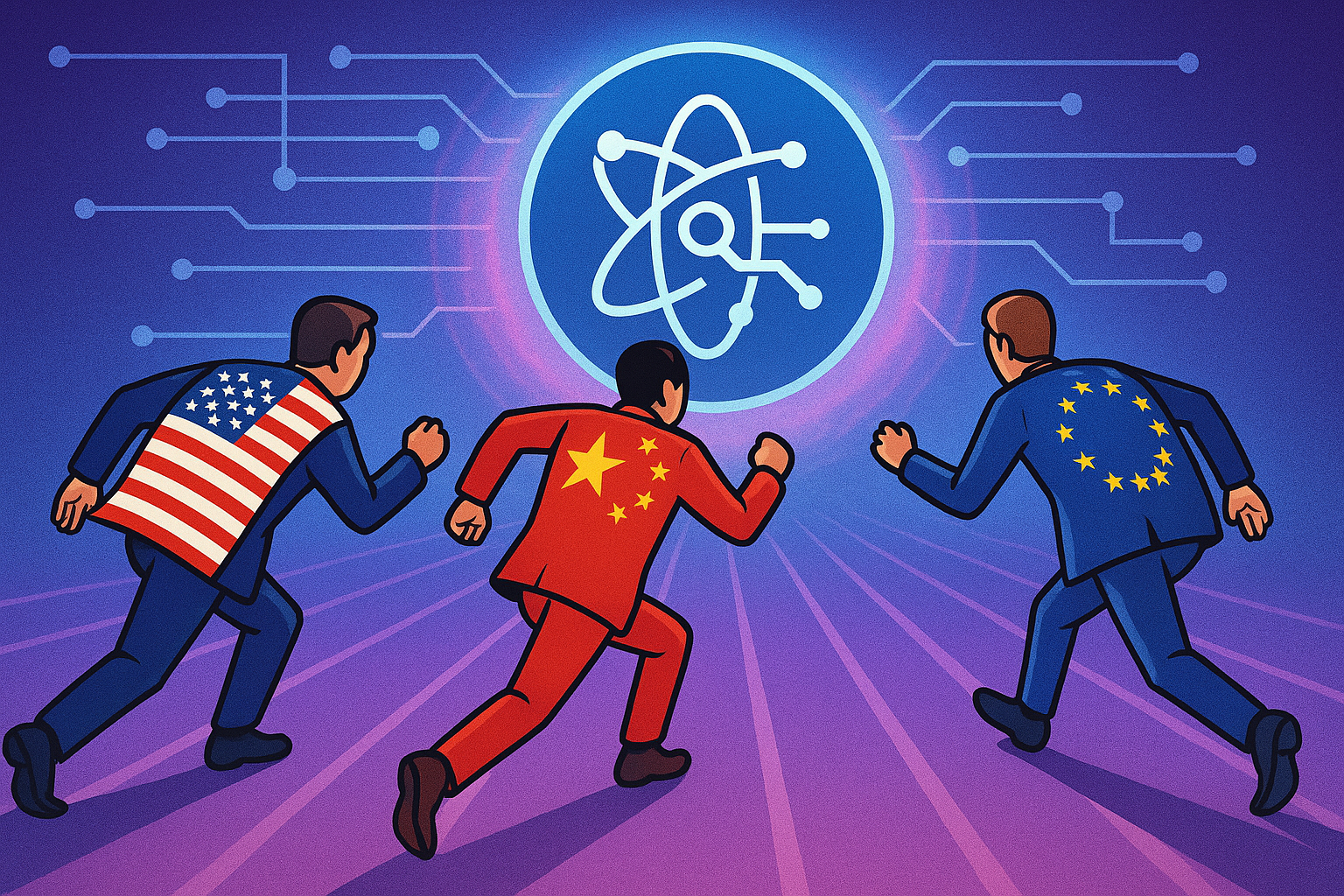
The Dutch government has released a policy paper urging the European Union to take coordinated action to reduce its heavy dependence on non-EU cloud providers, especially from the United States.
The document recommends that the European Commission introduce a clearer and harmonized approach at the EU level.
Key proposals include creating a consistent definition of ‘cloud sovereignty,’ adjusting public procurement rules to allow prioritizing sovereignty, promoting open-source technologies and standards, setting up a common European decision-making framework for cloud choices, and ensuring sufficient funding to support the development and deployment of sovereign cloud technologies.
These measures aim to strengthen the EU’s digital independence and protect public administrations from external political or economic pressures.
A recent investigation found that over 20,000 Dutch institutions rely heavily on US cloud services, with Microsoft holding about 60% of the market.
The Dutch government warned this dependence risks national security and fundamental rights. Concerns escalated after Microsoft blocked the ICC prosecutor’s email following US sanctions, sparking political outrage.
In response, the Dutch parliament called for reducing reliance on American providers and urged the government to develop a roadmap to protect digital infrastructure and regain control.
Would you like to learn more about AI, tech and digital diplomacy? If so, ask our Diplo chatbot!
The law criminalises creating and distributing such content, mainly when used for deceit, highlighting a proactive response to deepening online threats.
The legislation differentiates between uses of deepfakes: non-consensual impersonation will result in misdemeanour charges, while cases involving fraudulent intent, such as financial scams or political manipulation, are now classified as third-degree felonies.
Support for the bill was bipartisan and overwhelming in the state legislature. Its sponsors emphasised that while it deters harmful digital impersonation, it also carefully safeguards legitimate speech, including parody, satire, and artistic expression.
With Pennsylvania now among the growing number of states implementing deepfake regulations, this development aligns with a national trend to regulate AI-generated digital forgeries. It complements earlier state-level laws and federal initiatives to curb AI’s misuse without stifling innovation.
Would you like to learn more about AI, tech and digital diplomacy? If so, ask our Diplo chatbot!
Chinese authorities reportedly use a powerful new malware tool called Massistant to extract data from seized Android phones. Developed by Xiamen Meiya Pico, the tool enables police to access messages, photos, locations, and app data once they have physical access to a device.
Cybersecurity firm Lookout revealed that Massistant operates via a desktop-connected tower, requiring unlocked devices but no advanced hacking techniques. Researchers said affected users include Chinese citizens and international travellers whose phones may be searched at borders.
The malware leaves traces on compromised phones, allowing for post-infection removal, but authorities already have the data by then. Forums in China have shown increasing user complaints about malware following police interactions.
Massistant is seen as the successor to an older tool, MSSocket, with Meiya Pico now controlling 40% of China’s digital forensics market. They previously sanctioned the firm for its surveillance tech links to the Chinese government’s use.
Would you like to learn more about AI, tech and digital diplomacy? If so, ask our Diplo chatbot!
Thinking Machines Lab, an AI startup founded earlier this year by former OpenAI executive Mira Murati, has raised $2 billion in new funding. The round, which values the company at $12 billion, was led by Andreessen Horowitz and backed by Nvidia, Cisco, AMD, and others.
The company aims to develop safer and more reliable AI systems by focusing on how people naturally interact with the world, including speech and vision. Its first product, due in the coming months, will offer open-source components designed to support researchers and startups.
At launch, nearly two-thirds of the team had previously worked at OpenAI, underscoring the company’s ambition to lead in the field of frontier AI. Murati said the startup plans to make its science publicly available to support understanding and transparency.
The investment comes amid a surge in AI-related funding, which accounted for over 64% of all US startup deal value in the first half of 2025. Growing interest in generative and multimodal AI continues to attract major capital despite wider concerns over tech sector spending.
Would you like to learn more about AI, tech and digital diplomacy? If so, ask our Diplo chatbot!
Quantum computing could fundamentally reshape technology, using quantum bits (qubits) instead of classical bits. Qubits allow complex calculations beyond classical computing, transforming sectors from pharmaceuticals to defence.
Europe is investing billions in quantum technology, emphasising technological sovereignty. Yet, it competes fiercely with the United States, which enjoys substantial private investment, and China, powered by significant state-backed funding.
The UK began quantum initiatives early, launching the National Quantum Programme 2014. It recently pledged £2.5 billion more, supporting start-ups like Orca Computing and Universal Quantum, alongside nations like Canada, Israel, and Japan.
Europe accounted for eight of the nineteen quantum start-ups established globally in 2024, including IQM Quantum Computers and Pasqal. Despite Europe’s scientific strengths, it only captured 5% of global quantum investments, versus 50% for the US.
The European Commission aims to strengthen quantum capabilities by funding six chip factories and a continent-wide Quantum Skills Academy. However, attracting sufficient private investment remains a significant challenge.
The US quantum industry thrives, driven by giants such as IBM, Google, Microsoft, IonQ, Rigetti, and D-Wave Quantum. Recent breakthroughs include Microsoft’s topological qubit and Google’s Willow quantum chip.
D-Wave Quantum has demonstrated real-world quantum advantages, solving complex optimisation problems in minutes. Its technology is now used commercially in logistics, traffic management, and supply chains.
China, meanwhile, leads in state-driven quantum funding, investing $15 billion directly and managing a $138 billion tech venture fund. By contrast, US federal investment totals about $6 billion, underscoring China’s aggressive approach.
Global investment in quantum start-ups reached $1.25 billion in Q1 2025 alone, reflecting a shift towards practical applications. By 2040, the quantum market is projected to reach $173 billion, influencing global economics and geopolitics.
Quantum computing raises geopolitical concerns, prompting democratic nations to coordinate through bodies like the OECD and G7. Interoperability, trust, and secure infrastructure have become essential strategic considerations.
Europe’s quantum ambitions require sustained investment, standard-setting leadership, and robust supply chains. Its long-term technological independence hinges on moving swiftly beyond initial funding towards genuine strategic autonomy.
Would you like to learn more about AI, tech and digital diplomacy? If so, ask our Diplo chatbot!
Meta has unveiled plans to build a 5GW data centre in Louisiana, part of a significant expansion of its AI infrastructure. CEO Mark Zuckerberg said the Hyperion complex will cover an area nearly the size of Manhattan, with the first 1.5GW phase expected online in 2026.
The company is also constructing a 1GW cluster named Prometheus in US, Ohio, which combines Meta-owned infrastructure with leased systems. Both projects will use a mix of renewable and natural gas power, underlining Meta’s strategy to ramp up compute capacity rapidly.
Zuckerberg stated Meta would invest hundreds of billions of dollars into superintelligence development, supported by elite talent recruited from major rivals. He added that the new data centres would offer the highest compute-per-researcher in the industry.
Amidst growing demand, Meta recently sought $29 billion in financing and secured 1GW of renewable power. Yet the expansion has raised environmental concerns, with one data centre in Georgia reportedly consuming 10% of a county’s water supply.
Would you like to learn more about AI, tech and digital diplomacy? If so, ask our Diplo chatbot!
One of the world’s most iconic sporting events — and certainly the pinnacle of professional tennis — came to a close on Sunday, as Jannik Sinner lifted his first Wimbledon trophy and Iga Świątek triumphed in the women’s singles.
The leap into the future, however, came at a cost. System failures sparked considerable controversy both during the tournament and in its aftermath.
Beyond technical faults, the move disrupted one of Wimbledon’s oldest traditions — for the first time in 138 years, AI performed the role of line judge entirely. Several players have since pointed the finger not just at the machines, but directly at those who put them in charge.
Wimbledon as the turning point for AI in sport
The 2025 edition of Wimbledon introduced a radical shift: all line calls were entrusted exclusively to the Hawk-Eye Live system, eliminating the on-court officials. The sight of a human line judge, once integral to the rhythm and theatre of Grand Slam tennis, was replaced by automated sensors and disembodied voices.
Rather than a triumph of innovation, the tournament became a cautionary tale.
During the second round, Britain’s Sonay Kartal faced Anastasia Pavlyuchenkova in a match that became the focal point of AI criticism. Multiple points were misjudged due to a system error requiring manual intervention mid-match. Kartal was visibly unsettled; Pavlyuchenkova even more so. ‘They stole the game from me,’ she said — a statement aimed not at her opponent but the organisers.
Further problems emerged across the draw. The system’s imperfections were increasingly evident from Taylor Fritz’s quarterfinal, where a serve was wrongly ruled out, to delayed audio cues.
Athletes speak out when technology silences the human
Discontent was not confined to a few isolated voices. Across locker rooms and at press conferences, players voiced concerns about specific decisions and the underlying principle.
Kartal later said she felt ‘undone by silence’ — referring to the machine’s failure and the absence of any human presence. Emma Raducanu and Jack Draper raised similar concerns, describing the system as ‘opaque’ and ‘alienating’. Without the option to challenge or review a call, athletes felt disempowered.
Former line judge Pauline Eyre described the transformation as ‘mechanical’, warning that AI cannot replicate the subtle understanding of rhythm and emotion inherent to human judgement. ‘Hawk-Eye doesn’t breathe. It doesn’t feel pressure. That used to be part of the game,’ she noted.
Although Wimbledon is built on tradition, the value of human oversight seems to have slipped away.
Other sports, same problem: When AI misses the mark
Wimbledon’s situation is far from unique. In various sports, AI and automated systems have repeatedly demonstrated their limitations.
In the 2020 Premier League, goal-line technology failed during a match between Aston Villa and Sheffield United, overlooking a clear goal — an error that shaped the season’s outcome.
Irish hurling suffered a similar breakdown in 2013, when the Hawk-Eye system wrongly cancelled a valid point during an All-Ireland semi-final, prompting a public apology and a temporary suspension of the technology.
Even tennis has a history of scepticism towards Hawk-Eye. Players like Rafael Nadal and Andy Murray questioned line calls, with replay footage often proving them right.
Patterns begin to emerge. Minor AI malfunctions in high-stakes settings can lead to outsized consequences. Even more damaging is the perception that the technology is beyond reproach.
From umpire to overseer: When AI watches everything
The events at Wimbledon reflect a broader trend, one seen during the Paris 2024 Olympics. As outlined in our earlier analysis of the Olympic AI agenda, AI was used extensively in scoring and judging, crowd monitoring, behavioural analytics, and predictive risk assessment.
Rather than simply officiating, AI has taken on a supervisory role: watching, analysing, interpreting — but offering little to no explanation.
Vital questions arise as the boundary between sports technology and digital governance fades. Who defines suspicious movement? What triggers an alert? Just like with Hawk-Eye rulings, the decisions are numerous, silent, and largely unaccountable.
Traditionally, sport has relied on visible judgement and clear rule enforcement. AI introduces opacity and detachment, making it difficult to understand how and why decisions are made.
The AI paradox: Trust without understanding
The more sophisticated AI becomes, the less people seem to understand it. The so-called black box effect — where outputs are accepted without clarity on inputs — now exists across society, from medicine to finance. Sport is no exception.
At Wimbledon, players were not simply objecting to incorrect calls. They were reacting to a system that offered no explanation, human feedback, or room for dialogue. In previous tournaments, athletes could appeal or contest a decision. In 2025, they were left facing a blinking light and a pre-recorded announcement.
Such experiences highlight a growing paradox. As trust in AI increases, scrutiny declines, often precisely because people cannot question it.
That trust comes at a price. In sport, it can mean irreversible moments. In public life, it risks producing systems that are beyond challenge. Even the most accurate machine, if left unchecked, may render the human experience obsolete.
Dependency over judgement and the cost of trusting machines
The promise of AI lies in precision. But precision, when removed from context and human judgement, becomes fragile.
What Wimbledon exposed was not a failure in design, but a lapse in restraint — a human tendency to over-delegate. Players faced decisions without recourse, coaches adapted to algorithmic expectations, and fans were left outside the decision-making loop.
Whether AI can be accurate is no longer a question. It often is. The danger arises when accuracy is mistaken for objectivity — when the tool becomes the ultimate authority.
Sport has always embraced uncertainty: the unexpected volley, the marginal call, the human error. Strip that away, and something vital is lost.
A hybrid model — where AI supports but does not dictate — may help preserve fairness and trust.
Let AI enhance the game. Let humans keep it human.
Would you like to learn more aboutAI, tech and digital diplomacy? If so, ask our Diplo chatbot!
Claude AI has introduced integration with Canva, enabling users to generate and manage design content using simple text prompts. The new feature allows paid users to create presentations, edit visuals, and explore templates directly within Claude’s chat interface.
Alongside Canva, Claude now supports additional connectors like Notion, Stripe, and desktop apps like Figma and Prisma, expanding its ability to fetch and process data contextually. These integrations are powered by the open-source Model Context Protocol (MCP).
Canva’s head of ecosystem highlighted that users can now generate, summarise, and publish designs in one continuous workflow within Claude. The move represents another step toward AI-first productivity, removing the need for manual app-switching during the creative process.
Claude is the first AI assistant to enable Canva workflows through MCP, following recent partnerships with tools like Figma. A new integrations directory has also launched, helping users discover compatible apps for both web and desktop experiences.
Would you like to learn more about AI, tech and digital diplomacy? If so, ask our Diplo chatbot!
While Gemini often dominates attention in Google’s AI portfolio, other innovative tools deserve the spotlight. One standout is NotebookLM, a virtual research assistant that helps users organise and interact with complex information across various subjects.
NotebookLM creates structured notebooks from curated materials, allowing meaningful engagement with the content. It supports dynamic features, including summaries and transformation options like Audio Overview, making research tasks more intuitive and efficient.
According to Google, featured notebooks are built using information from respected authors, academic institutions, and trusted nonprofits. Current topics include Shakespeare, Yellowstone National Park and more, offering a wide spectrum of well-sourced material.
Featured notebooks function just like regular ones, with added editorial quality. Users can navigate, explore, and repurpose content in ways that support individual learning and project needs. Google has confirmed the collection will grow over time.
NotebookLM remains in early development, yet the tool already shows potential for transforming everyday research tasks. Google also plans tighter integration with its other productivity tools, including Docs and Slides.
The tool significantly reduces the effort traditionally required for academic or creative research. Structured data presentation, combined with interactive features, makes information easier to consume and act upon.
NotebookLM was initially released on desktop but is now also available as a mobile app. Users can download it via the Google Play Store to create notebooks, add content, and stay productive from anywhere.
Would you like to learn more about AI, tech and digital diplomacy? If so, ask our Diplo chatbot!
Eurosky seeks to build European infrastructure for social media platforms and promote digital sovereignty. The goal is to ensure that the continent’s digital space is governed by European laws, values, and rules, rather than being subject to the influence of foreign companies or governments.
To support this goal, Eurosky plans to implement a decentralised content moderation system, modelled after the approach used by the Bluesky network.
Moderation, essential for removing harmful or illegal content like child exploitation or stolen data, remains a significant obstacle for new platforms. Eurosky offers a non-profit moderation service to help emerging social media providers handle this task, thus lowering the barriers to entering the market.
The project enjoys strong public and political backing. Polls show that majorities in France, Germany, and Spain prefer Europe-based platforms, with only 5% favouring US providers.
Eurosky also has support from four European governments, though their identities remain undisclosed. This momentum aligns with a broader shift in user behaviour, as Europeans increasingly turn to local tech services amid privacy and sovereignty concerns.
Would you like to learn more about AI, tech and digital diplomacy? If so, ask our Diplo chatbot!