People often treat their email address as harmless, just a digital ID for receipts and updates. In reality, it acts as a skeleton key linking behaviour, purchases, and personal data across platforms.
Using the same email everywhere makes tracking easy. Companies may encrypt addresses, but behavioural patterns remain intact. Aliases disrupt this chain by creating unique addresses that forward mail without revealing your true identity.
Each alias becomes a useful tracker. If one is compromised or starts receiving spam, it can simply be disabled, cutting off the problem at its source.
Aliases also reduce the fallout of data breaches. Instead of exposing your main email to countless third-party tools, scripts, and mailing platforms, an alias shields your core digital identity.
Beyond privacy, aliases encourage healthier habits. They force a pause before signing up, add structure through custom rules, and help fragment your identity, thereby lowering the risks associated with any single breach.
Would you like to learn more about AI, tech, and digital diplomacy? If so, ask our Diplo chatbot!
Microsoft has unveiled two new AI models, marking a major step in its efforts to build its own technology rather than rely solely on OpenAI.
The first model, MAI-Voice-1, generates high-fidelity audio and supports both single and multi-speaker scenarios. Microsoft said the system can create a full minute of expressive audio in under a second on a single GPU, making it one of the fastest of its kind.
MAI-Voice-1 is already available in Copilot Daily and Podcasts, while Copilot Labs allows users to experiment with storytelling and speech demos. Microsoft sees voice as a vital interface for future AI companions.
MAI-1 Preview is currently undergoing community testing on LMArena and will soon be integrated into selected Copilot use cases. Microsoft said it plans to expand its family of specialised models, aiming to orchestrate different systems for diverse user needs.
Would you like to learn more about AI, tech and digital diplomacy? If so, ask our Diplo chatbot!
China has set its most ambitious AI adoption targets yet, aiming to embed the technology across industries, governance, and daily life within the next decade.
According to a new State Council directive, AI use should reach 70% of the population by 2027 and 90% by 2030, with a complete shift to what it calls an ‘intelligent society’ by 2035.
The plan would mean nearly one billion Chinese citizens regularly using AI-powered services or devices within two years, a timeline compared to the rapid rise of smartphones.
Although officials acknowledge risks such as opaque models, hallucinations and algorithmic discrimination, the policy calls for frameworks to govern ‘natural persons, digital persons, and intelligent robots’.
Would you like to learn more about AI, tech and digital diplomacy? If so, ask our Diplo chatbot!
Indonesia will deploy an AI-driven maritime surveillance network to combat piracy and other illegal activities across its vast waters.
The Indonesian Sea and Coast Guard Unit has signed a 10-year agreement with UK-based SRT Marine Systems for its SRT-MDA platform. The system, to be known locally as the National Maritime Security System, will integrate terrestrial, mobile and satellite surveillance with AI-powered analytics.
Fifty command posts will be digitised under the plan, enabling authorities to detect, track and predict activities from piracy to environmental violations. The deal, valued at €157.9m and backed by UK Export Finance, has been strongly supported by both governments.
Piracy remains a pressing issue in Indonesian waters, particularly in the Singapore Strait, where opportunistic thefts against slow-moving ships quadrupled in the first half of 2025 compared with last year. Analysts warn that weak deterrence and economic hardship are fuelling the rise in incidents.
Would you like to learn more about AI, tech and digital diplomacy? If so, ask our Diplo chatbot!
According to the IT regulator, Nigeria is preparing a national framework to guide responsible use of AI in governance, healthcare, education and agriculture.
NITDA Director General Kashifu Abdullahi told a policy lecture in Abuja that AI could accelerate economic transformation if properly harnessed. He emphasised that Nigeria’s youthful population should move from being consumers to becoming innovators and creators.
He urged stakeholders to view automation as an opportunity to generate jobs, highlighting that over 60% of Nigerians are under 25. Abdullahi described this demographic as a key asset in positioning the nation for global competitiveness.
Meanwhile, a joint report from the Digital Education Council and the Global Finance & Technology Network found that AI boosts productivity, though adoption remains uneven. It warned of a growing divide between organisations that use AI effectively and those falling behind.
Would you like to learn more about AI, tech, and digital diplomacy? If so, ask our Diplo chatbot!
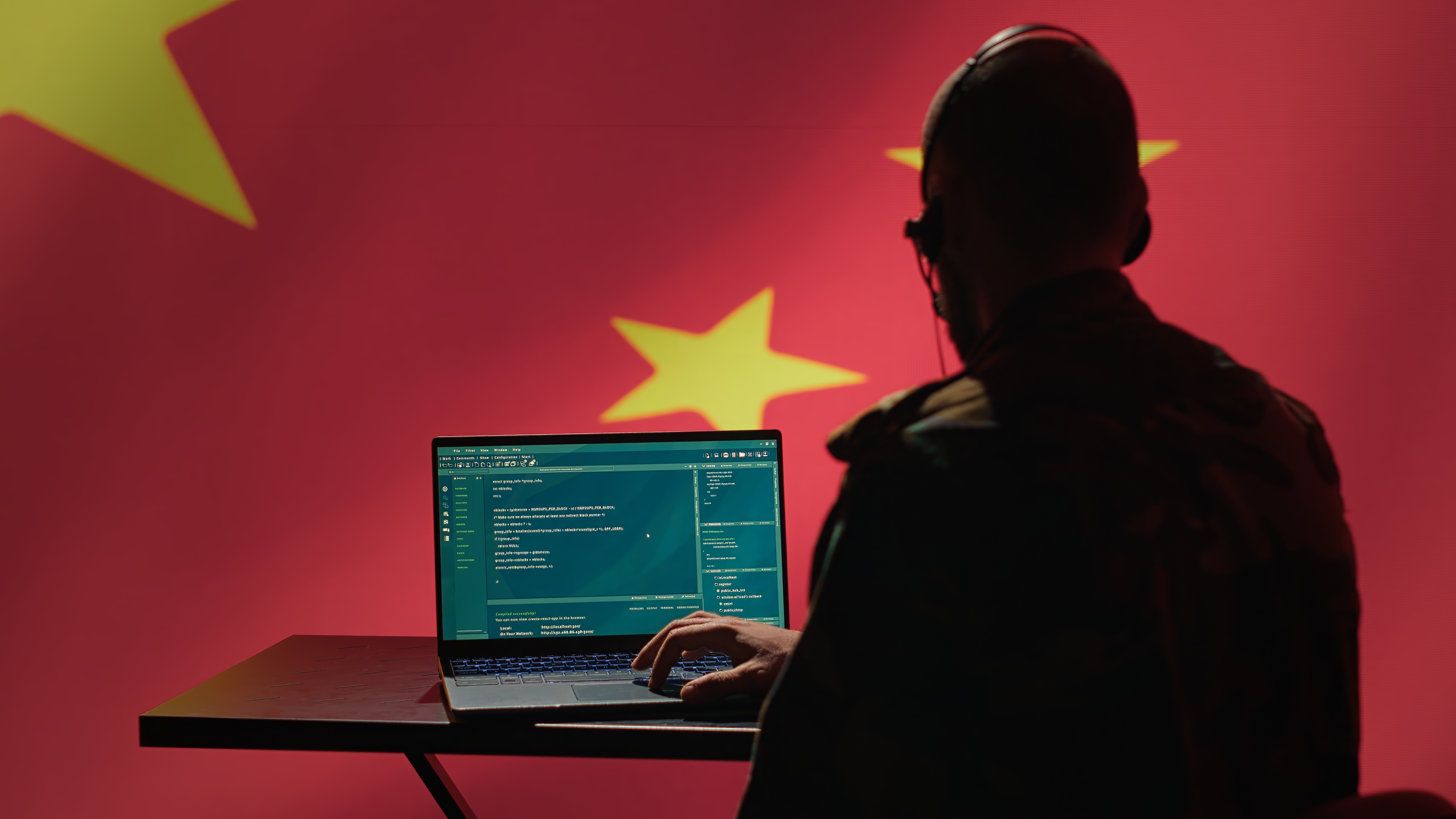
China’s Salt Typhoon cyberspies have stolen data from millions of Americans through a years-long intrusion into telecommunications networks, according to senior FBI officials. The campaign represents one of the most significant espionage breaches uncovered in the United States.
The Beijing-backed operation began in 2019 and remained hidden until last year. Authorities say at least 80 countries were affected, far beyond the nine American telcos initially identified, with around 200 US organisations compromised.
Targets included Verizon, AT&T, and over 100 current and former administration officials. Officials say the intrusions enabled Chinese operatives to geolocate mobile users, monitor internet traffic, and sometimes record phone calls.
Three Chinese firms, Sichuan Juxinhe, Beijing Huanyu Tianqiong, and Sichuan Zhixin Ruijie, have been tied to Salt Typhoon. US officials say they support China’s security services and military.
The FBI warns that the scale of indiscriminate targeting falls outside traditional espionage norms. Officials stress the need for stronger cybersecurity measures as China, Russia, Iran, and North Korea continue to advance their cyber operations against critical infrastructure and private networks.
Would you like to learn more about AI, tech, and digital diplomacy? If so, ask our Diplo chatbot!
Law enforcement agencies increasingly leverage AI across critical functions, from predictive policing, surveillance and facial recognition to automated report writing and forensic analysis, to expand their capacity and improve case outcomes.
In predictive policing, AI models analyse historical crime patterns, demographics and environmental factors to forecast crime hotspots. However, this enables pre-emptive deployment of officers and more efficient resource allocation.
Facial recognition technology matches images from CCTV, body cameras or telescopic data against criminal databases. Meanwhile, NLP supports faster incident reporting, body-cam transcriptions and keyword scanning of digital evidence.
Despite clear benefits, risks persist. Algorithmic bias may unfairly target specific groups. Privacy concerns grow where systems flag individuals without oversight.
Automated decisions also raise questions on accountability, the integrity of evidence, and the preservation of human judgement in justice.
Would you like to learn more about AI, tech and digital diplomacy? If so, ask our Diplo chatbot!
Russia has been pushing for its state-backed messenger Max to be pre-installed on all smartphones sold in the country since September 2025. Chinese and South Korean manufacturers, including Samsung and Xiaomi, are reportedly preparing to comply, though official confirmation is still pending.
The Max platform, developed by VK (formerly Vkontakte), offers messaging, audio and video calls, file transfers, and payments. It is set to replace VK Messenger on the mandatory app list, signalling a shift away from foreign apps like Telegram and WhatsApp.
Integration may occur via software updates or prompts when inserting a Russian SIM card.
Concerns have arisen over potential surveillance, as Max collects sensitive personal data backed by the Russian government. Critics fear the platform may monitor users, reflecting Moscow’s push to control encrypted communications.
The rollout reflects Russia’s broader push for digital sovereignty. While companies navigate compliance, the move highlights the increasing tension between state-backed applications and widely used foreign messaging services in Russia.
Would you like to learn more about AI, tech and digital diplomacy? If so, ask our Diplo chatbot!
Google has launched Pixel Care+, a new device protection programme that replaces Preferred Care and Fi Device Protection in the US. Existing subscribers will be transitioned to the new plan over the coming months.
The programme offers unlimited accidental damage claims, extended warranty coverage, and $0 repairs for screen, battery, and malfunction issues. It also guarantees genuine Google parts, priority support, and optional theft and loss protection.
Subscribers benefit from free upgraded shipping on replacements, including next-day delivery. Pricing varies by device, with Pixel Care+ for the Pixel 10 costing $10 per month or $199 for two years.
Pixel Care+ is available for Pixel 8 and newer devices, as well as Pixel Watch 2, Pixel Tablet, and Fitbit models, including Ace LTE, Versa 4, Sense 2, Charge 6, and Inspire 3. Users must enrol within 60 days of purchase.
Would you like to learn more about AI, tech, and digital diplomacy? If so, ask our Diplo chatbot!
Funding season is restarting in Europe, with investors expecting to add several new unicorns in the coming months. Despite fewer mega-rounds than in 2021, a dozen startups passed the $1 billion mark in the first half of 2025.
AI, biotech, defence technology, and renewable energy are among the sectors attracting major backing. Recent unicorns include Lovable, an AI coding firm from Sweden, UK-based Fuse Energy, and Isar Aerospace from Germany.
London-based Isomorphic Labs, spun out of DeepMind, raised $600 million to enter unicorn territory. In biotech, Verdiva Bio hit unicorn status after a $410 million Series A, while Neko Health reached a $1.8 billion valuation.
AI and automation continue to drive investor appetite. Dublin’s Tines secured a $125 million Series C at a $1.125 billion valuation, and German AI customer service startup Parloa raised $120 million at a $1 billion valuation.
Dual-use drone companies also stood out. Portugal-based Tekever confirmed its unicorn status with plans for a £400 million UK expansion, while Quantum Systems raised €160 million to scale its AI-driven drones globally.
Film-streaming platform Mubi and encryption startup Zama also joined the unicorn club, showing the breadth of sectors gaining traction. With Bristol, Manchester, Munich, and Stockholm among the hotspots, Europe’s tech ecosystem continues to diversify.
Would you like to learn more about AI, tech and digital diplomacy? If so, ask our Diplo chatbot!