Google has filed a formal complaint with the European Commission over Microsoft’s cloud business practices. The tech giant argues that Microsoft uses its dominant position with Windows Server to stifle competition and lock customers into its Azure platform. Specifically, Google claims Microsoft enforces heavy mark-ups on users of rival cloud services and restricts access to essential security updates.
The dispute follows a recent settlement where Microsoft paid €20 million to resolve concerns raised by European cloud providers. However, the agreement excluded key rivals like Google and Amazon Web Services (AWS), fuelling further criticism. Google insists only regulatory action will halt what it sees as Microsoft’s monopolistic approach, urging the EU to step in and ensure fair competition.
Microsoft denies the accusations, stating they have settled similar issues amicably with other European providers. A Microsoft spokesperson expressed confidence that Google would fail to persuade the European Commission, as it had failed with EU businesses.
Google believes immediate intervention is necessary to prevent the cloud market from becoming increasingly restrictive. They warn that Microsoft’s influence over the European cloud sector, which is growing rapidly, could limit options for customers and hurt competitors.
Microsoft has announced a significant investment of $1.3 billion in Mexico over the next three years, aimed at strengthening its cloud computing and AI infrastructure. During an event in Mexico City, CEO Satya Nadella emphasised the company’s commitment to enhancing connectivity and promoting AI adoption, particularly among small and medium-sized businesses (SMBs). The initiative is expected to reach 5 million people and support 30,000 SMBs in the region.
Major Mexican companies, including Bimbo and Cemex, are already utilising Microsoft’s AI tools, showcasing the growing integration of technology in the country. Additionally, in partnership with Viasat, Microsoft plans to extend internet access to 150,000 Mexicans without connectivity by the end of 2025.
The investment has been positively received by Mexico’s incoming Economy Minister Marcelo Ebrard, who believes it will significantly accelerate the nation’s AI development.
OpenAI is expanding its Advanced Voice Mode (AVM) to more ChatGPT users, beginning with those subscribed to the Plus and Teams plans, while Enterprise and education customers will gain access next week. The updated AVM includes a redesigned interface, now featuring a blue animated sphere, and introduces five new voices: Arbor, Maple, Sol, Spruce, and Vale. These additions bring the total voice options to nine, replacing ‘Sky,’ which was removed after legal issues arose over its similarity to actress Scarlett Johansson’s voice.
The AVM update also includes improvements like better accent recognition and smoother conversations. OpenAI has incorporated customisation options, including Custom Instructions, which allow users to personalise ChatGPT’s responses, and Memory, which enables ChatGPT to recall past conversations. However, previously showcased features such as video and screen-sharing remain unavailable, with no confirmed timeline for their release.
Despite the updates, AVM is not yet available in certain regions, including the EU, the UK, and several others. OpenAI is actively refining the feature based on early user feedback, working to resolve glitches and improve overall performance for a smoother experience.
Tech giants Google and Nvidia are increasing their focus on AI in India. The companies made the announcement following a meeting with Prime Minister Narendra Modi during his recent US visit, signalling plans for deeper involvement in AI development across the country.
Nvidia CEO Jensen Huang commended Prime Minister Modi’s keen interest in AI and its potential to transform industries. Huang also recognised growing tech talent and startup ecosystem, which he views as vital to AI innovation and development. Nvidia has formed various partnerships in India to help scale AI capabilities.
Google CEO Sundar Pichai emphasised the Prime Minister’s push for India to adopt AI across sectors, including healthcare, education, and agriculture. Pichai confirmed Google’s intention to continue robust investments in AI to help further India’s digital transformation and ensure AI benefits the wider population.
Both Google and Nvidia are committed to supporting India’s technological growth, recognising its pivotal role in shaping the future of AI globally. Their collaboration with the Indian government aims to boost innovation and provide advanced AI solutions for various industries.
Recent developments in 8-inch silicon carbide (SiC) technology mark a significant transformation in the semiconductor sector, especially for power electronics. Japan’s NGK Insulators has successfully created 8-inch SiC wafers, which will be showcased at ICSCRM 2024, underscoring the rapid advancements in this field. Additionally, Resonac is nearing the commercialisation of its 8-inch epitaxial wafers, targeting mass production of both epitaxial wafers and substrates by 2025, while Onsemi is set to introduce its 8-inch wafers later this year.
In the U.S., Wolfspeed has introduced a new 2300V SiC power module, leveraging advanced 8-inch wafer technology to enhance renewable energy applications and fast charging solutions. Meanwhile, in China, Sanan Optoelectronics has launched its 8-inch SiC substrate factory, with plans for significant production capacity, further indicating the growing global demand for these materials.
Market analysts anticipate that the transition from 6-inch to 8-inch wafers will lower production costs, enhancing the accessibility of SiC technology. Larger wafer sizes significantly decrease unit chip costs, with projections indicating that the market share for 8-inch SiC products could grow from under 2% today to approximately 15% by 2026. This shift is expected to create new opportunities across multiple industries, including automotive and renewable energy, as prices for SiC substrates continue to decline.
With increasing competition and advancements in production technology, the SiC industry is on the brink of widespread adoption. As prices for 6-inch substrates fall and 8-inch technology becomes more prevalent, the future looks promising for silicon carbide as a key player in the evolution of power electronics.
Brazil is witnessing a rapid rise in online sports betting, attracting foreign companies but raising alarms over its economic impact. While the government anticipates increased tax revenue, experts are concerned that gambling diverts money from consumer spending. Gabriel Galipolo, the incoming central bank governor, noted that this surge may hinder the benefits of rising incomes, as savings and consumption growth appear to be stalling due to the increased focus on betting.
Brazilians spent more than $12 billion on foreign betting platforms in the past year, placing the country among the world’s largest sports betting markets. Despite laws prohibiting the use of credit cards for betting, critics warn that gambling is taking a toll on household budgets, particularly among lower-income families. An increasing share of family income is being funnelled into betting, reducing spending on essentials like food, clothing, and healthcare.
The rapid growth of the gambling industry in Brazil has attracted major players like Betfair, Betsson, and Caesars Sportsbook, all keen to tap into the country’s 200 million sports enthusiasts. However, research from the U.S. indicates that legalised betting can lead to serious long-term consequences, such as rising credit card debt, bankruptcies, and economic instability for struggling families. Brazil now faces the challenge of balancing the potential economic benefits of the betting sector with the risks of increasing financial pressure on its citizens.
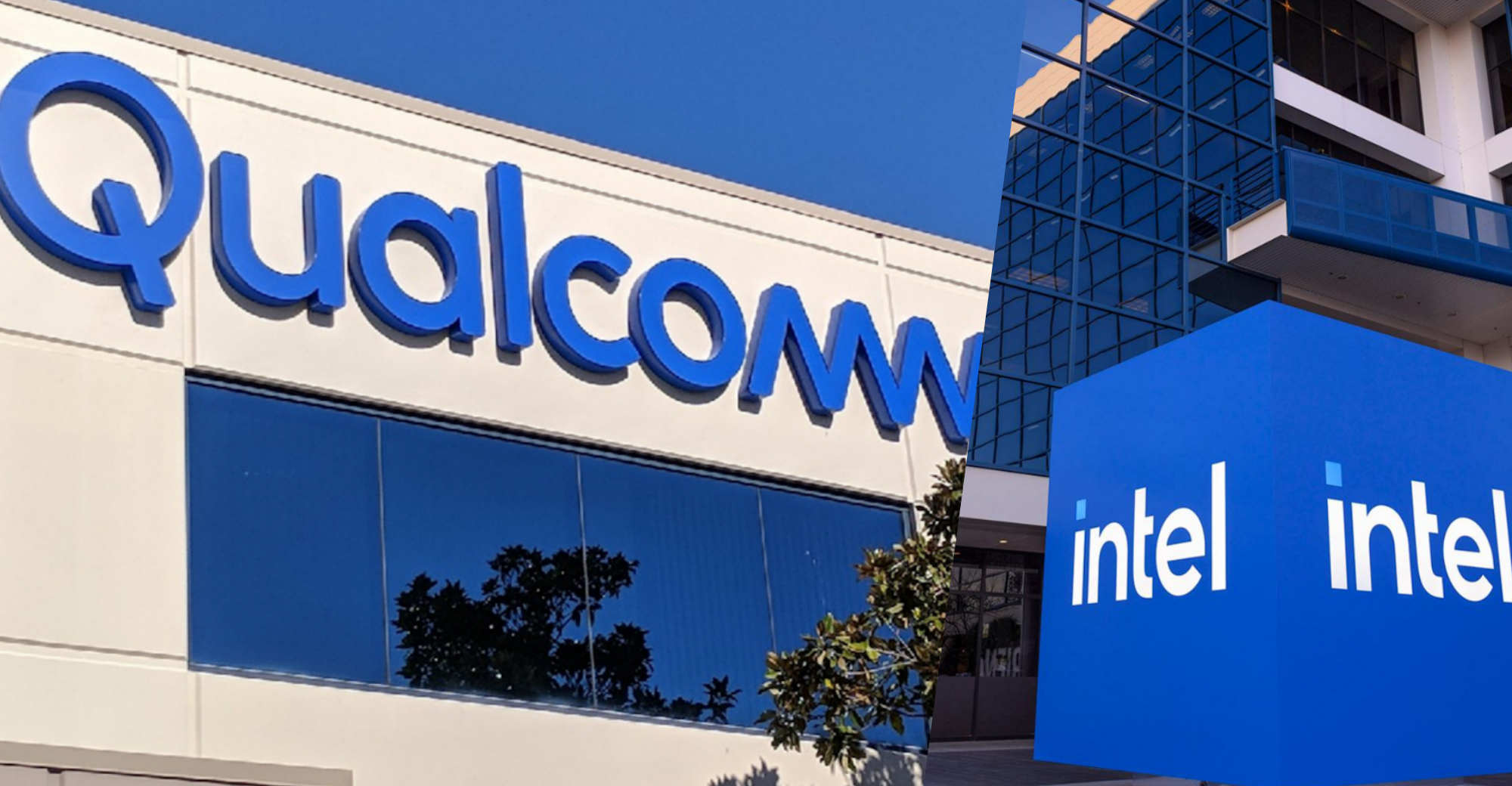
Qualcomm has approached Intel to discuss a potential acquisition, a move that could transform the semiconductor landscape. CEO Cristiano Amon is personally engaged in these early talks, which have yet to produce a formal offer. Reports suggest that Qualcomm is especially interested in Intel’s PC design unit and its overall portfolio as part of this exploration.
Intel, once the dominant force in chip manufacturing, has seen its stock plummet nearly 60% this year, highlighting its current vulnerability. A deal with Qualcomm would likely face intense scrutiny from antitrust regulators in the US, China, and Europe, possibly requiring Qualcomm to divest parts of Intel to gain approval.
If successful, this acquisition would mark a historic move in the tech sector, rivalling Broadcom’s attempted $142 billion takeover of Qualcomm in 2018. However, how Qualcomm would finance the deal, given its $13 billion cash reserves and Intel’s $122 billion valuation, remains unclear. Additionally, Qualcomm would need to navigate the complexities of managing Intel’s extensive manufacturing operations, a challenge for a company that currently relies on external contractors for chip production.
Intel is actively seeking to revitalise its business by prioritising AI processors and restructuring its operations, which includes pausing factory construction in Poland and Germany. As discussions with Qualcomm progress, both companies will need to navigate significant challenges in a rapidly changing market.
Apollo Global Management is considering a significant investment of up to $5 billion in Intel, according to a report by Bloomberg News. The offer comes at a challenging time for Intel, as its share value has plummeted nearly 60% since the beginning of the year. Discussions regarding this potential investment are still in preliminary stages, with Intel executives currently assessing the proposal.
While talks with Apollo are ongoing, the outcome remains uncertain, and the investment size could change. Intel has not provided comments on the report, and Apollo did not respond to further inquiries. Earlier this year, Apollo had announced plans to invest $11 billion in a joint venture linked to Intel’s new manufacturing facility in Ireland.
In addition to Apollo’s interest, Qualcomm is also exploring the possibility of acquiring Intel. Qualcomm’s CEO Cristiano Amon is personally involved in the negotiations, which are still in the early stages. Potential acquisition like this one could have transformative implications for the semiconductor industry.
Intel’s recent struggles have drawn attention from major players in the tech sector, highlighting the shifting landscape of the chip market. With both Apollo and Qualcomm looking to invest or acquire, Intel’s future direction remains a critical topic for industry analysts.
America’s Three Mile Island energy plant, infamous for the worst nuclear accident in US history, is preparing to reopen after Microsoft signed a 20-year deal to purchase power from the facility. The plant is scheduled to restart in 2028 following upgrades and will supply clean energy to support Microsoft’s growing data centres, especially those focused on AI. The agreement is pending regulatory approval.
Constellation Energy, the plant owner, confirmed that the reactor set to restart is separate from the unit involved in the 1979 accident, which, while not fatal, created significant public fear surrounding nuclear power. This deal represents a revival of interest in atomic energy, driven by increasing concerns about climate change and rising energy needs. The CEO of Constellation described this move as a “rebirth” of nuclear power, highlighting its potential as a dependable source of carbon-free energy.
The plant’s reopening is projected to create 3,400 jobs and add over 800 megawatts of carbon-free electricity to the grid, driving significant economic activity. Although the revival has faced some protests, it underscores a growing trend among tech companies, with Amazon also exploring nuclear energy to meet its expanding energy demands.
In 2024, the storage market is seeing notable advancements, especially in NAND flash technology, as key players like Samsung, Micron, and SK Hynix innovate to meet rising demands. Samsung has recently begun mass production of its 9th generation QLC V-NAND, boasting impressive enhancements in bit density and performance. This new model improves data retention and significantly lowers power consumption, addressing the growing need for efficient storage solutions in AI applications. Micron and SK Hynix are also pushing forward with their high-performance SSDs, reflecting a broader trend toward optimising storage for increased data demands.
Micron and SK Hynix are advancing their storage solutions as well, with Micron’s latest SSDs featuring 9th-generation TLC NAND technology that delivers impressive data transfer speeds. Meanwhile, SK Hynix is developing high-performance SSDs tailored for data centres. As the demand for storage continues to surge due to AI applications, there is a growing preference for higher-capacity SSDs, leading manufacturers to prioritise both TLC and QLC technologies in their offerings. This shift reflects the industry’s response to the increasing need for efficient and powerful storage solutions.
Market research forecasts that the demand for AI-related SSDs will surpass 45 exabytes in 2024, with the share of AI SSDs in the NAND flash market expected to grow significantly. Despite facing challenges in the PC and smartphone sectors, NAND flash revenue has risen, driven by strong demand from the AI industry. As companies ramp up production capacity, they are well-positioned to meet the increasing needs of data centres and AI applications. This trend underscores a transformative period for the NAND flash market, reflecting its critical role in supporting advancements in technology.