Elon Musk’s AI company, xAI, has launched a standalone iOS app for its chatbot, Grok, marking a major expansion beyond its initial availability to X users. The app is now live in several countries, including the US, Australia, and India, allowing users to access the chatbot directly on their iPhones.
The Grok app offers features such as real-time data retrieval from the web and X, text rewriting, summarising long content, and even generating images from text prompts. xAI highlights Grok’s ability to create photorealistic images with minimal restrictions, including the use of public figures and copyrighted material.
In addition to the app, xAI is working on a dedicated website, Grok.com, which will soon make the chatbot available on browsers. Initially limited to X’s paying subscribers, Grok rolled out a free version in November and made it accessible to all users earlier this month. The launch marks a notable push by xAI to establish Grok as a versatile, widely available AI assistant.
The European Commission has rejected accusations from Meta CEO Mark Zuckerberg that European Union laws censor social media, saying regulations only target illegal content. Officials clarified that platforms are required to remove posts deemed harmful to children or democracy, not lawful content.
Zuckerberg recently criticised EU regulations, claiming they stifle innovation and institutionalise censorship. In response, the Commission strongly denied the claims, emphasising its Digital Services Act does not impose censorship but ensures public safety through content regulation.
Meta has decided to end fact-checking in the US for Facebook, Instagram and Threads, opting for a ‘community notes’ system. The system allows users to highlight misleading posts, with notes published if diverse contributors agree they are helpful.
The EU confirmed that such a system could be acceptable in Europe if platforms submit risk assessments and demonstrate effectiveness in content moderation. Independent fact-checking for European users will remain available for US-based content.
Apple has clarified that it has never sold data collected by its Siri voice assistant or used it to create marketing profiles. The statement, issued Wednesday, follows a $95 million settlement last week to resolve a class action lawsuit alleging that Siri had inadvertently recorded private conversations and shared them with third parties, including advertisers. Apple denied the claims and admitted no wrongdoing as part of the settlement, which could result in payouts of up to $20 per Siri-enabled device for millions of affected customers.
The controversy stemmed from claims that Siri sometimes activated unintentionally, recording sensitive interactions. Apple emphasised in its statement that Siri data is used minimally and only for real-time server input when necessary, with no retention of audio recordings unless users explicitly opt-in. Even in such cases, the recordings are solely used to improve Siri’s functionality. Apple reaffirmed its commitment to privacy, stating, ‘Apple has never used Siri data to build marketing profiles, never made it available for advertising, and never sold it to anyone.’
This case has drawn attention alongside a similar lawsuit targeting Google’s Voice Assistant, currently pending in federal court in San Jose, California. Both lawsuits are spearheaded by the same legal teams, highlighting growing scrutiny over how tech companies handle voice assistant data.
Malaysia plans to leverage its strategic location and rising investments to establish itself as a hub for energy and semiconductor manufacturing, Prime Minister Anwar Ibrahim and Economy Minister Rafizi Ramli announced Thursday. The country is benefiting from political stability, economic growth, and a strong currency, distinguishing it from regional peers facing uncertainty.
Prime Minister Anwar highlighted Malaysia’s economic rebound last year, driven by significant investments in renewable energy and AI infrastructure. He pointed to a stable ringgit, low inflation, and a leading stock market performance in Southeast Asia. ‘In 2025, we aim to capitalise on our geographical position as a conduit for electricity, talent, and supply chain diversification,’ Anwar said at an economic forum.
Economy Minister Rafizi Ramli revealed plans to produce homegrown graphics processing unit (GPU) chips in response to growing AI and data centre demands. Malaysia, which already accounts for 13% of global semiconductor testing and packaging, is targeting over $100 billion in investments for the sector. The country has attracted major firms like Intel and Infineon, as well as digital investments from Google, further boosting its economy and solidifying its role as a key player in the global semiconductor supply chain.
The Dutch government announced a deal with Nvidia on Thursday to provide hardware and expertise for a potential AI supercomputing facility. The planned facility is part of the Netherlands‘ broader strategy to bolster AI research and contribute to EU efforts to strengthen Europe’s digital economy.
Last year, the Netherlands allocated €204.5 million ($210 million) for AI investments, with additional funding expected from European subsidies. Economy Minister Dirk Beljaarts hailed the Nvidia agreement as a major step toward realising the project, emphasising the intense global competition for advanced AI technologies.
‘This deal brings building a Dutch AI facility a lot closer,’ Beljaarts said after meeting Nvidia representatives in Silicon Valley, although he refrained from disclosing specific details of the agreement.
Brazilian Supreme Court Judge Alexandre de Moraes reiterated on Wednesday that technology companies must comply with national laws to continue operating in the country. His statement followed Meta’s recent announcement to scale back its US fact-checking program, raising concerns about its impact on Brazil.
Speaking at an event marking the anniversary of anti-institution riots, Moraes emphasised that the court would not tolerate the use of hate speech for profit. Last year, he ordered the suspension of social media platform X for over a month due to its failure to moderate hate speech, a decision later upheld by the court. X owner Elon Musk criticised the move as censorship but ultimately complied with court demands to restore the platform’s services in Brazil.
Brazilian prosecutors have also asked Meta to clarify whether its US fact-checking changes will apply in Brazil, citing an ongoing investigation into social media platforms’ efforts to combat misinformation and violence. Meta has been given 30 days to respond but declined to comment through its local office.
Panasonic has introduced Umi, a digital assistant designed to support family wellness, at CES 2025 in Las Vegas. Developed in partnership with AI startup Anthropic, Umi uses the Claude AI model to help families set and achieve personal goals, such as improving fitness or spending more time together. The interactive platform allows users to engage with the AI through voice chat and a mobile app, where they can create routines, manage tasks, and communicate in group chats.
The assistant is also aimed at caregivers looking after aging parents, offering a way to stay informed about their well-being even when living apart. Panasonic has collaborated with AARP to enhance Umi’s ability to support older adults. Additionally, the platform will connect users with wellness experts and integrate with partners such as Calm, Blue Apron, SleepScore Labs, and Precision Nutrition to help families build healthy habits.
Umi is expected to launch in the United States in 2025, with Panasonic positioning it as part of a broader wellness initiative. The partnership with Anthropic extends beyond consumer products, as Panasonic plans to integrate the Claude AI model into its own operations to enhance customer service, marketing, and coding efficiency.
A new app designed to help children aged seven to twelve manage anxiety through gaming is being launched in Lincolnshire, UK. The app, called Lumi Nova, combines cognitive behavioural therapy (CBT) techniques with personalised quests to gently expose children to their fears in a safe and interactive way.
The digital game has been created by BFB Labs, a social enterprise focused on digital therapy, in collaboration with children, parents, and mental health experts. The app aims to make mental health support more accessible, particularly in rural areas, where traditional services may be harder to reach.
Families in Lincolnshire can download the app for free without needing a prescription or referral. Councillor Patricia Bradwell from Lincolnshire County Council highlighted the importance of flexible mental health services, saying: ‘We want to ensure children and young people have easy access to support that suits their needs.’
By using immersive videos and creative tasks, Lumi Nova allows children to confront their worries at their own pace from the comfort of home, making mental health care more engaging and approachable. The year-long pilot aims to assess the app’s impact on childhood anxiety in the region.
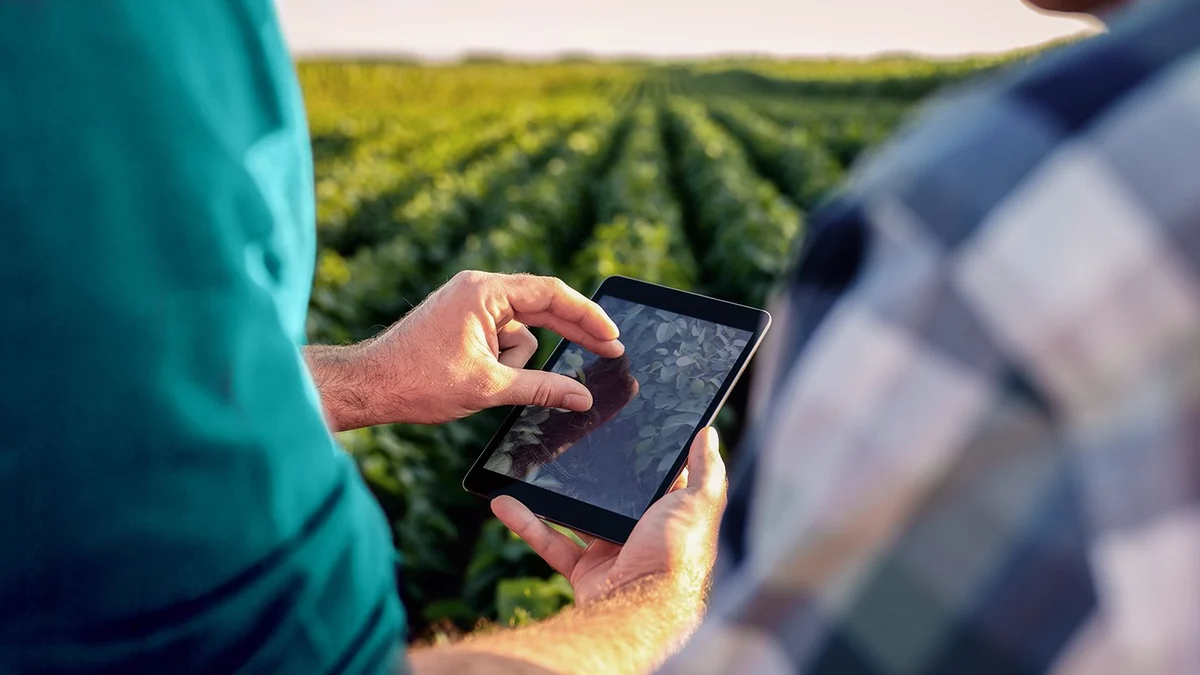
Israeli startup Fermata, founded in 2020 by bioinformatics expert Valeria Kogan, is using AI and computer vision to monitor greenhouse crops for diseases and pests. The company’s software works with standard cameras, capturing images of plants twice a day and alerting farmers to potential infestations via an app. Initially considering robotic solutions, Kogan shifted focus after consulting with farmers, realising that simpler camera-based monitoring was more effective.
Based in Israel, Fermata has gained traction by prioritising farmer needs and keeping its AI training in-house, improving model accuracy. Partnering with major agricultural firms like Bayer and Syngenta, the company has deployed over 100 cameras and continues to expand. The startup recently secured a $10 million Series A investment from Raw Ventures, its existing investor, to scale operations and work towards profitability by 2026.
Plans for growth include strengthening the sales team and expanding beyond greenhouse tomatoes into new crops. Despite AI’s previous struggles in agriculture, Fermata’s practical approach and farmer-centric model have helped it carve a niche in the industry.
US safety regulators are investigating Tesla’s ‘Actually Smart Summon’ feature, which allows drivers to move their cars remotely without being inside the vehicle. The probe follows reports of crashes involving the technology, including at least four confirmed incidents.
The US National Highway Traffic Safety Administration (NHTSA) is examining nearly 2.6 million Tesla cars equipped with the feature since 2016. The agency noted issues with the cars failing to detect obstacles, such as posts and parked vehicles, while using the technology.
Tesla has not commented on the investigation. Company founder Elon Musk has been a vocal supporter of self-driving innovations, insisting they are safer than human drivers. However, this probe, along with other ongoing investigations into Tesla’s autopilot features, could result in recalls and increased scrutiny of the firm’s driverless systems.
The NHTSA will assess how fast cars can move in Smart Summon mode and the safeguards in place to prevent use on public roads. Tesla’s manual advises drivers to operate the feature only in private areas with a clear line of sight, but concerns remain over its real-world safety applications.