AI chip startup Blaize has announced plans to go public through a SPAC deal, which will see the company listed on Nasdaq with a valuation of $1.2 billion. Founded in 2011 by former Intel engineers, Blaize specialises in AI chips for edge devices such as drones, security cameras, and industrial robots. Unlike traditional data centre chips, its products are designed for real-world applications that prioritise low latency, power efficiency, and privacy.
The company has raised $335 million from prominent investors, including Samsung and Mercedes-Benz, and claims to have $400 million worth of deals in the pipeline. CEO Dinakar Munagala, who spent over a decade at Intel, emphasised that Blaize’s approach focuses on practical AI solutions for physical environments, differentiating the company from competitors like Nvidia, which primarily targets large-scale data centres.
Despite facing financial challenges, including a loss of $87.5 million in 2023, Blaize is betting on a future where AI chips are embedded into everyday devices. The startup is also involved in defence-related contracts, with one major deal involving AI systems capable of identifying troops and detecting drones, further highlighting its niche in edge computing.
Blaize’s IPO marks a significant shift in the AI chip industry, signalling investor interest in decentralised AI technologies that extend beyond traditional data centre applications.
Apple’s latest charges for app developers are under fresh scrutiny from the European Union’s antitrust regulators. Concerns have been raised over the company’s new ‘core technology fee,’ which requires developers to pay €0.50 per installed app. Regulators are investigating whether the fee could increase costs for software makers or force them to change their business models.
The European Commission has circulated new questionnaires to developers, seeking insights on the financial impact of the fee and Apple’s claim that the changes will lower costs for most developers. The inquiry comes as major US tech companies urge President-elect Donald Trump to challenge EU regulations targeting American firms. Apple has not yet responded to the EU’s latest investigation.
Under the EU’s Digital Markets Act (DMA), Apple must comply with stricter rules on how it operates its App Store. The legislation allows regulators to fine major tech platforms up to 10% of their annual revenue for non-compliance. Apple, which has faced ongoing scrutiny in both the US and Europe over developer fees, says that 85% of developers using its App Store do not pay any commission.
With the potential TikTok ban in the US drawing near, thousands of users are migrating to the Chinese app RedNote, making it the most downloaded app on Apple’s US App Store. Dubbed ‘TikTok refugees,’ these users are rapidly building new communities on the platform, which combines features of TikTok and Instagram to share lifestyle content.
RedNote, known as Xiaohongshu in China, has around 300 million monthly users and is popular among young urban women for sharing tips on fashion, travel, and more. The app has welcomed its new users from the US with open arms, with thousands of posts guiding them on navigating the platform and even learning basic Mandarin phrases.
While TikTok continues to resist demands to sell its US operations, RedNote has seen a surge of interest from users looking to preserve their online presence. Many users, like school canteen worker Sarah Fotheringham and fashion designer Marcus Robinson, say the platform is giving them fresh opportunities to connect and grow their followings.
Despite security concerns surrounding Chinese apps, RedNote’s growing popularity shows that TikTok’s future may face challenges even without a formal ban. Some users report spending more time on RedNote than on TikTok and plan to continue building their presence there regardless of the outcome.
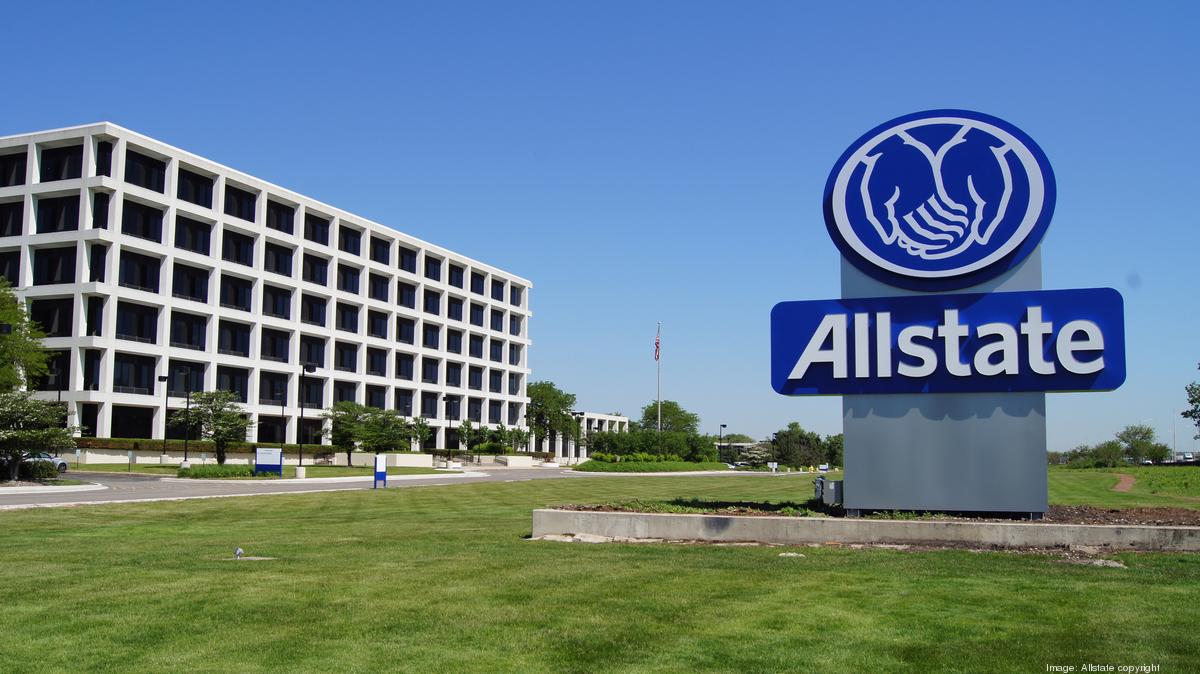
Allstate is facing a lawsuit from the state of Texas over claims that it secretly tracked millions of drivers through their mobile phones without consent. Texas Attorney General Ken Paxton alleges that the insurer collected location data through apps like GasBuddy and Life360 to create a vast driving behaviour database. The data was then used to raise insurance premiums, deny coverage, or sell to other insurers for profit.
The lawsuit also claims Allstate recently started purchasing vehicle location data directly from manufacturers, including Toyota, Mazda, and Stellantis brands like Jeep and Dodge. Texas accuses the company of violating state laws on data privacy and deceptive insurance practices. Prosecutors are seeking financial penalties, consumer restitution, and the destruction of unlawfully obtained data.
General Motors faced a similar lawsuit from Texas last year over allegations of secretly collecting and selling driver data. Allstate, headquartered in Illinois, has yet to respond to the claims. If found guilty, the company could face significant fines and legal consequences.
The US government has officially labelled the extreme right-wing ‘Terrorgram’ network as a terrorist organisation, citing its promotion of violent white supremacist attacks. The group operates mainly on the Telegram platform and has been linked to attacks across the globe, including shootings and planned assaults on critical infrastructure.
The move, announced by the State Department, includes sanctions against three of the network’s leaders based in Brazil, Croatia, and South Africa. The designation freezes any US-based assets belonging to the group and bans Americans from engaging with its members. Officials say the collective has provided detailed guidance for attacks on minorities and government officials, calling for a race war.
US authorities have been ramping up efforts to combat domestic extremism under President Biden, who launched the country’s first national strategy on countering domestic terrorism in 2021. Britain has already taken similar steps, outlawing the Terrorgram collective in April last year.
This crackdown follows criminal charges brought against two alleged leaders of the group, accused of using Telegram to incite violence against Black, Jewish, LGBTQ, and immigrant communities. Authorities stress that dismantling such online hate groups is essential to prevent further extremist attacks.
The European Commission is reassessing its investigations into major tech companies, including Apple, Meta, and Google, under its landmark Digital Markets Act (DMA), according to the Financial Times. The review, which covers cases initiated since March 2024, comes as tech giants urge President-elect Donald Trump to push back against EU regulatory scrutiny. Sources suggest Trump’s presidency has influenced the review, though it was not the direct trigger.
The DMA, implemented in 2022, seeks to curb the dominance of Big Tech by imposing strict rules on their practices and fines of up to 10% of annual revenue for violations. The review may lead to narrowing or altering the scope of current probes, with all decisions and potential fines paused during this process. Technical work on the cases, however, will continue.
This development coincides with Meta’s recent overhaul of its US fact-checking program and CEO Mark Zuckerberg’s signals of a more conciliatory stance toward the Trump administration. Meanwhile, EU regulators are also examining whether Elon Musk’s social media platform X has violated content moderation rules, further highlighting the tech industry’s complex regulatory challenges.
The European Central Bank (ECB) has expanded its social media presence by joining Bluesky, a rival to Elon Musk’s X. A spokesperson stated that the move is part of a broader strategy to diversify communication channels following the adoption of other platforms last year. The ECB launched its Bluesky account by sharing an interview with chief economist Philip Lane, while confirming it will continue using X.
Musk, who has used X to promote political figures, recently endorsed Germany’s far-right Alternative for Germany party and has also backed Italy’s Prime Minister Giorgia Meloni. His influence has raised concerns among EU regulators, particularly over misinformation and political bias. Critics have also highlighted his opposition to diversity and climate policies, which contrasts with the ECB’s commitment to gender equality and environmental sustainability under President Christine Lagarde.
Bluesky, founded as an alternative to X, has seen a surge in users following recent political events, adding 2.5 million accounts after Donald Trump’s election victory. However, with 27 million users, it remains smaller than Threads and X, which have 252 million and 317 million active users, respectively. EU regulators have also flagged Bluesky for failing to disclose key details about its user base within the bloc.
Arm Holdings, a key supplier to the semiconductor industry, is planning significant price hikes and has considered entering the chip design market. The British company, which licenses technology to major firms like Apple and Qualcomm, has historically focused on royalties from intellectual property rather than manufacturing its own chips.
CEO Rene Haas and SoftBank’s Masayoshi Son are reportedly pushing for a more aggressive revenue strategy. Plans revealed during a recent trial against Qualcomm disclosed the ‘Picasso’ initiative, aiming to increase smartphone revenue by $1 billion over a decade. The approach involves raising royalty fees by as much as 300% for the latest chip designs.
Documents from 2019 showed Arm executives discussing these increases, but customers like Apple and Qualcomm, capable of designing their own chips, may avoid the higher fees. Arm has also explored making complete chips or chiplets, a strategy Haas described as long-term speculation rather than a confirmed plan.
Meetings with Samsung executives in 2022 further highlighted Arm’s strategy shift. Concerns over licensing agreements with Qualcomm led Samsung to shorten a supply deal with the chipmaker. Arm has not publicly confirmed any immediate plans for chip production or pricing adjustments.
The US Supreme Court has rejected Meta’s attempt to block a massive class action lawsuit by advertisers accusing the company of inflating audience metrics. Advertisers claim Meta, the parent company of Facebook and Instagram, overstated the number of potential ad viewers, resulting in significant overcharges.
A lower court ruled that advertisers could seek damages collectively, stating Meta’s conduct was consistent across all affected parties. Plaintiffs, led by DZ Reserve and Cain Maxwell, argue Meta exaggerated potential audience figures by as much as 400%, focusing on social media accounts rather than unique users.
Meta challenged the decision, stating courts have rejected the ‘common course of conduct’ standard and that individual advertisers may not have relied on the figures. The company further criticised the court for excessive leniency when certifying class actions.
Potential damages could exceed $7 billion, covering millions of advertisers since 2014. Advertising remains Meta’s primary revenue source, with $116.1 billion generated in the first nine months of 2024.
Apple is defending itself against a $1.8 billion mass lawsuit in a London tribunal, accused of abusing its market dominance by charging app developers a 30% commission through its App Store. The lawsuit, brought on behalf of around 20 million UK iPhone and iPad users, claims the fees have unfairly inflated app costs for consumers.
Rachael Kent, the academic leading the case, argues Apple has leveraged its monopoly to exclude competition and impose restrictive terms on app developers. Apple’s lawyers counter that the fees reflect the benefits of its iOS ecosystem, emphasising its focus on security, privacy, and innovation. They also noted that most developers are exempt from paying commissions.
This trial marks the UK’s first class-action-style lawsuit against a tech giant under its evolving legal framework. Similar cases against Google, Meta, and Amazon are in progress, including a $1.1 billion lawsuit against Google over Play Store fees scheduled for later this year. The trial is expected to last seven weeks, with testimony from Apple’s CFO anticipated soon.