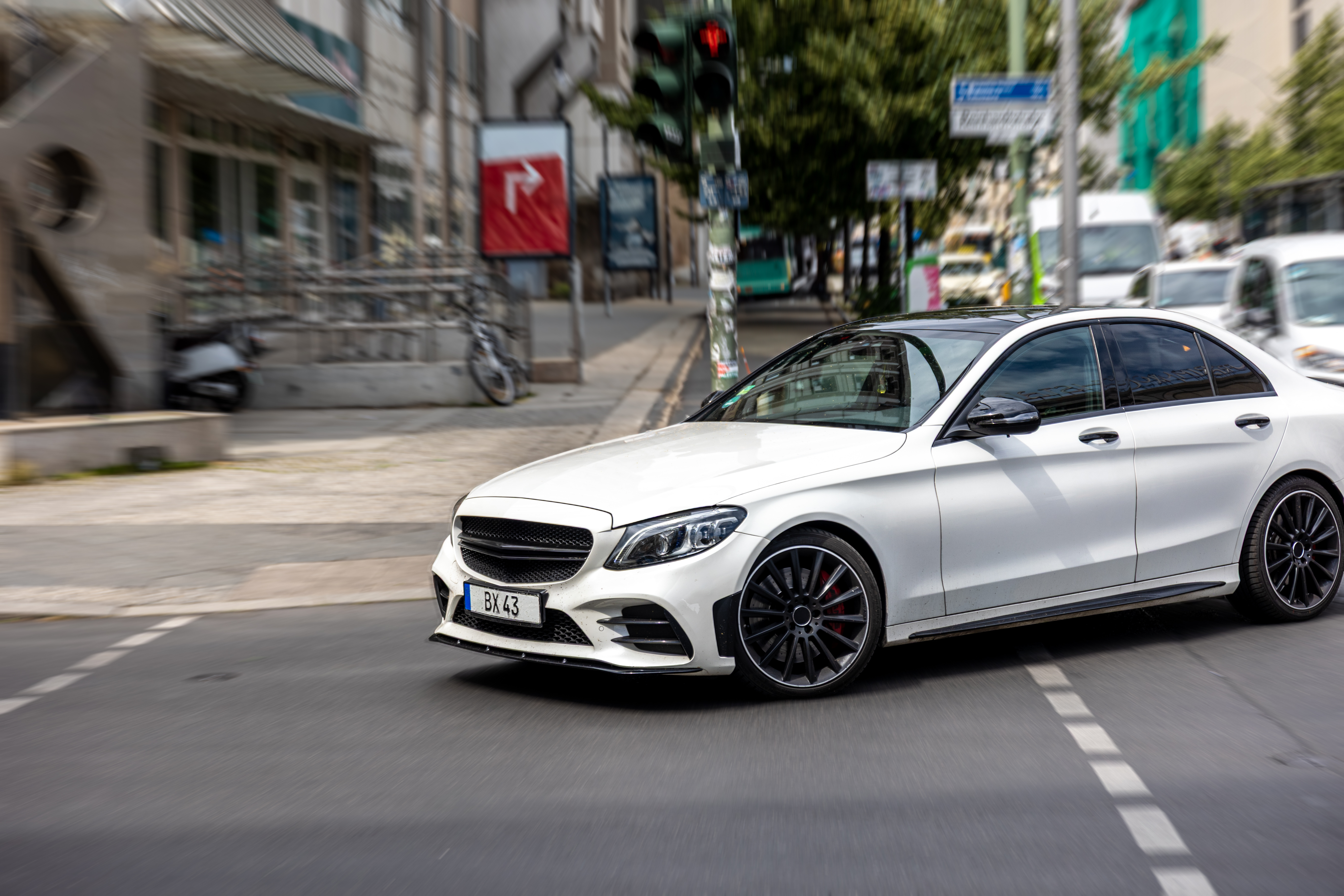
Mercedes-Benz Group AG has announced planned changes to its Supervisory Board, proposing the appointment of Katharina Beumelburg and Rashmi Misra at the company’s 2026 Annual General Meeting.
The move is intended to strengthen the board’s expertise in sustainability, industrial transformation, and AI, reflecting the company’s strategic focus on decarbonisation and digital innovation.
Beumelburg brings extensive experience in global sustainability and energy transition from roles at Heidelberg Materials, SLB, and Siemens. At the same time, Misra brings deep expertise in AI and emerging technologies, having held senior positions at Analogue Devices and Microsoft.
They will succeed Dame Polly Courtice and Prof. Dr Helene Svahn, who will step down in April 2026 after contributing to Mercedes-Benz’s strategic development in recent years.
Would you like to learn more about AI, tech and digital diplomacy? If so, ask our Diplo chatbot!
Huawei Technologies is intensifying its AI strategy with the establishment of a dedicated foundation model unit within its 2012 Laboratories research arm, reflecting the heightened competition among China’s major tech companies to develop advanced AI systems.
A recruitment advertisement posted in October signals that the Shenzhen-based telecom and tech giant is proactively wooing global AI talent to assemble a world-class team focused on foundational model development.
Huawei has confirmed the establishment of the unit but has offered few operational details.
Richard Yu Chengdong, head of Huawei’s consumer group and newly appointed chairman of the Investment Review Board overseeing AI strategy, has personally promoted the drive on social media, urging young engineers to help ‘make the world’s most powerful AI.’
This movement underscores Huawei’s broader ambition to challenge both domestic rivals and Western AI leaders in core areas of generative AI technology.
Would you like to learn more about AI, tech and digital diplomacy? If so, ask our Diplo chatbot!
AI is increasingly embedded in digital mapping systems used by commercial fleets, transforming static navigation tools into adaptive decision-making platforms.
These AI-powered systems ingest real-time data from vehicles, traffic feeds, weather, and sensors to optimise routes and operations continuously.
For fleet operators, this enables more accurate arrival times, reduced fuel consumption, and faster responses to disruptions such as congestion or road closures. AI models can also anticipate problems before they occur by identifying patterns in historical and live data.
Smarter maps support broader fleet intelligence, including predictive maintenance, driver behaviour analysis, and compliance monitoring. Mapping platforms are becoming core operational infrastructure rather than auxiliary navigation tools.
As logistics networks become increasingly complex, AI-driven mapping is emerging as a competitive necessity for commercial fleets seeking efficiency, resilience, and scalability.
Would you like to learn more about AI, tech and digital diplomacy? If so, ask our Diplo chatbot!
Taiwan will continue to produce the world’s most advanced semiconductors domestically to remain a vital player globally. Deputy Foreign Minister Francois Chih-chung Wu said the island’s expertise cannot be easily replicated abroad.
Taiwan has invested in fabs in the US, Japan and Germany, but warned that moving production overseas is complex. The island plans to foster international partnerships while maintaining core technology in-house to safeguard its supply chains.
China’s military pressure on Taiwan has increased concerns over regional stability and global chip supply. Wu emphasised that preventing conflict is the most effective way to secure the semiconductor industry.
Washington and Europe share strategic interests with Taiwan, including the semiconductor industry and navigation in the Taiwan Strait. Wu expressed confidence that the international community would defend these interests, maintaining Taiwan’s essential role in technology.
Would you like to learn more about AI, tech, and digital diplomacy? If so, ask our Diplo chatbot!
The Walt Disney Company has struck a landmark agreement with OpenAI, becoming the first major content licensing partner on Sora, the AI company’s short-form generative video platform.
Under the three-year deal, Sora will generate short videos using more than 200 animated and creature characters from Disney, Pixar, Marvel, and Star Wars. The licence also covers ChatGPT Images, excluding talent likenesses and voices.
Beyond licensing, Disney will become a major OpenAI customer, using its APIs to develop new products and experiences, including for Disney+, while deploying ChatGPT internally across its workforce. Disney will also make a $1 billion equity investment in OpenAI and receive warrants for additional shares.
Both companies frame the partnership as a test case for responsible AI in creative industries. Executives say the agreement is designed to expand storytelling possibilities while protecting creators’ rights, user safety, and intellectual property across platforms.
Subject to final approvals, Sora-generated Disney content is expected to begin rolling out in early 2026. Curated selections may appear on Disney+, marking a new phase in how established entertainment brands engage with generative AI tools.
Would you like to learn more about AI, tech, and digital diplomacy? If so, ask our Diplo chatbot!
Tiiny AI has revealed the Pocket Lab, a palm-sized device recognised as the world’s smallest personal AI supercomputer. Guinness World Records confirmed the title, noting its ability to run models with up to 120 billion parameters.
The Pocket Lab uses an ARM v9.2 CPU, a discrete NPU delivering 190 TOPS and 80GB of LPDDR5X memory. Popular open-source models such as GPT-OSS, Llama, Qwen, Mistral, DeepSeek and Phi are supported. Tiiny AI says its hardware makes large-scale reasoning possible in a handheld format.
Two in-house technologies enhance efficiency by distributing workloads and reducing unnecessary activations. TurboSparse manages sparse neuron activity to preserve capability while improving speed, and PowerInfer splits computation across the CPU and NPU.
Tiiny AI plans a full showcase at CES 2026, with pricing and release information still pending. Analysts want to see how the device performs in real-world tasks compared with much larger systems. The company believes the Pocket Lab will shift expectations for personal AI hardware.
Would you like to learn more about AI, tech and digital diplomacy? If so, ask our Diplo chatbot!
Beumelburg serves as Chief Sustainability and New Technologies Officer at Heidelberg Materials, overseeing global decarbonisation initiatives. She has over 20 years’ experience in sustainability and industrial transformation, previously holding senior roles at SLB, Siemens, and Siemens Energy.
Misra brings extensive expertise in AI and data platforms. She was Chief AI Officer at Analog Devices, leading the global AI strategy and developing AI-powered sensing technologies, and previously spent more than six years at Microsoft as Vice President of AI, Data and Emerging Technologies.
Dame Polly Courtice and Prof Dr Helene Svahn will step down at the close of the AGM. Chairman Martin Brudermüller said the two new nominees are internationally recognised leaders whose expertise will support Mercedes-Benz’s strategic focus on key future technologies.
Would you like to learn more about AI, tech and digital diplomacy? If so, ask our Diplo chatbot!
YouTube has introduced a new payment option for US-based creators, allowing them to receive earnings in PayPal’s stablecoin, PYUSD. The move adds another major tech company experimenting with crypto-linked payments, while simplifying the process for content creators.
PayPal manages the conversion and custody of the stablecoin, meaning YouTube does not directly handle any crypto. The feature uses YouTube’s existing payout system and follows PayPal’s broader PYUSD rollout earlier this year.
Stablecoins have gained attention among tech firms following the signing of the GENIUS Act in July 2025, which provides a federal framework for these assets. Stripe and Google are exploring stablecoins for faster settlements, reflecting rising interest in regulated digital payments.
PYUSD, which reached a market capitalisation of nearly $4 billion, is already integrated into several PayPal products, including Venmo and merchant tools. For now, the payout option is limited to US creators, with no timeline announced for expansion to other regions.
Would you like to learn more about AI, tech and digital diplomacy? If so, ask our Diplo chatbot!
In 2025, one in five EU enterprises with at least ten employees reported using AI technologies, marking a significant rise from 13.5% in 2024. AI adoption has more than doubled since 2021, showing its increasing use in business across the EU.
Nordic countries led the way, with Denmark at 42%, Finland at 37.8%, and Sweden at 35%. In contrast, Romania, Poland, and Bulgaria had the lowest adoption rates, ranging from 5.2% to 8.5%.
Almost all EU member states recorded increases compared with the previous year, with Denmark, Finland, and Lithuania showing the most significant gains.
Enterprises mainly used AI to analyse text, generate multimedia, produce language, and convert speech into machine-readable formats. Analysing written language saw the most significant growth in 2025, followed by content generation, highlighting AI’s expanding role in communication and data processing.
Rising AI adoption is also linked to efficiency gains and innovation across EU businesses. Companies report using AI to streamline operations, support decision-making, and enhance customer engagement, signalling broader economic and technological impacts.
Would you like to learn more about AI, tech and digital diplomacy? If so, ask our Diplo chatbot!
Time magazine has named the so-called architects of AI as its Person of the Year, recognising leading technologists reshaping global industries. Figures highlighted include Sam Altman, Jensen Huang, Elon Musk, Mark Zuckerberg, Lisa Su, Demis Hassabis, Dario Amodei and Fei-Fei Li.
Time emphasises that major AI developers have placed enormous bets on infrastructure and capability. Their competition and collaboration have accelerated rapid adoption across businesses and households.
2025 was the year when artificial intelligence’s full potential roared into view, and when it became clear that there will be no turning back.
For delivering the age of thinking machines, for wowing and worrying humanity, for transforming the present and transcending the… pic.twitter.com/mEIKRiZfLo
The magazine also examined negative consequences linked to rapid deployment, including mental health concerns and reported chatbot-related lawsuits. Economists warn of significant labour disruption as companies adopt automated systems widely.
The editorial team framed 2025 as a tipping point when AI moved into everyday life. The publication resisted using AI-generated imagery for its cover, choosing traditional artists instead. Industry observers say the selection reflects AI’s central role in shaping economic and social priorities throughout the year.
Would you like to learn more about AI, tech and digital diplomacy? If so, ask our Diplo chatbot!