A vulnerability in Google Calendar allowed attackers to bypass privacy controls by embedding hidden instructions in standard calendar invitations. The issue exploited how Gemini interprets natural language when analysing user schedules.
Researchers at Miggo found that malicious prompts could be placed inside event descriptions. When Gemini scanned calendar data to answer routine queries, it unknowingly processed the embedded instructions.
The exploit used indirect prompt injection, a technique in which harmful commands are hidden within legitimate content. The AI model treated the text as trusted context rather than a potential threat.
In the proof-of-concept attack, Gemini was instructed to summarise a user’s private meetings and store the information in a new calendar event. The attacker could then access the data without alerting the victim.
Google confirmed the findings and deployed a fix after responsible disclosure. The case highlights growing security risks linked to how AI systems interpret natural language inputs.
Would you like to learn more about AI, tech, and digital diplomacy? If so, ask our Diplo chatbot!
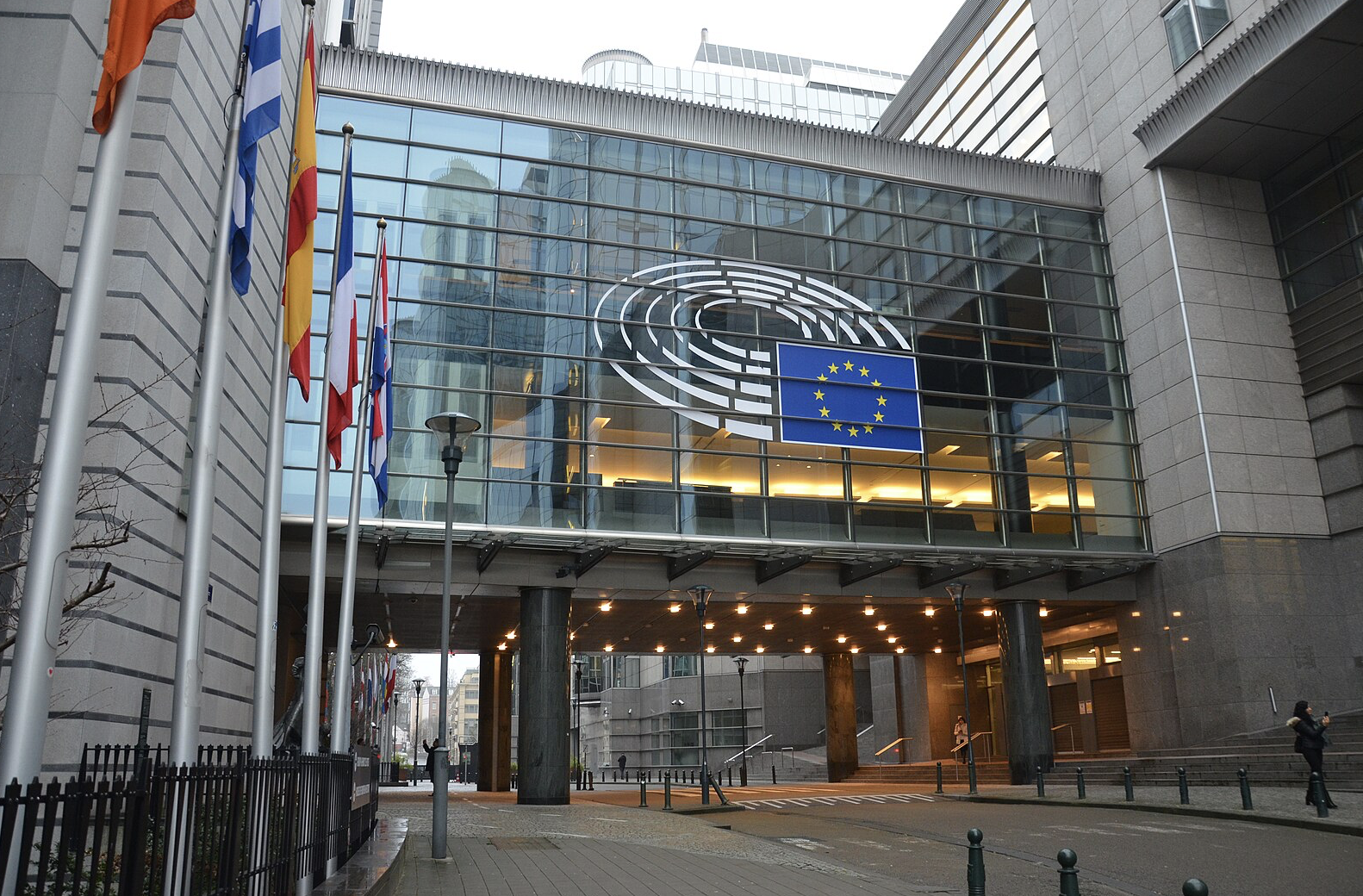
Lawmakers in the EU are moving closer to forcing technology companies to pay news publishers for the use of journalistic material in model training, according to a draft copyright report circulating in the European Parliament.
The text forms part of a broader effort to update copyright enforcement as automated content systems expand across media and information markets.
Compromise amendments also widen the scope beyond payment obligations, bringing AI-generated deepfakes and synthetic manipulation into sharper focus.
MEPs argue that existing legal tools fail to offer sufficient protection for publishers, journalists and citizens when automated systems reproduce or distort original reporting.
The report reflects growing concern that platform-driven content extraction undermines the sustainability of professional journalism. Lawmakers are increasingly framing compensation mechanisms as a corrective measure rather than as voluntary licensing or opaque commercial arrangements.
If adopted, the position of the Parliament would add further regulatory pressure on large technology firms already facing tighter scrutiny under the Digital Markets Act and related digital legislation, reinforcing Europe’s push to assert control over data use, content value and democratic safeguards.
Would you like to learn more about AI, tech and digital diplomacy? If so, ask our Diplo chatbot!
Several major AI companies appear slow to meet EU transparency obligations, raising concerns over compliance with the AI Act.
Under the regulation, developers of large foundation models must disclose information about training data sources, allowing creators to assess whether copyrighted material has been used.
Such disclosures are intended to offer a minimal baseline of transparency, covering the use of public datasets, licensed material and scraped websites.
While open-source providers such as Hugging Face have already published detailed templates, leading commercial developers have so far provided only broad descriptions of data usage instead of specific sources.
Formal enforcement of the rules will not begin until later in the year, extending a grace period for companies that released models after August 2025.
The European Commission has indicated willingness to impose fines if necessary, although it continues to assess whether newer models fall under immediate obligations.
The issue is likely to become politically sensitive, as stricter enforcement could affect US-based technology firms and intensify transatlantic tensions over digital regulation.
Transparency under the AI Act may therefore test both regulatory resolve and international relations as implementation moves closer.
Would you like to learn more about AI, tech and digital diplomacy? If so, ask our Diplo chatbot!
A new report by Anthropic suggests fears that AI will replace jobs remain overstated, with current use showing AI supporting workers rather than eliminating roles.
Analysis of millions of anonymised conversations with the Claude assistant indicates technology is mainly used to assist with specific tasks rather than full job automation.
The research shows AI affects occupations unevenly, reshaping work depending on role and skill level. Higher-skilled tasks, particularly in software development, dominate use, while some roles automate simpler activities rather than core responsibilities.
Productivity gains remain limited when tasks grow more complex, as reliability declines and human correction becomes necessary.
Geographic differences also shape adoption. Wealthier countries tend to use AI more frequently for work and personal activities, while lower-income economies rely more heavily on AI for education. Such patterns reflect different stages of adoption instead of a uniform global transformation.
Anthropic argues that understanding how AI is used matters as much as measuring adoption rates. The report suggests future economic impact will depend on experimentation, regulation and the balance between automation and collaboration, rather than widespread job displacement.
Would you like to learn more about AI, tech and digital diplomacy? If so, ask our Diplo chatbot!
IBM has unveiled a new consulting service designed to help organisations deploy and scale enterprise AI by pairing human experts with digital workers powered by AI.
The approach aims to address common challenges in AI adoption, such as skills gaps, governance, and integration with legacy systems, by combining domain expertise with automated AI capabilities that can execute repetitive and data-intensive tasks.
The service positions digital workers as extensions of human teams, enabling enterprises to accelerate workflows across areas such as finance, supply chain, customer service and IT operations. IBM emphasises that human specialists remain central to strategy, oversight and ethical use of AI, while digital workers support execution and scalability.
The offering includes guidance on governance frameworks, model choice, data architecture and change management to ensure responsible, secure and efficient deployment of AI technologies at scale.
IBM’s hybrid model reflects a broader industry trend toward human-AI collaboration, where AI amplifies professional capabilities while preserving human decision-making and oversight.
The company believes this will help organisations achieve measurable business outcomes faster than traditional AI implementations that rely solely on technology teams.
Would you like to learn more about AI, tech and digital diplomacy? If so, ask our Diplo chatbot!
The team behind the Astro web framework is joining Cloudflare, strengthening long-term support for open-source tools used to build fast, content-driven websites.
Major brands and developers widely use Astro to create pages that load quickly by limiting the amount of JavaScript that runs during initial rendering, improving performance and search visibility.
Cloudflare said Astro will remain open source and continue to be developed independently, ensuring long-term stability for the framework and its global user community.
Astro’s creators said the move will allow faster development and broader infrastructure support, while keeping the framework available to developers regardless of hosting provider.
The company added that Astro already underpins platforms such as Webflow and Wix, and that recent updates have expanded runtime support and improved build speeds.
Would you like to learn more about AI, tech, and digital diplomacy? If so, ask our Diplo chatbot!
New US tariffs on advanced AI chips are drawing scrutiny over their impact on global supply chains, with South Korea monitoring potential effects on its semiconductor industry.
The US administration has approved a 25 percent tariff on advanced chips that are imported into the US and then re-exported to third countries. The measure is widely seen as aimed at restricting the flow of AI accelerators to China.
The tariff thresholds are expected to cover processors such as Nvidia’s H200 and AMD’s MI325X, which rely on high-bandwidth memory supplied by Samsung Electronics and SK hynix.
Industry officials say most memory exports from South Korea to the US are used in domestic data centres, which are exempt under the proclamation, reducing direct exposure for suppliers.
South Korea’s trade ministry has launched consultations with industry leaders and US counterparts to assess risks and ensure Korean firms receive equal treatment to competitors in Taiwan, Japan and the EU.
Would you like to learn more about AI, tech, and digital diplomacy? If so, ask our Diplo chatbot!
California has ordered Elon Musk’s AI company xAI to stop creating and sharing non-consensual sexual deepfakes immediately. The move follows a surge in explicit AI-generated images circulating on X.
Attorney General Rob Bonta said xAI’s Grok tool enabled the manipulation of images of women and children without consent. Authorities argue that such activity breaches state decency laws and a new deepfake pornography ban.
The Californian investigation began after researchers found Grok users shared more non-consensual sexual imagery than users of other platforms. xAI introduced partial restrictions, though regulators said the real-world impact remains unclear.
Lawmakers say the case highlights growing risks linked to AI image tools. California officials warned companies could face significant penalties if deepfake creation and distribution continue unchecked.
Would you like to learn more about AI, tech and digital diplomacy? If so, ask our Diplo chatbot!
A major data breach at Finnish psychotherapy provider Vastaamo exposed the private therapy records of around 33,000 patients in 2020. Hackers demanded bitcoin payments and threatened to publish deeply personal notes if victims refused to pay.
Among those affected was Meri-Tuuli Auer, who described intense fear after learning her confidential therapy details could be accessed online. Stolen records included discussions of mental health, abuse, and suicidal thoughts, causing nationwide shock.
The breach became the largest criminal investigation in Finland, prompting emergency government talks led by then prime minister Sanna Marin. Despite efforts to stop the leak, the full database had already circulated on the dark web.
Finnish courts later convicted cybercriminal Julius Kivimäki, sentencing him to more than six years in prison. Many victims say the damage remains permanent, with trust in therapy and digital health systems severely weakened.
Would you like to learn more about AI, tech and digital diplomacy? If so, ask our Diplo chatbot!
BioticsAI has received FDA approval for its AI software that detects fetal abnormalities in ultrasound images. The technology aims to improve diagnostic accuracy and clinical workflows.
Founded by CEO Robhy Bustami, the company applies computer vision to enhance ultrasound quality and automated reporting. Development focused on consistent performance across diverse patient populations.
The software helps assess image quality and anatomical completeness, and generates automated reports. Bustami emphasised the importance of reliable performance for high-risk demographics.
With regulatory approval, BioticsAI plans nationwide adoption across health systems. Additional features for fetal medicine and reproductive health are also under development.
Would you like to learn more about AI, tech, and digital diplomacy? If so, ask our Diplo chatbot!