Horizon1000 aims to bring powerful AI healthcare tools to Africa

The Gates Foundation and OpenAI have launched a joint healthcare initiative, Horizon1000, to expand the use of AI across primary care systems in Sub-Saharan Africa. The partnership includes a $50 million commitment in funding, technology, and technical support to equip 1,000 clinics with AI tools by 2028.

Horizon1000’s Operations will begin in Rwanda, where local authorities will work with the two organisations to deploy AI systems in frontline healthcare settings. The initiative reflects the Foundation’s long-standing aim to ensure that new technologies reach lower-income regions without long delays.

Bill Gates said the project responds to a critical shortage of healthcare workers, which threatens to undermine decades of progress in global health. Sub-Saharan Africa currently faces a shortfall of nearly six million medical professionals, limiting the capacity of overstretched clinics to deliver consistent care.

Low-quality healthcare contributes to between six and eight million deaths annually in low- and middle-income countries, according to the World Health Organization. Rwanda, the first pilot country, has only one healthcare worker per 1,000 people, far below the WHO’s recommended level.

AI tools under Horizon1000 are intended to support, rather than replace, health workers by assisting with clinical guidance, administration, and patient interactions. The Gates Foundation said it will continue working with regional governments and innovators to scale the programme.

Would you like to learn more about AI, tech, and digital diplomacy? If so, ask our Diplo chatbot!

EU alternative app store Setapp Mobile closes

European users will soon lose access to Setapp Mobile, an alternative app store created under the EU Digital Markets Act. The service will shut down on 16 February 2026.

MacPaw, a Ukrainian software developer known for Mac productivity tools, launched Setapp as a subscription-based app platform. Its mobile store debuted in 2024 to challenge Apple’s App Store in the EU.

Ongoing uncertainty around Apple’s EU fee structure weakened the business case. The Core Technology Fee and frequent commercial changes made planning and sustainable monetisation difficult.

Setapp’s desktop service will continue operating, while the mobile store is discontinued. Other alternative app stores remain available in the EU, including Epic Games Store and the open source AltStore.

Would you like to learn more about AI, tech, and digital diplomacy? If so, ask our Diplo chatbot!

ChatGPT achieves perfect scores in Japan university exams

ChatGPT earned full marks in nine subjects during this year’s unified university entrance examinations in Japan. LifePrompt Inc reported that the AI achieved 97 percent accuracy across 15 subjects overall.

The subjects with perfect scores included mathematics, chemistry, informatics, and politics and economy. Performance was lower in Japanese language, where ChatGPT scored 90 percent, reflecting challenges with processing complex text.

Tests were conducted without access to the internet, with the AI relying solely on pre-stored data. Results show that ChatGPT has steadily improved since 2024, outperforming scores required for competitive programmes such as Human Sciences I at the University of Tokyo.

Would you like to learn more about AI, tech, and digital diplomacy? If so, ask our Diplo chatbot!

WhatsApp faces growing pressure in Russia

Authorities in Russia are increasing pressure on WhatsApp, one of the country’s most widely used messaging platforms. The service remains popular despite years of tightening digital censorship.

Officials argue that WhatsApp refuses to comply with national laws on data storage and cooperation with law enforcement. Meta has no legal presence in Russia and continues to reject requests for user information.

State backed alternatives such as the national messenger Max are being promoted through institutional pressure. Critics warn that restricting WhatsApp targets private communication rather than crime or security threats.

Would you like to learn more about AI, tech, and digital diplomacy? If so, ask our Diplo chatbot!
Davos hears Fink warn AI could deepen inequality

BlackRock CEO Larry Fink used his Davos speech to put AI at the centre of a broader warning. In the AI era, trust may become the world’s ‘hardest currency.’

Speaking at the World Economic Forum, he argued that new technologies will only strengthen societies if people believe the benefits are real, fairly shared, and not decided solely by a small circle of insiders.

Fink said AI is already showing a familiar pattern. The earliest gains are flowing mainly to those who control the models, data, and infrastructure. He cautioned that without deliberate choices, AI could deepen inequality in advanced economies, echoing the fact that decades of wealth creation after the fall of the Berlin Wall still ended up concentrating prosperity among a narrower share of people than a ‘healthy society’ can sustain.

He also raised a specific fear for the workforce, asking whether AI will do to white-collar jobs what globalisation did to blue-collar work: automate, outsource, and reshape employment faster than institutions can protect workers and communities. That risk, he said, is why leaders need to move beyond slogans and produce a credible plan for broad participation in the gains AI can deliver.

The stakes, Fink argued, go beyond economic statistics. Prosperity should not be judged only by GDP or soaring market values, he said, but by whether people can ‘see it, touch it, and build a future on it’, a test that becomes more urgent as AI changes how value is created and who captures it.

Fink tied the AI debate to the legitimacy crisis facing Davos itself, acknowledging that elite institutions are widely distrusted and that many people most affected by these decisions will never enter the conference. If the WEF wants to shape the next phase of the AI transition, he said, it must rebuild trust by listening outside the usual circles and engaging with communities where the modern economy is actually built.

He also urged a different style of conversation about AI, less staged agreement and more serious disagreement, aimed at understanding. In that spirit, he called for the forum to take its discussions beyond Davos, to places such as Detroit, Dublin, Jakarta and Buenos Aires, arguing that only real dialogue, grounded in lived economic realities, can give AI governance and AI-driven growth the legitimacy to last.

Diplo is live reporting on all sessions from the World Economic Forum 2026 in Davos.

Would you like to learn more about AI, tech and digital diplomacyIf so, ask our Diplo chatbot!

Davos 2026 reveals competing visions for AI

AI has dominated debates at Davos 2026, matching traditional concerns such as geopolitics and global trade while prompting deeper reflection on how the technology is reshaping work, governance, and society.

Political leaders, executives, and researchers agreed that AI development has moved beyond experimentation towards widespread implementation.

Microsoft chief executive Satya Nadella argued that AI should deliver tangible benefits for communities and economies, while warning that adoption will remain uneven due to disparities in infrastructure and investment.

Access to energy networks, telecommunications, and capital was identified as a decisive factor in determining which regions can fully deploy advanced systems.

Other voices at Davos 2026 struck a more cautious tone. AI researcher Yoshua Bengio warned against designing systems that appear too human-like, stressing that people may overestimate machine understanding.

Philosopher Yuval Noah Harari echoed those concerns, arguing that societies lack experience in managing human and AI coexistence and should prepare mechanisms to correct failures.

The debate also centred on labour and global competition.

Anthropic’s Dario Amodei highlighted geopolitical risks and predicted disruption to entry-level white-collar jobs. At the same time, Google DeepMind chief Demis Hassabis forecast new forms of employment alongside calls for shared international safety standards.

Together, the discussions underscored growing recognition that AI governance will shape economic and social outcomes for years ahead.

Diplo is live reporting on all sessions from the World Economic Forum 2026 in Davos.

Would you like to learn more about AI, tech and digital diplomacy? If so, ask our Diplo chatbot!

OpenAI models embedded into ServiceNow for enterprise automation

ServiceNow has announced a multi-year agreement positioning OpenAI as a preferred intelligence capability across its enterprise platform, extending access to frontier AI models for organisations running tens of billions of workflows each year.

The partnership reflects a broader shift towards operational AI embedded directly within business systems instead of experimental deployments.

By integrating OpenAI models such as GPT-5.2 into the ServiceNow AI Platform, enterprises can embed reasoning and automation into secure workflows spanning IT, finance, human resources, and customer operations.

AI tools are designed to analyse context, recommend actions, and execute tasks within existing governance frameworks instead of functioning as standalone assistants.

Executives from both companies emphasised that the collaboration aims to deliver measurable outcomes at scale.

ServiceNow highlighted its role in coordinating complex enterprise environments, while OpenAI stressed the importance of deploying agentic AI capable of handling work end to end within permissioned infrastructures.

Looking ahead, the partnership plans to expand towards multimodal and voice-based interactions, enabling employees to communicate with AI systems through speech, text, and visual inputs.

The initiative strengthens OpenAI’s enterprise footprint while reinforcing ServiceNow’s ambition to act as a central control layer for AI-driven business operations.

Would you like to learn more about AI, tech and digital diplomacy? If so, ask our Diplo chatbot!

Workers voice concern over AI-driven workplace change

Four in five workers believe AI will affect their daily tasks, as companies expand the use of AI chatbots and automation tools in the workplace, according to a new Randstad survey.

Demand for roles requiring ‘AI agent‘ skills has risen by 1,587%, reflecting a shift towards automation in low-complexity and transactional jobs, the recruitment firm said in its annual Workmonitor report.

Randstad surveyed 27,000 workers and 1,225 employers, analysing more than three million job postings across 35 global markets to assess how AI is reshaping labour demand.

Corporate cost-cutting pressures, weakened consumer confidence, and geopolitical uncertainty linked to US trade policies are accelerating workforce restructuring across multiple industries.

Gen Z workers expressed the highest level of concern about AI’s impact, while Baby Boomers reported greater confidence in their ability to adapt, as nearly half of employees said the technology may benefit companies more than workers.

Would you like to learn more about AI, tech, and digital diplomacy? If so, ask our Diplo chatbot!
New EU cybersecurity package strengthens resilience and ENISA powers

The European Commission has unveiled a broad cybersecurity package that moves the EU beyond certification reform towards systemic resilience across critical digital infrastructure.

Building on plans to expand EU cybersecurity certification beyond products and services, the revised Cybersecurity Act introduces a risk-based framework for securing ICT supply chains, with particular focus on dependencies, foreign interference, and high-risk third-country suppliers.

A central shift concerns supply-chain security as a geopolitical issue. The proposal enables mandatory derisking of mobile telecommunications networks, reinforcing earlier efforts under the 5G security toolbox.

Certification reform continues through a redesigned European Cybersecurity Certification Framework, promising clearer governance, faster scheme development, and voluntary certification that can cover organisational cyber posture alongside technical compliance.

The package also tackles regulatory complexity. Targeted amendments to the NIS2 Directive aim to ease compliance for tens of thousands of companies by clarifying jurisdictional rules, introducing a new ‘small mid-cap’ category, and streamlining incident reporting through a single EU entry point.

Enhanced ransomware data collection and cross-border supervision are intended to reduce fragmentation while strengthening enforcement consistency.

ENISA’s role is further expanded from coordination towards operational support. The agency would issue early threat alerts, assist in ransomware recovery with national authorities and Europol, and develop EU-wide vulnerability management and skills attestation schemes.

Together, the measures signal a shift from fragmented safeguards towards a more integrated model of European cyber sovereignty.

Would you like to learn more about AI, tech and digital diplomacy? If so, ask our Diplo chatbot!
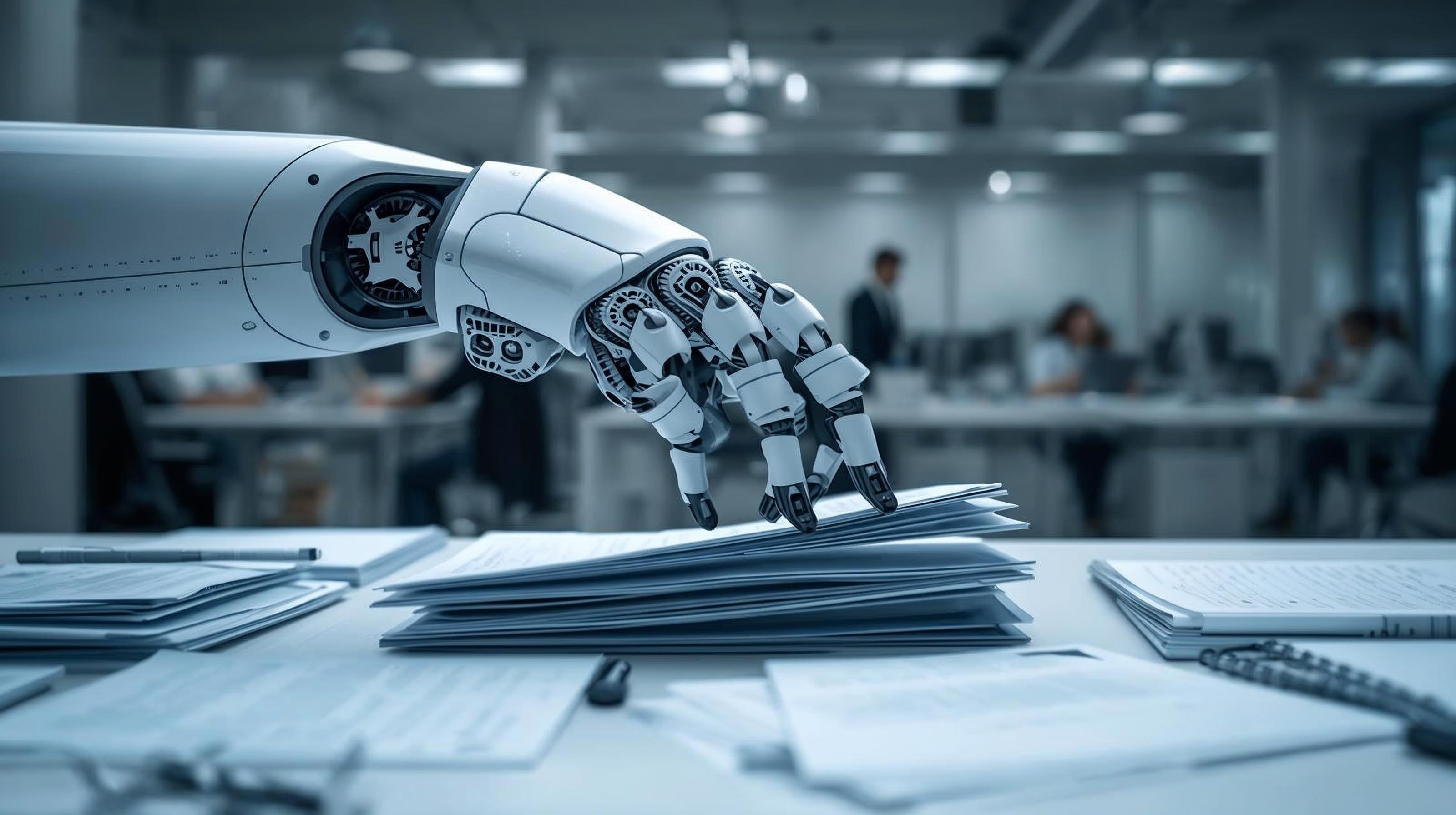
Cisco and OpenAI push AI-native software development

Cisco has deepened its collaboration with OpenAI to embed agentic AI into enterprise software engineering. The approach reflects a broader shift towards treating AI as operational infrastructure rather than an experimental tool.

Integrating Codex into production workflows exposed it to complex, multi-repository, and security-critical environments. Codex operated across interconnected codebases, running autonomous build and testing loops within existing compliance and governance frameworks.

Operational use delivered measurable results. Engineering teams reported faster builds, higher defect-resolution throughput, and quicker framework migrations, cutting work from weeks to days.

Real-world deployment shaped Codex’s enterprise roadmap, especially around compliance, long-running tasks, and pipeline integration. The collaboration will continue as both organisations pursue AI-native engineering at scale, including within Cisco’s Splunk teams.

Would you like to learn more about AI, tech and digital diplomacy? If so, ask our Diplo chatbot