European policymakers are sharpening their focus on digital sovereignty as concerns grow over the continent’s reliance on foreign technology providers. Control over key digital infrastructure and technologies is seen as vital to protecting Europe’s economic resilience.
At a fintech regulatory conference in Brussels, European Financial Services Commissioner Maria Luís Albuquerque stressed the need to retain control over core economic technologies. She warned that rising global isolationism is heightening the risks linked to external dependencies.
The comments reflected unease about Europe’s reliance on non-European tech companies, particularly those based in the United States. Such dependence, officials argue, could weaken Europe’s ability to protect its digital infrastructure and shape its own economic future.
Calls for greater digital autonomy are gaining momentum as the EU seeks to balance innovation with security. Policymakers see technological control as key to long-term stability, competitiveness, and strategic independence.
Would you like to learn more about AI, tech and digital diplomacy? If so, ask our Diplo chatbot!
Snapchat has blocked more than 415,000 Australian accounts after the national ban on under-16s began, marking a rapid escalation in the country’s effort to restrict children’s access to major platforms.
The company relied on a mix of self-reported ages and age-detection technologies to identify users who appeared to be under 16.
The platform warned that age verification still faces serious shortcomings, leaving room for teenagers to bypass safeguards rather than supporting reliable compliance.
Facial estimation tools remain accurate only within a narrow range, meaning some young people may slip through while older users risk losing access. Snapchat also noted the likelihood that teenagers will shift towards less regulated messaging apps.
The eSafety commissioner has focused regulatory pressure on the 10 largest platforms, although all services with Australian users are expected to assess whether they fall under the new requirements.
Officials have acknowledged that the technology needs improvement and that reliability issues, such as the absence of a liveness check, contributed to false results.
Institutions in the EU have begun designing a new framework to help European armies share defence information securely, rather than relying on US technology.
A plan centred on creating a military-grade data platform, the European Defence Artificial Intelligence Data Space, is intended to support sensitive exchanges among defence authorities.
Ultimately, the approach aims to replace the current patchwork of foreign infrastructure that many member states rely on to store and transfer national security data.
The European Defence Agency is leading the effort and expects the platform to be fully operational by 2030. The concept includes two complementary elements: a sovereign military cloud for data storage and a federated system that allows countries to exchange information on a trusted basis.
Officials argue that this will improve interoperability, speed up joint decision-making, and enhance operational readiness across the bloc.
A project that aligns with broader concerns about strategic autonomy, as EU leaders increasingly question long-standing dependencies on American providers.
Several European companies have been contracted to develop the early technical foundations. The next step is persuading governments to coordinate future purchases so their systems remain compatible with the emerging framework.
Planning documents suggest that by 2029, member states should begin integrating the data space into routine military operations, including training missions and coordinated exercises. EU authorities maintain that stronger control of defence data will be essential as military AI expands across European forces.
Would you like to learn more about AI, tech and digital diplomacy? If so, ask our Diplo chatbot!
Hamad Bin Khalifa University has unveiled the UNESCO Chair on Digital Technologies and Human Behaviour to strengthen global understanding of how emerging tools shape society.
An initiative, located in the College of Science and Engineering in Qatar, that will examine the relationship between digital adoption and human behaviour, focusing on digital well-being, ethical design and healthier online environments.
The Chair is set to address issues such as internet addiction, cyberbullying and misinformation through research and policy-oriented work.
By promoting dialogue among international organisations, governments and academic institutions, the programme aims to support the more responsible development of digital technologies rather than approaches that overlook societal impact.
HBKU’s long-standing emphasis on ethical innovation formed the foundation for the new initiative. The launch event brought together experts from several disciplines to discuss behavioural change driven by AI, mobile computing and social media.
An expert panel considered how GenAI can improve daily life while also increasing dependency, encouraging users to shift towards a more intentional and balanced relationship with AI systems.
UNESCO underlined the importance of linking scientific research with practical policymaking to guide institutions and communities.
The Chair is expected to strengthen cooperation across sectors and support progress on global development goals by ensuring digital transformation remains aligned with human dignity, social cohesion and inclusive growth.
Would you like to learn more about AI, tech and digital diplomacy? If so, ask our Diplo chatbot!
Toronto’s notoriously congested traffic, among the worst in North America, with drivers spending an average of about 100 hours in traffic annually, continues to frustrate commuters.
Experts and city officials are now considering artificial intelligence-driven traffic signal optimisation as a key tool to improve traffic flows by dynamically adjusting signal timing across the city’s roughly 2,500 intersections.
AI systems could analyse real-time traffic patterns faster and more efficiently than manual control, helping reduce idle time, clear bottlenecks and support transit modes like the Finch West LRT by prioritising movement where needed.
While details of Toronto’s broader congestion management plan are still being finalised, this high-tech approach is being positioned as one of the most promising ways to address chronic gridlock and improve overall mobility.
Would you like to learn more about AI, tech and digital diplomacy? If so, ask our Diplo chatbot!
Bitcoin traded sideways on Tuesday after a short-lived rebound from a 10-month low, as caution continued to dominate derivatives markets. Early Asian trading saw limited movement, with prices hovering below $78,500 following a sharp sell-off the previous day.
Options positioning suggests nerves have yet to ease fully. Data from Deribit showed heavy put option concentrations around $75,000, marking a key support level, while the next downside area is seen closer to $70,000.
Although downside protection demand has softened, positioning indicates traders remain defensive.
Signals from perpetual futures markets reinforced the cautious tone. According to CryptoQuant, funding rates turned negative, their weakest since mid-2024, pointing to a market dominated by short sellers.
Implied volatility stayed elevated near 48.8, based on data from TradingView.
Some traders highlighted early signs of stabilisation after aggressive selling. Analysts at FalconX and STS Digital noted that a weekly close below $75,000 could reignite downside pressure, while holding above that level may support a near-term recovery.
Would you like to learn more about AI, tech and digital diplomacy? If so, ask our Diplo chatbot!
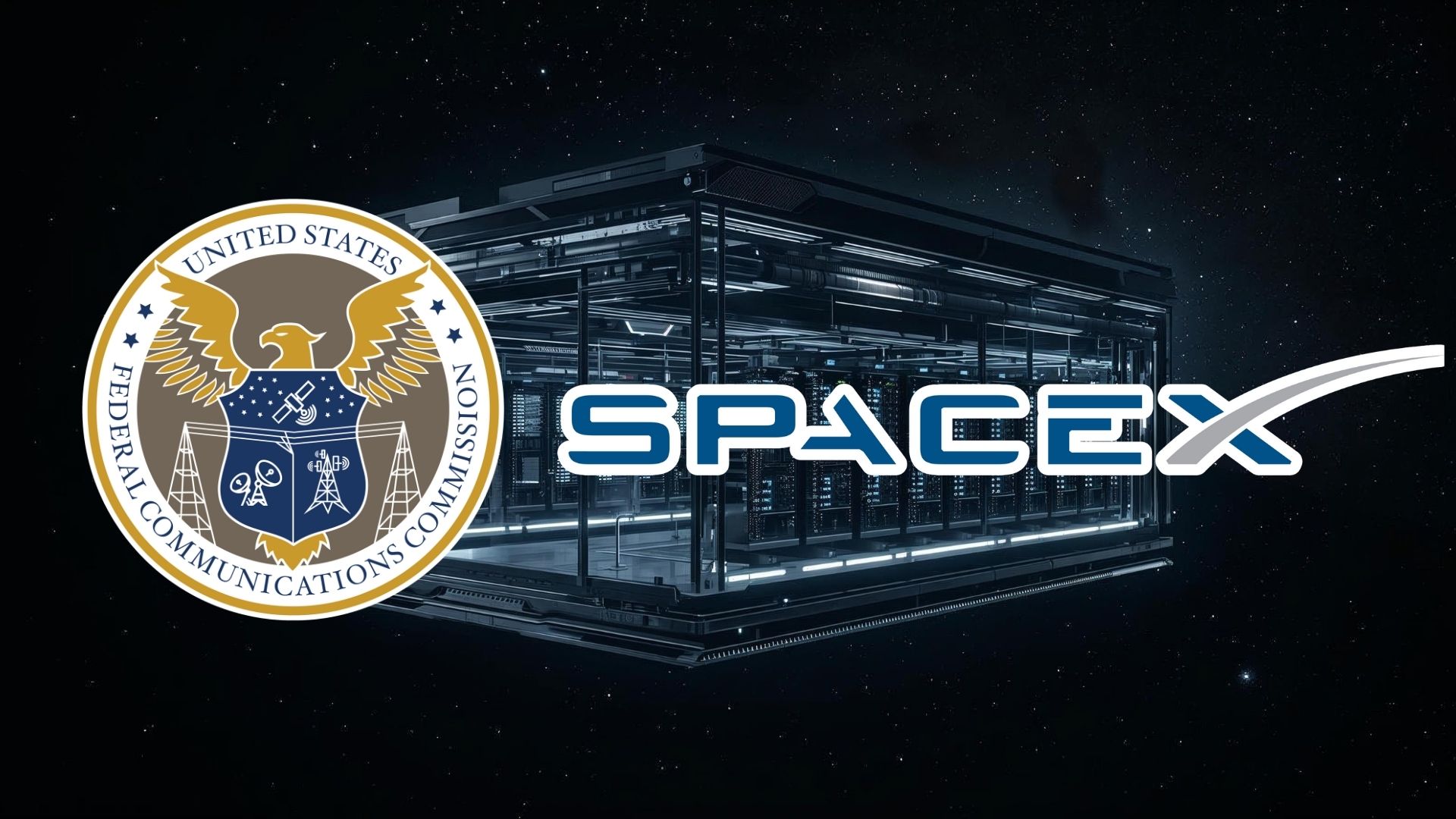
A proposal filed with the US Federal Communications Commission seeks approval for a constellation of up to one million solar-powered satellites designed to function as orbiting data centres for artificial intelligence computing, according to documents submitted by SpaceX.
The company described the network as an efficient response to growing global demand for AI processing power, positioning space-based infrastructure as a new frontier for large-scale computation.
In its filing, SpaceX framed the project in broader civilisational terms, suggesting the constellation could support humanity’s transition towards harnessing the Sun’s full energy output and enable long-term multi-planetary development.
Regulators are unlikely to approve the full scale immediately, with analysts viewing the figure as a negotiating position. The USFCC recently authorised thousands of additional Starlink satellites while delaying approval for a larger proposed expansion.
Concerns continue to grow over orbital congestion, space debris, and environmental impacts, as satellite numbers rise sharply and rival companies seek similar regulatory extensions.
Would you like to learn more about AI, tech, and digital diplomacy? If so, ask our Diplo chatbot!
Bison Bank plans to integrate Bison Digital Assets into its core operations, moving closer to becoming Portugal’s first cryptobank. The investment bank plans to support client-led asset tokenisation projects, signalling a wider move into regulated digital finance.
The strategy is backed by the EU’s MiCA framework, which provides legal clarity and regulatory certainty for cryptoasset firms. Regulatory approval under MiCA allows the bank to operate in Portugal while dealing in and investing in cryptoassets on behalf of clients.
Alongside the structural integration, the bank outlined three initiatives: issuing the first stablecoin by a Portuguese bank, advancing tokenised asset offerings, and completing its transition into a cryptobank.
Tokenisation is designed to enable fractional ownership, continuous trading, improved liquidity, and transparent settlement for assets ranging from real estate to bonds.
Although no official launch date has been confirmed, chief executive António Henriques indicated that the new services are expected to become available in the first half of the year, subject to final regulatory and operational steps.
Would you like to learn more about AI, tech and digital diplomacy? If so, ask our Diplo chatbot!
The UK and Bulgaria are expanding cooperation on semiconductor technology to strengthen supply chains and support Europe’s growing need for advanced materials.
A partnership that links British expertise with the ambitions of Bulgaria under the EU Chips Act 2023, creating opportunities for investment, innovation and skills development.
The Science and Technology Network has acted as a bridge between both countries by bringing together government, industry and academia. A high-level roundtable in Sofia, a study visit to Scotland and a trade mission to Bulgaria encouraged firms and institutions to explore new partnerships.
These exchanges helped shape joint projects and paved the way for shared training programmes.
Several concrete outcomes have followed. A €350 million Green Silicon Carbide wafer factory is moving ahead, supported by significant UK export wins.
Universities in Glasgow and Sofia have signed a research memorandum, while TechWorks UK and Bulgaria’s BASEL have agreed on an industry partnership. The next phase is expected to focus on launching the new factory, deepening research cooperation and expanding skills initiatives.
Bulgaria’s fast-growing electronics and automotive sectors have strengthened its position as a key European manufacturing hub. The country produces most sensors used in European cars and hosts modern research centres and smart factories.
The combined effect of the EU funding, national investment and international collaboration is helping Bulgaria secure a prominent role in Europe’s semiconductor supply chain.
Would you like to learn more about AI, tech and digital diplomacy? If so, ask our Diplo chatbot!
Doha Debates, an initiative of Qatar Foundation, hosted a town hall examining the ethical, political, and social implications of rapidly advancing AI. The discussion reflected growing concern that AI capabilities could outpace human control and existing governance frameworks.
Held at Multaqa in Education City, the forum gathered students, researchers, and international experts to assess readiness for rapid technological change. Speakers offered contrasting views, highlighting both opportunity and risk as AI systems grow more powerful.
Philosopher and transhumanist thinker Max More argued for continued innovation guided by reason and proportionate safeguards, warning against fear-driven stagnation.
By contrast, computer scientist Roman Yampolskiy questioned whether meaningful control over superintelligent systems is realistic, cautioning that widening intelligence gaps could undermine governance entirely.
Nabiha Syed, executive director of the Mozilla Foundation, focused on accountability and social impact. She urged broader public participation and transparency, particularly as AI deployment risks reinforcing existing inequalities across societies.
Would you like to learn more about AI, tech and digital diplomacy? If so, ask our Diplo chatbot!