AT&T has introduced a new initiative offering bill credits to customers affected by network outages, aiming to rebuild trust after a series of major service disruptions in 2024. The scheme, called AT&T Guarantee, will provide automatic credits to fibre customers experiencing outages of 20 minutes or more and wireless users facing at least an hour of disruption. The move follows a nationwide service failure last February, which lasted over 12 hours and blocked millions of calls, including thousands of emergency calls to 911.
The telecom industry has faced growing scrutiny over the reliability of its networks, with rivals such as T-Mobile and Verizon also experiencing significant outages. AT&T executives acknowledged that customer dissatisfaction had led to market share losses in recent years. In response, the company has invested over $140 billion in network improvements and nearly $1 billion in customer care and operations. The new guarantee is part of a broader effort to ensure dependable connectivity and restore consumer confidence.
Despite previous challenges, AT&T has maintained strong performance in customer satisfaction rankings, topping J.D. Power’s survey for business wireless service among large enterprises for three consecutive years until 2023. The company believes the new initiative will strengthen its position in the market by demonstrating a commitment to service reliability and customer compensation when expectations are not met.
Danish pharmaceutical giant Novo Nordisk is strengthening its collaboration with a United States tech firm Valo Health to develop new treatments for obesity, diabetes, and cardiovascular diseases using artificial intelligence and human data. The agreement, originally signed in 2023, has been expanded to cover up to 20 drug candidates, nearly doubling the initial scope of 11 treatments.
The expansion comes as Novo seeks to maintain its competitive edge in the booming obesity drug market, expected to be worth $150 billion in the next decade. A recent clinical trial for its weight-loss drug candidate, CagriSema, delivered underwhelming results, increasing pressure to develop a successor to its best-selling drug, Wegovy. Rival pharmaceutical company Eli Lilly is also pushing forward with its own obesity treatments, intensifying the race for dominance in the sector.
Under the revised deal, Valo Health will receive up to $190 million in near-term payments and milestone payments of around $4.6 billion, significantly increasing its earnings potential compared to the original agreement, which offered up to $2.7 billion. Novo hopes the collaboration will lead to groundbreaking therapies that extend the health benefits of weight-loss drugs beyond obesity treatment.
Honeywell and NXP Semiconductors are expanding their partnership to develop AI-powered aviation technology, focusing on autonomous flying systems. The collaboration will integrate Honeywell’s Anthem avionics, a cloud-connected cockpit system, with NXP’s computing architecture to improve flight planning and management.
NXP’s autonomy architecture, originally designed for the automotive industry, will be adapted to enhance autonomous flying capabilities when combined with Anthem. No financial details were disclosed, but the agreement builds on a previous partnership centred on building management systems.
Interest in autonomous technology continues to grow, particularly in the electric vertical take-off and landing (eVTOL) sector. Vertical Aerospace, an eVTOL manufacturer, plans to test its VX4 aircraft using the Anthem system.
Apple has clarified that it has never sold data collected by its Siri voice assistant or used it to create marketing profiles. The statement, issued Wednesday, follows a $95 million settlement last week to resolve a class action lawsuit alleging that Siri had inadvertently recorded private conversations and shared them with third parties, including advertisers. Apple denied the claims and admitted no wrongdoing as part of the settlement, which could result in payouts of up to $20 per Siri-enabled device for millions of affected customers.
The controversy stemmed from claims that Siri sometimes activated unintentionally, recording sensitive interactions. Apple emphasised in its statement that Siri data is used minimally and only for real-time server input when necessary, with no retention of audio recordings unless users explicitly opt-in. Even in such cases, the recordings are solely used to improve Siri’s functionality. Apple reaffirmed its commitment to privacy, stating, ‘Apple has never used Siri data to build marketing profiles, never made it available for advertising, and never sold it to anyone.’
This case has drawn attention alongside a similar lawsuit targeting Google’s Voice Assistant, currently pending in federal court in San Jose, California. Both lawsuits are spearheaded by the same legal teams, highlighting growing scrutiny over how tech companies handle voice assistant data.
Malaysia plans to leverage its strategic location and rising investments to establish itself as a hub for energy and semiconductor manufacturing, Prime Minister Anwar Ibrahim and Economy Minister Rafizi Ramli announced Thursday. The country is benefiting from political stability, economic growth, and a strong currency, distinguishing it from regional peers facing uncertainty.
Prime Minister Anwar highlighted Malaysia’s economic rebound last year, driven by significant investments in renewable energy and AI infrastructure. He pointed to a stable ringgit, low inflation, and a leading stock market performance in Southeast Asia. ‘In 2025, we aim to capitalise on our geographical position as a conduit for electricity, talent, and supply chain diversification,’ Anwar said at an economic forum.
Economy Minister Rafizi Ramli revealed plans to produce homegrown graphics processing unit (GPU) chips in response to growing AI and data centre demands. Malaysia, which already accounts for 13% of global semiconductor testing and packaging, is targeting over $100 billion in investments for the sector. The country has attracted major firms like Intel and Infineon, as well as digital investments from Google, further boosting its economy and solidifying its role as a key player in the global semiconductor supply chain.
The Dutch government announced a deal with Nvidia on Thursday to provide hardware and expertise for a potential AI supercomputing facility. The planned facility is part of the Netherlands‘ broader strategy to bolster AI research and contribute to EU efforts to strengthen Europe’s digital economy.
Last year, the Netherlands allocated €204.5 million ($210 million) for AI investments, with additional funding expected from European subsidies. Economy Minister Dirk Beljaarts hailed the Nvidia agreement as a major step toward realising the project, emphasising the intense global competition for advanced AI technologies.
‘This deal brings building a Dutch AI facility a lot closer,’ Beljaarts said after meeting Nvidia representatives in Silicon Valley, although he refrained from disclosing specific details of the agreement.
Brazilian Supreme Court Judge Alexandre de Moraes reiterated on Wednesday that technology companies must comply with national laws to continue operating in the country. His statement followed Meta’s recent announcement to scale back its US fact-checking program, raising concerns about its impact on Brazil.
Speaking at an event marking the anniversary of anti-institution riots, Moraes emphasised that the court would not tolerate the use of hate speech for profit. Last year, he ordered the suspension of social media platform X for over a month due to its failure to moderate hate speech, a decision later upheld by the court. X owner Elon Musk criticised the move as censorship but ultimately complied with court demands to restore the platform’s services in Brazil.
Brazilian prosecutors have also asked Meta to clarify whether its US fact-checking changes will apply in Brazil, citing an ongoing investigation into social media platforms’ efforts to combat misinformation and violence. Meta has been given 30 days to respond but declined to comment through its local office.
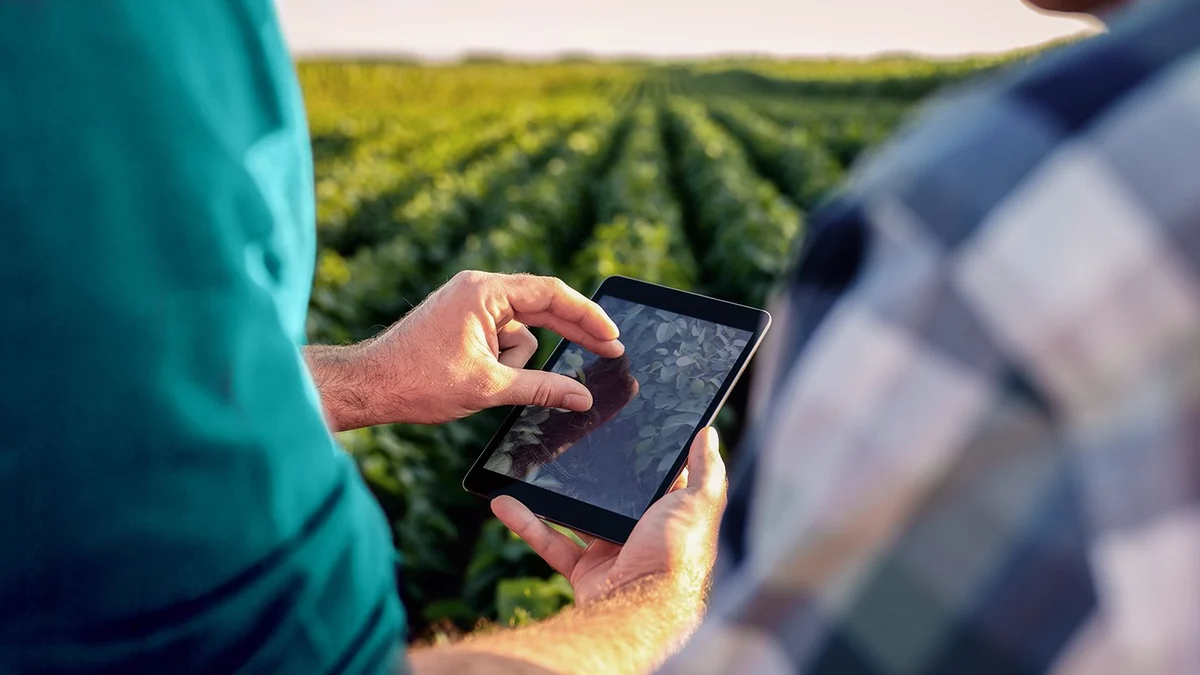
Israeli startup Fermata, founded in 2020 by bioinformatics expert Valeria Kogan, is using AI and computer vision to monitor greenhouse crops for diseases and pests. The company’s software works with standard cameras, capturing images of plants twice a day and alerting farmers to potential infestations via an app. Initially considering robotic solutions, Kogan shifted focus after consulting with farmers, realising that simpler camera-based monitoring was more effective.
Based in Israel, Fermata has gained traction by prioritising farmer needs and keeping its AI training in-house, improving model accuracy. Partnering with major agricultural firms like Bayer and Syngenta, the company has deployed over 100 cameras and continues to expand. The startup recently secured a $10 million Series A investment from Raw Ventures, its existing investor, to scale operations and work towards profitability by 2026.
Plans for growth include strengthening the sales team and expanding beyond greenhouse tomatoes into new crops. Despite AI’s previous struggles in agriculture, Fermata’s practical approach and farmer-centric model have helped it carve a niche in the industry.
Emirati billionaire Hussain Sajwani plans to invest $20 billion in the growing US data centre sector over the coming years. The announcement was made alongside US President-elect Donald Trump at his Mar-a-Lago residence in Florida, where Sajwani, chairman of Dubai-based developer DAMAC, expressed the potential for even larger investments depending on market conditions.
Sajwani’s company owns the only Trump-branded golf course in the Middle East, located in Dubai. The two have a long-standing relationship, with Sajwani celebrating New Year with Trump in Florida. Trump’s focus on economic growth aligns with this announcement, though previous investment promises, such as the Foxconn factory in Wisconsin, fell short of expectations.
A surge in AI technology, particularly since the introduction of OpenAI’s ChatGPT in 2022, has driven significant investment in data infrastructure. Microsoft recently revealed plans to spend $80 billion this fiscal year on expanding its AI capacity. SoftBank’s CEO Masayoshi Son also committed $100 billion in US investments, further highlighting the sector’s momentum.
US restrictions on advanced AI chip exports to China have intensified under the Biden administration. Trump’s recent appointments of China hard-liners in key economic and diplomatic roles signal a continued focus on limiting China’s access to cutting-edge technologies.
Faculty AI, a consultancy company with significant experience in AI, has been developing AI technologies for both civilian and military applications. Known for its close work with the UK government on AI safety, the NHS, and education, Faculty is also exploring the use of AI in military drones. The company has been involved in testing AI models for the UK’s AI Safety Institute (AISI), which was established to study the implications of AI safety.
While Faculty has worked extensively with AI in non-lethal areas, its work with military applications raises concerns due to the potential for autonomous systems in weapons, including drones. Though Faculty has not disclosed whether its AI work extends to lethal drones, it continues to face scrutiny over its dual roles in advising both the government on AI safety and working with defense clients.
The company has also generated some controversy because of its growing influence in both the public and private sectors. Some experts, including Green Party members, have raised concerns about potential conflicts of interest due to Faculty’s widespread government contracts and its private sector involvement in AI, such as its collaborations with OpenAI and defence firms. Faculty’s work on AI safety is seen as crucial, but critics argue that its broad portfolio could create a risk of bias in the advice it provides.
Despite these concerns, Faculty maintains that its work is guided by strict ethical policies, and it has emphasised its commitment to ensuring AI is used safely and responsibly, especially in defence applications. As AI continues to evolve, experts call for caution, with discussions about the need for human oversight in the development of autonomous weapons systems growing more urgent.