Taiwan’s GlobalWafers confirmed on Friday that its investments in the US are proceeding as planned, despite potential changes under the US CHIPS Act. The company has been awarded $406 million in government grants to expand its silicon wafer production in Texas and Missouri. However, the Biden administration is considering changes to some CHIPS Act funding, which has raised concerns for GlobalWafers, as sources indicated there could be delays or renegotiations of some semiconductor-related disbursements.
GlobalWafers CEO Doris Hsu stated that the company has not yet received any notifications regarding changes to its subsidy terms. She emphasised that, if adjustments to the CHIPS Act do occur, the company would need to reassess its investment strategy in the US. Hsu added that the decision would depend on factors such as US demand, pricing conditions, and potential tariffs, though she noted that these scenarios are still hypothetical at this stage.
The company is moving forward with its expansion plans across three US plants, with funding tied to specific milestones. Hsu reassured that the planned investments are continuing according to schedule, with no immediate changes to the company’s strategy. GlobalWafers remains optimistic about its US operations, bolstered by its existing factories in the country and its strong global presence.
For more information on these topics, visit diplomacy.edu.
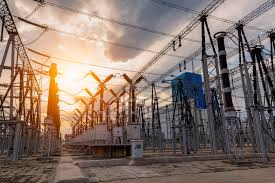
US electric utilities are significantly increasing their capital investment plans to expand power generation and strengthen the grid as AI and cloud computing drive up electricity consumption.
Companies such as PPL Corp, Dominion, and Exelon have revised their spending plans upward, with PPL announcing a nearly 40% increase to $20 billion through 2028.
The surge in demand is largely fuelled by data centres, which are now being built at an unprecedented scale, reaching capacities of up to 1 gigawatt per site.
Utility executives have dismissed concerns that market disruptions, such as Chinese AI startup DeepSeek’s recent emergence, would weaken demand from major tech firms.
Instead, companies including American Electric Power (AEP) and Duke Energy have received assurances from technology customers that their expansion plans remain unchanged. AEP is considering adding $10 billion to its existing $54 billion capital plan, while Duke is increasing its five-year spending by $10 billion.
Rising demand for electricity is expected to reach record levels in the US by 2026, driven not only by data centres but also by manufacturing and electrification in sectors like transportation.
While utilities race to expand power supplies, regulatory approval remains a challenge, and increased investment could lead to higher electricity costs for households and businesses.
Some utilities are also exploring whether data centres should bear a greater share of the costs associated with grid expansion.
For more information on these topics, visit diplomacy.edu.
Taiwan‘s President Lai Ching-te has pledged to address concerns raised by former US President Donald Trump regarding Taiwan’s semiconductor industry. Speaking after a National Security Council meeting, Lai acknowledged the importance of global semiconductor supply chains and vowed to work with Taiwan’s semiconductor sector to develop strategies to address US concerns. He emphasised the need for democratic nations, including the US, to collaborate on creating a “democratic supply chain” for advanced chips, particularly in the growing AI sector.
Lai also reassured the US of Taiwan’s commitment to contributing to the international economy, noting that Taiwan, home to the world’s largest contract chipmaker, TSMC, plays a vital role in the semiconductor market. TSMC is heavily invested in the US, including a $65 billion investment in new factories in Arizona. Despite these efforts, Taiwan’s defence spending remains a topic of criticism, particularly from Trump, who has repeatedly highlighted Taiwan’s insufficient military expenditure amid increasing threats from China.
In response to US concerns, Lai revealed plans to propose a special budget to raise Taiwan’s defence spending from 2.5% of GDP to 3%. This proposal is currently being debated in parliament, where opposition parties hold a majority. Lai stressed that Taiwan’s determination to defend itself must be clear, as international allies continue to voice concerns over its defence readiness.
Finally, Lai reiterated Taiwan’s key role as a reliable trading partner to the US, especially in high-tech exports such as semiconductors. Taiwan’s trade surplus with the US surged by 83% last year, with exports reaching a record $111.4 billion.
For more information on these topics, visit diplomacy.edu.
AI is set to revolutionise wealth management by lowering the barriers to entry for new players, according to a Microsoft executive. Martin Moeller, head of AI for financial services at Microsoft, highlighted that AI’s ability to process vast amounts of data could allow small teams or even individuals to offer services that traditionally required entire teams at banks. This shift is expected to reshape the competitive landscape, much like the internet did decades ago.
AI is already being used in the financial sector, with Swedish payment provider Klarna employing AI from OpenAI to handle tasks previously carried out by 700 employees. UBS, the world’s largest asset manager, also sees significant potential in AI to boost productivity and ease job functions. AI is expected to reduce operational costs for startups and allow banks that have not been involved in wealth management to enter the market with minimal investment.
Customer behaviour is also changing, with younger entrepreneurs increasingly managing their own investments. In response, banks are using AI to enable customers to consolidate financial information independently. While AI currently does not provide specific investment advice, ‘agentic AI’ is expected to be developed in the next two years, which will make independent decisions without human input, further transforming the industry.
For more information on these topics, visit diplomacy.edu.
Alibaba has announced a new partnership with Apple to support the development of AI services for iPhones in China, a move that aims to help Apple counter declining smartphone sales in its crucial market. The collaboration is seen as a significant win for Alibaba, which is gaining ground in China’s competitive AI industry, dominated by local players like DeepSeek. This deal comes after months of speculation regarding Apple’s AI strategy in the region, as the tech giant held discussions with other Chinese companies such as Baidu, ByteDance, and Tencent.
While the specifics of the partnership are still unclear, Alibaba’s chairman Tsai noted that Apple chose their AI technology to power its phones in China. The two companies have already submitted necessary regulatory materials to Chinese authorities, as consumer-facing AI products in the country require approval. Alibaba’s stock saw a notable rise following the announcement, reflecting investor optimism about the deal.
The timing of this collaboration is crucial for Apple, which has faced challenges in China, including falling iPhone sales and increased competition from domestic rivals like Huawei. Analysts suggest that Apple’s struggles in the region are partly due to the lack of advanced AI features in its phones, a growing demand in the Chinese market. Apple’s sales in Greater China dropped significantly in late 2024, and the company lost its top position in the market to local players like Vivo and Huawei.
For Alibaba, the partnership underscores its growing strength in AI, with its stock price surging in 2025. The company’s Qwen 2.5 AI model, which surpassed the capabilities of competitors, has become a focal point of its recent success. As Apple seeks to re-establish its presence in China, the effectiveness of this AI collaboration will likely play a critical role in its future in the market.
For more information on these topics, visit diplomacy.edu.
The rise of DeepSeek’s AI models is offering Chinese chipmakers like Huawei a better chance to compete in the domestic market against the powerful processors from US companies like Nvidia. For years, Huawei and other Chinese manufacturers have struggled to match Nvidia’s high-end chips, which are essential for training AI models. However, DeepSeek’s focus on ‘inference’ rather than raw processing power has led analysts to believe that it could help close the gap between Chinese-made processors and their US counterparts. Inference refers to the phase where AI models use trained data to make predictions, a process less reliant on heavy computational resources.
Several Chinese AI chipmakers, including Huawei, EnFlame, and Moore Threads, have recently stated that their products will support DeepSeek models, although few details have been disclosed. Industry executives predict that DeepSeek’s open-source nature and its low fees will drive the adoption of AI, helping Chinese companies bypass US export restrictions on advanced chips. In fact, Chinese chips like Huawei’s Ascend 910B have already been recognised as better suited for inference tasks, which require less computational power than training.
Despite these developments, Nvidia still dominates the global AI chip market. Analysts point out that while Chinese chips are cost-effective for inference tasks, Nvidia’s superior chips remain the preferred choice even for inference. Nvidia’s CUDA platform, which provides developers with a robust software environment, remains a key advantage, and Chinese companies like Huawei have struggled to convince developers to abandon CUDA in favour of their platforms, such as Huawei’s Compute Architecture for Neural Networks (CANN). The software performance of Chinese AI chips continues to lag behind, making it challenging for them to directly challenge Nvidia’s dominance.
For more information on these topics, visit diplomacy.edu.
Elon Musk has stated he will withdraw his $97.4 billion bid for OpenAI’s non-profit arm if the company halts plans to become a for-profit entity. Musk’s lawyers clarified in a court filing that if OpenAI’s board agrees to maintain the charity’s mission and remove the ‘for sale’ sign from its assets, he will retract his offer. However, if the conversion to a for-profit model continues, Musk’s consortium insists the charity must be compensated by what an independent buyer would pay for its assets.
OpenAI, originally founded by Musk and Sam Altman in 2015 as a non-profit, is in the midst of restructuring. Altman, now CEO, has moved to create a for-profit unit within the organisation to attract investors like Microsoft.
Musk, who left the company over disagreements with Altman, is suing to block this transition. This legal battle intensified this week when Musk’s group made a bid to purchase the non-profit’s assets, which Altman has rejected, stating that the organisation is not for sale.
For more information on these topics, visit diplomacy.edu.
Germany‘s Federal Cartel Office has expressed concerns over Apple’s App Tracking Transparency (ATT) feature, which could potentially violate antitrust rules for large tech companies. The regulator’s preliminary findings come after a detailed three-year investigation into the feature, which allows iPhone users to block advertisers from tracking their activities across multiple apps. The investigation is part of broader scrutiny over the influence of major tech companies on the digital advertising ecosystem.
In a statement released on Thursday, the Federal Cartel Office noted that Apple now has the opportunity to respond to the allegations. The authority’s concerns focus on whether ATT unfairly impacts the business models of other companies that rely on data-driven advertising, such as Meta Platforms, app developers, and startups. These businesses argue that the feature could severely limit their ability to target users with personalised ads, affecting their revenue generation strategies.
Apple has defended ATT as a crucial privacy tool that empowers users to have more control over their data. The company argues that the feature helps to protect user privacy by giving individuals the option to block third-party tracking. However, its critics, particularly in the advertising industry, contend that ATT has created an uneven playing field, disadvantaging businesses that depend on targeted advertising. The outcome of this investigation could have significant implications for Apple’s business practices in Europe.
For more information on these topics, visit diplomacy.edu.
Thomson Reuters has won a legal battle against Ross Intelligence, after a judge ruled that the law firm’s use of Thomson Reuters’ legal content to train an AI model violated US copyright laws. The case stems from a 2020 lawsuit where Thomson Reuters accused the now-defunct legal research firm of using its Westlaw platform to build a competing AI system without permission.
Judge Stephanos Bibas confirmed that Ross Intelligence’s use of the content did not qualify as “fair use” under US copyright law, which permits limited use of copyrighted material for purposes such as teaching or research. Thomson Reuters expressed satisfaction with the ruling, stating that copying its content for AI training was not a fair use.
This case is part of a broader trend of legal challenges involving AI and copyright issues, with authors, artists, and music labels filing similar lawsuits against AI developers for using their works without compensation. These cases all involve the claim that tech companies have used vast amounts of human-created content to train AI models, raising concerns about intellectual property rights and the ethics of AI development.
For more information on these topics, visit diplomacy.edu.
The Dutch government plans to cut bureaucracy and increase investment in artificial intelligence to help the country’s tech startups thrive, Prime Minister Dick Schoof announced. His comments follow a report by TechLeap, which revealed a sharp decline in small firms securing significant funding. Despite a 47% increase in venture capital investment in 2024, the number of Dutch startups receiving more than €100,000 fell dramatically, with most funding coming from foreign investors.
Schoof, speaking at TechLeap’s annual event in The Hague, stressed the urgency of creating a business-friendly environment to attract venture capital. He warned that Europe risks being left behind by the US and China if immediate action is not taken. Eindhoven, home to chip giant ASML, has been a key driver of the Dutch economy, but the slowdown in startup growth raises concerns about long-term innovation.
Two Dutch firms, hotel software developer Mews and AI-powered auditing company DataSnipper, achieved unicorn status last year, but industry leaders remain cautious. With the government now vowing to intervene, the hope is that streamlined regulations and targeted investments will help revive the country’s startup ecosystem.
For more information on these topics, visit diplomacy.edu