Linkup builds marketplace for AI content licensing

French startup Linkup is reshaping how AI applications access web content by creating a marketplace for licensed material. Unlike traditional web scraping, Linkup partners with publishers to fetch content directly through integrated systems, ensuring intellectual property rights are respected. The platform caters to developers enriching large language models (LLMs) with high-quality, fresh data.

CEO Philippe Mizrahi highlighted Linkup’s focus on licensing deals that benefit both publishers and AI developers. The service targets business applications, such as corporate insights or sales tools, utilising databases like Statista and news sources.

With €3 million in seed funding, Linkup aims to expand its team and services, standing out in the growing market of ethical content acquisition for generative AI. Competitors like ScalePost also focus on licensing, indicating a shift in how AI firms source data amid tightening regulations.

Montreal project uses AI to save biodiversity

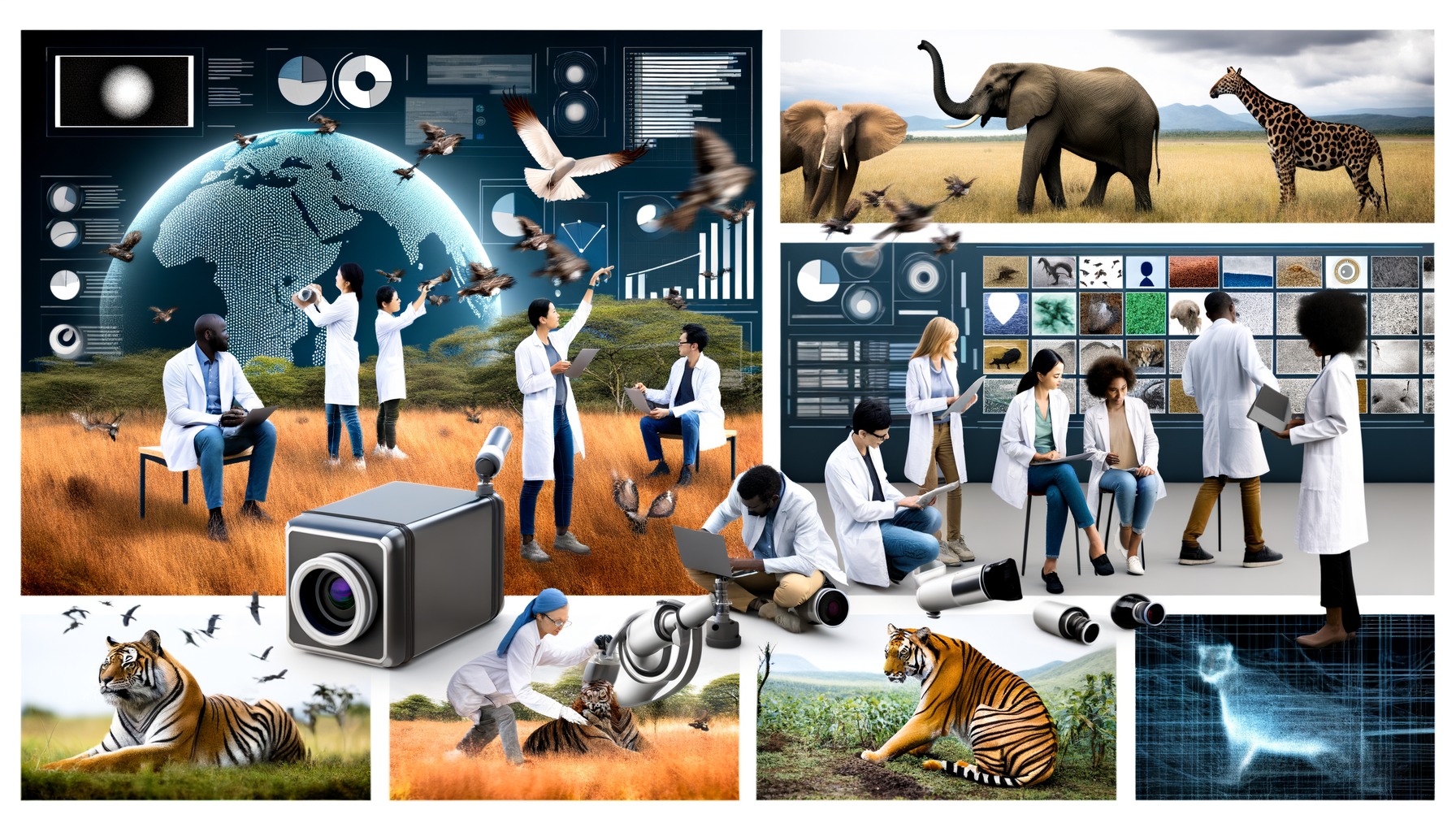
Researchers in Canada are using AI to address the accelerating mass extinction of insects. Led by the Montreal Insectarium, the Antenna project combines solar-powered camera traps, high-resolution imaging, and AI algorithms to monitor biodiversity in regions spanning from the Arctic to the Panamanian rainforests. The project aims to double the biodiversity data collected over the last century within five years.

Insects, crucial for global ecosystems, face unprecedented decline due to climate change, habitat destruction, and pesticides. However, the scope of these losses remains difficult to quantify. AI‘s ability to process vast amounts of data offers hope, with early tests in Panama uncovering 300 previously unknown species in a single week.

Focusing initially on moths, the project uses open-source AI models to encourage public participation and collaboration. Researchers aim to expand applications to discover deep-sea species and monitor pests threatening agriculture. Education also plays a role, with museum visitors using apps to identify species.

LightOn shares climb in Paris market debut

Shares of LightOn, Europe’s first generative AI startup to go public, rose by up to 9% during its debut on the Euronext Growth market in Paris. By mid-morning, the stock traded at €10.79, marking a 4.2% increase from its IPO valuation of €10.35 per share.

LightOn, which develops large language models for organisations like Safran and France‘s Space Command, was valued at €62 million in its initial public offering, surpassing the €50 million initially expected.

The listing reflects strong market confidence in generative AI ventures, highlighting their growing importance in Europe’s tech ecosystem.

Alibaba’s QwQ-32B AI model challenges OpenAI’s dominance

Alibaba has unveiled QwQ-32B-Preview, a new reasoning AI model designed to rival OpenAI’s o1 series. With 32.5 billion parameters and support for prompts up to 32,000 words, the model surpasses competitors in specific benchmarks, including logic puzzles and maths tests. Available for download under a permissive Apache 2.0 licence, it introduces robust reasoning capabilities but also exhibits limitations like language switching and occasional lapses in common sense.

The model incorporates test-time compute, enabling more thorough problem-solving by planning its steps before providing answers. However, such reasoning processes may result in slower responses. Like other AI models made by companies in China, QwQ-32B complies with local regulatory requirements, including constraints on politically sensitive topics, reflecting national ideological alignment.

Reasoning models like QwQ-32B mark a shift in AI development as traditional scaling laws show diminishing returns. Major firms, including Google, are exploring similar approaches, highlighting the race to innovate AI capabilities globally.

Gcore and Qareeb partner for Gulf Cooperation Council AI and cloud expansion

Luxembourg’s Gcore and the Middle East’s first Edge data centre provider, Qareeb Data Centres, have partnered to deliver AI, cloud, and Edge computing solutions across the Gulf Cooperation Council (GCC) region. As Qareeb continues its rapid expansion, it is deploying Edge data centres across GCC countries and beyond, with an initial capacity exceeding 50MW.

Notably, its first data centre in Bahrain, developed in collaboration with Batelco and Beyon Group’s Data Oasis, marks a major milestone in its regional growth. At the same time, Gcore leverages its global reach, encompassing 180 points of presence, $60 million in Series A funding, and significant projects such as a GPU cluster at Telia’s Helsinki data centre.

By combining their strengths, the partnership aims to foster innovation, drive economic growth, and accelerate digital transformation in the Middle East, empowering businesses to meet the region’s evolving digital needs. Furthermore, this collaboration aligns with Gcore’s broader initiatives, including its joint venture with Ezditek to establish an AI factory in Saudi Arabia.

By integrating Qareeb’s localised expertise in Edge infrastructure with Gcore’s advanced technologies, the alliance is well-positioned to enhance regional technological capacity, support economic development, and address the increasing demand for digital infrastructure in the GCC and neighbouring markets.

India introduces new rules for critical telecom infrastructure

The government of India introduced the Telecommunications (Critical Telecommunication Infrastructure) Rules, 2024, on 22 November, which require telecom entities designated as Critical Telecommunication Infrastructure (CTI) to grant government-authorised personnel access to inspect hardware, software, and data. These rules are part of the Telecommunications Act, 2023, empowering the government to designate telecom networks as CTI if their disruption could severely impact national security, the economy, public health, or safety.

The rules mandate that telecom entities appoint a Chief Telecom Security Officer (CTSO) to oversee cybersecurity efforts and report incidents within six hours, a revised deadline from the original two hours proposed in the draft rules. This brings the telecom sector in India in line with existing Telecom Cyber Security Rules and CERT-In directions, though experts argue that the six-hour window does not meet global standards and may contribute to over-regulation.

Telecom networks are already governed under the Information Technology Act, creating potential overlaps with other regulatory frameworks such as the National Critical Information Infrastructure Protection Centre (NCIIPC). The rules also raise concerns about inspection protocols and data access, as they lack clarity on when inspections can be triggered or what limitations should be placed on government personnel accessing sensitive information.

Experts have also questioned the accountability measures in case of abuse of power and the potential for government officials to access the personal data of telecom subscribers during these inspections. To implement these rules, telecom entities must provide detailed documentation to the government, including network architecture, access lists, cybersecurity plans, and security audit reports. They must also maintain logs and documentation for at least two years to assist in detecting anomalies.

Additionally, remote maintenance or repairs from outside India require government approval, and upgrades to hardware or software must be reviewed within 14 days. Immediate upgrades are allowed during cybersecurity incidents, with notification to the government within 24 hours. A digital portal will be established to manage these rules, but concerns about the lack of transparency in communications have been raised. Finally, all CTI hardware, software, and spares must meet Indian Telecommunication Security Assurance Requirements.


AI brings change to US farming

Artificial intelligence is reshaping agriculture in the United States, offering solutions to longstanding challenges like labor shortages and rising costs. With US farms dwindling from 6.8 million in the 1930s to just 1.9 million in 2023, AI-powered technologies are stepping in to improve crop yields, resource efficiency, and food production. Experts emphasise AI’s ability to analyse massive amounts of data, guiding decisions on irrigation, fertilisation, and pest control to maximise productivity.

Despite its potential, adoption remains limited, with only 27% of US farmers currently using emerging technologies like AI. However, investment is projected to grow significantly, from $2B in 2024 to over $5B by 2028. Researchers at institutions like the AI Institute for Next Generation Food Systems are exploring applications from robotics to controlled indoor environments, which enable year-round farming and climate adaptability for crops like grapes.

While high upfront costs and accessibility remain hurdles, proponents believe AI can accelerate agricultural innovation and foster collaboration among farmers. By combining advanced tools and shared data, AI could help build a more sustainable food system and support the delivery of fresh, nutritious produce to underserved areas.

Australia’s new social media ban faces backlash from Big Tech

Australia’s new law banning children under 16 from using social media has sparked strong criticism from major tech companies. The law, passed late on Thursday, targets platforms like Meta’s Instagram and Facebook, as well as TikTok, imposing fines of up to A$49.5 million for allowing minors to log in. Tech giants, including TikTok and Meta, argue that the legislation was rushed through parliament without adequate consultation and could have harmful unintended consequences, such as driving young users to less visible, more dangerous parts of the internet.

The law was introduced after a parliamentary inquiry into the harmful effects of social media on young people, with testimony from parents of children who had been bullied online. While the Australian government had warned tech companies about the impending legislation for months, the bill was fast-tracked in a chaotic final session of parliament. Critics, including Meta, have raised concerns about the lack of clear evidence linking social media to mental health issues and question the rushed process.

Despite the backlash, the law has strong political backing, and the government is set to begin a trial of enforcement methods in January, with the full ban expected to take effect by November 2025. Australia’s long-standing tensions with major US-based tech companies, including previous legislation requiring platforms to pay for news content, are also fueling the controversy. As the law moves forward, both industry representatives and lawmakers face challenges in determining how it will be practically implemented.

OpenAI and Korea Development Bank join forces to enhance South Korea’s AI ecosystem

OpenAI and the Korea Development Bank (KDB) have partnered to support the growth of South Korea’s AI ecosystem. The collaboration aims to develop AI models specifically designed for the Korean language and enhance the country’s position in the global AI landscape.

KDB views AI as a critical driver of national competitiveness and will assist OpenAI in navigating the local market by acting as a coordinator for government affairs. The partnership reflects a shared vision to advance South Korea’s technological and economic future through AI innovation. That move also highlights South Korea’s commitment to becoming a leader in the AI industry, with OpenAI playing a key role in advancing these goals.

The growing impact of AI is also evident in South Korea’s search engine market, where AI-driven technologies are changing how users access information. Naver, the leading domestic search engine, has experienced a decline in market share, while global search engines like Google, which integrate AI features such as OpenAI’s ChatGPT, have seen growth.

Why does it matter?

That shift signifies a broader transformation in the digital landscape, as AI-enhanced search engines provide more personalised and summarised answers, moving away from traditional lists of information. The increasing adoption of AI in search engines underscores the growing influence of AI on various industries in South Korea.

Dubai Police partners with Crystal Intelligence to bolster security in digital asset sector

Crystal Intelligence and Dubai Police have collaborated to address economic crimes within the rapidly growing digital asset space. By combining advanced blockchain analytics with law enforcement expertise, the two entities aim to predict and prevent financial crimes, ensuring robust security within the digital asset ecosystem.

That collaboration reflects Dubai’s commitment to remaining at the forefront of global blockchain innovation. Moreover, as part of its broader strategy, the UAE, particularly Dubai, has positioned itself as a leader in digital assets by creating a regulatory framework that fosters innovation while ensuring security and compliance.

Notably, establishing the Virtual Assets Regulatory Authority (VARA), the world’s first regulator for virtual assets, has attracted numerous blockchain companies and service providers to the city, further solidifying Dubai’s role as a central hub for digital assets. This collaboration also involves strengthening Dubai Police’s capabilities through Crystal Intelligence’s advanced tools in transaction monitoring, risk management, and predictive analytics.

Why does it matter?

These tools will enable law enforcement to proactively detect and address fraudulent activities across blockchain networks, thereby ensuring the integrity of Dubai’s digital asset market. By combining regulatory foresight with cutting-edge technology, Dubai demonstrates its leadership in integrating innovation with security. Ultimately, this partnership sets a new global standard for digital asset security and offers a model for other jurisdictions to follow as they navigate the complexities of financial crimes in the digital asset space.