AI is revolutionising the legal field, offering solutions to improve fairness and reduce costs in the justice system. Tools powered by AI are being used to streamline tasks like analysing evidence, drafting contracts, and preparing cases. Organisations like the Westway Trust in London are adopting AI to assist clients with complex disputes, such as benefits appeals and housing issues. These tools save hours of work, enabling paralegals to focus on providing better support.
The technology has sparked excitement and debate among legal professionals. AI models are being developed to help barristers identify inconsistencies in real-time court transcripts and assist judges with evidence analysis. Advocates argue that AI could make justice more accessible, while reducing the burden on legal practitioners and cutting costs for clients. However, concerns about accuracy and bias persist, with experts emphasising the importance of human oversight.
Sir Geoffrey Vos, Master of the Rolls, underscores the need for AI to complement, not replace, human judges. Guidelines stress transparency in AI use and the responsibility of lawyers to verify outputs. While tools like ChatGPT can provide general advice, professionals caution against relying on non-specialised AI for legal matters. Experts believe that AI will play a crucial role in addressing the fairness gap in the justice system without compromising the rule of law.
Google’s CEO, Sundar Pichai, has identified 2025 as a pivotal year for the tech giant, urging employees to adopt a sense of urgency during a recent strategy meeting. Speaking alongside executives, Pichai emphasised the high stakes of the moment and the need for Google to accelerate its progress across key areas, particularly AI.
AI remains a central focus for Google as it competes with industry leaders. Pichai highlighted the Gemini AI model’s momentum while admitting work remains to secure a leadership position in AI innovation by 2025. Scaling Gemini’s consumer applications will be a primary objective for the coming year.
Google is navigating a competitive and evolving technological landscape. As the company invests heavily in AI, its leadership is rallying employees to seize opportunities and overcome challenges ahead of what Pichai called a “critical” year for the company’s future.
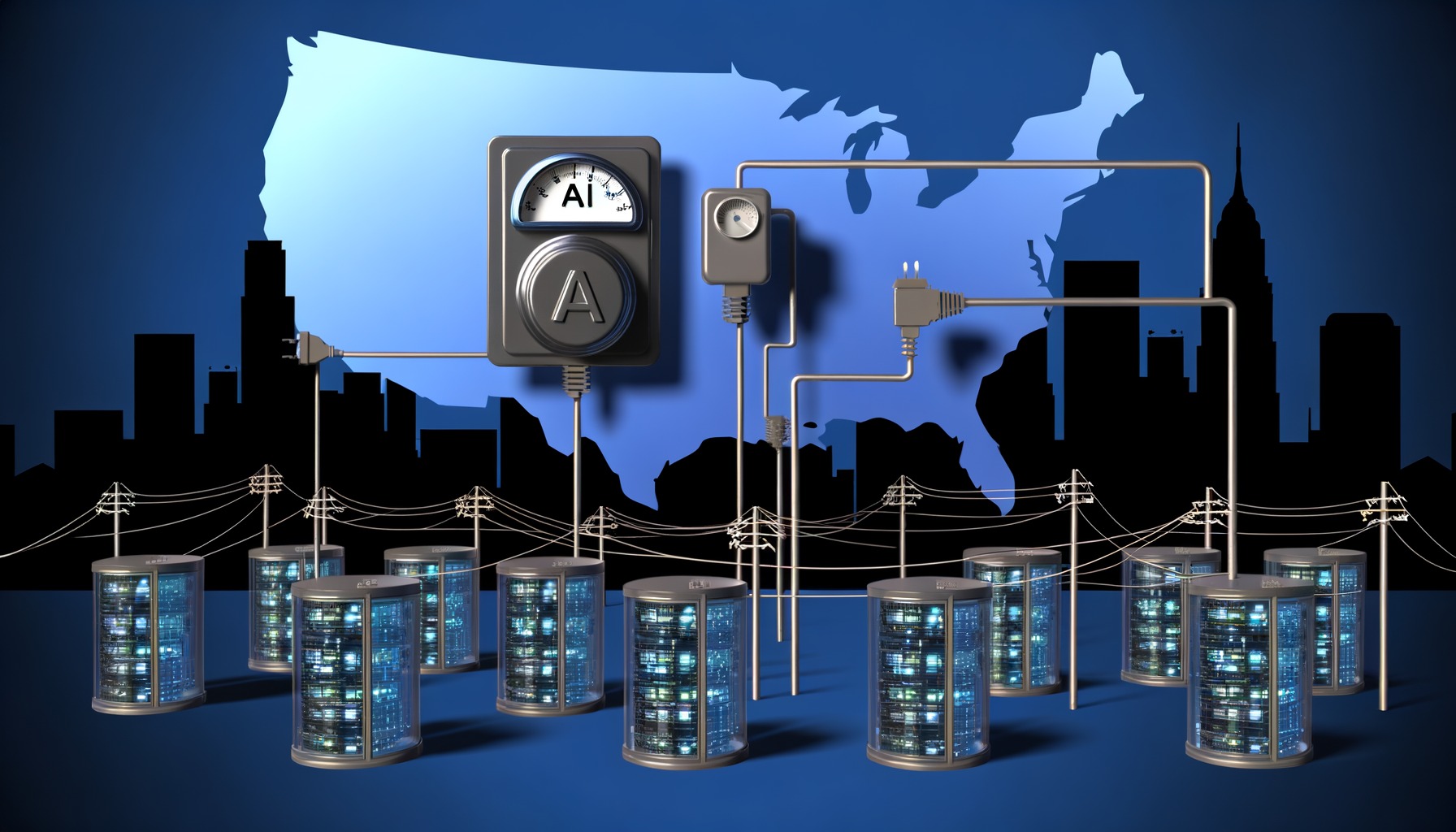
The increasing number of data centres powering AI could pose significant challenges for the United States power grid, as reported by Bloomberg. Findings indicate a connection between data centre activity and ‘bad harmonics,’ a term describing electrical power distortions that can damage appliances, heighten fire risks, and lead to power outages.
Bloomberg’s analysis, using data from Whisker Labs and DC Byte, revealed that over half of homes with the worst power distortions are located within 20 miles of active data centres. AI-driven centres, with their unpredictable energy needs, exacerbate these grid strains, pushing infrastructure beyond its designed limits.
Experts, including Aman Joshi of Bloom Energy, warn that no current grid can handle such intense load fluctuations from multiple data centres. While some utility companies question these findings, the report underscores the urgent need to address the interplay between technological expansion and energy stability.
A humanoid robot named CUE6 has captivated audiences in Japan with its basketball prowess, achieving a Guinness World Record for the longest shot by a humanoid robot. Developed by Toyota engineers, the robot’s achievement highlights the potential of AI in mimicking human precision and adapting to complex tasks.
CUE6’s journey began in 2017 as an experimental project. Starting with LEGO-based prototypes, the team gradually refined the robot’s capabilities, culminating in its ability to dribble, handle balls, and adapt its movements based on real-time analysis. By 2019, the robot had already achieved a remarkable milestone: 2,020 consecutive free throws. The latest version, CUE6, demonstrated the power of AI by recalibrating its shot after a miss to secure the record on its second attempt.
Toyota engineers view CUE6 as more than a novelty. The project serves as a testing ground for AI systems capable of dynamic learning and adaptation. While the immediate goal of creating a robot that can dunk like Michael Jordan remains aspirational, the technologies developed for CUE6 in Japan have far-reaching implications beyond sports, from automation to healthcare.
AT&T and Verizon have confirmed cyberattacks linked to a Chinese hacking group known as “Salt Typhoon,” but assured the public on Saturday that their US networks are now secure. Both companies acknowledged the breaches for the first time, stating they are cooperating with law enforcement and government agencies to address the threat. AT&T disclosed that the attackers targeted a small group of individuals tied to foreign intelligence, while Verizon emphasised that the activities have been contained following extensive remediation efforts.
The attacks, described by US officials as the most extensive telecommunications hack in the nation’s history, reportedly allowed Salt Typhoon operatives to access sensitive network systems, including the ability to geolocate individuals and record phone calls. Authorities have linked the breaches to several telecom firms, with a total of nine entities now confirmed as compromised. In response, the Cybersecurity and Infrastructure Security Agency has urged government officials to transition to encrypted communication methods.
US Senators, including Democrat Ben Ray Luján and Republican Ted Cruz, have expressed alarm over the breach’s scale, calling for stronger safeguards against future intrusions. Meanwhile, Chinese officials have denied the accusations, dismissing them as disinformation and reaffirming their opposition to cyberattacks. Despite assurances from the companies and independent cybersecurity experts, questions remain about how long it will take to fully restore public confidence in the nation’s telecommunications security.
Goodman Group has emerged as a standout performer in Australia’s real estate sector this year, with its stock soaring 45.8%, marking its strongest run since 2006. The surge is driven by a boom in AI, which has sparked frenzied demand for data centres. Global tech giants like Amazon, Microsoft, and Meta have poured billions into expanding their data centre capacity, fueling growth for developers like Goodman.
At the end of September, 42% of Goodman’s A$12.8 billion ($7.96 billion) development portfolio was dedicated to data centres, a jump from 37% last year. Analysts like John Lockton of Sandstone Insights see this focus as a key strength, noting the company’s access to land with power supply, a critical factor for future data-centre projects.
Despite the optimism, some caution remains. Analysts warn that soaring valuations in the data-centre sector could cool investor enthusiasm. Goodman’s high stock prices and concerns over risks like obsolescence and increased competition raise questions about long-term returns. Nonetheless, with robust demand for AI infrastructure, Goodman’s pipeline and strategic positioning keep it well-poised for continued growth.
Ukraine’s largest mobile operator, Kyivstar, has partnered with Elon Musk’s Starlink to introduce direct-to-cell satellite connectivity, marking a major technological advancement for the war-torn nation. Kyivstar’s parent company, VEON, announced that messaging services will be available by late 2025, with voice and data services to follow in later stages.
Direct-to-cell technology connects satellites to smartphones, functioning like space-based cell towers. Starlink, a SpaceX subsidiary, launched its first satellites equipped with this capability earlier this year and has struck similar deals in the US, Japan, and New Zealand. Ukraine will be one of the first countries to adopt this innovation and the first active conflict zone to benefit from it.
The deal highlights Starlink’s continued support for Ukraine, despite ongoing Russian attempts to jam signals between the satellites and ground terminals. Financial terms of the agreement were not disclosed, but the move solidifies Starlink’s role in providing essential connectivity to Ukraine amid geopolitical tensions.
President-elect Donald Trump has called on the US Supreme Court to postpone implementing a law that would ban TikTok or force its sale, arguing for time to seek a political resolution after taking office. The court will hear arguments on the case on 10 January, ahead of a 19 January deadline for TikTok’s Chinese owner, ByteDance, to sell the app or face a US ban.
The move marks a stark shift for Trump, who previously sought to block TikTok in 2020 over national security concerns tied to its Chinese ownership. Trump’s legal team emphasised that his request does not take a stance on the law’s merits but seeks to allow his incoming administration to explore alternatives. Trump has expressed a newfound appreciation for TikTok, citing its role in boosting his campaign visibility.
TikTok, with over 170 million US users, continues to challenge the legislation, asserting that its data and operations affecting US users are fully managed within the country. However, national security concerns persist, with the Justice Department and a coalition of attorneys general urging the Supreme Court to uphold the divest-or-ban mandate. The case highlights the growing debate between free speech advocates and national security interests in regulating digital platforms.
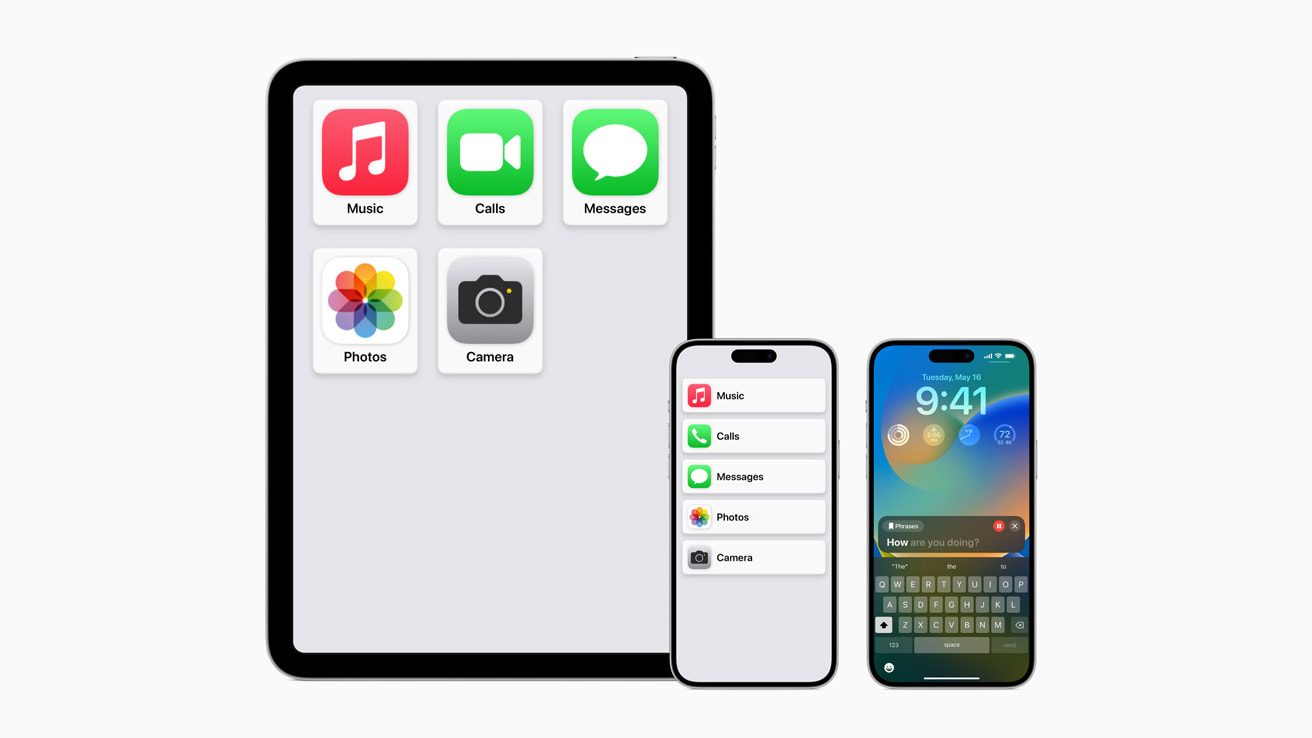
Losing the ability to speak can feel overwhelming, but Apple’s innovative Personal Voice and Live Speech features offer a transformative solution. Designed for individuals at risk of losing their voice, these tools allow users to create a synthesised version of their own voice, preserving their unique communication style even when speaking becomes difficult.
Personal Voice works by recording specific phrases on an iPhone, iPad, or Mac. These recordings are encrypted and stored securely on the user’s device, ensuring privacy. Once created, the personalised voice can be used across Apple devices running iOS 17, iPadOS 17, or macOS Sonoma, enabling seamless communication.
Setting up Personal Voice is simple and requires a quiet space for accurate recording. Apple’s features empower individuals dealing with progressive conditions, recovery from injuries, or anyone seeking a communication backup, underscoring technology’s ability to enhance accessibility and maintain personal expression.
Türk Telekom and ZTE have partnered to launch the ‘5G Smart Agriculture Project’ in Çorum, Turkey, to modernise the agricultural sector through digital transformation. The project integrates advanced technologies such as drones, smart farming machinery, and 5G connectivity to enhance farming practices, including automated spraying, fertilisation, and precision irrigation.
The high-speed, low-latency features of 5G enable real-time monitoring and control, improving efficiency and resource management. The project focuses on sustainability to reduce resource waste, targeting increased agricultural productivity and adopting smart farming solutions.
As the project expands to other regions, it will continue contributing to Turkey’s push for technological innovation and sustainability in agriculture. Both Türk Telekom and ZTE are committed to advancing digital transformation in agriculture, emphasising the importance of sustainability alongside technological progress.
Türk Telekom’s network deputy general manager and ZTE’s regional president have noted that this collaboration enhances their technological capabilities and aligns with their business objectives. The project is seen as a significant step in Turkey’s agricultural modernisation and industrial development, positioning agriculture as a key area for digital innovation and resource efficiency in the future.