
ChatGPT quietly tests new ‘Study Together’ feature for education

A few ChatGPT users have noticed a new option called ‘Study Together’ appearing among available tools, though OpenAI has yet to confirm any official rollout. The feature seems designed to make ChatGPT a more interactive educational companion than just delivering instant answers.

Rather than offering direct solutions, the tool prompts users to think for themselves by asking questions, potentially turning ChatGPT into a digital tutor.

Some speculate the mode might eventually allow multiple users to study together in real-time, mimicking a virtual study group environment.

With the chatbot already playing a significant role in classrooms — helping teachers plan lessons or assisting students with homework — the ‘Study Together’ feature might help guide users toward deeper learning instead of enabling shortcuts.

Critics have warned that AI tools like ChatGPT risk undermining education, so it could be a strategic shift to encourage more constructive academic use.

OpenAI has not confirmed when or if the feature will launch publicly, or whether it will be limited to ChatGPT Plus users. When asked, ChatGPT only replied that nothing had been officially announced.

Would you like to learn more about AI, tech and digital diplomacy? If so, ask our Diplo chatbot!

Sam Altman shrugs off Meta poaching, backs Trump, jabs at Musk

OpenAI CEO Sam Altman addressed multiple hot topics during the Sun Valley conference, including Meta’s aggressive recruitment of top AI researchers, his strained relationship with Elon Musk, and a surprising show of support for Donald Trump.

Altman downplayed Meta’s talent raids, saying he had not spoken to Mark Zuckerberg since the Meta CEO lured away three OpenAI researchers with a $100 million signing bonus. All three had worked at OpenAI’s Zurich office, which opened in 2024.

Despite the losses, Altman described the situation as ‘fine’ and ‘good’, suggesting OpenAI’s mission continues to retain top talent.

The OpenAI chief also took a subtle swipe at Meta’s smartglasses, saying he doesn’t like wearable tech and implying his company has no plans to follow suit.

On the topic of Elon Musk, Altman laughed off their rivalry, saying only that Musk’s bust-ups with everybody, and hinting at the long-running tension between the two former co-founders.

Perhaps most notably, Altman expressed disillusionment with the Democratic Party, saying he no longer feels represented by mainstream figures he once supported.

He praised Donald Trump’s focus on AI infrastructure. He even donated $1 million to Trump’s inaugural fund — a gesture reflecting a broader shift among Silicon Valley leaders warming to Trump as his popularity rises.

Would you like to learn more about AI, tech and digital diplomacy? If so, ask our Diplo chatbot!
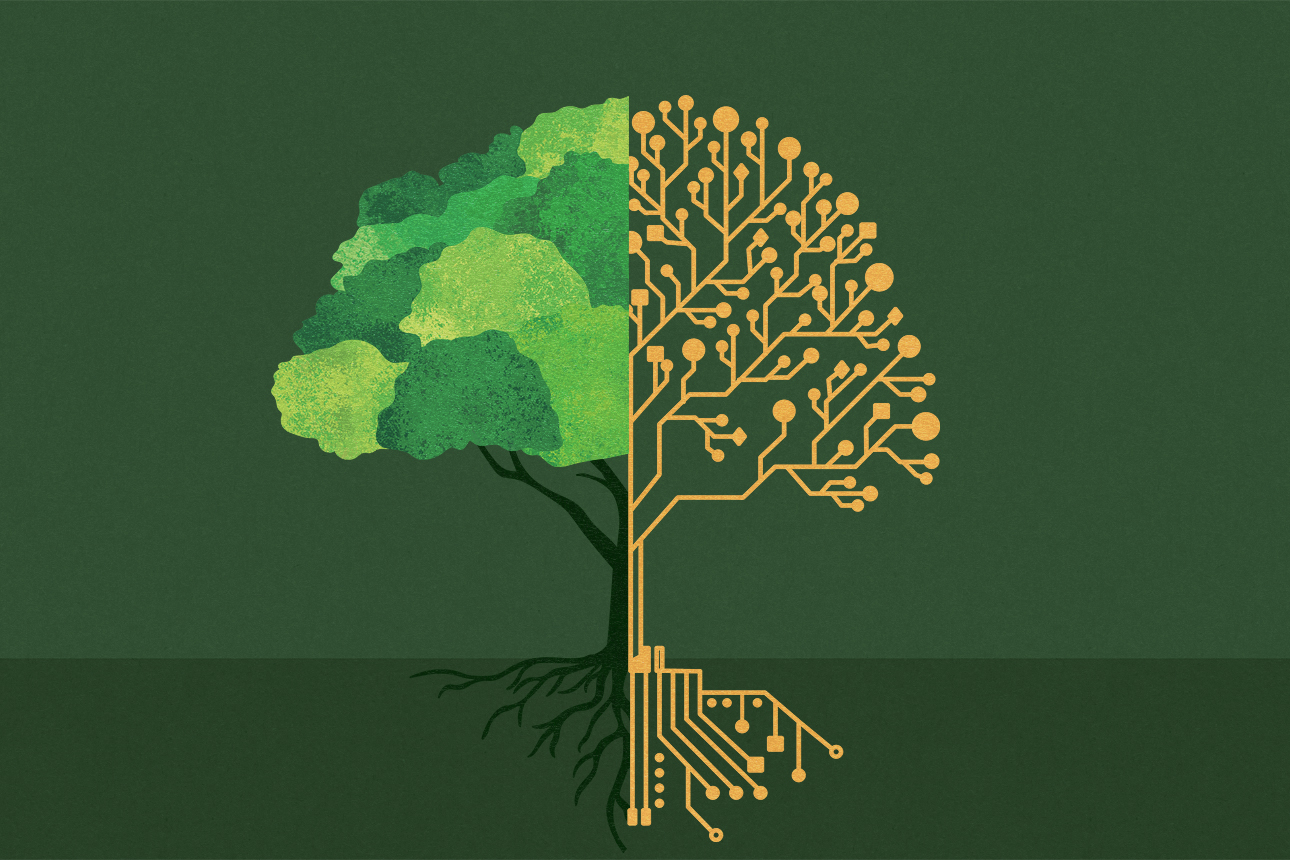
Training AI sustainably depends on where and how

Organisations are urged to place AI model training in regions powered by renewable energy. For instance, training in Canada rather than Poland could reduce carbon emissions by approximately 85 %. Strategic location choices are becoming vital for greener AI.

Selecting appropriate hardware also plays a pivotal role. Research shows that a high-end NVIDIA H100 GPU carries three times the manufacturing carbon footprint of a more energy-efficient NVIDIA L4. Opting for the proper GPU can deliver performance without undue environmental cost.

Efficiency should be embedded at every stage of the AI process. From hardware procurement and algorithm design to operational deployment, even fractional improvements across the supply chain can significantly reduce overall carbon output, ensuring that today’s progress doesn’t harm tomorrow’s planet.

Would you like to learn more about AI, tech and digital diplomacy? If so, ask our Diplo chatbot!

Humanitarian, peace, and media sectors join forces to tackle harmful information

At the WSIS+20 High-Level Event in Geneva, a powerful session brought together humanitarian, peacebuilding, and media development actors to confront the growing threat of disinformation, more broadly reframed as ‘harmful information.’ Panellists emphasised that false or misleading content, whether deliberately spread or unintentionally harmful, can have dire consequences for already vulnerable populations, fueling violence, eroding trust, and distorting social narratives.

The session moderator, Caroline Vuillemin of Fondation Hirondelle, underscored the urgency of uniting these sectors to protect those most at risk.

Hans-Peter Wyss of the Swiss Agency for Development and Cooperation presented the ‘triple nexus’ approach, advocating for coordinated interventions across humanitarian, development, and peacebuilding efforts. He stressed the vital role of trust, institutional flexibility, and the full inclusion of independent media as strategic actors.

Philippe Stoll of the ICRC detailed an initiative that focuses on the tangible harms of information—physical, economic, psychological, and societal—rather than debating truth. That initiative, grounded in a ‘detect, assess, respond’ framework, works from local volunteer training up to global advocacy and research on emerging challenges like deepfakes.

Donatella Rostagno of Interpeace shared field experiences from the Great Lakes region, where youth-led efforts to counter misinformation have created new channels for dialogue in highly polarised societies. She highlighted the importance of inclusive platforms where communities can express their own visions of peace and hear others’.

Meanwhile, Tammam Aloudat of The New Humanitarian critiqued the often selective framing of disinformation, urging support for local journalism and transparency about political biases, including the harm caused by omission and silence.

The session concluded with calls for sustainable funding and multi-level coordination, recognising that responses must be tailored locally while engaging globally. Despite differing views, all panellists agreed on the need to shift from a narrow focus on disinformation to a broader and more nuanced understanding of information harm, grounded in cooperation, local agency, and collective responsibility.

Track all key events from the WSIS+20 High-Level Event 2025 on our dedicated page.

Accelerating SDGs through digital innovation: SMEs take center stage at WSIS+20

At the WSIS+20 High-Level Event in Geneva, the session ‘Collaborative Innovation Ecosystem and Digital Transformation’ spotlighted how digital ecosystems can empower small and medium-sized enterprises (SMEs) to drive global progress toward the Sustainable Development Goals (SDGs). Organised by the China Academy of Information and Communication Technology (CAICT) and the International Telecommunication Union (ITU), the event drew experts from governments, industry, and international organisations to strategise on digital solutions for sustainable development.

Dr Cosmas Zavazava of ITU emphasised that SMEs are the heartbeat of global economies, yet many still lack the digital capacity to thrive. Through the ITU Innovation and Entrepreneurship Alliance—comprising over 100 stakeholders and 17 acceleration centres—efforts are underway to provide universal connectivity and foster sustainable digital transformation.

Xiaohui Yu of CAICT echoed this vision, highlighting the crucial role of developing nations in closing the digital gap and announcing CAICT’s expanded role as an ITU acceleration centre dedicated to tech innovation and SME support.

One key milestone from the session was launching a global case collection initiative to identify best practices in ICT-enabled SME transformation. Countries like South Africa and Kenya shared success stories—South Africa’s Digitech platform and foresight-driven policymaking, and Kenya’s Hustler Fund, which digitises SME financing via mobile platforms like M-Pesa while integrating over 20,000 government services. These examples underscore the need for inclusive infrastructure, affordable digital tools, and coherent policies to bridge divides.

The discussion culminated in a unified call for action: build a ‘platform of platforms’ that connects regional innovation efforts, harmonises cross-border policies, and fosters capacity-building to ensure digital transformation reaches even the most marginalised entrepreneurs. As participants agreed, collaboration must move beyond goodwill to coordinated, sustained action if SMEs are to unlock their full potential in achieving the SDGs.

Track all key events from the WSIS+20 High-Level Event 2025 on our dedicated page.

Rights before risks: Rethinking quantum innovation at WSIS+20

At the WSIS+20 High-Level Event in Geneva, a powerful call was made to ensure the development of quantum technologies remains rooted in human rights and inclusive governance. A UNESCO-led session titled ‘Human Rights-Centred Global Governance of Quantum Technologies’ presented key findings from a new issue brief co-authored with Sciences Po and the European University Institute.

It outlined major risks—such as quantum’s dual-use nature threatening encryption, a widening technological divide, and severe gender imbalances in the field—and urged immediate global action to build safeguards before quantum capabilities mature.

UNESCO’s Guilherme Canela emphasised that innovation and human rights are not mutually exclusive but fundamentally interlinked, warning against a ‘false dichotomy’ between the two. Lead author Shamira Ahmed highlighted the need for proactive frameworks to ensure quantum benefits are equitably distributed and not used to deepen global inequalities or erode rights.

With 79% of quantum firms lacking female leadership and a mere 1 in 54 job applicants being women, the gender gap was called ‘staggering.’ Ahmed proposed infrastructure investment, policy reforms, capacity development, and leveraging the UN’s International Year of Quantum to accelerate global discussions.

Panellists echoed the urgency. Constance Bommelaer de Leusse from Sciences Po advocated for embedding multistakeholder participation into governance processes and warned of a looming ‘quantum arms race.’ Professor Pieter Vermaas of Delft University urged moving from talk to international collaboration, suggesting the creation of global quantum research centres.

Journalist Elodie Vialle raised alarms about quantum’s potential to supercharge surveillance, endangering press freedom and digital privacy, and underscored the need to close the cultural gap between technologists and civil society.

Overall, the session championed a future where quantum technology is developed transparently, governed globally, and serves as a digital public good, bridging divides rather than deepening them. Speakers agreed that the time to act is now, before today’s opportunities become tomorrow’s crises.

Track all key events from the WSIS+20 High-Level Event 2025 on our dedicated page.

Preserving languages in a digital world: A call for inclusive action

At the WSIS+20 High-Level Event in Geneva, UNESCO convened a powerful session on the critical need to protect multilingualism in the digital age. With over 8,000 languages spoken globally but fewer than 120 represented online, the panel warned of a growing digital divide that excludes billions and marginalises thousands of cultures.

Dr Tawfik Jelassi of UNESCO painted a vivid metaphor of the internet as a vast library where most languages have no books on the shelves, calling for urgent action to safeguard humanity’s linguistic and cultural diversity.

Speakers underscored that bridging this divide goes beyond creating language tools—it requires systemic change rooted in policy, education, and community empowerment. Guilherme Canela of UNESCO highlighted ongoing initiatives like the 2003 Recommendation on Multilingualism and the UN Decade of Indigenous Languages, which has already inspired 15 national action plans.

Panellists like Valts Ernstreits and Sofiya Zahova emphasised community-led efforts, citing examples from Latvia, Iceland, and Sámi institutions that show how native speakers and local institutions must lead digital inclusion efforts.

Africa’s case brought the urgency into sharp focus. David Waweru noted that despite hosting a third of the world’s languages, less than 0.1% of websites feature African language content. Yet, promising efforts like the African Storybook project and AI language models show how local storytelling and education can thrive in digital spaces.

Elena Plexida of ICANN revealed that only 26% of email servers accept non-Latin addresses, a stark reminder of the structural barriers to full digital participation.

The session concluded with a strong call for multistakeholder collaboration. Governments, tech companies, indigenous communities, and civil society must work together to make multilingualism the default, not the exception, in digital spaces. As Jelassi put it, ensuring every language has a place online is not just a technical challenge but a matter of cultural survival and digital justice.

Track all key events from the WSIS+20 High-Level Event 2025 on our dedicated page.

How agentic AI is transforming cybersecurity

Cybersecurity is gaining a new teammate—one that never sleeps and acts independently. Agentic AI doesn’t wait for instructions. It detects threats, investigates, and responds in real-time. This new class of AI is beginning to change the way we approach cyber defence.

Unlike traditional AI systems, Agentic AI operates with autonomy. It sets objectives, adapts to environments, and self-corrects without waiting for human input. In cybersecurity, this means instant detection and response, beyond simple automation.

With networks more complex than ever, security teams are stretched thin. Agentic AI offers relief by executing actions like isolating compromised systems or rewriting firewall rules. This technology promises to ease alert fatigue and keep up with evasive threats.

A 2025 Deloitte report says 25% of GenAI-using firms will pilot Agentic AI this year. SailPoint found that 98% of organisations will expand AI agent use in the next 12 months. But rapid adoption also raises concern—96% of tech workers see AI agents as security risks.

The integration of AI agents is expanding to cloud, endpoints, and even physical security. Yet with new power comes new vulnerabilities—from adversaries mimicking AI behaviour to the risk of excessive automation without human checks.

Key challenges include ethical bias, unpredictable errors, and uncertain regulation. In sectors like healthcare and finance, oversight and governance must keep pace. The solution lies in balanced control and continuous human-AI collaboration.

Cybersecurity careers are shifting in response. Hybrid roles such as AI Security Analysts and Threat Intelligence Automation Architects are emerging. To stay relevant, professionals must bridge AI knowledge with security architecture.

Agentic AI is redefining cybersecurity. It boosts speed and intelligence but demands new skills and strong leadership. Adaptation is essential for those who wish to thrive in tomorrow’s AI-driven security landscape.

Would you like to learn more about AI, tech and digital diplomacy? If so, ask our Diplo chatbot!

US targets Southeast Asia to stop AI chip leaks to China

The US is preparing stricter export controls on high-end Nvidia AI chips destined for Malaysia and Thailand, in a move to block China’s indirect access to advanced GPU hardware.

According to sources cited by Bloomberg, the new restrictions would require exporters to obtain licences before sending AI processors to either country.

The change follows reports that Chinese engineers have hand-carried data to Malaysia for AI training after Singapore began restricting chip re-exports.

Washington suspects Chinese firms are using Southeast Asian intermediaries, including shell companies, to bypass existing export bans on AI chips like Nvidia’s H100.

Although some easing has occurred between the US and China in areas such as ethane and engine components, Washington remains committed to its broader decoupling strategy. The proposed measures will reportedly include safeguards to prevent regional supply chain disruption.

Malaysia’s Trade Minister confirmed earlier this year that the US had requested detailed monitoring of all Nvidia chip shipments into the country.

As the global race for AI dominance intensifies, Washington appears determined to tighten enforcement and limit Beijing’s access to advanced computing power.

Would you like to learn more about AI, tech and digital diplomacy? If so, ask our Diplo chatbot!

Pakistan launches AI customs system to tackle tax evasion

Pakistan has launched its first AI-powered Customs Clearance and Risk Management System (RMS) to cut tax evasion, reduce corruption, and modernise port operations by automating inspections and declarations.

The initiative, part of broader digital reforms, is led by the Federal Board of Revenue (FBR) with support from the Intelligence Bureau.

By minimising human involvement in customs procedures, the system enables faster, fairer, and more transparent processing. It uses AI and automated bots to assess goods’ value and classification, improve risk profiling, and streamline green channel clearances.

Early trials showed a 92% boost in system performance and more than double the efficiency in identifying compliant cargo.

Prime Minister Shehbaz Sharif praised the collaboration between the FBR and IB, calling the initiative a key pillar of national economic reform. He urged full integration of the system into the country’s digital infrastructure and reaffirmed tax reform as a government priority.

The AI system is also expected to close loopholes in under-invoicing and misdeclaration, which have long been used to avoid duties.

Meanwhile, video analytics technology is trialled to detect factory tax fraud, with early tests showing 98% accuracy. In recent enforcement efforts, authorities recovered Rs178 billion, highlighting the potential of data-driven approaches in tackling fiscal losses.

Would you like to learn more about AI, tech and digital diplomacy? If so, ask our Diplo chatbot!