UK sets up expert commission to speed up NHS adoption of AI

Doctors, researchers and technology leaders will work together to accelerate the safe adoption of AI in the NHS, under a new commission launched by the Medicines and Healthcare products Regulatory Agency (MHRA).

The body will draft recommendations to modernise healthcare regulation, ensuring patients gain faster access to innovations while maintaining safety and public trust.

MHRA stressed that clear rules are vital as AI spreads across healthcare, already helping to diagnose conditions such as lung cancer and strokes in hospitals across the UK.

Backed by ministers, the initiative aims to position Britain as a global hub for health tech investment. Companies including Google and Microsoft will join clinicians, academics, and patient advocates to advise on the framework, expected to be published next year.

A commission that will also review the regulatory barriers slowing adoption of tools such as AI-driven note-taking systems, which early trials suggest can significantly boost efficiency in clinical care.

Officials say the framework will provide much-needed clarity for AI in radiology, pathology, and virtual care, supporting the digital transformation of NHS.

MHRA chief executive Lawrence Tallon called the commission a ‘cultural shift’ in regulation. At the same time, Technology Secretary Liz Kendall said it will ensure patients benefit from life-saving technologies ‘quickly and safely’.

Would you like to learn more about AI, tech and digital diplomacy? If so, ask our Diplo chatbot!
Expanded AI model support arrives in Microsoft 365 Copilot

Microsoft is expanding the AI models powering Microsoft 365 Copilot by adding Anthropic’s Claude Sonnet 4 and Claude Opus 4.1. Customers can now choose between OpenAI and Anthropic models for research, deep reasoning, and agent building across Microsoft 365 tools.

The Researcher agent can now run on Anthropic’s Claude Opus 4.1, giving users a choice of models for in-depth analysis. The Researcher draws on web sources, trusted third-party data, and internal work content—encompassing emails, chats, meetings, and files—to deliver tailored, multistep reasoning.

Claude Sonnet 4 and Opus 4.1 are also available in Copilot Studio, enabling the creation of enterprise-grade agents with flexible model selection. Users can mix Anthropic, OpenAI, and Azure Model Catalogue models to power multi-agent workflows, automate tasks, and manage agents efficiently.

Claude in Researcher is rolling out today to Microsoft 365 Copilot-licensed customers through the Frontier Program. Customers can also use Claude models in Copilot Studio to build and orchestrate agents.

Microsoft says this launch is part of its strategy to bring the best AI innovation across the industry to Copilot. More Anthropic-powered features will roll out soon, strengthening Copilot’s role as a hub for enterprise AI and workflow transformation.

Would you like to learn more about AI, tech, and digital diplomacy? If so, ask our Diplo chatbot!

Quantum-classical hybrid outperforms, according to HSBC and IBM study

HSBC and IBM have reported the first empirical evidence of the value of quantum computers in solving real-world problems in bond trading. Their joint trial showed a 34% improvement in predicting the likelihood of a trade being filled at a quoted price compared to classical-only techniques.

The trial used a hybrid approach that combined quantum and classical computing to optimise quote requests in over-the-counter bond markets. Production-scale trading data from the European corporate bond market was run on IBM quantum computers to predict winning probabilities.

The results demonstrate how quantum techniques can outperform standard methods in addressing the complex and dynamic factors in algorithmic bond trading. HSBC said the findings offer a competitive edge and could redefine how the financial industry prices customer inquiries.

Philip Intallura, HSBC Group Head of Quantum Technologies, called the trial ‘a ground-breaking world-first in bond trading’. He said the results show that quantum computing is on the cusp of delivering near-term value for financial services.

IBM’s latest Heron processor played a key role in the workflow, augmenting classical computation to uncover hidden pricing signals in noisy data. IBM said such work helps unlock new algorithms and applications that could transform industries as quantum systems scale.

Would you like to learn more about AI, tech, and digital diplomacy? If so, ask our Diplo chatbot!

New Meta feature floods users with AI slop in TikTok-style feed

Meta has launched a new short-form video feed called Vibes inside its Meta AI app and on meta.ai, offering users endless streams of AI-generated content. The format mimics TikTok and Instagram Reels but consists entirely of algorithmically generated clips.

Mark Zuckerberg unveiled the feature in an Instagram post showcasing surreal creations, from fuzzy creatures leaping across cubes to a cat kneading dough and even an AI-generated Egyptian woman taking a selfie in antiquity.

Users can generate videos from scratch or remix existing clips by adding visuals, music, or stylistic effects before posting to Vibes, sharing via direct message, or cross-posting to Instagram and Facebook Stories.

Meta partnered with Midjourney and Black Forest Labs to support the early rollout, though it plans to transition to its AI models.

The announcement, however, was derided by users, who criticised the platform for adding yet more ‘AI slop’ to already saturated feeds. One top comment under Zuckerberg’s post bluntly read: ‘gang nobody wants this’.

A launch that comes as Meta ramps up its AI investment to catch up with rivals OpenAI, Anthropic, and Google DeepMind.

Earlier during the year, the company consolidated its AI teams into Meta Superintelligence Labs and reorganised them into four units focused on foundation models, research, product integration, and infrastructure.

Despite the strategic shift, many question whether Vibes adds value or deepens user fatigue with generative content.

Would you like to learn more about AI, tech and digital diplomacy? If so, ask our Diplo chatbot!
YouTube rolls back rules on Covid-19 and 2020 election misinformation

Google’s YouTube has announced it will reinstate accounts previously banned for repeatedly posting misinformation about Covid-19 and the 2020 US presidential election. The decision marks another rollback of moderation rules that once targeted health and political falsehoods.

The platform said the move reflects a broader commitment to free expression and follows similar changes at Meta and Elon Musk’s X.

YouTube had already scrapped policies barring repeat claims about Covid-19 and election outcomes, rules that had led to actions against figures such as Robert F. Kennedy Jr.’s Children’s Health Defense Fund and Senator Ron Johnson.

An announcement that came in a letter to House Judiciary Committee Chair Jim Jordan, amid a Republican-led investigation into whether the Biden administration pressured tech firms to remove certain content.

YouTube claimed the White House created a political climate aimed at shaping its moderation, though it insisted its policies were enforced independently.

The company said that US conservative creators have a significant role in civic discourse and will be allowed to return under the revised rules. The move highlights Silicon Valley’s broader trend of loosening restrictions on speech, especially under pressure from right-leaning critics.

Would you like to learn more about AI, tech and digital diplomacy? If so, ask our Diplo chatbot!
US military unveils automated cybersecurity construct for modern warfare

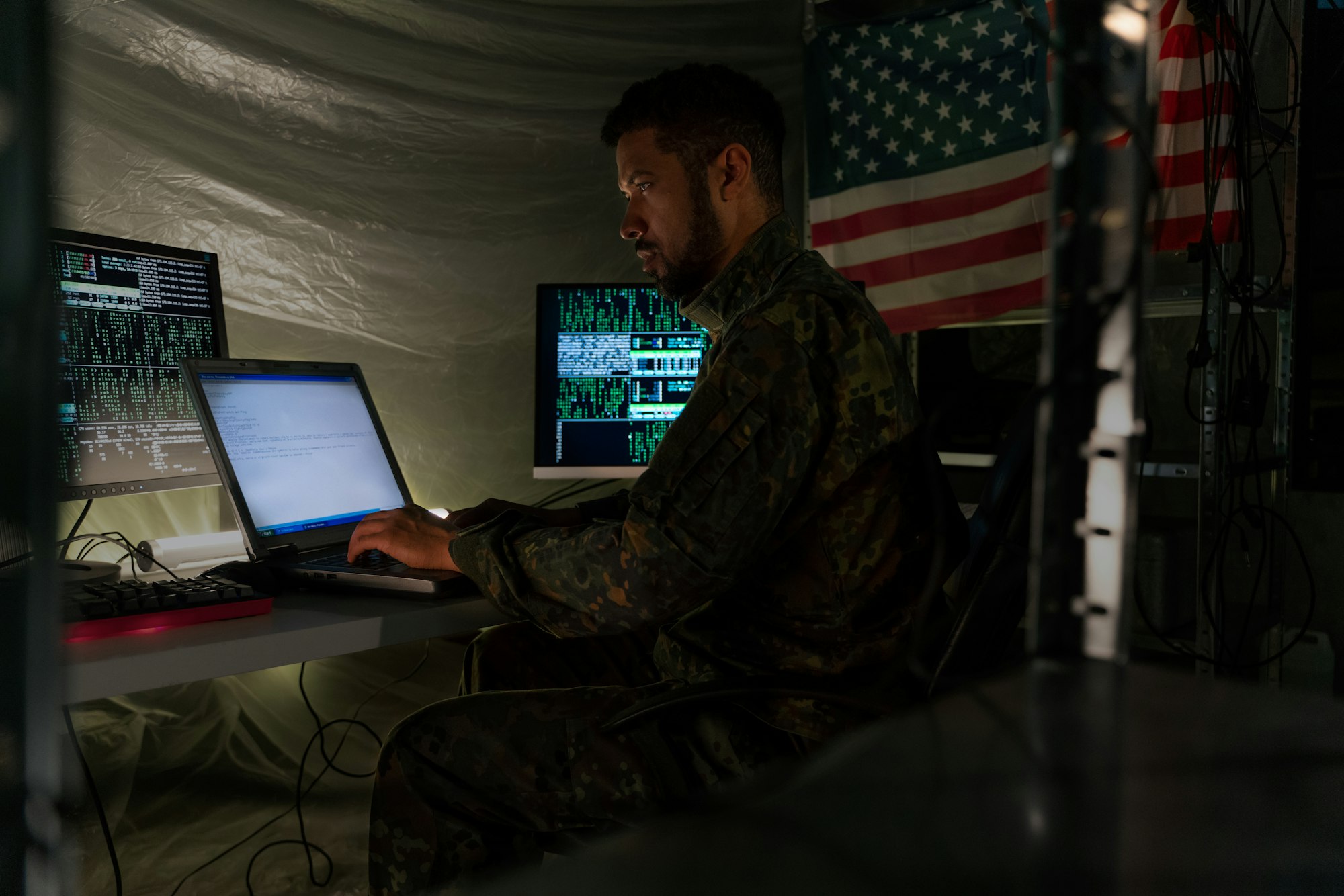
The US Department of War has unveiled a new Cybersecurity Risk Management Construct (CSRMC), a framework designed to deliver real-time cyber defence and strengthen the military’s digital resilience.

A model that replaces outdated checklist-driven processes with automated, continuously monitored systems capable of adapting to rapidly evolving threats.

The CSRMC shifts from static, compliance-heavy assessments to dynamic and operationally relevant defence. Its five-phase lifecycle embeds cybersecurity into system design, testing, deployment, and operations, ensuring digital systems remain hardened and actively defended throughout use.

Continuous monitoring and automated authorisation replace periodic reviews, giving commanders real-time visibility of risks.

Built on ten core principles, including automation, DevSecOps, cyber survivability, and threat-informed testing, the framework represents a cultural change in military cybersecurity.

It seeks to cut duplication through enterprise services, accelerate secure capability delivery, and enable defence systems to survive in contested environments.

According to acting CIO Kattie Arrington, the construct is intended to institutionalise resilience across all domains, from land and sea to space and cyberspace. The goal is to provide US forces with the technological edge to counter increasingly sophisticated adversaries.

Would you like to learn more about AI, tech and digital diplomacy? If so, ask our Diplo chatbot!

LinkedIn default AI data sharing faces Dutch privacy watchdog scrutiny

The Dutch privacy watchdog, Autoriteit Persoonsgegevens (AP), is warning LinkedIn users in the Netherlands to review their settings to prevent their data from being used for AI training.

LinkedIn plans to use names, job titles, education history, locations, skills, photos, and public posts from European users to train its systems. Private messages will not be included; however, the sharing option is enabled by default.

AP Deputy Chair Monique Verdier said the move poses significant risks. She warned that once personal data is used to train a model, it cannot be removed, and its future uses are unpredictable.

LinkedIn, headquartered in Dublin, falls under the jurisdiction of the Data Protection Commission in Ireland, which will determine whether the plan can proceed. The AP said it is working with Irish and EU counterparts and has already received complaints.

Users must opt out by 3 November if they do not wish to have their data used. They can disable the setting via the AP’s link or manually in LinkedIn under ‘settings & privacy’ → ‘data privacy’ → ‘data for improving generative AI’.

Would you like to learn more about AI, tech, and digital diplomacy? If so, ask our Diplo chatbot!

UN urges global rules to ensure AI benefits humanity

The UN Security Council debated AI, noting its potential to boost development but warning of risks, particularly in military use. Secretary-General António Guterres called AI a ‘double-edged sword,’ supporting development but posing threats if left unregulated.

He urged legally binding restrictions on lethal autonomous weapons and insisted nuclear decisions remain under human control.

Experts and leaders emphasised the urgent need for global regulation, equitable access, and trustworthy AI systems. Yoshua Bengio of Université de Montréal warned of risks from misaligned AI, cyberattacks, and economic concentration, calling for greater oversight.

Stanford’s Yejin Choi highlighted the concentration of AI expertise in a few countries and companies, stressing that democratising AI and reducing bias is key to ensuring global benefits.

Representatives warned that AI could deepen digital inequality in developing regions, especially Africa, due to limited access to data and infrastructure.

Delegates from Guyana, Somalia, Sierra Leone, Algeria, and Panama called for international rules to ensure transparency, fairness, and prevent dominance by a few countries or companies. Others, including the United States, cautioned that overregulation could stifle innovation and centralise power.

Delegates stressed AI’s risks in security, urging Yemen, Poland, and the Netherlands called for responsible use in conflict with human oversight and ethical accountability.Leaders from Portugal and the Netherlands said AI frameworks must promote innovation, security, and serve humanity and peace.

Would you like to learn more about AI, tech and digital diplomacy? If so, ask our Diplo chatbot!
Cyberattack on Jaguar Land Rover exposes UK supply chain risks

The UK’s ministers are considering an unprecedented intervention after a cyberattack forced Jaguar Land Rover to halt production, leaving thousands of suppliers exposed to collapse.

A late August hack shut down JLR’s IT networks and forced the suspension of its UK factories. Industry experts estimate losses of more than £50m a week, with full operations unlikely to restart until October or later.

JLR, owned by India’s Tata Motors, had not finalised cyber insurance before the breach, which left it particularly vulnerable.

Officials are weighing whether to buy and stockpile car parts from smaller firms that depend on JLR, though logistical difficulties make the plan complex. Government-backed loans are also under discussion.

Cybersecurity agencies, including the National Cyber Security Centre and the National Crime Agency, are now supporting the investigation.

The attack is part of a wider pattern of major breaches targeting UK institutions and retailers, with a group calling itself Scattered Lapsus$ Hunters claiming responsibility.

A growing threat that highlights how the country’s critical industries remain exposed to sophisticated cybercriminals, raising questions about resilience and the need for stronger digital defences.

Would you like to learn more about AI, tech and digital diplomacy? If so, ask our Diplo chatbot!
Anthropic models join Microsoft Copilot Studio for enhanced AI flexibility

Microsoft has added Anthropic’s Claude Sonnet 4 and Claude Opus 4.1 to Copilot Studio, giving users more control over model selection for orchestration, workflow automation, and reasoning tasks.

The integration allows customers to design and optimise AI agents with either Anthropic or OpenAI models, or even coordinate across both. Administrators can manage access through the Microsoft 365 Admin Center, with automatic fallback to OpenAI GPT-4o if Anthropic models are disabled.

Anthropic’s models are available in early release environments now, with preview access across all environments expected within two weeks and full production readiness by the end of the year.

Microsoft said the move empowers businesses to tailor AI agents more precisely to industry-specific needs, from HR onboarding to compliance management.

By enabling multi-model orchestration, Copilot Studio extends its versatility for enterprises seeking to match the right AI model to each task, underlining Microsoft’s push to position Copilot as a flexible platform for agentic AI.

Would you like to learn more about AI, tech and digital diplomacy? If so, ask our Diplo chatbot!