IMF calls for stronger AI regulation in global securities markets

Regulators worldwide are being urged to adopt stronger oversight frameworks for AI in capital markets after an IMF technical note warned that rapid AI adoption could reshape securities trading while increasing systemic risk.

AI brings major efficiency gains in asset management and high-frequency trading instead of slower, human-led processes, yet opacity, market volatility, cyber threats and model concentration remain significant concerns.

The IMF warns that AI could create powerful data oligopolies where only a few firms can train the strongest models, while autonomous trading agents may unintentionally collude by widening spreads without explicit coordination.

Retail investors also face rising exposure to AI washing, where financial firms exaggerate or misrepresent AI capability, making transparency, accountability and human-in-the-loop review essential safeguards.

Supervisory authorities are encouraged to scale their own AI capacity through SupTech tools for automated surveillance and social-media sentiment monitoring.

The note highlights India as a key case study, given the dominance of algorithmic trading and SEBI’s early reporting requirements for AI and machine learning. The IMF also points to the National Stock Exchange’s use of AI in fraud detection as an emerging-market model for resilient monitoring infrastructure.

The report underlines the need for regulators to prepare for AI-driven market shocks, strengthen governance obligations on regulated entities and build specialist teams capable of understanding model risk instead of reacting only after misconduct or misinformation harms investors.

Would you like to learn more about AI, tech and digital diplomacy? If so, ask our Diplo chatbot!

Agentic AI, digital twins, and intelligent wearables reshape security operations in 2026

Operational success in security technology is increasingly being judged through measurable performance rather than early-stage novelty.

As 2026 approaches, Agentic AI, digital twins and intelligent wearables are moving from research concepts into everyday operational roles, reshaping how security functions are designed and delivered.

Agentic AI is no longer limited to demonstrations. Instead of simple automation, autonomous agents now analyse video feeds, access data and sensor logs to investigate incidents and propose mitigation steps for human approval.

Adoption is accelerating worldwide, particularly in Singapore, where most business leaders already view Agentic AI as essential for maintaining competitiveness. The technology is becoming embedded in workflows rather than used as an experimental add-on.

Digital twins are also reaching maturity. Instead of being static models, they now mirror complex environments such as ports, airports and high-rise estates, allowing organisations to simulate emergencies, plan resource deployment, and optimise systems in real time.

Wearables and AR tools are undergoing a similar shift, acting as intelligent companions that interpret the environment and provide timely guidance, rather than operating as passive recording devices.

The direction of travel is clear. Security work is becoming more predictive, interconnected and immersive.

Organisations most likely to benefit are those that prioritise integration, simulation and augmentation, while measuring outcomes through KPIs such as response speed, false-positive reduction and decision confidence instead of chasing technological novelty.

Would you like to learn more about AI, tech and digital diplomacyIf so, ask our Diplo chatbot!

Drones and AI take over Christmas tree farms

Across Christmas tree farms, drones and AI are beginning to replace manual counting and field inspections.

Growers in Denmark and North Carolina are now mapping plantations using AI-driven image analysis instead of relying on workers walking the fields for days.

Systems can recognise and measure each tree, give it a digital ID and track health and growth over time, helping farmers plan harvests and sales more accurately.

The technology is proving particularly valuable in large or difficult terrain. Some plantations in North Carolina sit on steep slopes where machinery and people face higher risks, so farmers are turning to laser-scanning drones and heavy-duty robotic mowers instead of traditional equipment.

Experts say the move saves time, improves safety and reduces labour needs, while accuracy rates can reach as high as 98 percent.

Adoption still depends on cost, aviation rules and staff training, so smaller farms may struggle to keep pace. Yet interest continues to rise as equipment becomes cheaper and growers grow more comfortable with digital tools.

Many industry specialists now see AI-enabled drones as everyday agricultural equipment rather than experimental gadgets.

Would you like to learn more about AI, tech and digital diplomacyIf so, ask our Diplo chatbot!

AI disruption risk seen as lower for India’s white-collar jobs

India faces a lower risk of AI-driven disruption to white-collar jobs than Western economies, IT Secretary S Krishnan said. A smaller share of cognitive roles and strong STEM employment reduce near-term impact.

Rather than replacing workers, artificial intelligence is expected to create jobs through sector-specific applications. Development and deployment of these systems will require many trained professionals.

Human oversight will remain essential as issues such as AI hallucinations limit full automation of cognitive tasks. Productivity gains are expected to support, rather than eliminate, knowledge-based work.

India is positioning itself as a global contributor to applied artificial intelligence solutions. Indigenous AI models under development are expected to support jobs, innovation and long-term economic growth.

Would you like to learn more about AI, tech, and digital diplomacy? If so, ask our Diplo chatbot!

Indian banks turn to AI for revenue growth

Indian banks and financial institutions are deploying AI at scale to increase revenue generation. Post-pandemic digitisation has accelerated adoption beyond pilot projects.

Executives say AI deployment now focuses on customer engagement, credit decisions and risk management. Indian revenue growth is replacing cost reduction as the primary objective.

Industry leaders highlight a shift towards agentic AI, where autonomous systems perform complex business tasks. Banking workflows are increasingly handled with minimal human intervention.

Cloud providers say Indian finance is entering a mature AI phase. Digital infrastructure investments are expected to deepen competitive advantage across the sector.

Would you like to learn more about AI, tech and digital diplomacy? If so, ask our Diplo chatbot

Digital rules dispute deepens as US administration avoids trade retaliation

The US administration is criticising foreign digital regulations affecting major online platforms while avoiding trade measures that could disrupt the US economy. Officials say the rules disproportionately impact American technology companies.

US officials have paused or cancelled trade discussions with the UK, the EU, and South Korea. Current negotiations are focused on rolling back digital taxes, privacy rules, and platform regulations that Washington views as unfair barriers to US firms.

US administration officials describe the moves as a negotiating tactic rather than an escalation toward tariffs. While trade investigations into digital practices have been raised as a possibility, officials have stressed that the goal remains a negotiated outcome rather than a renewed trade conflict.

Technology companies have pressed for firmer action, though some industry figures warn that aggressive retaliation could trigger a wider digital trade war. Officials acknowledge that prolonged disputes with major partners could ultimately harm both US firms and global markets.

Despite rhetorical escalation and targeted threats against European companies, the US administration has so far avoided dismantling existing trade agreements. Analysts say mounting pressure may soon force Washington to choose between compromise and more concrete enforcement measures.

Would you like to learn more about AI, tech, and digital diplomacy? If so, ask our Diplo chatbot!

Groq partners with Nvidia to expand inference technology

Groq has signed a non-exclusive licensing agreement with Nvidia to share its inference technology, aiming to make high-performance, cost-efficient AI processing more widely accessible.

Groq’s founder, Jonathan Ross, president Sunny Madra, and other team members will join Nvidia to help develop and scale the licensed technology. Despite the collaboration, Groq will remain an independent company, with Simon Edwards taking over as Chief Executive Officer.

Operations of GroqCloud will continue without interruption, ensuring ongoing services for existing customers. The agreement highlights a growing trend of partnerships in the AI sector, combining innovation with broader access to advanced processing capabilities.

The partnership could speed up AI inference adoption, offering companies more scalable and cost-effective options for deploying AI workloads. Analysts suggest such collaborations are likely to drive competition and innovation in the rapidly evolving AI hardware and software market.

Would you like to learn more about AI, tech and digital diplomacy? If so, ask our Diplo chatbot

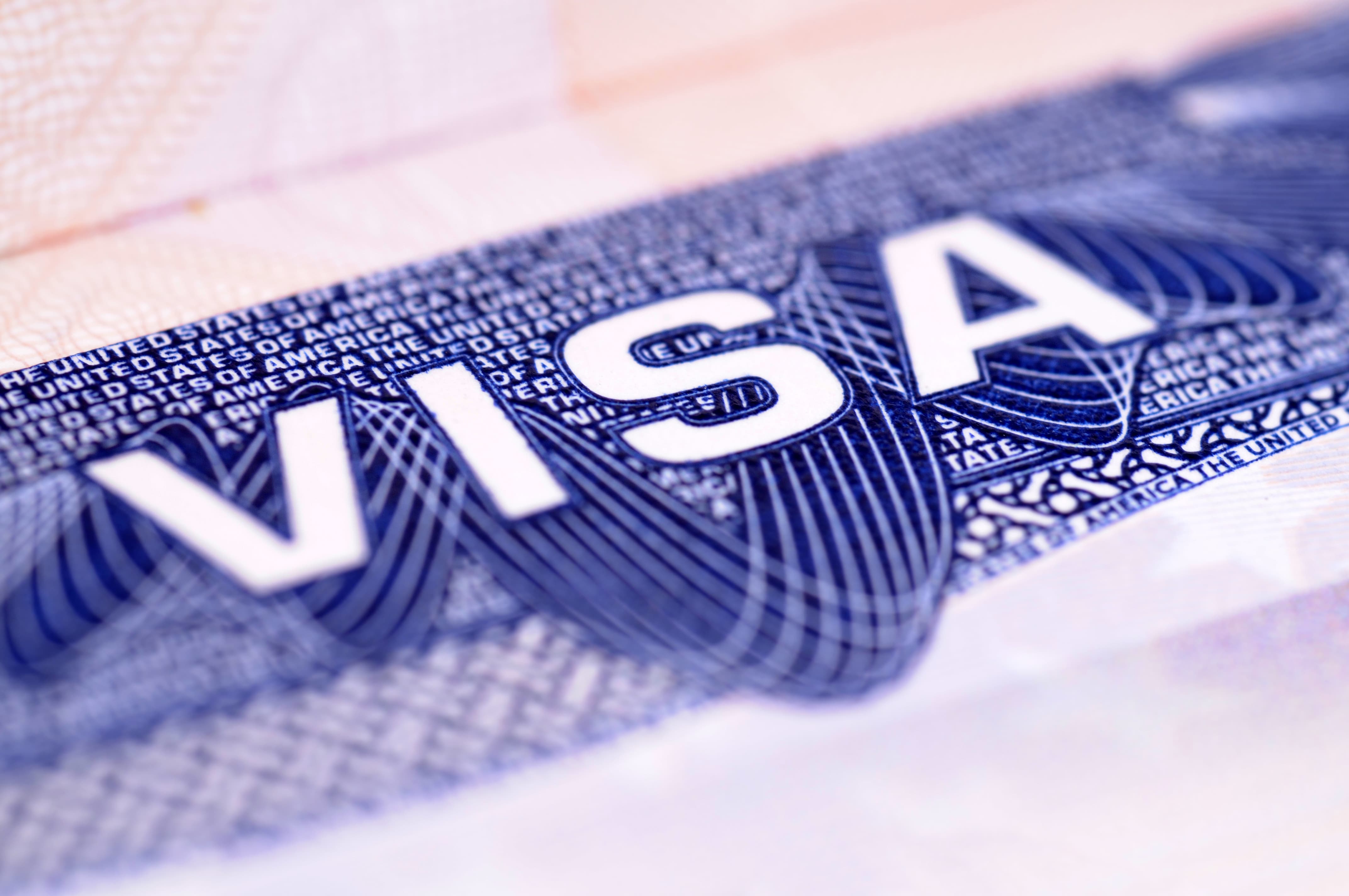
Visa ban imposed by US on ex-EU commissioner over digital platform rules

The US State Department has imposed a visa ban on former EU Commissioner Thierry Breton and four other individuals, citing opposition to European regulation of social media platforms. The US visa ban reflects growing tensions between Washington and Brussels over digital governance and free expression.

US officials said the visa ban targets figures linked to organisations involved in content moderation and disinformation research. Those named include representatives from HateAid, the Center for Countering Digital Hate, and the Global Disinformation Index, alongside Breton.

Secretary of State Marco Rubio accused the individuals of pressuring US-based platforms to restrict certain viewpoints. A senior State Department official described Breton as a central figure behind the EU’s Digital Services Act, a law that sets obligations for large online platforms operating in Europe.

Breton rejected the US visa ban, calling it a witch hunt and denying allegations of censorship. European organisations affected by the decision criticised the move as unlawful and authoritarian, while the European Commission said it had sought clarification from US authorities.

France and the European Commission condemned the visa ban and warned of a possible response. EU officials said European digital rules are applied uniformly and are intended to support a safe, competitive online environment.

Would you like to learn more about AI, tech, and digital diplomacy? If so, ask our Diplo chatbot!

Santa Tracker services add new features on Christmas Eve

AI-powered tools are adding new features to long-running Santa Tracker services used by families on Christmas Eve. Platforms run by NORAD and Google allow users to follow Father Christmas’s journey through their Santa Tracker tools, which also introduce interactive and personalised digital experiences.

NORAD’s Santa Tracker, first launched in 1955, now features games, videos, music, and stories in addition to its live tracking map. This year, the service introduced AI-powered features that generate elf-style avatars, create toy ideas, and produce personalised holiday stories for families.

The Santa Tracker presents Santa’s journey on a 3D globe built using open-source mapping technology and satellite imagery. Users can also watch short videos on Santa Cam, featuring Santa travelling to destinations around the world.

Google’s rendition offers similar features, including a live map, estimated arrival times, and interactive activities available throughout December. Santa’s Village includes games, animations, and beginner-friendly coding activities designed for children.

Google Assistant introduces a voice-based experience to its service, enabling users to ask about Santa’s location or receive updates from the North Pole. Both platforms aim to blend tradition with digital tools to create a seamless and engaging holiday experience.

Would you like to learn more about AI, tech, and digital diplomacy? If so, ask our Diplo chatbot!

AI tools help researchers explore how memory forms in the brain

Researchers at the Marine Biological Laboratory in Massachusetts are using AI and advanced visualisation tools to study how memories are formed in the human brain. Their work focuses on understanding how experiences produce lasting biological changes linked to long-term memory.

The project is led by Andre Fenton of New York University and Abhishek Kumar of the University of Wisconsin–Madison. Using NVIDIA RTX GPUs and HP Z workstations, the team analyses large-scale brain imaging data with custom AI tools and the syGlass virtual reality platform.

Researchers centred on the hippocampus, a brain structure central to memory. Scientists are examining specific protein markers in neurons to reveal how memories are encoded, even though these markers represent only a small fraction of the brain’s overall protein landscape.

High-resolution 3D imaging previously created a major data bottleneck. AI-supported workflows now allow researchers to capture, inspect, and store terabytes of volumetric data, enabling more detailed analysis of brain cell structure and function.

Researchers say understanding memory at a molecular level could support earlier insights into neurological and psychiatric conditions. The tools are also being used for education, allowing students to explore brain data interactively while contributing to ongoing research.

Would you like to learn more about AI, tech, and digital diplomacy? If so, ask our Diplo chatbot!