China is closing 2025 with renewed confidence in its economic resilience and growing influence across technology, manufacturing and global markets. Breakthroughs in AI, electric vehicles, green energy and biopharmaceuticals have reshaped perceptions of the country, moving it beyond its long-standing image as the world’s factory towards a centre of innovation.
Despite trade tensions with the United States and ongoing challenges in property and consumer spending, China is expected to meet its 5% growth target for the year. Exports remained robust as firms diversified away from reliance on the US market, while a temporary trade truce eased pressure on global supply chains. Competition with Washington is increasingly shifting from tariffs to technology leadership in areas such as AI, advanced chips and biotechnology.
AI emerged as a defining theme, with Chinese companies pushing large language models into widespread industrial and consumer use. Government-backed initiatives are accelerating integration across manufacturing, transport and healthcare, while tighter rules aim to address risks such as deepfakes and data security.
At the same time, Chinese electric vehicle manufacturers expanded rapidly overseas, and domestic sales of new energy vehicles surpassed those of traditional cars for the first time.
Capital markets and global outreach also strengthened China’s position. Hong Kong reclaimed its status as the world’s largest IPO market, while Shanghai advanced its role as a financial and fintech hub. Looking to 2026, analysts expect China’s growth story to depend less on volume expansion and more on technological competitiveness, global integration and the ability to navigate a more fragmented geopolitical landscape.
Would you like to learn more about AI, tech and digital diplomacy? If so, ask our Diplo chatbot!
Manus has returned to the spotlight after agreeing to be acquired by Meta in a deal reportedly worth more than $2 billion. The transaction is one of the most high-profile acquisitions of an Asian AI startup by a US technology company and reflects Meta’s push to expand agentic AI capabilities across its platforms.
The startup drew attention in March after unveiling an autonomous AI agent designed to execute tasks such as résumé screening and stock analysis. Founded in China, Manus later moved its headquarters to Singapore and was developed by the AI product studio Butterfly Effect.
Since launch, Manus has expanded its features to include design work, slide creation, and browser-based task completion. The company reported surpassing $100 million in annual recurring revenue and raised $75 million earlier this year at a valuation of about $500 million.
Meta said the acquisition would allow it to integrate the Singapore-based company’s technology into its wider AI strategy while keeping the product running as a standalone service. Manus said subscriptions would continue uninterrupted and that operations would remain based in Singapore.
The deal has drawn political scrutiny in the US due to Manus’s origins and past links to China. Meta said the transaction would sever remaining ties to China, as debate intensifies over investment, data security, and competition in advanced AI systems.
Would you like to learn more about AI, tech, and digital diplomacy? If so, ask our Diplo chatbot!
SoftBank Group has completed a $41 billion investment in OpenAI, marking one of the largest private funding rounds on record. The deal gives the Japanese conglomerate an estimated 11 percent stake in the ChatGPT developer.
The investment reflects SoftBank chief executive Masayoshi Son’s renewed focus on AI and supporting infrastructure. The company is seeking to capitalise on rising demand for the computing capacity that underpins advanced AI models.
SoftBank said the latest funding includes an additional $22.5 billion investment, following an earlier $7.5 billion injection in April. OpenAI also secured a further $11 billion through an expanded syndicated co-investment from other backers.
The funding values OpenAI at roughly $300 billion on a post-money basis, though secondary market transactions later placed the company’s valuation closer to $500 billion. The investment follows SoftBank’s recent agreement to acquire DigitalBridge Group, a digital infrastructure investor.
OpenAI remains a central beneficiary of the global surge in AI spending. The company is also involved in Stargate, a large-scale data centre project backed by SoftBank and other partners to support next-generation AI systems.
Would you like to learn more about AI, tech, and digital diplomacy? If so, ask our Diplo chatbot!
Growing concern over data privacy and subscription fatigue has led an independent developer to create WitNote, an AI note-taking tool that runs entirely offline.
The software allows users to process notes locally on Windows and macOS rather than relying on cloud-based services where personal information may be exposed.
WitNote supports lightweight language models such as Qwen2.5-0.5B that can run with limited storage requirements. Users may also connect to external models through API keys if preferred.
Core functions include rewriting, summarising and extending content, while a WYSIWYG Markdown editor provides a familiar workflow without network delays, instead of relying on web-based interfaces.
Another key feature is direct integration with Obsidian Markdown files, allowing notes to be imported instantly and managed in one place.
The developer says the project remains a work in progress but commits to ongoing updates and user-driven improvements, even joining Apple’s developer programme personally to support smoother installation.
For users seeking AI assistance while protecting privacy and avoiding monthly fees, WitNote positions itself as an appealing offline alternative that keeps full control of data on the local machine.
Would you like to learn more about AI, tech and digital diplomacy? If so, ask our Diplo chatbot!
A white paper released in December 2025 by the Principal Scientific Adviser outlines a strategy to treat AI compute, datasets and models as Digital Public Goods, rather than resources concentrated in a handful of urban hubs.
Despite generating nearly one-fifth of the world’s data, India currently hosts only a small share of global data centre capacity. The paper outlines plans to nearly tenfold capacity expansion by 2030, alongside the rollout of national computing resources through the IndiaAI Mission.
A central pool of GPUs and TPUs is being offered at subsidised rates to researchers and startups, aiming to reduce dependence on foreign cloud providers.
Data access and sovereignty form another pillar of the roadmap. Platforms such as IndiaAIKosh and Bhashini are being developed as shared repositories, hosting thousands of datasets and models across sectors including healthcare, agriculture and Indian languages.
High-performance computing initiatives, including the AIRAWAT supercomputer, are supporting large-scale research in areas such as climate modelling and drug discovery.
The strategy also emphasises regional and state-led infrastructure, with initiatives like Telangana’s federated data exchange seeking to decentralise AI development. Sustainability requirements are also being introduced, as data centres are expected to account for an increasing share of electricity use.
Policymakers view the approach as crucial to developing a form of sovereign AI that fosters innovation beyond major technology hubs and across the broader economy.
Would you like to learn more about AI, tech, and digital diplomacy? If so, ask our Diplo chatbot!
A new international study has shown that an AI model using deep transfer learning can predict spoken language outcomes for children following cochlear implants with 92% accuracy.
Researchers analysed pre-implantation brain MRI scans from 278 children across Hong Kong, Australia, and the US, covering English, Spanish, and Cantonese speakers.
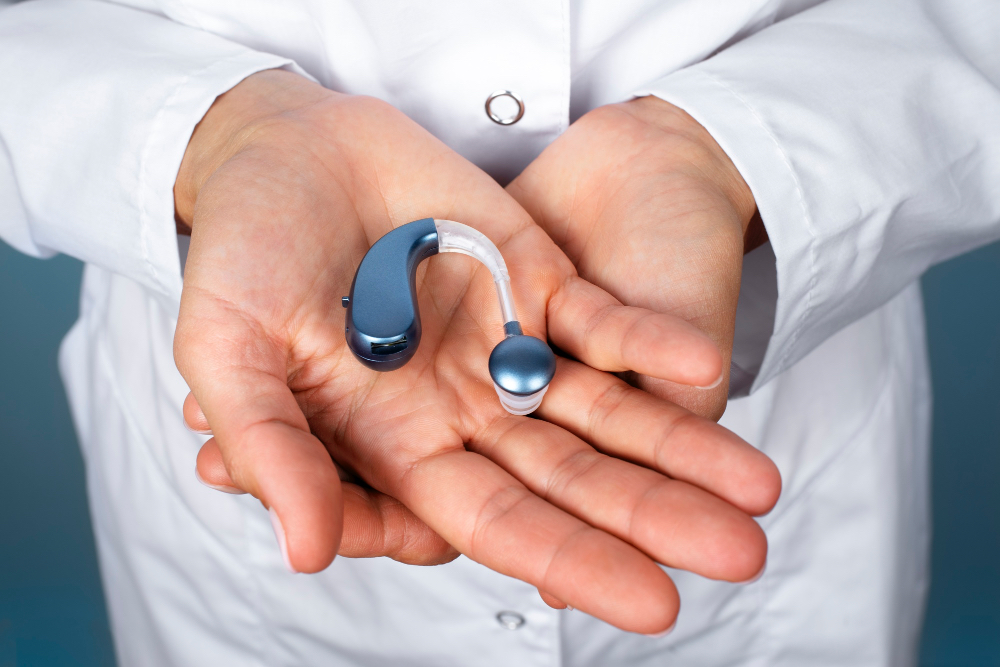
Cochlear implants are the only effective treatment for severe hearing loss, though speech development after early implantation can vary widely. The AI model identifies children needing intensive therapy, enabling clinicians to tailor interventions before implantation.
The study demonstrated that deep learning outperformed traditional machine learning models, handling complex, heterogeneous datasets across multiple centres with different scanning protocols and outcome measures.
Researchers described the approach as a robust prognostic tool for cochlear implant programmes worldwide.
Experts highlighted that the AI-powered ‘predict-to-prescribe’ method could transform paediatric audiology by optimising therapy plans and improving spoken language development for children receiving cochlear implants.
Would you like to learn more about AI, tech and digital diplomacy? If so, ask our Diplo chatbot!
The booming influencer economy of Belgium is colliding with an advertising rulebook that many creators say belongs to another era.
Different obligations across federal, regional and local authorities mean that wording acceptable in one region may trigger a reprimand in another. Some influencers have even faced large fines for administrative breaches such as failing to publish business details on their profiles.
In response, the Influencer Marketing Alliance in Belgium has launched a certification scheme designed to help creators navigate the legal maze instead of risking unintentional violations.
Influencers complete an online course on advertising and consumer law and must pass a final exam before being listed in a public registry monitored by the Jury for Ethical Practices.
Major brands, including L’Oréal and Coca-Cola, already prefer to collaborate with certified creators to ensure compliance and credibility.
Not everyone is convinced.
Some Belgian influencers argue that certification adds more bureaucracy at a time when they already struggle to understand overlapping rules. Others see value as a structured reminder that content creators remain legally responsible for commercial communication shared with followers.
The alliance is also pushing lawmakers to involve influencers more closely when drafting future rules, including taxation and safeguards for child creators.
Consumer groups such as BEUC support clearer definitions and obligations under the forthcoming EU Digital Fairness Act, arguing that influencer advertising should follow the same standards as other media instead of remaining in a grey zone.
Would you like to learn more about AI, tech and digital diplomacy? If so, ask our Diplo chatbot!
A ransomware attack has disrupted the Oltenia Energy Complex, Romania’s largest coal-based power producer, after hackers encrypted key IT systems in the early hours of 26 December.
The state-controlled company confirmed that the Gentlemen ransomware strain locked corporate files and disabled core services, including ERP platforms, document management tools, email and the official website.
The organisation isolated affected infrastructure and began restoring services from backups on new systems instead of paying a ransom. Operations were only partially impacted and officials stressed that the national energy system remained secure, despite the disruption across business networks.
A criminal complaint has been filed. Additionally, both the National Directorate of Cyber Security of Romania and the Ministry of Energy have been notified.
Investigators are still assessing the scale of the breach and whether sensitive data was exfiltrated before encryption. The Gentlemen ransomware group has not yet listed the energy firm on its dark-web leak site, a sign that negotiations may still be underway.
An attack that follows a separate ransomware incident that recently hit Romania’s national water authority, underlining the rising pressure on critical infrastructure organisations.
Would you like to learn more about AI, tech and digital diplomacy? If so, ask our Diplo chatbot!
The Bank of Russia has reiterated its confidence in the long-term potential of the digital ruble, describing the project as one of the most advanced central bank digital currency initiatives globally.
According to the regulator, preparations for a large-scale rollout remain on track for 2026, with internal estimates suggesting the digital ruble could represent up to 5% of all cashless payments within seven years of launch.
Central bank officials highlighted smart contracts as a primary area of application, alongside budgetary payments and cross-border transaction mechanisms, where efficiency and transparency gains are expected.
The regulator added that global payment trends are being closely monitored. Officials stressed the importance of defining a clear role for each financial instrument rather than introducing technology without a specific economic purpose.
Bank of Russia officials also emphasised ongoing collaboration with market participants to identify new opportunities for the digital ruble and maximise its practical impact.
Would you like to learn more about AI, tech and digital diplomacy? If so, ask our Diplo chatbot!
AI dictation reached maturity during the years after many attempts of patchy performance and frustrating inaccuracies.
Advances in speech-to-text engines and large language models now allow modern dictation tools to recognise everyday speech more reliably while keeping enough context to format sentences automatically instead of producing raw transcripts that require heavy editing.
Several leading apps have emerged with different strengths. Wispr Flow focuses on flexibility with style options and custom vocabulary, while Willow blends automation with privacy by storing transcripts locally.
Monologue also prioritises privacy by allowing users to download the model and run transcription entirely on their own machines. Superwhisper caters for power users by supporting multiple downloadable models and transcription from audio or video files.
Other tools take different approaches. VoiceTypr offers an offline-first design with lifetime licensing, Aqua promotes speed and phrase-based shortcuts, Handy provides a simple free open source starting point, and Typeless gives one of the most generous free allowances while promising strong data protection.
Each reflects a wider trend where developers try to balance convenience, privacy, control and affordability.
Users now benefit from cleaner, more natural-sounding transcripts instead of the rigid audio typing tools of previous years. AI dictation has become faster, more accurate and far more usable for everyday note-taking, messaging and work tasks.
Would you like to learn more about AI, tech and digital diplomacy? If so, ask our Diplo chatbot!