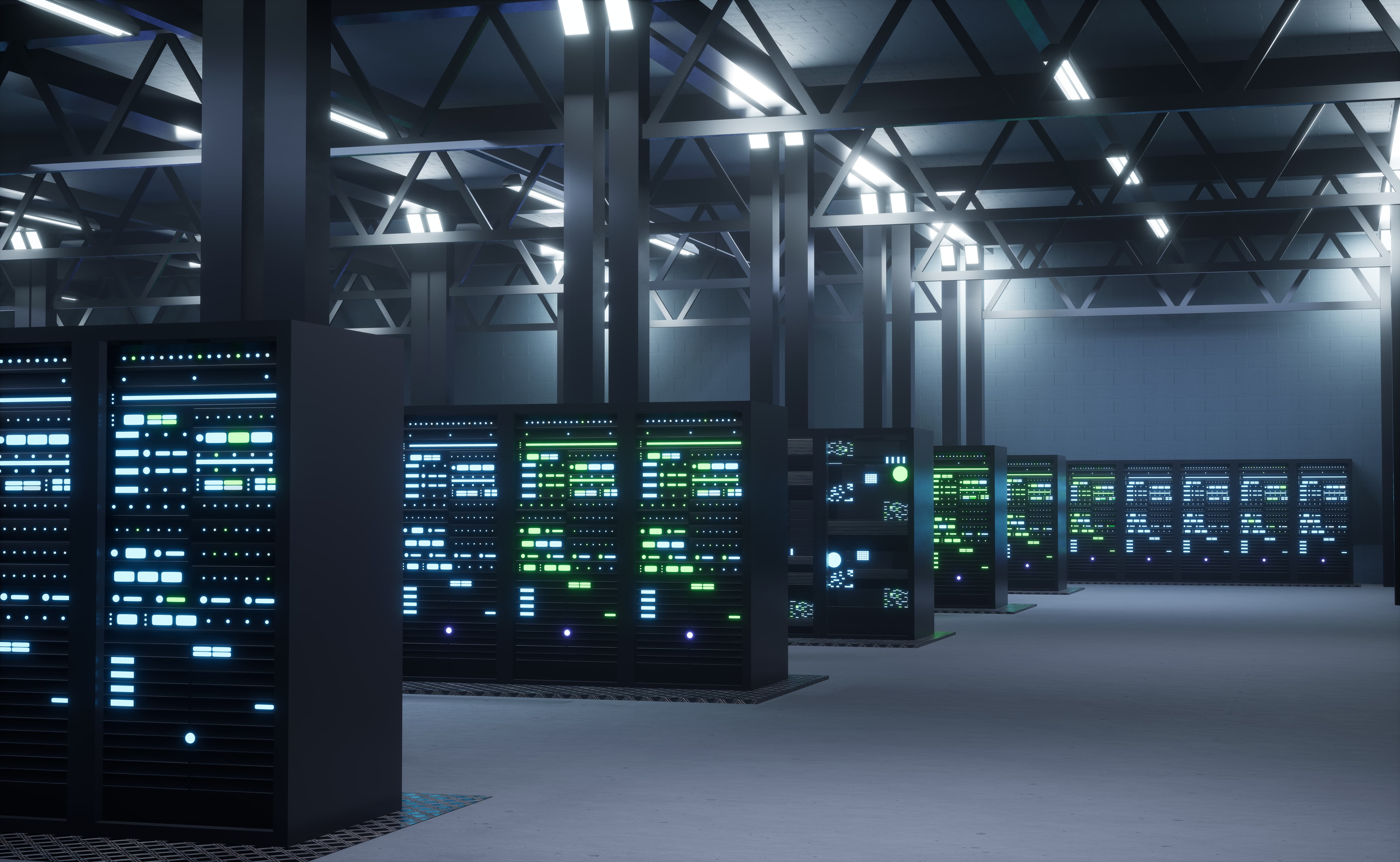
The strategic shift toward open-source AI

The release of DeepSeek’s open-source reasoning model in January 2025, followed by the Trump administration’s July endorsement of open-source AI as a national priority, has marked a turning point in the global AI race, writes Jovan Kurbalija in his blog ‘The strategic imperative of open source AI’.

What once seemed an ideological stance is now being reframed as a matter of geostrategic necessity. Despite their historical reliance on proprietary systems, China and the United States have embraced openness as the key to competitiveness.

Kurbalija adds that history offers clear lessons that open systems tend to prevail. Just as TCP/IP defeated OSI in the 1980s and Linux outpaced costly proprietary operating systems in the 1990s, today’s open-source AI models are challenging closed platforms. Companies like Meta and DeepSeek have positioned their tools as the new foundations of innovation, while proprietary players such as OpenAI are increasingly seen as constrained by their closed architectures.

The advantages of open-source AI are not only philosophical but practical. Open models evolve faster through global collaboration, lower costs by sharing development across vast communities, and attract younger talent motivated by purpose and impact.

They are also more adaptable, making integrating into industries, education, and governance easier. Importantly, breakthroughs in efficiency show that smaller, smarter models can now rival giant proprietary systems, further broadening access.

The momentum is clear. Open-source AI is emerging as the dominant paradigm. Like the internet protocols and operating systems that shaped previous digital eras, openness is proving more ethical and strategically effective. As researchers, governments, and companies increasingly adopt this approach, open-source AI could become the backbone of the next phase of the digital world.

Would you like to learn more about AI, tech and digital diplomacy? If so, ask our Diplo chatbot!

London faces major job shifts as AI takes hold

Nearly a million jobs in London face change as AI reshapes the workplace.

New research suggests repetitive roles such as telemarketing, bookkeeping, and data entry will be among the most affected, with women at greater risk since they comprise much of the workforce in these sectors.

Analysts from LiveCareer UK and McKinsey reported that job adverts for roles most exposed to automation have dropped sharply in the past three years.

They warn that fewer entry-level opportunities could damage the future workforce unless businesses rethink how to balance automation with human creativity and judgement.

Some organisations are already adapting AI to support staff instead of replacing them. At Queen Elizabeth Hospital, a pharmaceutical robot works alongside clinicians, using AI to predict medicine demand and improve patient safety.

Leaders at Lewisham and Greenwich NHS Trust argue AI should relieve staff of repetitive tasks so they can focus on higher-value care.

Across industries, firms from Ford to Microsoft predict significant disruption. Ford’s chief executive has suggested AI could replace half of white-collar roles in the US, while others argue it will boost productivity instead of eliminating jobs.

Tech companies such as Snap are experimenting with AI-driven creativity tools, insisting the technology should act as an aid for workers rather than a threat to employment.

Would you like to learn more about AI, tech and digital diplomacy? If so, ask our Diplo chatbot!

Persistent WordPress malware campaign hides as fake plugin to evade detection

A new malware campaign targets WordPress sites, utilising steganography and persistent backdoors to maintain unauthorised admin access. It uses two components that work together to maintain control.

The attack begins with malicious files disguised as legitimate WordPress components. These files are heavily obfuscated, create administrator accounts with hardcoded credentials, and bypass traditional detection tools. However, this ensures attackers can retain access even after security teams respond.

Researchers say the malware exploits WordPress plugin infrastructure and user management functions to set up redundant access points. It then communicates with command-and-control servers, exfiltrating system data and administrator credentials to attacker-controlled endpoints.

This campaign can allow threat actors to inject malicious code, redirect site visitors, steal sensitive data, or deploy additional payloads. Its persistence and stealth tactics make it difficult to detect, leaving websites vulnerable for long periods.

The main component poses as a fake plugin called ‘DebugMaster Pro’ with realistic metadata. Its obfuscated code creates admin accounts, contacts external servers, and hides by allowing known admin IPs.

Would you like to learn more about AI, tech, and digital diplomacy? If so, ask our Diplo chatbot!

Hitachi launches AI Factory with NVIDIA

Hitachi has unveiled a global AI Factory built on NVIDIA’s reference architecture to accelerate the development of physical AI solutions.

The new platform uses Hitachi iQ systems powered by NVIDIA Blackwell GPUs, alongside the Spectrum-X networking platform, to deliver unified AI infrastructure for research and deployment.

Hitachi said the AI Factory will enhance its HMAX family of AI-enabled solutions across energy, mobility, industry, and technology sectors. It will allow models to interpret data from sensors and cameras, make decisions, and act in real-world environments.

The facility integrates NVIDIA AI Enterprise software and Omniverse libraries, enabling simulation and digital twin capabilities. Both firms describe the initiative as a key driver of social innovation, combining advanced AI computing with industrial applications.

Would you like to learn more about AI, tech and digital diplomacy? If so, ask our Diplo chatbot

UK government considers supplier aid after JLR cyberattack

Jaguar Land Rover (JLR) is recovering from a disruptive cyberattack, gradually bringing its systems back online. The company is focused on rebuilding its operations, aiming to restore confidence and momentum as key digital functions are restored.

JLR said it has boosted its IT processing capacity for invoicing to clear its payment backlog. The Global Parts Logistics Centre is also resuming full operations, restoring parts distribution to retailers.

The financial system used for processing vehicle wholesales has been restored, allowing the company to resume car sales and registration. JLR is collaborating with the UK’s NCSC and law enforcement to ensure a secure restart of operations.

Production remains suspended at JLR’s three UK factories in Halewood, Solihull, and Wolverhampton. The company typically produces around 1,000 cars a day, but staff have been instructed to stay at home since the August cyberattack.

The government is considering support packages for the company’s suppliers, some of whom are under financial pressure. A group identifying itself as Scattered Lapsus$ Hunters has claimed responsibility for the incident.

Would you like to learn more about AI, tech, and digital diplomacy? If so, ask our Diplo chatbot!

UNDP and RIPE NCC join forces for sustainable development

The United Nations Development Programme (UNDP) and the Réseaux IP Européens Network Coordination Centre (RIPE NCC) have signed a new agreement to boost cooperation on digital development. The Memorandum of Understanding, announced in New York during the UN General Assembly’s High-Level Week, focuses on building scalable, secure, and resilient internet infrastructure across the Arab States and beyond.

By combining UNDP’s development mandate with RIPE NCC’s technical expertise, the partnership aims to promote inclusive digital transformation and accelerate progress toward the Sustainable Development Goals.

UNDP’s Abdallah Al Dardari stressed that digital transformation is now a ‘development imperative,’ while RIPE NCC CEO Hans Petter Holen highlighted that resilient internet systems are vital for innovation and growth.

The announcement took place as part of Digital@UNGA Week and came just ahead of UNDP’s High-Level Roundtable on Digital for Sustainable Development. At the roundtable, partners unveiled Morocco’s Digital for Sustainable Development Hub, underscoring the growing role of multi-stakeholder cooperation in shaping inclusive digital ecosystems worldwide.

For more information from the 80th session of the UN General Assembly, visit our dedicated page.

Would you like to learn more about AI, tech and digital diplomacy? If so, ask our Diplo chatbot!

UN Secretary-General launches call for candidates for AI Scientific Panel

The UN Secretary-General has launched an open call for candidates to serve on the Independent International Scientific Panel on Artificial Intelligence.

The Panel was agreed by UN member states in September 2024 as part of the Global Digital Compact; its terms of reference were later defined in a UN General Assembly resolution adopted in August 2025. The 40-member Panel will provide evidence-based scientific assessments on AI’s opportunities, risks, and impacts. Its work will culminate in an annual, policy-relevant – but non-prescriptive –summary report presented to the Global Dialogue on AI Governance, along with up to two updates per year to engage with the General Assembly plenary.

Candidates with expertise in the following fields are invited to apply:

  • AI, including foundation models & generative AI, machine learning methods, core AI subfields (e.g. vision, language, speech/audio, robotics, planning & scheduling, knowledge representation), reliability, safety & alignment, cognitive & neuroscience links, human–AI interaction, AI security and infrastructure;
  • Applied AI, including science (foundational and applied in health, climate, life sciences, physics, health, social sciences, agriculture), engineering, industry and mobility (e.g. materials, drugs, transportation, smart cities, IoT, satellite, navigation), digital society (e.g. misinformation & disinformation, online harms, social networks, software engineering, web),
  • Related fields, including AI opportunity, risk and impact assessment, AI impacts on society, technology, economy, and environment, AI security and infrastructure, data, ethics, and rights, governance (e.g. public policy, international law, standards, oversight, compliance, foresight and scenario-building).

Following the call for nominations (open until 31 October 2025), the Secretary-General will recommend 40 members for appointment by the General Assembly.

For more information from the 80th session of the UN General Assembly, visit our dedicated page.

Would you like to learn more about AI, tech and digital diplomacy? If so, ask our Diplo chatbot!

Global Dialogue on AI Governance officially launched

On 25 September 2025, the President of the UN General Assembly chaired a high-level multistakeholder informal meeting to launch the Global Dialogue on AI Governance.

The creation of the Dialogue was agreed by UN member states in September 2024, with the adoption of the Global Digital Compact. In August 2025, the General Assembly adopted a resolution outlining the terms of reference and modalities for this new global mechanism.

The Global Dialogue on AI Governance is tasked with facilitating open, transparent and inclusive discussions on AI governance. Issues to focus on will include safe, trustworthy AI; bridging capacity and digital divides; social, ethical, and technical implications; interoperability of governance approaches; human rights; transparency and accountability; and open-source AI development.

The Dialogue will meet annually for up to two days alongside UN conferences in Geneva or New York, featuring high-level government participation, thematic discussions, and an annual report presentation. Initially, it will be held back-to-back in the margins of the International Telecommunication Union Artificial Intelligence for Good Global Summit in Geneva, in 2026, and of the multistakeholder forum on science, technology and innovation for the SDGs in New York, in 2027.

Speaking at the launch of the Dialogue, the UN Secretary-General noted that the Dialogue is ‘about creating a space where governments, industry and civil society can advance common solutions together.  Where innovation can thrive — guided by shared standards and common purpose.’

For more information from the 80th session of the UN General Assembly, visit our dedicated page.

Would you like to learn more about AI, tech and digital diplomacy? If so, ask our Diplo chatbot!

Brazil to host massive AI-ready data centre by RT-One

RT-One plans to build Latin America’s largest AI data centre after securing land in Uberlândia, Minas Gerais, Brazil. The US$1.2bn project will span over one million square metres, with 300,000 m² reserved as protected green space.

The site will support high-performance computing, sovereign cloud services, and AI workloads, launching with 100MW capacity and scaling to 400MW. It will run on 100% renewable energy and utilise advanced cooling systems to minimise its environmental impact.

RT-One states that the project will prepare Brazil to compete globally, generate skilled jobs, and train new talent for the digital economy. A wide network of partners, including Hitachi, Siemens, WEG, and Schneider Electric, is collaborating on the development, aiming to ensure resilience and sustainability at scale.

The project is expected to stimulate regional growth, with jobs, training programmes, and opportunities for collaboration between academia and industry. Local officials, including the mayor of Uberlândia, attended the launch event to underline government support for the initiative.

Once complete, the Uberlândia facility will provide sovereign cloud capacity, high-density compute, and AI-ready infrastructure for Brazil and beyond. RT-One says the development will position the city as a hub for digital innovation and strengthen Latin America’s role in the global AI economy.

Would you like to learn more about AI, tech, and digital diplomacy? If so, ask our Diplo chatbot!
UN Secretary-General warns humanity cannot rely on algorithms

UN Secretary-General António Guterres has urged world leaders to act swiftly to ensure AI serves humanity rather than threatens it. Speaking at a UN Security Council debate, he warned that while AI can help anticipate food crises, support de-mining efforts, and prevent violence, it is equally capable of fueling conflict through cyberattacks, disinformation, and autonomous weapons.

‘Humanity’s fate cannot be left to an algorithm,’ he stressed.

Guterres outlined four urgent priorities. First, he called for strict human oversight in all military uses of AI, repeating his demand for a global ban on lethal autonomous weapons systems. He insisted that life-and-death decisions, including any involving nuclear weapons, must never be left to machines.

Second, he pressed for coherent international regulations to ensure AI complies with international law at every stage, from design to deployment. He highlighted the dangers of AI lowering barriers to acquiring prohibited weapons and urged states to build transparency, trust, and safeguards against misuse.

Finally, Guterres emphasised protecting information integrity and closing the global AI capacity gap. He warned that AI-driven disinformation could destabilise peace processes and elections, while unequal access risks leaving developing countries behind.

The UN has already launched initiatives, including a new international scientific panel and an annual AI governance dialogue, to foster cooperation and accountability.

‘The window is closing to shape AI, for peace, justice, and humanity,’ he concluded.

For more information from the 80th session of the UN General Assembly, visit our dedicated page.

Would you like to learn more about AI, tech and digital diplomacy? If so, ask our Diplo chatbot!