The US tech giant Microsoft is expanding its AI strategy by integrating Anthropic’s Claude models into Office 365, adding them to apps like Word, Excel and Outlook instead of relying solely on OpenAI.
Internal tests reportedly showed Anthropic’s systems outperforming OpenAI in specific reasoning and data-processing tasks, prompting Microsoft to adopt a hybrid approach while maintaining OpenAI as a frontier partner.
The shift reflects growing strain between Microsoft and OpenAI, with disputes over intellectual property and cloud infrastructure as well as OpenAI’s plans for greater independence.
By diversifying suppliers, Microsoft reduces risks, lowers costs and positions itself to stay competitive while OpenAI prepares for a potential public offering and develops its own data centres.
Anthropic, backed by Amazon and Google, has built its reputation on safety-focused AI, appealing to Microsoft’s enterprise customers wary of regulatory pressures.
Analysts believe the move could accelerate innovation, spark a ‘multi-model era’ of AI integration, and pressure OpenAI to enhance its technology faster.
The decision comes amid Microsoft’s push to broaden its AI ecosystem, including its in-house MAI-1 model and partnerships with firms like DeepSeek.
Regulators are closely monitoring these developments, given Microsoft’s dominant role in AI investment and the potential antitrust implications of its expanding influence.
Would you like to learn more aboutAI, tech and digital diplomacy? If so, ask our Diplo chatbot!
A group of 12 Democratic US senators unveiled a crypto regulation plan, highlighting the need for bipartisan oversight. The proposal comes in response to Republicans’ plan to advance a market structure bill this month.
The Democrats’ framework outlines seven key pillars, including protections against illicit finance and measures to close gaps in the spot market for digital assets not classified as securities. It also calls for fair and effective regulation, highlighting concerns over the SEC, CFTC, and Treasury Department leadership.
The framework criticised Trump for removing Democratic commissioners and noted his family’s financial ties to crypto projects. Senators urged limits on elected officials and family members profiting from digital assets and reinforced disclosure requirements.
With the House passing the CLARITY Act and the GENIUS Act regulating stablecoins, the Senate is expected to prioritise crypto market structure legislation. However, Democrats remain uncertain whether Republicans will adopt their recommendations, with a final bill unlikely before 2026.
Would you like to learn more about AI, tech and digital diplomacy? If so, ask our Diplo chatbot!
A Ukrainian cybercrime suspect has been added to the EU’s Most Wanted list for his role in the 2019 LockerGoga ransomware attack against a major Norwegian aluminium company and other global incidents.
The fugitive is considered a high-value target and is wanted by multiple countries. The US Department of Justice has offered up to USD 10 million for information leading to the arrest.
Europol stated that the identification of the suspect followed a lengthy, multinational investigation supported by Eurojust, with damages from the network estimated to be in the billions. Several members of the group have already been detained in Ukraine.
Investigators have mapped the network’s operations, tracing its hierarchy from malware developers and intrusion experts to money launderers who processed illicit proceeds. The wanted man is accused of directly deploying LockerGoga ransomware.
Europol has urged the public to visit the EU Most Wanted website and share information that could assist in locating the fugitive. The suspect’s profile is now live on the platform.
Would you like to learn more about AI, tech, and digital diplomacy? If so, ask our Diplo chatbot!
Kazakhstan President Kassym-Jomart Tokayev has announced plans to establish a State Digital Asset Fund to consolidate the country’s position in digital finance. The fund will accumulate a strategic crypto reserve through the National Bank’s Investment Corporation.
Crypto adoption in Kazakhstan has surged, doubling ownership from 4% in 2022 to 8% in 2024. Mining generated over $10 million in taxes, while licensed providers contributed $367,000 in the first eight months 2024.
Tokayev warned of rising online fraud, highlighting the need for anti-fraud centres, biometric ID systems, and enhanced legislation to protect citizens and state finances. He connected digital finance to urban development, unveiling Alatau City, a $7.2 billion fully digitalised smart city with crypto payments.
The initiative positions Kazakhstan as a regional leader in crypto strategy, combining economic growth, technological innovation, and digital infrastructure development.
Would you like to learn more about AI, tech and digital diplomacy? If so, ask our Diplo chatbot!
Yevgeny Masharov, a member of the Public Chamber of the Russian Federation, said a national crypto bank would bring vast sums of crypto into the legal economy. He added that lawmakers also aim to ban quasi-legal exchanges while exploring the launch of state-run trading platforms.
Masharov suggested that a crypto bank could be a tool against online fraud, particularly schemes involving ‘droppers’ who launder cash and crypto for criminals. He argued that by keeping transactions within an official system, authorities would have more control over illicit flows.
The initiative follows similar moves in Belarus, where President Alexander Lukashenko has instructed officials to accelerate work on a national crypto bank. Moscow also views such a project as a way to support miners, enable safer cross-border payments, and reduce reliance on Western-controlled financial networks.
Would you like to learn more about AI, tech and digital diplomacy? If so, ask our Diplo chatbot!
Meta has plans to spend at least $600 billion on US data centres and AI infrastructure by 2028. The forecast, reported by The Information, was shared by CEO Mark Zuckerberg during a dinner with President Donald Trump and other technology leaders.
Capital expenditure is set to rise sharply over the next three years. Meta projects spending of $66–72 billion in 2025, nearly 70% higher than 2024, with another significant increase expected in 2026.
The company said the surge in investment will be driven primarily by the need to expand AI computing power.
Zuckerberg confirmed that Meta aims to deploy more than one million GPUs to train its next generation of AI models.
The company is also investing heavily in talent and infrastructure as it builds a dedicated team focused on developing artificial super intelligence, a concept referring to AI systems with capabilities beyond those of humans.
The spending commitment highlights how major US technology companies are racing to secure computing capacity for AI. Meta is pledging ‘hundreds of billions of dollars’ towards expanding its data centre footprint in the years ahead.
Would you like to learn more about AI, tech, and digital diplomacy? If so, ask our Diplo chatbot!
Uber and Chinese startup Momenta will begin robotaxi testing in Munich in 2026, marking their first public deployment in continental Europe. The trials will start with human safety operators, with plans to expand across additional European cities.
Founded in 2016, Momenta is one of China’s leading autonomous vehicle companies, having tested self-driving cars since 2018. The company is already collaborating with automakers such as Mercedes-Benz and BMW to integrate advanced driver assistance systems.
Uber is broadening its global AV network, which already spans 20 partners across mobility, delivery, and freight. In the US, Waymo robotaxis operate via Uber’s app, while international partnerships include WeRide in the Gulf and Wayve in London.
Competition in Europe is intensifying. Baidu from China and Lyft plan to roll out robotaxis in Germany and the UK next year, while Uber has chosen Munich, Germany, as its engineering base and a strong automotive ecosystem.
German regulators must still certify Momenta’s technology and approve geo-fenced operating areas. If successful, Munich will become Momenta’s first European launchpad, building on its Shanghai robotaxi service and global ADAS deployment.
Would you like to learn more about AI, tech, and digital diplomacy? If so, ask our Diplo chatbot!
Sam Altman, X enthusiast and Reddit shareholder, has expressed doubts over whether social media content can still be distinguished from bot activity. His remarks followed an influx of praise for OpenAI Codex on Reddit, where users questioned whether such posts were genuine.
Altman noted that humans are increasingly adopting quirks of AI-generated language, blurring the line between authentic and synthetic speech. He also pointed to factors such as social media optimisation for engagement and astroturfing campaigns, which amplify suspicions of fakery.
The comments follow OpenAI’s backlash over the rollout of GPT-5, which saw Reddit communities shift from celebratory to critical. Altman acknowledged flaws in a Reddit AMA, but the fallout left lasting scepticism and lower enthusiasm among AI users.
Underlying this debate is the wider reality that bots dominate much of the online environment. Imperva estimates that more than half of 2024’s internet traffic was non-human, while X’s own Grok chatbot admitted to hundreds of millions of bots on the platform.
Some observers suggest Altman’s comments may foreshadow an OpenAI-backed social media venture. Whether such a project could avoid the same bot-related challenges remains uncertain, with research suggesting that even bot-only networks eventually create echo chambers of their own.
Would you like to learn more about AI, tech, and digital diplomacy? If so, ask our Diplo chatbot!
Quantum computers could become more efficient with a new quantum router that directs data more quickly within machines. Researchers at Stanford have built the component, which could eventually form the backbone of quantum random access memory (QRAM).
The router utilises superconducting qubits, controlled by electromagnetic pulses, to transmit information to quantum addresses. Unlike classical routers, it can encode addresses in superposition, allowing data to be stored in two places simultaneously.
In tests with three qubits, the router achieved a fidelity of around 95%. If integrated into QRAM, it could unlock new algorithms by placing information into quantum states where locations remain indeterminate.
Experts say the advance could benefit areas such as quantum machine learning and database searches. It may also support future ideas, such as quantum IP addresses, although more reliable designs with larger qubit counts are still required.
The Stanford team acknowledges the device needs refinement to reduce errors. But with further development, the quantum router could be a vital step toward practical QRAM and more powerful quantum computing applications.
Would you like to learn more about AI, tech, and digital diplomacy? If so, ask our Diplo chatbot!
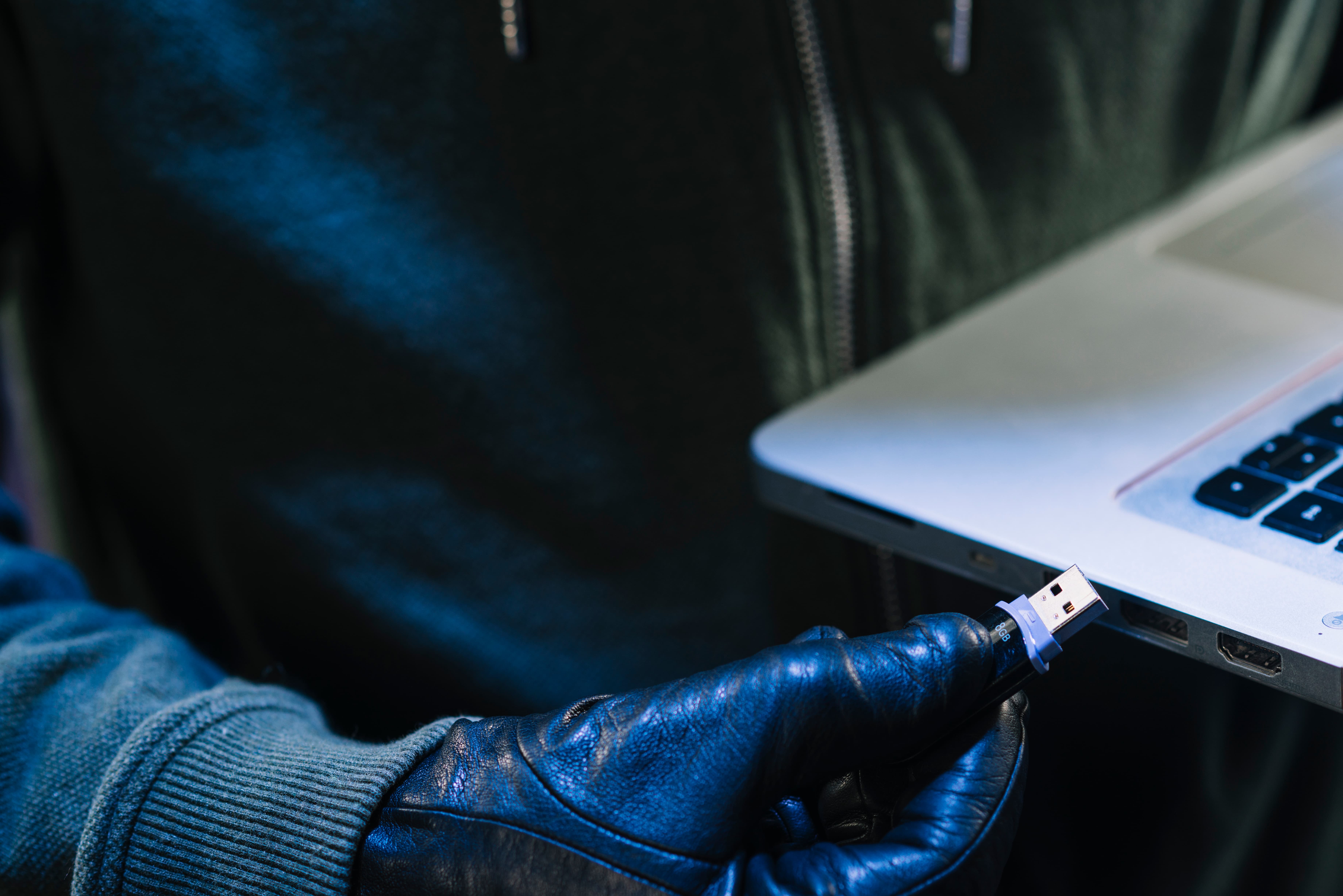
A malvertising campaign is targeting IT workers in the EU with fake GitHub Desktop installers, according to Arctic Wolf. The goal is to steal credentials, deploy ransomware, and infiltrate sensitive systems. The operation has reportedly been active for over six months.
Attackers used malicious Google Ads that redirected users to doctored GitHub repositories. Modified README files mimicked genuine download pages but linked to a lookalike domain. MacOS users received the AMOS Stealer, while Windows victims downloaded bloated installers hiding malware.
The Windows malware evaded detection using GPU-based checks, refusing to run in sandboxes that lacked real graphics drivers. On genuine machines, it copied itself to %APPDATA%, sought elevated privileges, and altered Defender settings. Analysts dubbed the technique GPUGate.
The payload persisted by creating privileged tasks and sideloading malicious DLLs into legitimate executables. Its modular system could download extra malware tailored to each victim. The campaign was geo-fenced to EU targets and relied on redundant command servers.
Researchers warn that IT staff are prime targets due to their access to codebases and credentials. With the campaign still active, Arctic Wolf has published indicators of compromise, Yara rules, and security advice to mitigate the GPUGate threat.
Would you like to learn more about AI, tech, and digital diplomacy? If so, ask our Diplo chatbot!