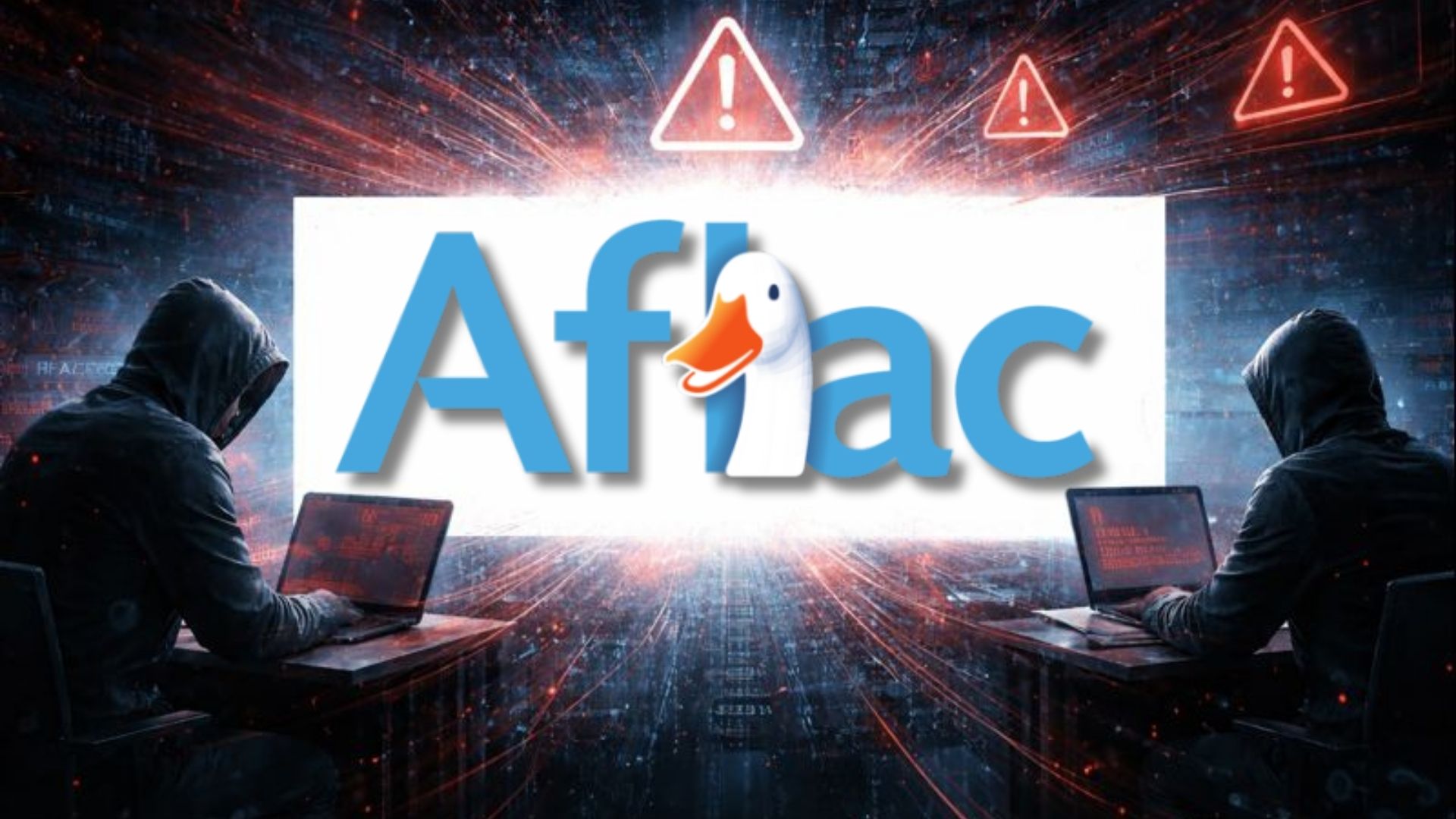
US insurance firm Aflac has confirmed that a cyberattack disclosed in June affected around 22.65 million people. The breach involved the theft of sensitive personal and health information; however, the company initially did not specify the number of individuals affected.
In filings with the Texas attorney general, Aflac said the compromised data includes names, dates of birth, home addresses, government-issued identification numbers, driving licence details, and Social Security numbers. Medical and health insurance information was also accessed during the incident.
A separate filing with the Iowa attorney general suggested the attackers may be linked to a known cybercriminal organisation. Federal law enforcement and external cybersecurity specialists indicated the group had been targeting the insurance sector more broadly.
Security researchers have linked a wave of recent insurance-sector breaches to Scattered Spider, a loosely organised group of predominantly young, English-speaking hackers. The timing and targeting of the Aflac incident align with the group’s activity.
The US company stated that it has begun notifying the affected individuals. The company, which reports having around 50 million customers, did not respond to requests for comment. Other insurers, including Erie Insurance and Philadelphia Insurance Companies, reported breaches during the same period.
Would you like to learn more about AI, tech, and digital diplomacy? If so, ask our Diplo chatbot!
Mandatory facial verification will be introduced in South Korea for anyone opening a new mobile phone account, as authorities try to limit identity fraud.
Officials said criminals have been using stolen personal details to set up phone numbers that later support scams such as voice phishing instead of legitimate services.
Major mobile carriers, including LG Uplus, Korea Telecom and SK Telecom, will validate users by matching their faces against biometric data stored in the PASS digital identity app.
Such a requirement expands the country’s identity checks rather than replacing them outright, and is intended to make it harder for fraud rings to exploit stolen data at scale.
The measure follows a difficult year for data security in South Korea, marked by cyber incidents affecting more than half the population.
SK Telecom reported a breach involving all 23 million of its customers and now faces more than $1.5 billion in penalties and compensation.
Regulators also revealed that mobile virtual network operators were linked to 92% of counterfeit phones uncovered in 2024, strengthening the government’s case for tougher identity controls.
Would you like to learn more aboutAI, tech and digital diplomacy? If so, ask our Diplo chatbot!
Authorities in Romania have confirmed a severe ransomware attack on the national water administration ‘Apele Române’, which encrypted around 1,000 IT systems across most regional water basin offices.
Attackers used Microsoft’s BitLocker tool to lock files and then issued a ransom note demanding contact within seven days, although cybersecurity officials continue to reject any negotiation with criminals.
The disruption affected email systems, databases, servers and workstations instead of operational technology, meaning hydrotechnical structures and critical water management systems continued to function safely.
Staff coordinated activity by radio and telephone, and flood defence operations remained in normal working order while investigations and recovery progressed.
National cyber agencies, including the National Directorate of Cyber Security and the Romanian Intelligence Service’s cyber centre, are now restoring systems and moving to include water infrastructure within the state cyber protection framework.
The case underlines how ransomware groups increasingly target essential utilities rather than only private companies, making resilience and identity controls a strategic priority.
Would you like to learn more aboutAI, tech and digital diplomacy? If so, ask our Diplo chatbot!
Prime Minister Kim Min-seok has called for punitive fines of up to 10 percent of company sales for repeated and serious data breaches, as public anger grows over large-scale leaks.
The government is seeking swift legislation to impose stronger sanctions on firms that fail to safeguard personal data, reflecting President Lee Jae Myung’s stance that violations require firm penalties instead of lenient warnings.
Kim said corporate responses to recent breaches had fallen far short of public expectations and stressed that companies must take full responsibility for protecting customer information.
Under the proposed framework, affected individuals would receive clearer notifications that include guidance on their rights to seek damages.
The government of South Korea also plans to strengthen investigative powers through coercive fines for noncompliance, while pursuing rapid reforms aimed at preventing further harm.
The tougher line follows a series of major incidents, including a leak at Shinhan Card that affected around 190,000 merchant records and a large-scale breach at Coupang that exposed the data of 33.7 million users.
Officials have described the Coupang breach as a serious social crisis that has eroded public trust.
Authorities have launched an interagency task force to identify responsibility and ensure tighter data protection across South Korea’s digital economy instead of relying on voluntary company action.
Would you like to learn more aboutAI, tech and digital diplomacy? If so, ask our Diplo chatbot!
If you are piecing together a new workstation or gaming rig, or just hunting for extra RAM or SSD storage, you have stumbled into the worst possible moment. With GPU prices already sky-high, the recent surge in RAM and storage costs has hit consumers hard, leaving wallets lighter and sparking fresh worries about where the tech market is headed.
On the surface, the culprit behind these soaring prices is a sudden RAM shortage. Prices for 32GB and 64GB sticks have skyrocketed by as much as 600 percent, shelves are emptying fast, and the balance between supply and demand has completely unraveled.
But blaming the sky-high prices on empty shelves only tells part of the story. Why has affordable RAM vanished? How long will this chaos last? And most intriguingly, what role does AI play in this pricing storm?
Tracing the causes of RAM pricing spikes
The US tariffs imposed on China on 1 August 2025, played a substantial role in the increase in DRAM prices. Global imports of various goods have become more costly, investments and workforce onboarding have been halted, and many businesses relying on imports have adopted a ‘wait-and-see’ approach to how they will do business going forward.
However, the worst was yet to come. On 3 December, Micron, one of the world’s leading manufacturers of data storage and computer memory components, announced its withdrawal from the RAM consumer market, citing a ‘surge in demand for memory and storage’ driven by supply shortages of memory and storage for AI data centres.
With Micron out of the picture, we are left with only two global consumer RAM and high-bandwidth memory (HBM) manufacturers: Samsung and SK Hynix. While there are countless RAM brands on the market, with Corsair, Kingston, and Crucial leading the charge, all of them rely on the three aforementioned suppliers for memory chips.
Micron’s exit was likely met with obscured glee by Samsung and SK Hynix of South Korea, who seized the opportunity to take over Crucial’s surrendered territory and set the stage for their DRAM/HBM supply duel. The latter supplier was quick to announce the completion of its M15X semiconductor fabrication plant (fab), but warned that RAM supply constraints are likely to last until 2028 at the earliest.
Amid the ruckus, rumours surfaced that Samsung would be sunsetting its SATA SSD production, which the company quickly extinguished. On the contrary, the Korean giant announced its intention to dethrone SK Hynix as the top global RAM provider, with more than 80 percent of its projected profits coming directly from Samsung Electronics.
Despite their established market shares, both enterprises were caught off guard when their main rival threw in the towel, and their production facilities are unable, at current capacity, to accommodate the resulting market void. It is nigh certain that the manufacturers will use their newly gained market dominance to their advantage, setting prices based on their profit margins and customers’ growing demand for their products. In a nutshell, they have the baton, and we must play to their tune.
AI infrastructure and the reallocation of RAM supply
Micron, deeming commodity RAM a manufacturing inconvenience, made a move that was anything but rash. In October, Samsung and SK Hynix joined forces with OpenAI to supply the AI giant with a monthly batch of 900,000 DRAM wafers. OpenAI’s push to enhance its AI infrastructure and development was presumably seen by Micron as a gauntlet thrown by its competitors, and Crucial’s parent company took no time in allocating its forces to a newly opened front.
Lured by lucrative, long-term, high-volume contracts, all three memory suppliers saw AI as an opportunity to open new income streams that would not dry up for years to come. While fears of the AI bubble bursting are omnipresent and tangible, neither Samsung, SK Hynix, nor Micron are overly concerned about what the future holds for LLMs and AGI, as long as they continue to get their RAM money’s worth (literally).
AI has expanded across multiple industries, and three competitors judged Q4 2025 the opportune time to put all their RAM eggs in one basket. AI as a business model has yet to reach profitability, but corporate investors poured more than USD 250 billion into AI in 2024 alone. Predictions for 2025 have surpassed the USD 500 billion mark, but financiers will inevitably grow more selective as the AI startup herd thins and predicted cash cows fail to deliver future profits.
To justify massive funding rounds, OpenAI, Microsoft, Google, and other major AI players need to keep their LLMs in a perpetual growth cycle by constantly expanding their memory capacity. A hyperscale AI data centre can contain tens of thousands to hundreds of thousands of GPUs, each with up to 180 gigabytes of VRAM. Multiply that by 1,134, the current number of hyperscale data centres, and it is easy to see why Micron was eager to ditch the standard consumer market for more bankable opportunities.
The high demand for RAM has changed the ways manufacturers view risk and opportunity. AI infrastructure brings more volume, predictability, and stable contracts than consumer markets, especially during uncertain times and price swings. Even if some areas of AI do not meet long-term hopes, the need for memory in the near and medium term is built into data centre growth plans. For memory makers, shifting capacity to AI is a practical response to current market incentives, not just a risky bet on a single trend.
The aftermath of the RAM scarcity
The sudden price inflation and undersupply of RAM have affected more than just consumers building high-end gaming PCs and upgrading laptops. Memory components are critical to all types of devices, thereby affecting the prices of smartphones, tablets, TVs, game consoles, and many other IoT devices. To mitigate production costs and maintain profit margins, device manufacturers are tempted to offer their products with less RAM, resulting in substandard performance at the same price.
Businesses that rely on servers, cloud services, or data processing are also expected to get caught in the RAM crossfire. Higher IT costs are predicted to slow down software upgrades, digital services, and cybersecurity improvements. Every SaaS company, small or large, risks having its platforms overloaded or its customers’ data compromised.
Public institutions, such as schools, hospitals, and government agencies, will also have to bend backwards to cover higher hardware costs due to more expensive RAM. Operating on fixed budgets allows only so much wiggle room to purchase the required software and hardware, likely leading to delays in public digital projects and the continued use of outdated electronic equipment.
Rising memory costs also influence innovation and competition. When basic components become more expensive, it is harder for new companies to enter the market or scale up their services. This can favour large, well-funded firms and reduce diversity in the tech ecosystem. Finally, higher RAM prices can indirectly affect digital access and inclusion. More expensive devices and services make it harder for individuals and communities to afford modern technology, widening existing digital divides.
In short, when RAM becomes scarce or expensive, the effects extend far beyond memory pricing, influencing how digital services are accessed, deployed, and maintained across the economy. While continued investment in more capable AI models is a legitimate technological goal, it also raises a practical tension.
Advanced systems deliver limited value if the devices and infrastructure most people rely on lack the memory capacity required to run them efficiently. The challenge of delivering advanced AI models and AI-powered apps to subpar devices is one that AI developers will have to take into account moving forward. After all, what good is a state-of-the-art LLM if a run-of-the-mill PC or smartphone lacks the RAM to handle it?
The road ahead for RAM supply and pricing
As mentioned earlier, some memory component manufacturers predict that the RAM shortage will remain a burr under consumers’ saddles for at least a few years. Pompous predictions of the AI bubble’s imminent bursting have mostly ended up in the ‘I’ll believe it when I see it’ archive section, across the hall from the ‘NFTs are the future of digital ownership’ district.
Should investments continue to fill the budgets of OpenAI, Perplexity, Anthropic, and the rest, they will have the resources to reinforce their R&D departments, acquire the necessary memory components, and further develop their digital infrastructure. In the long run, the technology powering AI models may become more sophisticated to the point where energy demands reach a plateau. In that case, opportunities for expansion would be limitless.
Even though one of the biggest RAM manufacturers has fully shifted to making AI infrastructure components, there is still a gap large enough to be filled by small- and medium-sized producers. Companies such as Nanya Technology from Taiwan or US-based Virtium hold a tenth of the overall market share, but they have been given the opportunity to carry Micron’s torch and maintain competitiveness in their own capacities.
The current RAM price crisis is not caused by a single event, but by the way new technologies are changing the foundations of the digital economy. As AI infrastructure takes up more of the global memory supply, higher prices and limited availability are likely to continue across consumer, business, and public-sector markets. How governments, manufacturers, and buyers respond will shape not only the cost of hardware but also how accessible and resilient digital systems remain.
Would you like to learn more about AI, tech, and digital diplomacy? If so, ask our Diplo chatbot!
The growing demand for AI is reshaping the fortunes of the memory chip industry, according to leading manufacturers, who argue that the scale of AI investment is altering the sector’s typical boom-and-bust pattern.
The technology is creating more structural demand, rather than the sharp cyclical spikes that previously defined the market.
AI workloads depend heavily on robust memory systems, particularly as companies expand data centre capacity worldwide. Major chipmakers now expect steadier growth because AI models require vast data handling rather than one-off hardware surges.
Analysts suggest it could reduce the volatility that has often led to painful downturns for the industry.
Additionally, some reports claim that Japanese technology group Rakuten is prioritising low-cost AI development to improve profitability across its businesses.
Its AI leadership stresses the need to deploy systems that maximise margins instead of simply chasing capability for its own sake.
The developments underscore how AI is not only transforming software and services but also reshaping the economics of the hardware required to power them, from memory chips to cloud infrastructure on a global scale.
Would you like to learn more aboutAI, tech and digital diplomacy? If so, ask our Diplo chatbot!
Teenagers account for most of the serious threats reported against supermarket staff across South Island stores, according to a privacy report released on Foodstuffs South Island’s facial recognition trial.
The company is testing the technology in three Christchurch supermarkets to identify only adult repeat offenders, rather than minors, even though six out of the ten worst offenders are under eighteen.
A system that creates a biometric template of every shopper at the trial stores and deletes it if there is no match with a watchlist. Detections remain stored within the Auror platform for seven years, while personal images are deleted on the same day.
The technology is supplied by the Australian firm Vix Vizion, in collaboration with Auror, which is already known for its vehicle plate recognition systems.
Foodstuffs argues the trial is justified by rising threatening and violent behaviour towards staff across all age groups.
A previous North Island pilot scanned 226 million faces and generated more than 1700 alerts, leading the Privacy Commissioner of New Zealand to conclude that strong safeguards could reduce privacy intrusion to an acceptable level.
The watchlist only includes adults previously involved in violence or serious threats, and any matches undergo human checks before action is taken.
Foodstuffs continues to provide regular updates to the Office of the Privacy Commissioner as the South Island trial proceeds.
Would you like to learn more aboutAI, tech and digital diplomacy? If so, ask our Diplo chatbot!
TikTok removed fake adverts for weight loss drugs after a company impersonating UK retailer Boots used AI-generated videos. The clips falsely showed healthcare professionals promoting prescription-only medicines.
Boots said it contacted TikTok after becoming aware of the misleading adverts circulating on the platform. TikTok confirmed the videos were removed for breaching its rules on deceptive and harmful advertising.
BBC reporting found the account was briefly able to repost the same videos before being taken down. The account appeared to be based in Hong Kong and directed users to a website selling the drugs.
UK health regulators warned that prescription-only weight loss medicines must only be supplied by registered pharmacies. TikTok stated that it continues to strengthen its detection systems and bans the promotion of controlled substances.
Would you like to learn more about AI, tech, and digital diplomacy? If so, ask our Diplo chatbot!
An EU-funded project, AIOLIA, is examining how Europe’s approach to trustworthy AI can be applied in practice. Principles such as transparency and accountability are embedded in the AI Act’s binding rules. Turning those principles into design choices remains difficult.
The project focuses on closing that gap by analysing how AI ethics is applied in real systems. Its work supports the implementation of AI Act requirements beyond legal text. Lessons are translated into practical training.
Project coordinator Alexei Grinbaum argues that ethical principles vary widely by context. Engineers are expected to follow them, but implications differ across systems. Bridging the gap requires concrete examples.
AIOLIA analyses ten use cases across multiple domains involving professionals and citizens. The project examines how organisations operationalise ethics under regulatory and organisational constraints. Findings highlight transferable practices without a single model.
Training is central to the initiative, particularly for EU ethics evaluators and researchers working under the AI Act framework. As AI becomes more persuasive, risks around manipulation grow. AIOLIA aims to align ethical language with daily decisions.
Would you like to learn more about AI, tech, and digital diplomacy? If so, ask our Diplo chatbot!
ChatGPT Atlas has introduced an agent mode that allows an AI browser agent to view webpages and perform actions directly. The feature supports everyday workflows using the same context as a human user. Expanded capability also increases security exposure.
Prompt injection has emerged as a key threat to browser-based agents, targeting AI behaviour rather than software flaws. Malicious instructions embedded in content can redirect an agent from the user’s intended action. Successful attacks may trigger unauthorised actions.
To address the risk, OpenAI has deployed a security update to Atlas. The update includes an adversarially trained model and strengthened safeguards. It followed internal automated red teaming.
Automated red teaming uses reinforcement learning to train AI attackers that search for complex exploits. Simulations test how agents respond to injected prompts. Findings are used to harden models and system-level defences.
Prompt injection is expected to remain a long-term security challenge for AI agents. Continued investment in testing, training, and rapid mitigation aims to reduce real-world risk. The goal is to achieve reliable and secure AI assistance.
Would you like to learn more about AI, tech, and digital diplomacy? If so, ask our Diplo chatbot!