EXA to boost European connectivity with new fibre route and subsea cable

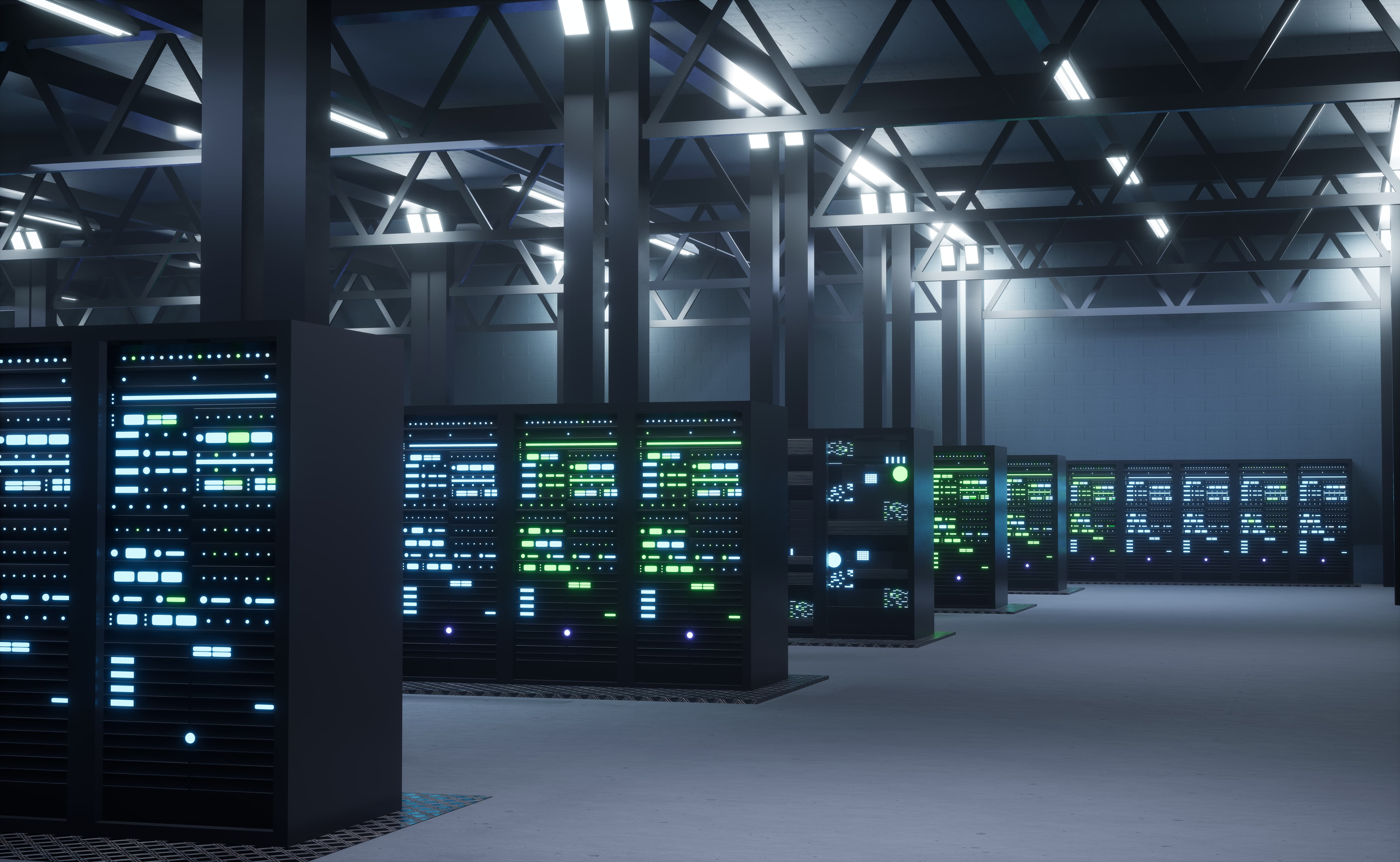
EXA Infrastructure has launched a strategic 1,200 km high-capacity fibre route connecting London, Frankfurt, Amsterdam, and Brussels (FLAP cities), featuring the first new subsea cable in the North Sea corridor in 25 years.

The new deployment includes 1,085 km of low-loss terrestrial fibre and a 115 km subsea segment using ultra-low-loss G.654C cable, running between Margate (UK) and Ostend (Belgium).

The project also introduces two new landing stations, EXA’s 21st and 22nd globally, enhancing its infrastructure across the UK, Belgium, and the Netherlands. These efforts complement EXA’s prior investments in the Channel Tunnel route, including upgrades to in-line amplifier (ILA) facilities and modern, high-fibre-count cables.

The new route is part of EXA’s broader push to improve Europe’s digital infrastructure with ultra-low latency, high-bandwidth, and scalable fibre paths between key hubs.

Over 65,000 km of its network is now 400G-enabled, supporting future scalability demands. EXA’s network spans 155,000 km across 37 countries, including six transatlantic cables. Among them is EXA Express, which offers the lowest latency link between Europe and North America.

The network serves a range of mission-critical functions, including hyperscale infrastructure for global enterprises, government networks, and specialised solutions for latency-sensitive industries like finance, gaming, and broadcasting.

Would you like to learn more about AI, tech and digital diplomacy? If so, ask our Diplo chatbot!

Military AI and the void of accountability

In her blog post ‘Military AI: Operational dangers and the regulatory void,’ Julia Williams warns that AI is reshaping the battlefield, shifting from human-controlled systems to highly autonomous technologies that make life-and-death decisions. From the United States’ Project Maven to Israel’s AI-powered targeting in Gaza and Ukraine’s semi-autonomous drones, military AI is no longer a futuristic concept but a present reality.

While designed to improve precision and reduce risks, these systems carry hidden dangers—opaque ‘black box’ decisions, biases rooted in flawed data, and unpredictable behaviour in high-pressure situations. Operators either distrust AI or over-rely on it, sometimes without understanding how conclusions are reached, creating a new layer of risk in modern warfare.

Bias remains a critical challenge. AI can inherit societal prejudices from the data it is trained on, misinterpret patterns through algorithmic flaws, or encourage automation bias, where humans trust AI outputs even when they shouldn’t.

These flaws can have devastating consequences in military contexts, leading to wrongful targeting or escalation. Despite attempts to ensure ‘meaningful human control’ over autonomous weapons, the concept lacks clarity, allowing states and manufacturers to apply oversight unevenly. Responsibility for mistakes remains murky—should it lie with the operator, the developer, or the machine itself?

That uncertainty feeds into a growing global security crisis. Regulation lags far behind technological progress, with international forums disagreeing on how to govern military AI.

Meanwhile, an AI arms race accelerates between the US and China, driven by private-sector innovation and strategic rivalry. Export controls on semiconductors and key materials only deepen mistrust, while less technologically advanced nations fear both being left behind and becoming targets of AI warfare. The risk extends beyond states, as rogue actors and non-state groups could gain access to advanced systems, making conflicts harder to contain.

As Williams highlights, the growing use of military AI threatens to speed up the tempo of conflict and blur accountability. Without strong governance and global cooperation, it could escalate wars faster than humans can de-escalate them, shifting the battlefield from soldiers to civilian infrastructure and leaving humanity vulnerable to errors we may not survive.

Would you like to learn more about AI, tech and digital diplomacy? If so, ask our Diplo chatbot!

US House passes NTIA cyber leadership bill after Salt Typhoon hacks

The US House of Representatives has passed legislation that would officially designate the National Telecommunications and Information Administration (NTIA) as the federal lead for cybersecurity across communications networks.

The move follows last year’s Salt Typhoon hacking spree, described by some as the worst telecom breach in US history.

The National Telecommunications and Information Administration Organization Act, introduced by Representatives Jay Obernolte and Jennifer McClellan, cleared the House on Monday and now awaits Senate approval.

The bill would rebrand an NTIA office to focus on both policy and cybersecurity, while codifying the agency’s role in coordinating cybersecurity responses alongside other federal departments.

Lawmakers argue that recent telecom attacks exposed major gaps in coordination between government and industry.

The bill promotes public-private partnerships and stronger collaboration between agencies, software developers, telecom firms, and security researchers to improve resilience and speed up innovation across communications technologies.

With Americans’ daily lives increasingly dependent on digital services, supporters say the bill provides a crucial framework for protecting sensitive information from cybercriminals and foreign hacking groups instead of relying on fragmented and inconsistent measures.

Nvidia to restart China AI chip sales after US talks

Nvidia has announced plans to resume sales of its H20 AI chip in China, following meetings between CEO Jensen Huang and US President Donald Trump in Beijing.

The move comes after US export controls previously banned sales of the chip on national security grounds, costing Nvidia an estimated $15 billion in lost revenue.

The company confirmed it is filing for licences with the US government to restart deliveries of the H20 graphics processing unit, expecting approval shortly.

Nvidia also revealed a new RTX Pro GPU designed specifically for China, compliant with US export rules, offering a lower-cost alternative instead of risking further restrictions.

Huang, attending a supply chain expo in Beijing, described China as essential to Nvidia’s growth, despite rising competition from local firms like Huawei.

Chinese companies remain highly dependent on Nvidia’s CUDA platform, while US lawmakers have raised concerns about Nvidia engaging with Chinese entities linked to military or intelligence services.

Nvidia’s return to the Chinese market comes as Washington and Beijing show signs of easing trade tensions, including relaxed rare earth export rules from China and restored chip design services from the US.

Analysts note, however, that Chinese firms are likely to keep diversifying suppliers instead of relying solely on US chips for supply chain security.

Would you like to learn more about AI, tech and digital diplomacy? If so, ask our Diplo chatbot!

EU bets on quantum to regain global influence

European policymakers are turning to quantum technology as a strategic solution to the continent’s growing economic and security challenges.

With the US and China surging ahead in AI, Europe sees quantum innovation as a last-mover advantage it cannot afford to miss.

Quantum computers, sensors, and encryption are already transforming military, industrial and cybersecurity capabilities.

From stealth detection to next-generation batteries, Europe hopes quantum breakthroughs will bolster its defences and revitalise its energy, automotive and pharmaceutical sectors.

Although EU institutions have heavily invested in quantum programmes and Europe trains more engineers than anywhere else, funding gaps persist.

Private investment remains limited, pushing some of the continent’s most promising start-ups abroad in search of capital and scale.

The EU must pair its technical excellence with bold policy reforms to avoid falling behind. Strategic protections, high-risk R&D support and new alliances will be essential to turning scientific strength into global leadership.

Would you like to learn more about AI, tech and digital diplomacy? If so, ask our Diplo chatbot!

Malicious Gravity Forms versions prompt urgent WordPress update

Two versions of the popular Gravity Forms plugin for WordPress were found infected with malware after a supply chain attack, prompting urgent security warnings for website administrators. The compromised plugin files were available for manual download from the official page on 9 and 10 July.

The attack was uncovered on 11 July, when researchers noticed the plugin making suspicious requests and sending WordPress site data to an unfamiliar domain.

The injected malware created secret administrator accounts, providing attackers with remote access to websites, allowing them to steal data and control user accounts.

According to developer RocketGenius, only versions 2.9.11.1 and 2.9.12 were affected if installed manually or via composer during that brief window. Automatic updates and the Gravity API service remained secure. A patched version, 2.9.13, was released on 11 July, and users are urged to update immediately.

RocketGenius has rotated all service keys, audited admin accounts, and tightened download package security to prevent similar incidents instead of risking further unauthorised access.

Would you like to learn more about AI, tech and digital diplomacy? If so, ask our Diplo chatbot!

Malaysia enforces trade controls on AI chips with US origin

Malaysia’s trade ministry announced new restrictions on the export, transshipment and transit of high-performance AI chips of US origin. Effective immediately, individuals and companies must obtain a trade permit and notify authorities at least 30 days in advance for such activities.

The restrictions apply to items not explicitly listed in Malaysia’s strategic items list, which is currently under review to include relevant AI chips. The move aims to close regulatory gaps while Malaysia updates its export control framework to match emerging technologies.

‘Malaysia stands firm against any attempt to circumvent export controls or engage in illicit trade activities,’ the ministry stated on Monday. Violations will result in strict legal action, with authorities emphasising a zero-tolerance approach to export control breaches.

The announcement follows increasing pressure from the United States to curb the flow of advanced chips to China. In March, the Financial Times reported that Washington had asked allies including Malaysia to tighten semiconductor export rules.

Malaysia is also investigating a shipment of servers linked to a Singapore-based fraud case that may have included restricted AI chips. Authorities are assessing whether local laws were breached and whether any controlled items were transferred without proper authorisation.

Would you like to learn more about AI, tech and digital diplomacy? If so, ask our Diplo chatbot!

AI fake news surge tests EU Digital Services Act

Europe is facing a growing wave of AI-powered fake news and coordinated bot attacks that overwhelm media, fact-checkers, and online platforms instead of relying on older propaganda methods.

According to the European Policy Centre, networks using advanced AI now spread deepfakes, hoaxes, and fake articles faster than they can be debunked, raising concerns over whether EU rules are keeping up.

Since late 2024, the so-called ‘Overload’ operation has doubled its activity, sending an average of 2.6 fabricated proposals each day while also deploying thousands of bot accounts and fake videos.

These efforts aim to disrupt public debate through election intimidation, discrediting individuals, and creating panic instead of open discussion. Experts warn that without stricter enforcement, the EU’s Digital Services Act risks becoming ineffective.

To address the problem, analysts suggest that Europe must invest in real-time threat sharing between platforms, scalable AI detection systems, and narrative literacy campaigns to help citizens recognise manipulative content instead of depending only on fact-checkers.

Publicly naming and penalising non-compliant platforms would give the Digital Services Act more weight.

The European Parliament has already acknowledged widespread foreign-backed disinformation and cyberattacks targeting EU countries. Analysts say stronger action is required to protect the information space from systematic manipulation instead of allowing hostile narratives to spread unchecked.

Would you like to learn more about AI, tech and digital diplomacy? If so, ask our Diplo chatbot!

Azerbaijan government workers hit by cyberattacks

In the first six months of the year, 95 employees from seven government bodies in Azerbaijan fell victim to cyberattacks after neglecting basic cybersecurity measures and failing to follow established protocols. The incidents highlight growing risks from poor cyber hygiene across public institutions.

According to the State Service of Special Communication and Information Security (XRİTDX), more than 6,200 users across the country were affected by various cyberattacks during the same period, not limited to government staff.

XRİTDX is now intensifying audits and monitoring activities to strengthen information security and safeguard state organisations against both existing and evolving cyber threats instead of leaving vulnerabilities unchecked.

Would you like to learn more about AI, tech and digital diplomacy? If so, ask our Diplo chatbot!

Google Gemini flaw lets hackers trick email summaries

Security researchers have identified a serious flaw in Google Gemini for Workspace that allows cybercriminals to hide malicious commands inside email content.

The attack involves embedding hidden HTML and CSS instructions, which Gemini processes when summarising emails instead of showing the genuine content.

Attackers use invisible text styling such as white-on-white fonts or zero font size to embed fake warnings that appear to originate from Google.

When users click Gemini’s ‘Summarise this email’ feature, these hidden instructions trigger deceptive alerts urging users to call fake numbers or visit phishing sites, potentially stealing sensitive information.

Unlike traditional scams, there is no need for links, attachments, or scripts—only crafted HTML within the email body. The vulnerability extends beyond Gmail, affecting Docs, Slides, and Drive, raising fears of AI-powered phishing beacons and self-replicating ‘AI worms’ across Google Workspace services.

Experts advise businesses to implement inbound HTML checks, LLM firewalls, and user training to treat AI summaries as informational only. Google is urged to sanitise incoming HTML, improve context attribution, and add visibility for hidden prompts processed by Gemini.

Security teams are reminded that AI tools now form part of the attack surface and must be monitored accordingly.

Would you like to learn more about AI, tech and digital diplomacy? If so, ask our Diplo chatbot!