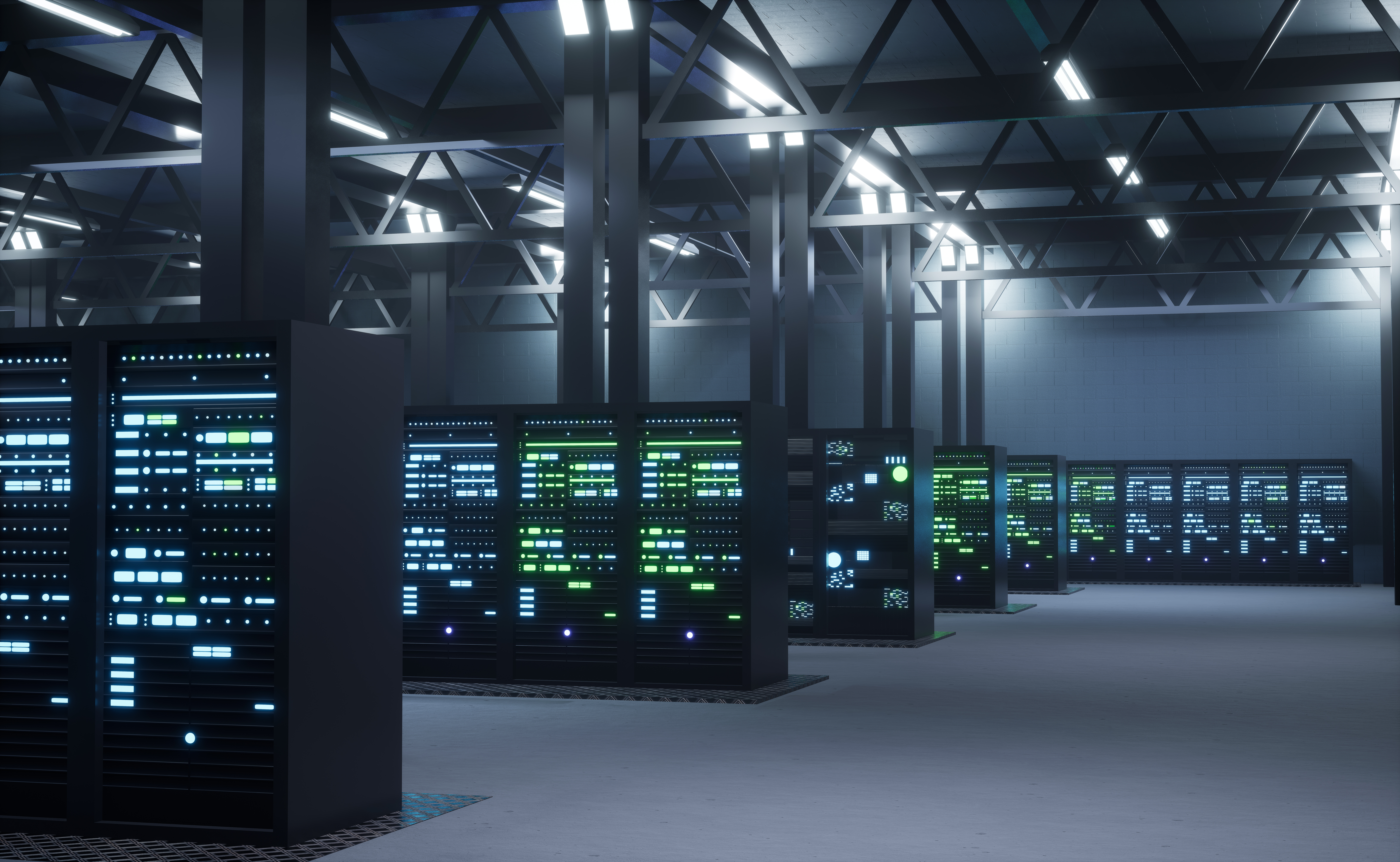
Hackers infiltrate Southeast Asian telecom networks

A cyber group breached telecoms across Southeast Asia, deploying advanced tracking tools instead of stealing data. Palo Alto Networks’ Unit 42 assesses the activity as ‘associated with a nation-state nexus’.

A hacking group gained covert access to telecom networks across Southeast Asia, most likely to track users’ locations, according to cybersecurity analysts at Palo Alto Networks’ Unit 42.

The campaign lasted from February to November 2024.

Instead of stealing data or directly communicating with mobile devices, the hackers deployed custom tools such as CordScan, designed to intercept mobile network protocols like SGSN. These methods suggest the attackers focused on tracking rather than data theft.

Unite42 assessed the activity ‘with high confidence’ as ‘associated with a nation state nexus’. The Unit notes that ‘this cluster heavily overlaps with activity attributed to Liminal Panda, a nation state adversary tracked by CrowdStrike’; according to CrowdStrike, Liminal Panda is considered to be a ‘likely China-nexus adversary’. It further states that ‘while this cluster significantly overlaps with Liminal Panda, we have also observed overlaps in attacker tooling with other reported groups and activity clusters, including Light Basin, UNC3886, UNC2891 and UNC1945.’

The attackers initially gained access by brute-forcing SSH credentials using login details specific to telecom equipment.

Once inside, they installed new malware, including a backdoor named NoDepDNS, which tunnels malicious data through port 53 — typically used for DNS traffic — in order to avoid detection.

To maintain stealth, the group disguised malware, altered file timestamps, disabled system security features and wiped authentication logs.

Would you like to learn more about AI, tech and digital diplomacy? If so, ask our Diplo chatbot!

The US considers chip tracking to prevent smuggling to China

The US is exploring how to build better location-tracking into advanced chips, as part of an effort to prevent American semiconductors from ending up in China.

Michael Kratsios, a senior official behind Donald Trump’s AI strategy, confirmed that software or physical updates to chips are being considered to support traceability.

Instead of relying on external enforcement, Washington aims to work directly with the tech industry to improve monitoring of chip movements. The strategy forms part of a broader national plan to counter smuggling and maintain US dominance in cutting-edge technologies.

Beijing recently summoned Nvidia representatives to address concerns over American proposals linked to tracking features and perceived security risks in the company’s H20 chips.

Although US officials have not directly talked with Nvidia or AMD on the matter, Kratsios clarified that chip tracking is now a formal objective.

The move comes even as Trump’s team signals readiness to lift certain export restrictions to China in return for trade benefits, such as rare-earth magnet sales to the US.

Kratsios criticised China’s push to lead global AI regulation, saying countries should define their paths instead of following a centralised model. He argued that the US innovation-first approach offers a more attractive alternative.

Would you like to learn more about AI, tech and digital diplomacy? If so, ask our Diplo chatbot!

Eswatini advances digital vision with new laws, 5G and skills training

Eswatini is moving forward with a national digital transformation plan focused on infrastructure, legislation and skills development.

The country’s Minister of ICT, Savannah Maziya, outlined key milestones during the 2025 Eswatini Economic Update, co-hosted with the World Bank.

In her remarks, Maziya said that digital technology plays a central role in job creation, governance and economic development. She introduced several regulatory frameworks, including a Cybersecurity Bill, a Critical Infrastructure Bill and an E-Commerce Strategy.

Additional legislation is planned for emerging technologies such as AI, robotics and satellite systems.

Infrastructure improvements include the nationwide expansion of fibre optic networks and a rise in international connectivity capacity from 47 Gbps to 72 Gbps.

Mbabane, the capital, is being developed as a Smart City with 5G coverage, AI-enabled surveillance and public Wi-Fi access.

The Ministry of ICT has launched more than 11 digital public services and plans to add 90 more in the next three years.

A nationwide coding initiative will offer digital skills training to over 300,000 citizens, supporting wider efforts to increase access and participation in the digital economy.

Would you like to learn more about AI, tech and digital diplomacy? If so, ask our Diplo chatbot!

AI breaches push data leak costs to new heights despite global decline

IBM’s 2025 Cost of a Data Breach Report revealed a sharp gap between rapid AI adoption and the oversight needed to secure it.

Although the global average data breach cost fell slightly to $4.44 million, security incidents involving AI systems remain more severe and disruptive.

Around 13% of organisations reported breaches involving AI models or applications, while 8% were unsure whether they had been compromised.

Alarmingly, nearly all AI-related breaches occurred without access controls, leading to data leaks in 60% of cases and operational disruption in almost one-third. Shadow AI (unsanctioned or unmanaged systems) played a central role, with one in five breaches traced back to it.

Organisations without AI governance policies or detection systems faced significantly higher costs, especially when personally identifiable information or intellectual property was exposed.

Attackers increasingly used AI tools such as deepfakes and phishing, with 16% of studied breaches involving AI-assisted threats.

Healthcare remained the costliest sector, with an average breach price of $7.42 million and the most extended recovery timeline of 279 days.

Despite the risks, fewer organisations plan to invest in post-breach security. Only 49% intend to strengthen defences, down from 63% last year.

Even fewer will prioritise AI-driven security tools. With many organisations also passing costs on to consumers, recovery now often includes long-term financial and reputational fallout, not just restoring systems.

Would you like to learn more about AI, tech and digital diplomacy? If so, ask our Diplo chatbot!

Nvidia refutes chip backdoor allegations as China launches probe

Nvidia has firmly denied claims that its AI chips contain backdoors allowing remote control or tracking, following questioning by China’s top cybersecurity agency.

The investigation, which focuses on the H20 chip explicitly designed for the Chinese market, comes as Beijing intensifies scrutiny over foreign tech used in sensitive systems.

The H20 was initially blocked from export in April under US restrictions, but is now expected to return to Chinese shelves.

China’s Cyberspace Administration (CAC) summoned Nvidia officials to explain whether the chip enables unauthorised access or surveillance. The agency cited demands from US lawmakers for mandatory tracking features in advanced AI hardware as grounds for its concern.

In a statement, Nvidia insisted it does not include remote access capabilities in its products, reaffirming its commitment to cybersecurity.

Meanwhile, China’s state-backed People’s Daily questioned the company’s trustworthiness, stating that ‘network security is as vital as national territory’ and warning against reliance on what it described as ‘sick chips’.

The situation highlights Nvidia’s delicate position as it attempts to maintain dominance in China’s AI chip market while complying with mounting US export rules.

Tensions have escalated since similar actions were taken against other US firms, including a 2022 ban on Micron’s chips and recent antitrust scrutiny over Nvidia’s Mellanox acquisition.

Would you like to learn more about AI, tech and digital diplomacy? If so, ask our Diplo chatbot!

Telegram-powered TON on track for mass adoption

TON, the blockchain natively embedded in Telegram’s app, is emerging as the most practical path to mainstream crypto adoption. With over 900 million users on Telegram and more than 150 million TON accounts created, the platform is delivering Web3 features through a familiar, app-like experience.

Unlike Ethereum or Solana, which require external wallets and technical knowledge, TON integrates features like tipping, staking, and gaming directly into Telegram. Mini apps like Notcoin and Catizen let users access blockchain without dealing with wallets or gas fees.

TON currently processes around 2 million daily transactions and may reach over 10 million daily users by 2027. Growing user fatigue with complex blockchain makes TON’s simple, mobile-first design ready to lead the next adoption wave.

Would you like to learn more about AI, tech and digital diplomacy? If so, ask our Diplo chatbot

Cybersecurity sector sees busy July for mergers

July witnessed a significant surge in cybersecurity mergers and acquisitions (M&A), spearheaded by Palo Alto Networks’ announcement of its definitive agreement to acquire identity security firm CyberArk for an estimated $25 billion.

The transaction, set to be the second-largest cybersecurity acquisition on record, signals Palo Alto’s strategic entry into identity security.

Beyond this significant deal, Palo Alto Networks also completed its purchase of AI security specialist Protect AI. The month saw widespread activity across the sector, including LevelBlue’s acquisition of Trustwave to create the industry’s largest pureplay managed security services provider.

Zurich Insurance Group, Signicat, Limerston Capital, Darktrace, Orange Cyberdefense, SecurityBridge, Commvault, and Axonius all announced or finalised strategic cybersecurity acquisitions.

The deals highlight a strong market focus on AI security, identity management, and expanding service capabilities across various regions.

Would you like to learn more about AI, tech and digital diplomacy? If so, ask our Diplo chatbot!

China says the US used a Microsoft server vulnerability to launch cyberattacks

China has accused the US of exploiting long-known vulnerabilities in Microsoft Exchange servers to launch cyberattacks on its defence sector, escalating tensions in the ongoing digital arms race between the two superpowers.

In a statement released on Friday, the Cyber Security Association of China claimed that US hackers compromised servers belonging to a significant Chinese military contractor, allegedly maintaining access for nearly a year.

The group did not disclose the name of the affected company.

The accusation is a sharp counterpunch to long-standing US claims that Beijing has orchestrated repeated cyber intrusions using the same Microsoft software. In 2021, Microsoft attributed a wide-scale hack affecting tens of thousands of Exchange servers to Chinese threat actors.

Two years later, another incident compromised the email accounts of senior US officials, prompting a federal review that criticised Microsoft for what it called a ‘cascade of security failures.’

Microsoft, based in Redmond, Washington, has recently disclosed additional intrusions by China-backed groups, including attacks exploiting flaws in its SharePoint platform.

Jon Clay of Trend Micro commented on the tit-for-tat cyber blame game: ‘Every nation carries out offensive cybersecurity operations. Given the latest SharePoint disclosure, this may be China’s way of retaliating publicly.’

Cybersecurity researchers note that Beijing has recently increased its use of public attribution as a geopolitical tactic. Ben Read of Wiz.io pointed out that China now uses cyber accusations to pressure Taiwan and shape global narratives around cybersecurity.

In April, China accused US National Security Agency (NSA) employees of hacking into the Asian Winter Games in Harbin, targeting personal data of athletes and organisers.

While the US frequently names alleged Chinese hackers and pursues legal action against them, China has historically avoided levelling public allegations against American intelligence agencies, until now.

Would you like to learn more about AI, tech and digital diplomacy? If so, ask our Diplo chatbot!

China’s Silk Typhoon hackers filed patents for advanced spyware tools

A Chinese state-backed hacking group known as Silk Typhoon has filed more than ten patents for intrusive cyberespionage tools, shedding light on its operations’ vast scope and sophistication.

These patents, registered by firms linked to China’s Ministry of State Security, detail covert data collection software far exceeding the group’s previously known attack methods.

The revelations surfaced following a July 2025 US Department of Justice indictment against two alleged members of Silk Typhoon, Xu Zewei and Zhang Yu.

Both are associated with companies tied to the Shanghai State Security Bureau and connected to the Hafnium group, which Microsoft rebranded as Silk Typhoon in 2022.

Instead of targeting only Windows environments, the patent filings reveal a sweeping set of surveillance tools designed for Apple devices, routers, mobile phones, and even smart home appliances.

Submissions include software for bypassing FileVault encryption, extracting remote cellphone data, decrypting hard drives, and analysing smart devices. Analysts from SentinelLabs suggest these filings offer an unprecedented glimpse into the architecture of China’s cyberwarfare ecosystem.

Silk Typhoon gained global attention in 2021 with its Microsoft Exchange ProxyLogon campaign, which prompted a rare coordinated condemnation by the US, UK, and EU. The newly revealed capabilities show the group’s operations are far more advanced and diversified than previously believed.

Would you like to learn more about AI, tech and digital diplomacy? If so, ask our Diplo chatbot!

OpenAI and Nscale to build an AI super hub in Norway

OpenAI has revealed its first European data centre project in partnership with British startup Nscale, selecting Norway as the location for what is being called ‘Stargate Norway’.

The initiative mirrors the company’s ambitious $500 billion US ‘Stargate’ infrastructure plan and reflects Europe’s growing demand for large-scale AI computing capacity.

Nscale will lead the development of a $1 billion AI gigafactory in Norway, with engineering firm Aker matching the investment. These advanced data centres are designed to meet the heavy processing requirements of cutting-edge AI models.

OpenAI expects the facility to deliver 230MW of computing power by the end of 2026, making it a significant strategic foothold for the company on the continent.

Sam Altman, CEO of OpenAI, stated that Europe needs significantly more computing to unlock AI’s full potential for researchers, startups, and developers. He said Stargate Norway will serve as a cornerstone for driving innovation and economic growth in the region.

Nscale confirmed that Norway’s AI ecosystem will receive priority access to the facility, while remaining capacity will be offered to users across the UK, Nordics and Northern Europe.

The data centre will support 100,000 of NVIDIA’s most advanced GPUs, with long-term plans to scale as demand grows.

The move follows broader European efforts to strengthen AI infrastructure, with the UK and France pushing for major regulatory and funding reforms.

Would you like to learn more about AI, tech and digital diplomacy? If so, ask our Diplo chatbot!