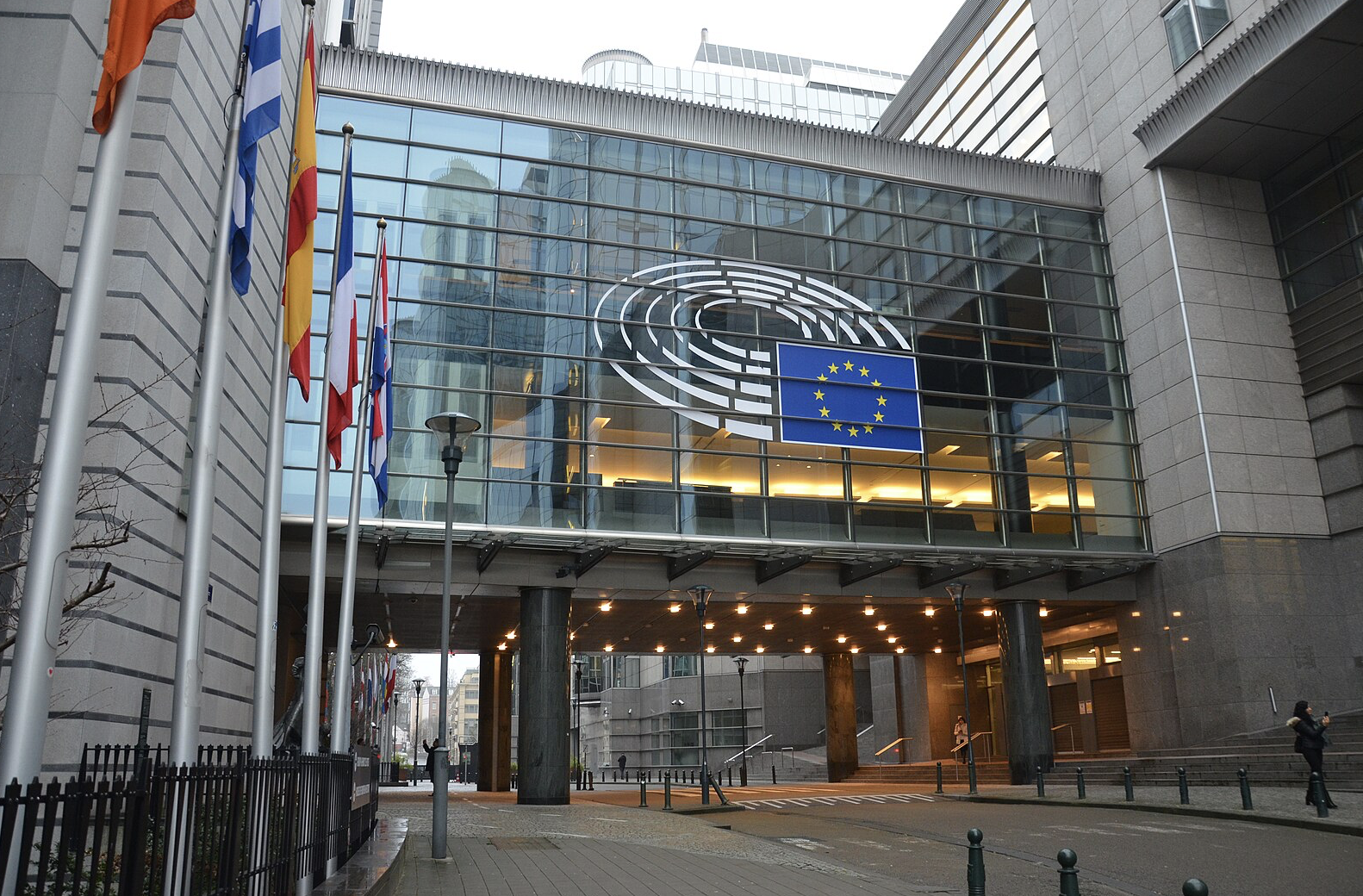
Irish regulator opens DSA probe into X

Ireland’s media watchdog has opened a formal investigation into X under the EU’s Digital Services Act. Regulators will assess appeal rights and internal complaint handling after reports of inaccessible processes for users.

Irish officials will examine whether users can challenge refusals to remove reported content and receive clear outcomes. Potential penalties reach up to 6% of global turnover for confirmed breaches.

The case stems from ongoing supervision, a user complaint, and information from HateAid, marking the first such probe by Ireland. Wider EU scrutiny continues across huge platforms.

Other services, including Meta and TikTok, have faced DSA actions, underscoring tighter enforcement across the bloc. Remedial measures and transparency improvements could follow if non-compliance is found.

Would you like to learn more about AI, tech and digital diplomacy? If so, ask our Diplo chatbot

European Commission launches Culture Compass to strengthen the EU identity

The European Commission unveiled the Culture Compass for Europe, a framework designed to place culture at the heart of the EU policies.

An initiative that aims to foster the identity ot the EU, celebrate diversity, and support excellence across the continent’s cultural and creative sectors.

The Compass addresses the challenges facing cultural industries, including restrictions on artistic expression, precarious working conditions for artists, unequal access to culture, and the transformative impact of AI.

It provides guidance along four key directions: upholding European values and cultural rights, empowering artists and professionals, enhancing competitiveness and social cohesion, and strengthening international cultural partnerships.

Several initiatives will support the Compass, including the EU Artists Charter for fair working conditions, a European Prize for Performing Arts, a Youth Cultural Ambassadors Network, a cultural data hub, and an AI strategy for the cultural sector.

The Commission will track progress through a new report on the State of Culture in the EU and seeks a Joint Declaration with the European Parliament and Council to reinforce political commitment.

Commission officials emphasised that the Culture Compass connects culture to Europe’s future, placing artists and creativity at the centre of policy and ensuring the sector contributes to social, economic, and international engagement.

Culture is portrayed not as a side story, but as the story of the EU itself.

Would you like to learn more about AI, tech and digital diplomacy? If so, ask our Diplo chatbot!

Banks and insurers pivot to AI agents at scale, Capgemini finds

Agentic AI is expected to deliver up to $450 billion in value by 2028, as financial institutions shift frontline processes to AI agents, according to Capgemini’s estimates. Banks start with customer service before expanding into fraud detection, lending, and onboarding, while insurers report similar priorities.

To seize the opportunity, 33% of banks are building agents in-house, while 48% of institutions are creating human supervisor roles. Cloud’s role is expanding beyond infrastructure, with 61% of executives calling cloud-based orchestration critical to scaling.

Adoption is accelerating but uneven. Four in five firms are in ideation or pilots, yet only 10% run agents at scale. Executives expect gains in real-time decision-making, accuracy, and turnaround, especially across onboarding, KYC, loan processing, underwriting, and claims.

Leaders also see growth levers. Most expect agents to support entry into new geographies, enable dynamic pricing, and deliver multilingual services that respect local norms and rules. Budgets reflect this shift, with up to 40% of generative AI spend already earmarked for agents.

Barriers persist. Skills shortages and regulatory complexity top the list of concerns, alongside high implementation costs. A quarter of firms are exploring ‘service-as-a-software’ models, paying for outcomes such as the resolution of fraud cases or the handling of customer queries.

Would you like to learn more about AI, tech, and digital diplomacy? If so, ask our Diplo chatbot!

ChatGPT-5 outperformed by a Chinese startup model

A Chinese company has stunned the AI world after its new open-source model outperformed OpenAI’s ChatGPT-5 and Anthropic’s Claude Sonnet 4.5 in key benchmarks.

Moonshot AI’s Kimi K2 Thinking model achieved the best reasoning and coding scores yet, shaking confidence in American dominance over advanced AI systems.

The Beijing-based startup, backed by Alibaba and Tencent, released Kimi K2 Thinking on 6 November. It scored 44.9 percent in Humanity’s Last Exam and 60.2 percent in BrowseComp, both surpassing leading US models.

Analysts dubbed it another ‘DeepSeek moment ‘, echoing the earlier success of China in breaking AI cost barriers.

Moonshot AI trained the trillion-parameter system for just US$4.6 million (nearly ten times cheaper than GPT-5’s reported costs) using a Mixture-of-Experts structure and advanced quantisation for faster generation.

The fully open-weight model, released under a Modified MIT License, adds commercial flexibility and intensifies competition with US labs.

Industry observers called it a turning point. Hugging Face’s Thomas Wolf said the achievement shows how open-source models can now rival closed systems.

Researchers from the Allen Institute for AI noted that Chinese innovation is narrowing the gap faster than expected, driven by efficiency and high-quality training data rather than raw computing power.

Would you like to learn more about AI, tech and digital diplomacy? If so, ask our Diplo chatbot!

Nvidia stake sale powers SoftBank’s $22.5bn OpenAI bet

SoftBank sold its entire Nvidia stake for $5.83 billion and part of its T-Mobile holding for $9.17 billion, raising cash for OpenAI. Alongside a margin loan on Arm, the proceeds fund a $22.5 billion commitment and other projects. Nvidia slipped 2%; SoftBank referred to it as asset monetisation, not a valuation call.

Executives said the goal is an investor opportunity with balance-sheet strength, including backing for ABB’s robotics deal. Analysts called the quarter’s funding need unusually large but consistent with an AI pivot. SoftBank said the sale recycles capital, not a retreat from Nvidia.

SoftBank has a history with Nvidia: the Vision Fund invested in 2017 and exited in 2019; group ventures still utilise its technology. Projects include the $500 billion Stargate data centre programme, built on accelerated computing. Shares remain volatile amid concerns about the AI bubble and questions regarding the timing of deployment.

Results reflected the shift, with $19 billion in Vision Fund gains helping to double profit in fiscal Q2. SoftBank says its OpenAI stake will rise from 4% to 11% after the recapitalisation, with scope to increase further. The group aims to avoid setting a controlling threshold while scaling exposure to AI.

Management stressed liquidity and shareholder access, flagging a four-for-one stock split and ‘very safe’ funding plans. Further portfolio monetisation is possible as it backs AI infrastructure and applications at scale. Investors will closely monitor execution risks and the timing of returns from OpenAI and its adjacent bets.

Would you like to learn more about AI, tech, and digital diplomacy? If so, ask our Diplo chatbot!

OpenAI loses German copyright lawsuit over song lyrics reproduction

A Munich regional court has ruled that OpenAI infringed copyright in a landmark case brought by the German rights society GEMA. The court held OpenAI liable for reproducing and memorising copyrighted lyrics without authorisation, rejecting its claim to operate as a non-profit research institute.

The judgement found that OpenAI had violated copyright even in a 15-word passage, setting a low threshold for infringement. Additionally, the court dismissed arguments about accidental reproduction and technical errors, emphasising that both reproduction and memorisation require a licence.

It also denied OpenAI’s request for a grace period to make compliance changes, citing negligence.

Judges concluded that the company could not rely on proportionality defences, noting that licences were available and alternative AI models exist.

OpenAI’s claim that EU copyright law failed to foresee large language models was rejected, as the court reaffirmed that European law ensures a high level of protection for intellectual property.

The ruling marks a significant step for copyright enforcement in the age of generative AI and could shape future litigation across Europe. It also challenges technology companies to adapt their training and licensing practices to comply with existing legal frameworks.

Would you like to learn more about AI, tech and digital diplomacy? If so, ask our Diplo chatbot!

Winning the AI race means winning developers in China, says Huang of Nvidia

Nvidia CEO Jensen Huang said China is ‘nanoseconds’ behind the US in AI and urged Washington to lead by accelerating innovation and courting developers globally. He argued that excluding China would weaken the reach of US technology and risk splintering the ecosystem into incompatible stacks.

Huang’s remarks came amid ongoing export controls that bar Nvidia’s most advanced processors from the Chinese market. He acknowledged national security concerns but cautioned that strict limits can slow the spread of American tools that underpin AI research, deployment, and scaling.

Hardware remains central, Huang said, citing advanced accelerators and data-centre capacity as the substrate for training frontier models. Yet diffusion matters: widespread adoption of US platforms by global developers amplifies influence, reduces fragmentation, and accelerates innovation.

With sales of top-end chips restricted, Huang warned that Chinese firms will continue to innovate on domestic alternatives, increasing the likelihood of parallel systems. He called for policies that enable US leadership while preserving channels to the developer community in China.

Huang framed the objective as keeping America ahead, maintaining the world’s reliance on an American tech stack, and avoiding strategies that would push away half the world’s AI talent.

Would you like to learn more about AI, tech, and digital diplomacy? If so, ask our Diplo chatbot!

Salesforce strengthens Agentforce with planned Spindle AI acquisition

Salesforce has signed a definitive agreement to acquire Spindle AI, a company specialising in agentic analytics and machine learning. The deal aims to strengthen Salesforce’s Agentforce platform by integrating Spindle’s advanced data modelling and forecasting technologies.

Spindle AI has developed neuro-symbolic AI agents capable of autonomously generating and optimising scenario models. Its analytics tools enable businesses to simulate and assess complex decisions, from pricing strategies to go-to-market plans, using AI-driven insights.

Salesforce said the acquisition will enhance its focus on Agent Observability and Self-Improvement within Agentforce 360. Executives described Spindle AI’s expertise as critical to building more transparent and reliable agentic systems capable of explaining and refining their own reasoning.

The acquisition, subject to customary closing conditions, is expected to be completed in Salesforce’s fourth fiscal quarter of 2026. Once finalised, Spindle AI will join Agentforce to expand AI-powered analytics, continuous optimisation, and ROI forecasting for enterprise customers worldwide.

Would you like to learn more about AI, tech and digital diplomacy? If so, ask our Diplo chatbot

Researchers urge governance after LLMs display source-driven bias

Large language models (LLMs) are increasingly used to grade, hire, and moderate text. UZH research shows that evaluations shift when participants are told who wrote identical text, revealing source bias. Agreement stayed high only when authorship was hidden.

When told a human or another AI wrote it, agreement fell, and biases surfaced. The strongest was anti-Chinese across all models, including a model from China, with sharp drops even for well-reasoned arguments.

AI models also preferred ‘human-written’ over ‘AI-written’, showing scepticism toward machine-authored text. Such identity-triggered bias risks unfair outcomes in moderation, reviewing, hiring, and newsroom workflows.

Researchers recommend identity-blind prompts, A/B checks with and without source cues, structured rubrics focused on evidence and logic, and human oversight for consequential decisions.

They call for governance standards: disclose evaluation settings, test for bias across demographics and nationalities, and set guardrails before sensitive deployments. Transparency on prompts, model versions, and calibration is essential.

Would you like to learn more about AI, tech, and digital diplomacy? If so, ask our Diplo chatbot!

‘Wooing and suing’ defines News Corp’s AI strategy

News Corp chief executive Robert Thomson warned AI companies against using unlicensed publisher content, calling recipients of ‘stolen goods’ fair game for pursuit. He said ‘wooing and suing’ would proceed in parallel, with more licensing deals expected after the OpenAI pact.

Thomson argued that high-quality data must be paid for and that ingesting material without permission undermines incentives to produce journalism. He insisted that ‘content crime does not and will not pay,’ signalling stricter enforcement ahead.

While criticising bad actors, he praised partners that recognise publisher IP and are negotiating usage rights. The company is positioning itself to monetise archives and live reporting through structured licences.

He also pointed to a major author settlement with another AI firm as a watershed for compensation over past training uses. The message: legal and commercial paths are both accelerating.

Against this backdrop, News Corp said AI-related revenues are gaining traction alongside digital subscriptions and B2B data services. Further licensing announcements are likely in the coming months.

Would you like to learn more about AI, tech, and digital diplomacy? If so, ask our Diplo chatbot!