AI could save billions but healthcare adoption is slow

AI is being hailed as a transformative force in healthcare, with the potential to reduce costs and improve outcomes dramatically. Estimates suggest widespread AI integration could save up to 360 billion dollars annually by accelerating diagnosis and reducing inefficiencies across the system.

Although tools like AI scribes, triage assistants, and scheduling systems are gaining ground, clinical adoption remains slow. Only a small percentage of doctors, roughly 12%, currently rely on AI for diagnostic decisions. This cautious rollout reflects deeper concerns about the risks associated with medical AI.

Challenges include algorithmic drift when systems are exposed to real-world conditions, persistent racial and ethnic biases in training data, and the opaque ‘black box’ nature of many AI models. Privacy issues also loom, as healthcare data remains among the most sensitive and tightly regulated.

Experts argue that meaningful AI adoption in clinical care must be incremental. It requires rigorous validation, clinician training, transparent algorithms, and clear regulatory guidance. While the potential to save lives and money is significant, the transformation will be slow and deliberate, not overnight.

Would you like to learn more about AI, tech and digital diplomacy? If so, ask our Diplo chatbot!
Latin America struggling to join the global AI race

Currently, Latin America is lagging in AI innovation. It contributes only 0.3% of global startup activity and attracts a mere 1% of worldwide investment, despite housing around 8% of the global population.

Experts point to a significant brain drain, a lack of local funding options, weak policy frameworks, and dependency on foreign technology as major obstacles. Many high‑skilled professionals emigrate in search of better opportunities elsewhere.

To bridge the gap, regional governments are urged to develop coherent national AI strategies, foster regional collaboration, invest in digital education, and strengthen ties between the public and private sectors.

Strategic regulation and talent retention initiatives could help Latin America build its capacity and compete globally.

Would you like to learn more about AI, tech and digital diplomacy? If so, ask our Diplo chatbot!
Samsung confirms core Galaxy AI tools remain free

Samsung has confirmed that core Galaxy AI features will continue to be available free of charge for all users.

Speaking during the recent Galaxy Unpacked event, a company representative clarified that any AI tools installed on a device by default—such as Live Translate, Note Assist, Zoom Nightography and Audio Eraser—will not require a paid subscription.

Instead of leaving users uncertain, Samsung has publicly addressed speculation around possible Galaxy AI subscription plans.

While there are no additional paid AI features on offer at present, the company has not ruled out future developments. Samsung has already hinted that upcoming subscription services linked to Samsung Health could eventually include extra AI capabilities.

Alongside Samsung’s announcement, attention has also turned towards Google’s freemium model for its Gemini AI assistant, which appears on many Android devices. Users can access basic features without charge, but upgrading to Google AI Pro or Ultra unlocks advanced tools and increased storage.

New Galaxy Z Fold 7 and Z Flip 7 handsets even come bundled with six months of free access to premium Google AI services.

Although Samsung is keeping its pre-installed Galaxy AI features free, industry observers expect further changes as AI continues to evolve.

Whether Samsung will follow Google’s path with a broader subscription model remains to be seen, but for now, essential Galaxy AI functions stay open to all users without extra cost.

Would you like to learn more about AI, tech and digital diplomacy? If so, ask our Diplo chatbot!
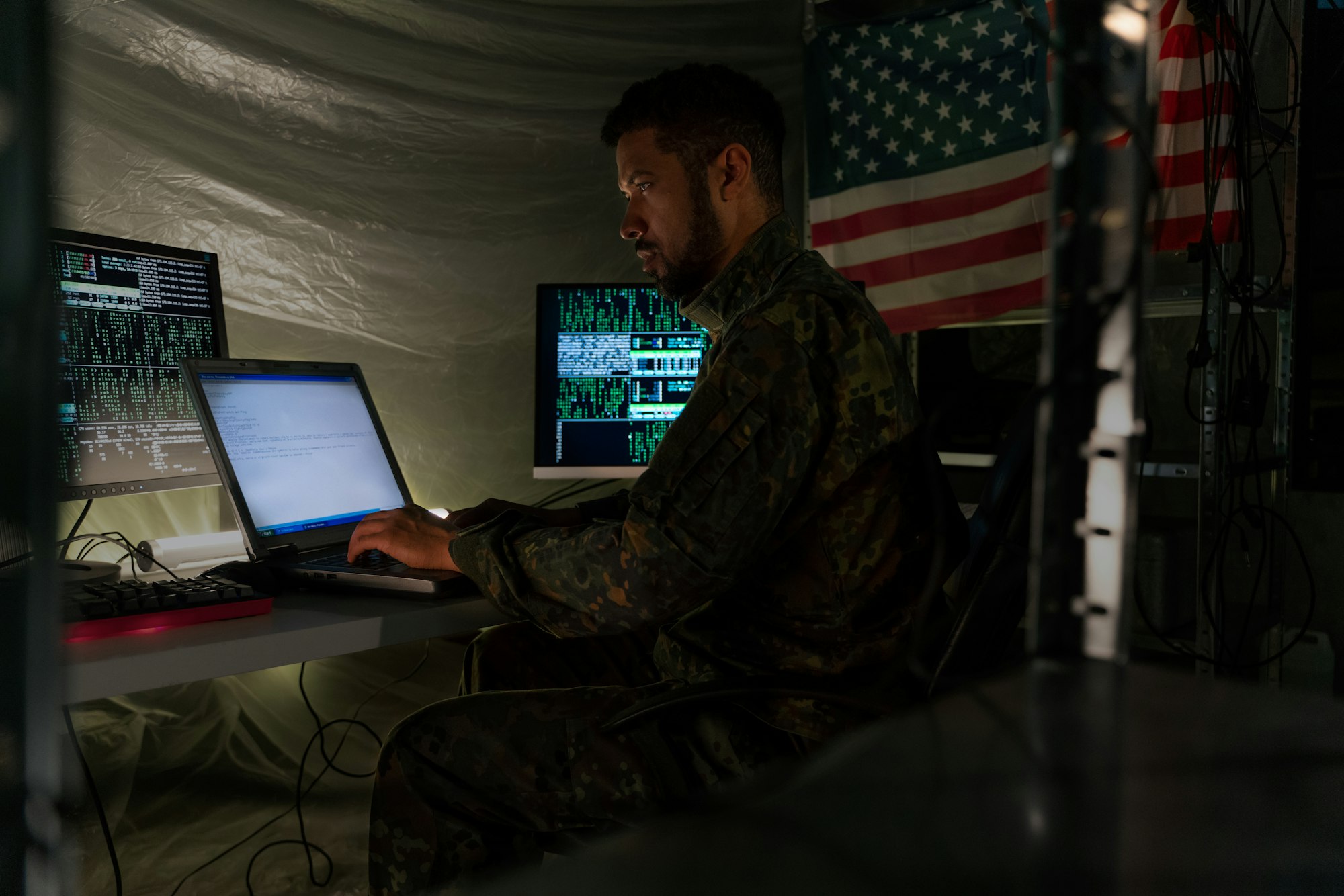
Hackers use fake Termius app to infect macOS devices

Hackers are bundling legitimate Mac apps with ZuRu malware and poisoning search results to lure users into downloading trojanized versions. Security firm SentinelOne reported that the Termius SSH client was recently compromised and distributed through malicious domains and fake downloads.

The ZuRu backdoor, originally detected in 2021, allows attackers to silently access infected machines and execute remote commands undetected. Attackers continue to target developers and IT professionals by trojanising trusted tools such as SecureCRT, Navicat, and Microsoft Remote Desktop.

Infected disk image files are slightly larger than legitimate ones due to embedded malicious binaries. Victims unknowingly launch malware alongside the real app.

The malware bypasses macOS code-signing protections by injecting a temporary developer signature into the compromised application bundle. The updated variant of ZuRu requires macOS Sonoma 14.1 or newer and supports advanced command-and-control functions using the open-source Khepri beacon.

The functions include file transfers, command execution, system reconnaissance and process control, with captured outputs sent back to attacker-controlled domains. The latest campaign used termius.fun and termius.info to host the trojanized packages. Affected users often lack proper endpoint security.

Would you like to learn more about AI, tech and digital diplomacy? If so, ask our Diplo chatbot!

Huawei challenges Nvidia in global AI chip market

Huawei Technologies is exploring AI chip exports to the Middle East and Southeast Asia in a bid to compete with Nvidia, according to a Bloomberg News report published Thursday.

The Chinese telecom firm has contacted potential buyers in the United Arab Emirates, Saudi Arabia, and Thailand to promote its Ascend 910B chips, an earlier-generation AI processor.

The offer involves a limited number of chips, reportedly in the low thousands, although specific quantities remain undisclosed. No deals have been finalised so far. Sources cited in the report said there is limited interest in the UAE, and the status of talks in Thailand remains uncertain.

Government representatives in Thailand and Saudi Arabia did not immediately respond to Reuters’ requests for comment. Huawei also declined to comment. The initiative is part of a broader strategy to expand into markets where US chipmakers have long held dominance.

Huawei also promotes remote access to CloudMatrix 384, a China-based AI system built using its more advanced chipsets. However, due to supply limitations, the company cannot export these high-end models outside China.

The Middle East has quickly become a high-demand region for AI infrastructure, attracting interest from leading technology companies. Nvidia has already struck several regional deals, positioning itself as a major player in AI development across Saudi Arabia and neighbouring countries.

Huawei is simultaneously focusing on domestic sales of its newer 910C chips, offering them to Chinese firms that cannot purchase US AI chips due to ongoing export restrictions imposed by Washington.

US administrations have long cited national security concerns in limiting China’s access to cutting-edge chip technologies, fearing their potential use in military applications.

‘With the current export controls, we are effectively out of the China datacenter market, which is now served only by competitors such as Huawei,’ an Nvidia spokesperson told Reuters.

Would you like to learn more about AI, tech and digital diplomacy? If so, ask our Diplo chatbot!

New Gemini AI tool animates photos into short video clips

Google has rolled out a new feature for Gemini AI that transforms still photos into short, animated eight-second videos with sound. The capability is powered by Veo 3, Google’s latest video generation model, and is currently available to Gemini Advanced Ultra and Pro subscribers.

The tool supports background noise, ambient audio, and even spoken dialogue, with support gradually expanding to users in select countries, including India. At launch, access to the web interface is limited, though Google has announced that mobile support will follow later in the week.

To use the tool, users upload a photo, describe the intended motion, and optionally add prompts for sound effects or narration. Gemini then generates a 720p MP4 video in a 16:9 landscape format, automatically synchronising visuals and audio.

Josh Woodward, Vice President of the Gemini app and Google Labs, showcased the feature on X (formerly Twitter), animating a child’s drawing. ‘Still experimental, but we wanted our Pro and Ultra members to try it first,’ he said, calling the result fun and expressive.

To maintain authenticity, each video includes a visible ‘Veo’ watermark in the bottom-right corner and an invisible SynthID watermark. This hidden digital signature, developed by Google DeepMind, helps identify AI-generated content and preserve transparency around synthetic media.

The company has emphasised its commitment to responsible AI deployment by embedding traceable markers in all output from this tool. These safeguards come amid increasing scrutiny of generative video tools and deepfakes across digital platforms.

To animate a photo using Gemini AI’s new tool, users should follow these steps: Click on the ‘tools’ icon in the prompt bar, then choose the ‘video’ option from the menu. Upload the still image, describe the desired motion, and provide sound or narration instructions, optionally.

The underlying Veo 3 model was first introduced at Google I/O as the company’s most advanced video generation engine. It can produce high-quality visuals, simulate real-world physics, and even lip-sync dialogue from text and image-based prompts.

A Google blog post explains: ‘Veo 3 excels from text and image prompting to real-world physics and accurate lip syncing.’ The company says users can craft short story prompts and expect realistic, cinematic responses from the model.

Would you like to learn more about AI, tech and digital diplomacy? If so, ask our Diplo chatbot!

WSIS+20: Inclusive ICT policies urged to close global digital divide

At the WSIS+20 High-Level Event in Geneva, Dr Hakikur Rahman and Dr Ranojit Kumar Dutta presented a sobering picture of global digital inequality, revealing that more than 2.6 billion people remain offline. Their session, marking two decades of the World Summit on the Information Society (WSIS), emphasised that affordability, poor infrastructure, and a lack of digital literacy continue to block access, especially for marginalised communities.

The speakers proposed a structured three-pillar framework — inclusion, ethics, and sustainability- to ensure that no one is left behind in the digital age.

The inclusion pillar advocated for universal connectivity through affordable broadband, multilingual content, and skills-building programs, citing India’s Digital India and Kenya’s Community Networks as examples of success. On ethics, they called for policies grounded in human rights, data privacy, and transparent AI governance, pointing to the EU’s AI Act and UNESCO guidelines as benchmarks.

The sustainability pillar highlighted the importance of energy-efficient infrastructure, proper e-waste management, and fair public-private collaboration, showcasing Rwanda’s green ICT strategy and Estonia’s e-residency program.

Dr Dutta presented detailed data from Bangladesh, showing stark urban-rural and gender-based gaps in internet access and digital literacy. While urban broadband penetration has soared, rural and female participation lags behind.

Encouraging trends, such as rising female enrollment in ICT education and the doubling of ICT sector employment since 2022, were tempered by low data protection awareness and a dire e-waste recycling rate of only 3%.

The session concluded with a call for coordinated global and regional action, embedding ethics and inclusion in every digital policy. The speakers urged stakeholders to bridge divides in connectivity, opportunity, access, and environmental responsibility, ensuring digital progress uplifts all communities.

Track all key events from the WSIS+20 High-Level Event 2025 on our dedicated page.

Building digital resilience in an age of crisis

At the WSIS+20 High-Level Event in Geneva, the session ‘Information Society in Times of Risk’ spotlighted how societies can harness digital tools to weather crises more effectively. Experts and researchers from across the globe shared innovations and case studies that emphasised collaboration, inclusiveness, and preparedness.

Chairs Horst Kremers and Professor Ke Gong opened the discussion by reinforcing the UN’s all-of-society principle, which advocates cooperation among governments, civil society, tech companies, and academia in facing disaster risks.

The Singapore team unveiled their pioneering DRIVE framework—Digital Resilience Indicators for Veritable Empowerment—redefining resilience not as a personal skill set but as a dynamic process shaped by individuals’ environments, from family to national policies. They argued that digital resilience must include social dimensions such as citizenship, support networks, and systemic access, making it a collective responsibility in the digital era.

Turkish researchers analysed over 54,000 social media images shared after the 2023 earthquakes, showing how visual content can fuel digital solidarity and real-time coordination. However, they also revealed how the breakdown of communication infrastructure in the immediate aftermath severely hampered response efforts, underscoring the urgent need for robust and redundant networks.

Meanwhile, Chinese tech giant Tencent demonstrated how integrated platforms—such as WeChat and AI-powered tools—transform disaster response, enabling donations, rescues, and community support on a massive scale. Yet, presenters cautioned that while AI holds promise, its current role in real-time crisis management remains limited.

The session closed with calls for pro-social platform designs to combat polarisation and disinformation, and a shared commitment to building inclusive, digitally resilient societies that leave no one behind.

Track all key events from the WSIS+20 High-Level Event 2025 on our dedicated page.

Parliamentarians step up as key players in shaping the digital future

At the 2025 WSIS+20 High-Level Event in Geneva, lawmakers from Egypt, Uruguay, Tanzania, and Thailand united to call for a transformative shift in how parliaments approach digital governance. Hosted by ITU and the IPU, the session emphasised that legislators are no longer passive observers but essential drivers of digital policy.

While digital innovation presents opportunities for growth and inclusion, it also brings serious challenges, chief among them the digital divide, online harms, and the risks posed by AI.

Speakers underscored a shared urgency to ensure digital policies are people-centred and grounded in human rights. Egypt’s Amira Saber spotlighted her country’s leap toward AI regulation and its rapid expansion of connectivity, but also expressed concerns over online censorship and inequality.

Uruguay’s Rodrigo Goñi warned that traditional, reactive policymaking won’t suffice in the fast-paced digital age, proposing a new paradigm of ‘political intelligence.’ Thailand’s Senator Nophadol In-na praised national digital progress but warned of growing gaps between urban and rural communities. Meanwhile, Tanzania’s Neema Lugangira pushed for more capacity-building, especially for female lawmakers, and direct dialogue between legislators and big tech companies.

Across the board, there was strong consensus – parliamentarians must be empowered with digital literacy and AI tools to legislate effectively. Both ITU and IPU committed to ramping up support through training, partnerships, and initiatives like the AI Skills Coalition. They also pledged to help parliaments engage directly with tech leaders and tackle issues such as online abuse, misinformation, and accessibility, particularly in the Global South.

The discussion ended with cautious optimism. While challenges are formidable, the collaborative spirit and concrete proposals laid out in Geneva point toward a digital future where democratic values and inclusivity remain central. As the December WSIS+20 review approaches, these commitments could start a new era in global digital governance, led not by technocrats alone but by informed, engaged, and forward-thinking parliamentarians.

Track all key events from the WSIS+20 High-Level Event 2025 on our dedicated page.

Report shows China outpacing the US and EU in AI research

AI is increasingly viewed as a strategic asset rather than a technological development, and new research suggests China is now leading the global AI race.

A report titled ‘DeepSeek and the New Geopolitics of AI: China’s ascent to research pre-eminence in AI’, authored by Daniel Hook, CEO of Digital Science, highlights how China’s AI research output has grown to surpass that of the US, the EU and the UK combined.

According to data from Dimensions, a primary global research database, China now accounts for over 40% of worldwide citation attention in AI-related studies. Instead of focusing solely on academic output, the report points to China’s dominance in AI-related patents.

In some indicators, China is outpacing the US tenfold in patent filings and company-affiliated research, signalling its capacity to convert academic work into tangible innovation.

Hook’s analysis covers AI research trends from 2000 to 2024, showing global AI publication volumes rising from just under 10,000 papers in 2000 to 60,000 in 2024.

However, China’s influence has steadily expanded since 2018, while the EU and the US have seen relative declines. The UK has largely maintained its position.

Clarivate, another analytics firm, reported similar findings, noting nearly 900,000 AI research papers produced in China in 2024, triple the figure from 2015.

Hook notes that governments increasingly view AI alongside energy or military power as a matter of national security. Instead of treating AI as a neutral technology, there is growing awareness that a lack of AI capability could have serious economic, political and social consequences.

The report suggests that understanding AI’s geopolitical implications has become essential for national policy.

Would you like to learn more about AI, tech and digital diplomacy? If so, ask our Diplo chatbot!