The United Kingdom is sending its first trade delegation focused on AI and semiconductors to Kolkata on 18-19 November 2024. Seventeen leading British organisations specialising in technological innovation will take part in the two-day mission.
A key goal is to explore business opportunities in West Bengal and eastern India, fostering partnerships between British companies and Indian stakeholders. The initiative is aimed at bolstering collaboration in AI and semiconductor research, development, and manufacturing, addressing the growing demand in these sectors.
Andrew Fleming, the British Deputy High Commissioner to East and North-East India, expressed enthusiasm for the initiative, highlighting the potential for new partnerships. He emphasised the strengthening ties between the UK and India in the technology sphere, particularly in East and Northeast India, as key drivers for this mission.
Activities during the visit include roundtable discussions, networking events, and Business-to-Business meetings. Organised by the British Deputy High Commission in Kolkata in partnership with NASSCOM and Asterix Innovations, the engagements aim to identify opportunities for collaboration, innovation, and investment, paving the way for expanded cooperation between the UK and India.
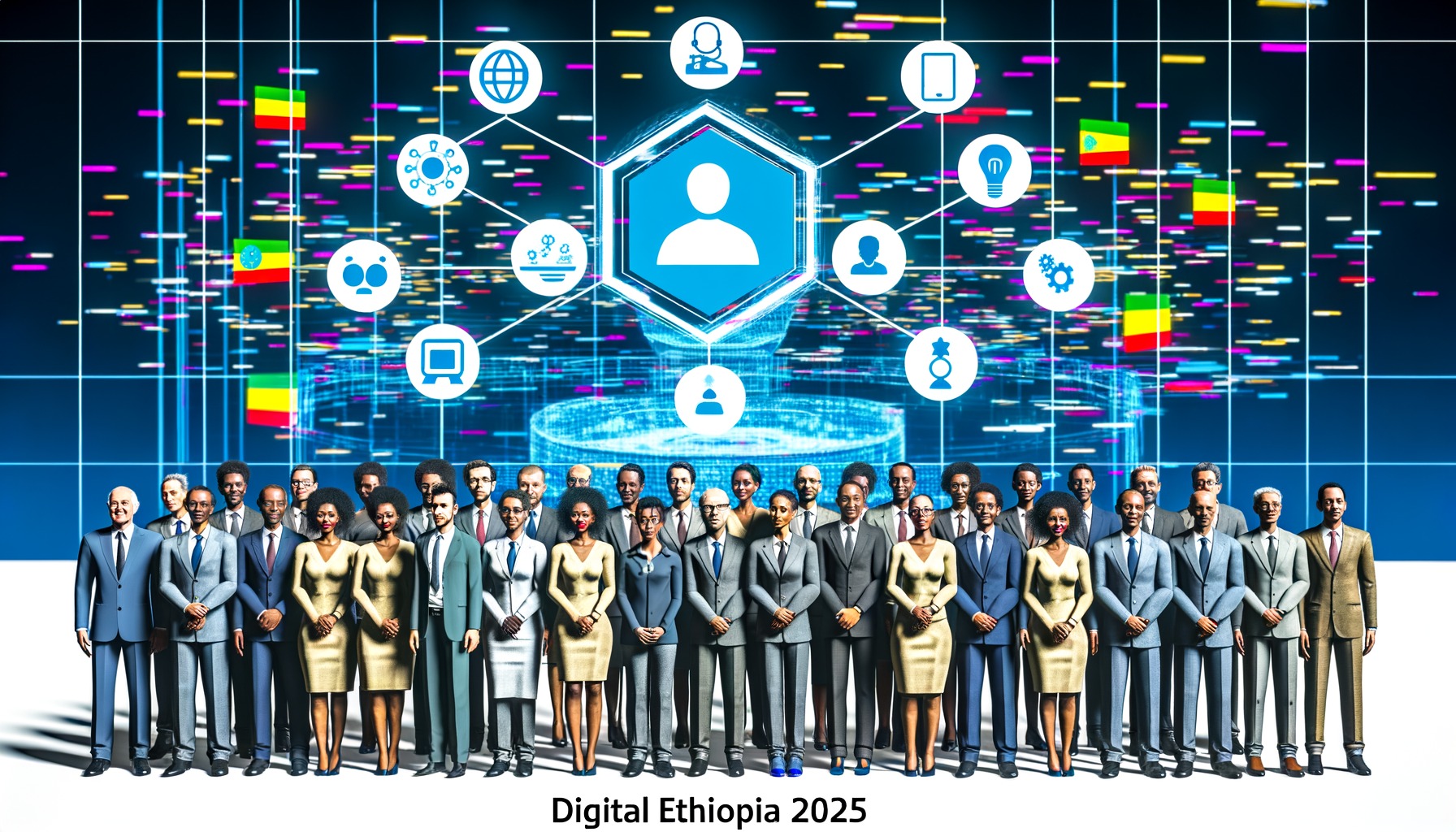
Ethiopia’s National ID Program (NIDP) has partnered with four other government institutions to enhance access to integrated public services as part of the Digital Ethiopia 2025 initiative. The collaboration, formalised through a Memorandum of Understanding (MoU) signed on 12 November, includes the Ethiopian Artificial Intelligence Institute, the Information Network Security Administration, the Addis Ababa Civil Registration and Residency Service Agency, and the Addis Ababa Innovation and Technology Development Bureau.
Digital Ethiopia 2025 aims to transform the nation into a digital society by next year, with the national ID system serving as a crucial component. Engr. Worku Gachena, Director General of the Ethiopian Artificial Intelligence Institute, highlighted that the collaboration will simplify access to government services, particularly through the issuance of residence and national ID cards. Additionally, AI solutions are being explored to ensure efficient, secure, and high-quality service delivery.
Other officials emphasised that the partnership will advance the rollout of legal and digital ID services for Ethiopian citizens and foreign residents. Yodahe Zemichael, Executive Director of NIDP, described the initiative as a key driver of national prosperity and development. Yonas Alemayehu, Director General of the Addis Ababa Civil Registration and Residency Service Agency, pointed out that digital ID plays a foundational role in the ongoing smart city project, with efforts ramping up for digital ID enrolment across Addis Ababa.
The Fayda digital ID system is increasingly being integrated into various government operations, including public procurement. Looking ahead, Ethiopia plans to launch a new digital government program extending to 2030, with Fayda ID as a central element.
Federal Trade Commissioner Melissa Holyoak has called for closer scrutiny of how AI products handle data from younger users, raising concerns about privacy and safety. Speaking at an American Bar Association meeting in Washington, Holyoak questioned what happens to information collected from children using AI tools, comparing their interactions to asking advice from a toy like a Magic 8 Ball.
The FTC, which enforces the Children’s Online Privacy Protection Act, has previously sued platforms like TikTok over alleged violations. Holyoak suggested the agency should evaluate its authority to investigate AI privacy practices as the sector evolves. Her remarks come as the FTC faces a leadership change with President-elect Donald Trump set to appoint a successor to Lina Khan, known for her aggressive stance against corporate consolidation.
Holyoak, considered a potential acting chair, emphasised that the FTC should avoid a rigid approach to mergers and acquisitions, while also predicting challenges to the agency’s worker noncompete ban. She noted that a Supreme Court decision on the matter could provide valuable clarity.
TikTok has rolled out Symphony Creative Studios worldwide, a generative AI video creation platform designed for advertisers. The platform aims to simplify the creation of tailored, high-quality content for businesses, creators, and agencies.
Unveiled earlier this year at the TikTok World Product Summit, Symphony is part of a broader suite of tools. These include Symphony Assistant, Symphony Digital Avatars, and the TikTok Ads Manager, all focused on enhancing creative capabilities on the platform.
Symphony Creative Studios offers features like automated content generation from text, video previews, remixing, and digital avatar creation. Users can also access tools for translation and customisation, making it easier to adapt content for diverse audiences.
AI-powered tools have become essential in attracting brands, with TikTok joining other tech companies in integrating these technologies to strengthen its advertising business. Symphony aims to position the platform as a leader in digital marketing innovation.
Europe’s largest tech company, ASML, projected an annual sales growth of 8% to 14% over the next five years, driven by strong demand for its advanced chip-making tools amid a global boom in AI. ASML’s CEO Christophe Fouquet highlighted the company’s advanced EUV technology as pivotal in meeting the growing AI demand, positioning the firm well for continued profitability.
Ahead of its investor day in the Netherlands, ASML forecasted revenue between €44 billion and €60 billion by 2030, with stable gross margins between 56% and 60%, reassuring analysts who had been concerned by recent earnings shortfalls. The company’s shares rose by 2.6% in early trading, buoyed by its steady outlook on AI-driven growth despite weaker demand in other chip segments.
ASML faces challenges in China, where US and Dutch export restrictions prevent it from selling its most advanced EUV and certain DUV tools. However, ASML continues to supply older DUV models to Chinese buyers, even as China’s share of ASML’s total sales has dropped significantly.
Indonesia‘s top telecom company, Indosat Ooredoo Hutchison, and tech giant GoTo Gojek Tokopedia launched Sahabat-AI, a new large language model ecosystem designed to support AI-based services in Indonesian languages. This initiative aims to empower local developers to create applications that reflect Indonesia’s diverse languages and cultural nuances.
The Sahabat-AI project is supported by AI Singapore and India’s Tech Mahindra, using Nvidia’s AI Enterprise software and the Nvidia NeMo platform for robust language processing capabilities. Contributions from universities and media groups will further tailor the model to Indonesia’s unique context.
In its initial phase, Sahabat-AI will offer 8-billion and 9-billion parameter models, highlighting Indonesia’s growing AI sector, which has already drawn significant investment interest, including a recent data centre pledge from Microsoft.
London-based startup Tessl has raised $125 million in funding, achieving a valuation exceeding $500 million. Led by founder and CEO Guy Podjarny, the company aims to address challenges in managing software created by both humans and AI. Podjarny, known for his work with Snyk and Akamai, brings deep industry expertise in software security and scalability to this new venture.
Tessl plans to launch its AI-driven platform early next year, designed to simplify code creation and maintenance. The system will enable developers and non-technical team members to provide specifications in natural language or code, with Tessl generating code to meet those requirements. This approach allows users to test and adjust code in a secure sandbox environment before it’s deployed, with the AI automatically identifying and fixing potential issues to keep software running smoothly.
The platform is envisioned as open and adaptable, intended to work alongside other AI coding assistants. This flexibility has attracted significant investor interest, with Index Ventures, Accel, GV, and Boldstart among the backers. Tessl will initially support Java, Javascript, and Python, with plans to expand to more languages over time.
The name ‘Tessl’ reflects its goal of creating a seamless ‘tessellation’ of code, preventing overlaps and inconsistencies that often arise in software development. By streamlining the code lifecycle, Tessl aims to alleviate the increasing complexity in software engineering, particularly as AI-generated code continues to proliferate.
Khazna, BEEAH, and the Sharjah Communication Technology Authority (SCTA) are partnering to enhance Sharjah’s digital infrastructure by developing advanced data centres. Building on a joint venture formed in 2022 between BEEAH and Khazna, SCTA is joining the effort to create Sharjah’s largest data centre, featuring a 9MW capacity, with the first phase focusing on Kalba.
That project aims to provide the necessary infrastructure to support digital transformation in Sharjah, driving innovation and enabling emerging technologies like AI and blockchain. As a result, the collaboration will advance telecommunications solutions and significantly contribute to the emirate’s broader digital growth.
In addition to fostering technological advancements, the partnership also emphasises sustainability. The project will explore eco-friendly energy solutions, such as waste-to-energy power generation, and incorporate greywater recycling systems to minimise water usage.
Moreover, energy-efficient technologies will be integrated to reduce the environmental footprint. Consequently, it will foster economic growth and technological leadership in the UAE.
The Philippines Department of Transportation and UltraPass ID have partnered to pilot a biometric passenger processing system at selected airports following a memorandum of understanding (MOU) signing. The pilot test is scheduled to begin in early 2025 at Iloilo International Airport, with additional testing planned for Tacloban, Laoag, and Bicol International Airport later in the year.
The system, which embeds biometric data in passports, is designed to streamline airport operations by swiftly enabling passengers to pass through check-in, security, and boarding gates, enhancing both convenience and security. The implementation will occur in two phases – Phase 1 will involve Filipino passengers using the national ID, while Phase 2 will cater to foreign passengers with e-passports travelling domestically. Additionally, the system will integrate with the Philippine national ID system, which aims to reduce processing times and provide a touchless, more efficient airport experience.
Furthermore, this initiative is part of the US Smart Cities Trade Mission, which features 12 US companies from various sectors such as cybersecurity, AI, and tourism. These companies are already contributing to the growth of key Philippine industries, including the digital economy, semiconductors, and tourism.
Through this partnership, the Philippines aims to improve its airport operations and strengthen trade and investment opportunities. In doing so, the involvement of US companies sets high standards for labour practices, environmental responsibility, and corporate social engagement.
FutureMain, Sensoteq, Al Bahlaq Trading, and Colonel have formed a strategic partnership at ADIPEC 2024 to accelerate the global expansion of FutureMain’s ExRBM industrial predictive maintenance solution, particularly in the Middle Eastern market. That collaboration integrates Sensoteq’s advanced wireless sensor technology with FutureMain’s AI-powered ExRBM solution, enabling real-time monitoring of equipment conditions and proactive maintenance through precise diagnostics.
As a result, the sensors help detect potential failures early, minimising downtime and reducing maintenance costs. Moreover, Colonel and Al Bahlaq Trading, UAE-based companies with expertise in data development, IoT, and security systems, will support the local implementation and market entry of ExRBM in the region.
By leveraging their extensive networks, they will provide customised solutions that address specific industrial needs. Together, these partnerships aim to improve operational efficiency, enhance equipment reliability, and offer tailored solutions that reduce equipment failures, optimise productivity, and create long-term customer value in the Middle East.
Additionally, the collaboration highlights the tangible benefits that clients will experience, including cost savings and productivity gains. Furthermore, the partnership reaffirms the commitment to advancing technology and expanding global partnerships, ultimately delivering differentiated value to the industrial sector. That will create a stable environment for regional customers to adopt ExRBM effectively and achieve long-term operational improvements.