As 2024 concludes, China’s AI sector is making global waves with groundbreaking innovations. DeepSeek, a Hangzhou-based startup, unveiled its V3 large-scale language model, which rivals leading proprietary models like GPT-4o. Remarkably, the V3 was developed in just two months with minimal resources, showcasing China’s ability to deliver cutting-edge AI solutions at significantly lower costs. Experts have praised the model’s efficiency and ingenuity, highlighting its potential to disrupt the industry.
China’s AI ambitions extend beyond language models. In November, ShengShu Technology introduced Vidu-1.5, an image-to-video tool that generates dynamic visuals in record time. The tool gained recognition for its creative applications, such as crafting an ink-style promotional video for Sony’s ‘Venom: The Last Dance.’ The innovation has drastically reduced production times and costs in the film industry, inspiring artists with its blend of tradition and technology.
AI-driven creativity also thrives in literature and virtual interaction. Researchers at East China Normal University used AI to author fantasy novels, completing projects in weeks that would take human authors a year. Meanwhile, apps like Xingye are redefining digital companionship, integrating AI chatbots with user-generated content to create unique community experiences. These advancements have resonated globally, with Chinese AI apps gaining popularity in markets like the United States.
E-commerce sector in China is leveraging AI to transform operations and consumer experiences. Entrepreneurs like Lyu Hongwei have used AI to identify trends, tailor product offerings, and accelerate growth. Analysts predict that AI-driven tools will continue to enhance business efficiency, paving the way for a more personalised and streamlined shopping experience.
India solidified its global leadership in 2024, making remarkable strides in pharmaceuticals, biotechnology, defence, nuclear energy, and space exploration. Initiatives like the Production Linked Incentive (PLI) scheme and breakthroughs such as the indigenous antibiotic Nafithromycin propelled the pharmaceutical sector’s exports to USD 28 billion. Biotechnology expanded 13-fold over the past decade, achieving a valuation of USD 130 billion, with ambitions to hit USD 300 billion by 2030.
The nation’s defence sector reached unprecedented levels of self-reliance, recording indigenous production worth 15.24 billion USD and a 30-fold rise in exports. Achievements like the Agni-5 missile test and the deployment of advanced ballistic missile defence systems highlighted India’s strategic capabilities. In nuclear energy, capacity nearly doubled to 8,180 MW, with a roadmap to triple this by 2032 through projects like Bharat Small Reactors.
India’s space programme achieved significant milestones, including the approval of the Venus Orbiter Mission and Chandrayaan-4, as well as advancements in private sector contributions. The foundation of a second spaceport and the celebration of National Space Day underscored the sector’s growing prominence. Additionally, the solar mission Aditya-L1 made groundbreaking contributions to space weather predictions.
Infrastructure and emerging technologies further reinforced India’s position on the global stage. Developments such as the completion of a Hyperloop test track and the GNSS-enabled tolling system showcased futuristic planning. Quantum communication, AI, and blockchain innovations, including the Vishvasya platform, demonstrated India’s commitment to leading the next technological revolution.
Prominent figures in technology are heavily investing in nuclear energy, viewing it as crucial for future innovation. OpenAI’s Sam Altman and Microsoft co-founder Bill Gates are spearheading initiatives in advanced nuclear technology, with Altman chairing Oklo, a company developing sustainable nuclear reactors.
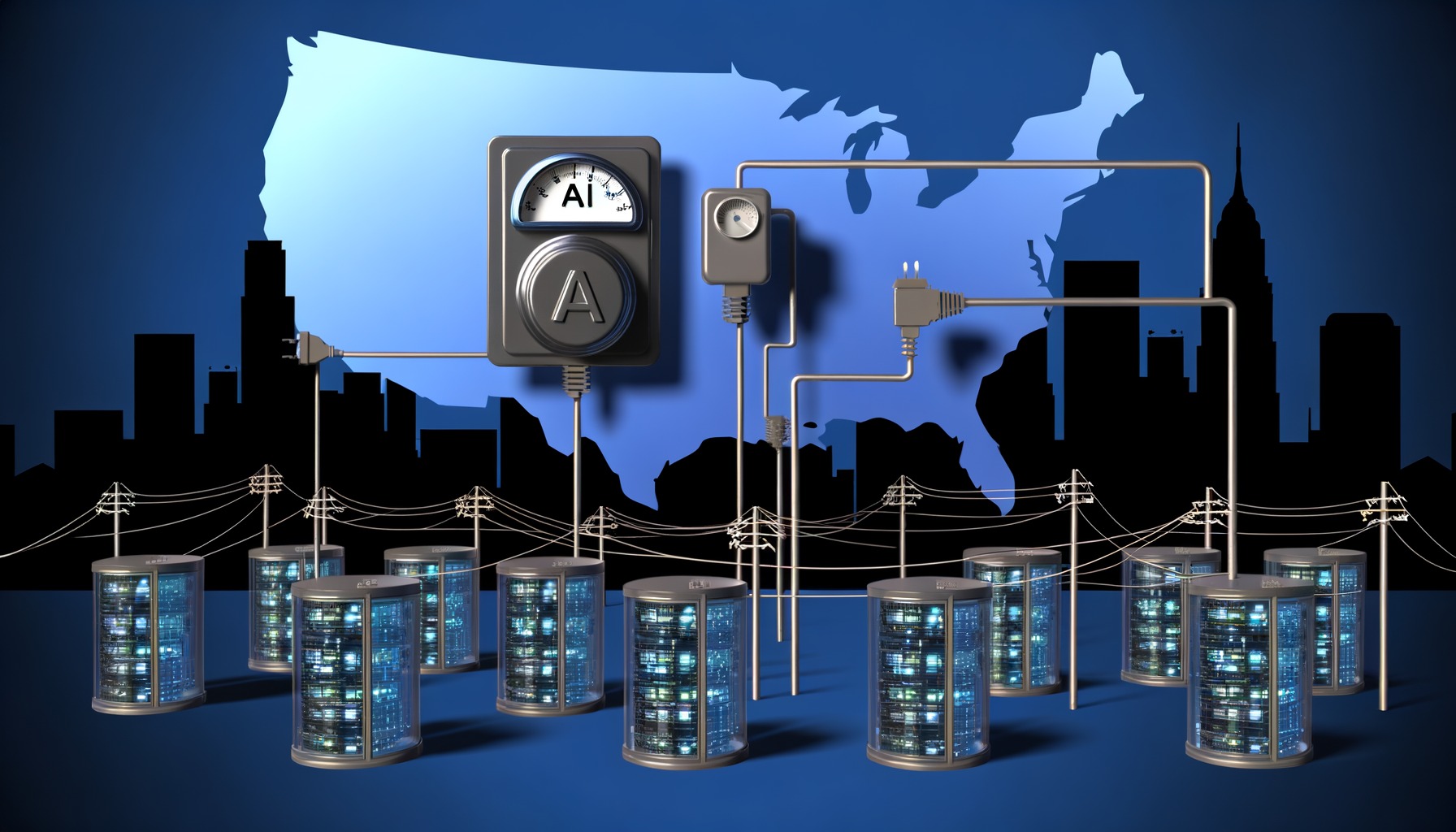
Data centres, essential for AI and cloud technologies, have seen electricity demands surge by 50% since 2020, now accounting for 4% of US energy use. Projections indicate this figure could rise to 9% by 2030, emphasising the need for scalable, carbon-free energy solutions. Nuclear power offers a consistent energy supply, unlike solar or wind, making it an attractive choice.
Microsoft has committed to reviving the Three Mile Island reactor by 2028, aiming to meet the energy needs of its growing AI operations. Experts, however, caution that tech-driven nuclear investments may prioritise corporate demands over broader public benefits.
Oklo and similar ventures highlight the increasing convergence of technology and energy, as industry leaders strive to support AI advancements sustainably. The debate continues on whether these moves truly serve societal needs or primarily benefit the tech sector.
AI is revolutionising the legal field, offering solutions to improve fairness and reduce costs in the justice system. Tools powered by AI are being used to streamline tasks like analysing evidence, drafting contracts, and preparing cases. Organisations like the Westway Trust in London are adopting AI to assist clients with complex disputes, such as benefits appeals and housing issues. These tools save hours of work, enabling paralegals to focus on providing better support.
The technology has sparked excitement and debate among legal professionals. AI models are being developed to help barristers identify inconsistencies in real-time court transcripts and assist judges with evidence analysis. Advocates argue that AI could make justice more accessible, while reducing the burden on legal practitioners and cutting costs for clients. However, concerns about accuracy and bias persist, with experts emphasising the importance of human oversight.
Sir Geoffrey Vos, Master of the Rolls, underscores the need for AI to complement, not replace, human judges. Guidelines stress transparency in AI use and the responsibility of lawyers to verify outputs. While tools like ChatGPT can provide general advice, professionals caution against relying on non-specialised AI for legal matters. Experts believe that AI will play a crucial role in addressing the fairness gap in the justice system without compromising the rule of law.
Nvidia has completed its $700 million acquisition of Israeli AI software company Run:ai, following unconditional approval by the European Commission. The deal, initially announced in April, underwent antitrust scrutiny to evaluate potential market dominance in GPUs, critical for AI applications. Regulators concluded Run:ai’s minimal current revenues posed no competition concerns.
Established in 2018, Run:ai offers workload management and orchestration software tailored for AI infrastructure. Its platform supports enterprise customers in optimising compute resources across cloud, edge, and on-premises environments. With a focus on managing large-scale GPU clusters, Run:ai is instrumental in deploying AI workloads like generative AI and search engines.
Now integrated into Nvidia, Run:ai aims to expand its offerings and make its software open-source, broadening its compatibility beyond Nvidia GPUs. The move aligns with Nvidia’s broader strategy to enhance its robotics portfolio and strengthen its AI ecosystem.
Nvidia plans to continue its advancements in robotics, targeting the release of its next-generation Jetson Thor computer for humanoid robots by early 2025.
Google’s CEO, Sundar Pichai, has identified 2025 as a pivotal year for the tech giant, urging employees to adopt a sense of urgency during a recent strategy meeting. Speaking alongside executives, Pichai emphasised the high stakes of the moment and the need for Google to accelerate its progress across key areas, particularly AI.
AI remains a central focus for Google as it competes with industry leaders. Pichai highlighted the Gemini AI model’s momentum while admitting work remains to secure a leadership position in AI innovation by 2025. Scaling Gemini’s consumer applications will be a primary objective for the coming year.
Google is navigating a competitive and evolving technological landscape. As the company invests heavily in AI, its leadership is rallying employees to seize opportunities and overcome challenges ahead of what Pichai called a “critical” year for the company’s future.
The increasing number of data centres powering AI could pose significant challenges for the United States power grid, as reported by Bloomberg. Findings indicate a connection between data centre activity and ‘bad harmonics,’ a term describing electrical power distortions that can damage appliances, heighten fire risks, and lead to power outages.
Bloomberg’s analysis, using data from Whisker Labs and DC Byte, revealed that over half of homes with the worst power distortions are located within 20 miles of active data centres. AI-driven centres, with their unpredictable energy needs, exacerbate these grid strains, pushing infrastructure beyond its designed limits.
Experts, including Aman Joshi of Bloom Energy, warn that no current grid can handle such intense load fluctuations from multiple data centres. While some utility companies question these findings, the report underscores the urgent need to address the interplay between technological expansion and energy stability.
In Barcelona, a pink-haired 25-year-old named Aitana captivates social media with her stunning images and relatable personality. But Aitana isn’t a real person—she’s an AI model created by The Clueless Agency. Launched during a challenging period for the agency, Aitana was designed as a solution to the unpredictability of working with human influencers. The virtual model has proven successful, earning up to €10,000 monthly by featuring in advertisements and modelling campaigns.
Aitana has already amassed over 343,000 Instagram followers, with some celebrities unknowingly messaging her for dates. Her creators, Rubén Cruz and Diana Núñez, maintain her appeal by crafting a detailed “life,” including fictional trips and hobbies, to connect with her audience. Unlike traditional models, Aitana has a defined personality, presented as a fitness enthusiast with a determined yet caring demeanour. This strategic design, rooted in current trends, has made her a relatable and marketable figure.
The success of Aitana has sparked a new wave of AI influencers. The Clueless Agency has developed additional virtual models, including a more introverted character named Maia. Brands increasingly seek these customisable AI creations for their campaigns, citing cost efficiency and the elimination of human unpredictability. However, critics warn that the hypersexualised and digitally perfected imagery promoted by such models may negatively influence societal beauty standards and young audiences.
Despite these concerns, Aitana represents a broader shift in advertising and social media. By democratising access to influencer marketing, AI models like her offer new opportunities for smaller businesses while challenging traditional notions of authenticity and influence in the digital age.
A series of intrusions targeting Chrome browser extensions has compromised multiple companies since mid-December, experts revealed. Among the victims is Cyberhaven, a California-based data protection company. The breach, confirmed by Cyberhaven on Christmas Eve, is reportedly part of a larger campaign aimed at developers of Chrome extensions across various industries.
Cyberhaven stated it is cooperating with federal law enforcement to address the issue. Browser extensions, commonly used to enhance web browsing, can also pose risks when maliciously altered. Cyberhaven’s Chrome extension, for example, is designed to monitor and secure client data within web-based applications.
Experts identified other compromised extensions, including those involving AI and virtual private networks. Jaime Blasco, cofounder of Texas-based Nudge Security, noted that the attacks appear opportunistic, aiming to harvest sensitive data from numerous sources. Some breaches date back to mid-December, indicating an ongoing effort.
Federal authorities, including the US cyber watchdog CISA, have redirected inquiries to the affected companies. Alphabet, maker of the Chrome browser, has yet to respond to requests for comment.
OpenAI has unveiled plans to transition its for-profit arm into a Delaware-based public benefit corporation (PBC). The move aims to attract substantial investment as the competition to develop advanced AI intensifies, and the proposed structure intends to prioritise societal interests alongside shareholder value, setting the company apart from traditional corporate models.
The shift marks a significant step for OpenAI, which started as a nonprofit in 2015 before establishing a for-profit division to fund high-cost AI development. Its latest funding round, valued at $157 billion, necessitated the structural change to eliminate a profit cap for investors, enabling greater financial backing. The nonprofit will retain a substantial stake in the restructured company, ensuring alignment with its original mission.
OpenAI faces criticism and legal challenges over the move. Elon Musk, a co-founder and vocal critic, has filed a lawsuit claiming the changes prioritise profit over public interest. Meta Platforms has also urged regulatory intervention. Legal experts suggest the PBC status offers limited enforcement of its mission-focused commitments, relying on shareholder influence to maintain the balance between profit and purpose.
By adopting this structure, OpenAI aims to align with competitors like Anthropic and xAI, which have similarly raised billions in funding. Analysts view the move as essential for securing the resources needed to remain a leader in the AI sector, though significant hurdles remain.