OpenAI is now valued at $300 billion after new funding

OpenAI has secured a $40 billion funding deal from SoftBank, pushing its valuation to $300 billion instead of staying below that mark, making it the third most valuable private company in the world.

It now ranks behind Elon Musk’s SpaceX, valued at around $350 billion, instead of taking the top spot, and TikTok’s parent company, ByteDance, which stands at approximately $315 billion.

The valuation surpasses major firms like Chevron, Salesforce, McDonald’s, Pepsico, and Samsung instead of lagging behind them.

Funding is structured in two phases, beginning with an initial $10 billion investment. The remaining $30 billion is expected to be provided by the end of 2025, as reported by the New York Times.

OpenAI stated that this capital will allow the company to advance AI research instead of stagnating and expand its infrastructure with more powerful tools.

Founded in 2015 as a non-profit, OpenAI later shifted to a capped-profit model to attract investment instead of relying solely on donations while continuing its work in AI development.

Despite facing operational challenges and legal disputes, including a high-profile lawsuit from Musk opposing its transition to a profit-driven model, OpenAI has continued to grow.

Its ChatGPT platform now boasts 500 million weekly users instead of seeing a decline. In February, investors, including Musk, sought control of the firm, but CEO Sam Altman firmly rejected the proposal, reaffirming that ‘OpenAI is not for sale’ instead of giving in to external pressure.

For more information on these topics, visit diplomacy.edu.

Gemini AI for kids: A new era of safe, smart learning

Google appears to be working on a child-friendly version of its Gemini AI, offering young users a safer and more controlled experience. A recent teardown of the Google app (version 16.12.39) uncovered strings referencing ‘kid users,’ hinting at an upcoming feature tailored specifically for children.

While Gemini already assists users with creating stories, answering questions, and helping with homework, this kid-friendly version is expected to include stricter content policies and additional safeguards.

Google’s existing safety measures for teens suggest that Gemini for Kids may offer even tighter restrictions and enhanced content moderation.

It remains unclear how Google plans to implement this feature, but it is likely that Gemini for Kids will be automatically enabled for Google accounts registered under a child’s name.

Given global regulations on data collection for minors, Google will reportedly process children’s data in accordance with its privacy policies and the Gemini Apps Privacy Notice.

As AI increasingly integrates into education and daily life, a safer, child-focused version of Gemini could provide a more secure way for kids to engage with technology while ensuring parental peace of mind.

For more information on these topics, visit diplomacy.edu.

Alphawave acquisition eyed by arm for AI advancements

Arm Holdings, owned by SoftBank, recently considered acquiring UK-based semiconductor IP supplier Alphawave to bolster its artificial intelligence processor technology.

The focus was on Alphawave’s ‘serdes’ technology, essential for rapid data transfer in AI applications requiring interconnected chips.

Despite initial discussions, Arm decided against pursuing the acquisition. Alphawave had been exploring a sale after attracting interest from Arm and other potential buyers.

Alphawave’s joint venture in China, WiseWave, added complexity to the potential deal due to national security concerns raised by US officials.

For more information on these topics, visit diplomacy.edu.

AI-powered brain implant turns thoughts into words in real-time

A brain implant powered by AI has enabled a paralysed woman to speak almost instantly, offering new hope for those who have lost their ability to communicate. Developed by researchers in California, the experimental system translates brain signals into speech in real-time.

Ann, a 47-year-old who lost her voice after a stroke 18 years ago, previously used a brain-computer interface (BCI) with an eight-second delay.

The latest model, published in Nature Neuroscience, reduces that time to just 80 milliseconds, allowing more natural conversations. Scientists trained the system using deep learning and reconstructed Ann’s voice from past recordings.

Although the vocabulary remains limited, the breakthrough marks a major step towards real-world applications. Researchers believe with proper funding, the technology could become widely available within a decade, helping many regain their voice.

For more information on these topics, visit diplomacy.edu.

Guangdong eyes global role in AI and robotics

Guangdong is stepping up efforts to become a world leader in AI and robotics by offering generous subsidies to attract start-ups and top tech talent.

The province will grant up to 50 million yuan to major AI manufacturing hubs and millions more to smaller firms and developers.

Officials also plan to fund five open-source communities and ten industrial applications of AI each year, with up to 8 million yuan in support for each.

Local tech giants like Huawei and Tencent are expected to play a key role in the ecosystem.

The move follows the rise of AI firm DeepSeek in neighbouring province of China, Zhejiang, whose founder hails from Guangdong.

The government hopes to replicate that success at home by turning the region into a centre for innovation and global competitiveness.

For more information on these topics, visit diplomacy.edu.

Hackers exploit AI: The hidden dangers of open-source models

As AI adoption grows, security experts warn that malicious actors are finding new ways to exploit vulnerabilities in open-source models.

Yuval Fernbach, CTO of machine learning operations at JFrog, notes that hackers are increasingly embedding harmful code within AI models, making it easier to steal information, manipulate outputs, or disrupt services.

A recent study by JFrog and Hugging Face found that of over one million AI models analyzed, 400 contained malicious code—roughly a 1% chance of encountering a tainted model.

However, the risk has escalated: while the number of available AI models has tripled, attacks have increased sevenfold.

The widespread use of open-source models, often chosen over costly proprietary alternatives, exacerbates security concerns.

Many companies lack proper oversight, with 58% of surveyed firms admitting to having no formal policy for vetting AI models. Meanwhile, banks and other industries worry that AI’s rapid evolution outpaces their ability to implement safeguards.

With agentic AI poised to automate decision-making, businesses face an urgent need to strengthen AI security measures before vulnerabilities lead to significant financial and operational consequences.

For more information on these topics, visit diplomacy.edu.

AI technology sparks debate in Hollywood

Hollywood is grappling with AI’s increasing role in filmmaking, with executives, actors, and developers exploring the technology’s potential. At a recent event, industry leaders discussed AI-generated video, heralded as the biggest breakthrough since the advent of sound in cinema.

Despite its growing presence, AI’s impact remains controversial, especially after recent strikes from actors and writers seeking protection from AI exploitation.

AI technology is making its way into movies and TV shows, with Oscar-nominated films like Emilia Perez and The Brutalist using AI for voice alterations and actor de-aging. AI’s capacity to generate scripts, animation, and even actors has led to fears of job displacement, particularly for background actors.

However, proponents like Bryn Mooser of Moonvalley argue that AI can empower filmmakers, especially independent creators, to produce high-quality content at a fraction of traditional costs.

While Hollywood is still divided on AI’s potential, several tech companies, including OpenAI and Google, are lobbying for AI models to access copyrighted art to fuel their development, claiming it’s vital for national security.

The push has met resistance from filmmakers who fear it could undermine the creative industry, which provides millions of jobs. Despite the opposition, AI’s role in filmmaking is rapidly expanding, and its future remains uncertain.

Some in the industry believe AI, if used correctly, can enhance creativity by allowing filmmakers to create worlds and narratives beyond their imagination. However, there is a push to ensure that artists remain central to this transformation, and that AI’s role in cinema respects creators’ rights and protections.

As AI technology evolves, Hollywood faces a critical choice: embrace it responsibly instead of the risk of being overtaken by powerful tech companies.

For more information on these topics, visit diplomacy.edu.

ChatGPT adds one million users per hour with AI image tool

OpenAI’s ChatGPT is experiencing unprecedented growth following the release of its new AI image generation feature. According to CEO Sam Altman, the AI tool has been attracting one million new users per hour, spurred by what he described as ‘biblical demand.’

The GPT-4o model, now available to free users, has quickly become a sensation, drawing comparisons to the app’s initial launch 26 months ago.

The latest update allows users to generate highly detailed visuals, including logos, diagrams, and imagery with precise meaning. OpenAI has touted GPT-4o’s ability to accurately render text, follow prompts closely, and draw from its extensive knowledge base to produce tailored visuals.

Popular uses include crafting images in the style of Studio Ghibli, which has led to a flood of creative outputs shared across social media platforms.

However, the overwhelming popularity has strained OpenAI’s resources. Sam Altman acknowledged the situation by noting that their GPUs were ‘melting’ under the pressure.

To manage the surge, OpenAI implemented temporary rate limits to enhance efficiency and maintain service quality.

The company’s success has also attracted significant investment, with OpenAI securing $40 billion in funding, bringing its valuation to $300 billion.

Since launching in November 2022, ChatGPT has amassed 500 million users, solidifying its position as one of the most influential AI platforms globally.

For more information on these topics, visit diplomacy.edu.
Agentic AI gains traction with Amazon’s Nova Act and OpenAI’s open-weight model

The competition to define the next era of agentic AI—systems capable of planning, reasoning, and executing tasks—continues to intensify as major tech firms introduce new AI models with varying levels of autonomy and openness.

Amazon has launched Nova Act, an AI-powered browser agent that operates much like a human user, handling low-risk, automated tasks. Meanwhile, OpenAI is preparing to release an open-weight language model, providing developers with access to its trained parameters for custom AI applications.

At the same time, China’s Zhipu AI has unveiled a free AI assistant aimed at strengthening its domestic market presence and competing with Western firms.

The launches signal a major shift in AI adoption strategies. While agentic AI holds vast potential, experts caution that its deployment in high-stakes enterprise environments requires further refinement.

‘The launch of Amazon Nova Act seems well suited for public-facing use cases with minimal risks, but enterprise adoption will take longer due to workflow complexity and operational concerns,’ said Sharath Srinivasamurthy, Associate VP of Research at IDC.

OpenAI’s move toward an open-weight model could accelerate AI customization efforts, aligning with growing enterprise demands for greater control.

Unlike fully open-source models that release training data and code, open-weight models provide access to trained parameters, enabling businesses to adapt AI to their specific needs.

‘The world is shifting towards open models,’ Srinivasamurthy added. ‘With Meta and DeepSeek gaining traction for their open approach, OpenAI’s move was only a matter of time. This will make the market even more competitive.’

Zhipu AI’s rise also introduces geopolitical factors, as China seeks to expand its AI leadership. The growing presence of Chinese AI firms may push multinational companies to reassess partnerships and compliance strategies in different markets.

‘The ascent of Zhipu AI highlights China’s increasing role in AI innovation, urging global businesses to carefully evaluate AI governance, security, and competitive strategy,’ said Abhivyakti Sengar, Practice Director at Everest Group.

As AI adoption accelerates, the evolving balance between control, performance, and openness is set to shape enterprise strategies in an increasingly competitive landscape.

For more information on these topics, visit diplomacy.edu.
Windows 11 update brings AI-powered Live Captions and image editing

Microsoft is making its AI-powered features more widely available across Copilot Plus PCs, extending support to Intel and AMD devices.

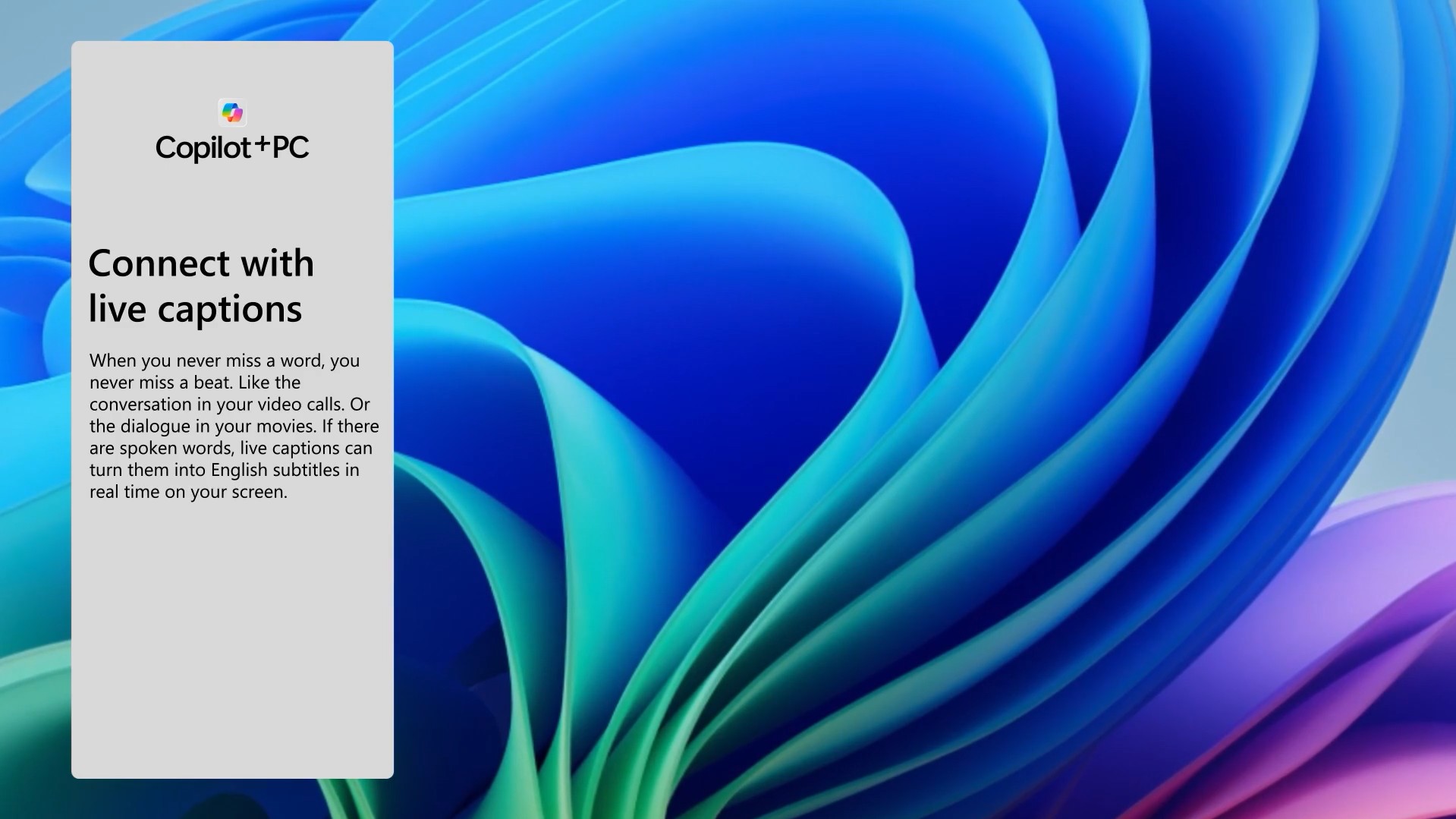
Among the most notable additions is Live Captions, which translates audio into English subtitles in real time from dozens of languages. Initially tested on these devices last December, Live Captions is now accessible through the latest Windows 11 update.

The update also introduces Cocreator, an AI-powered tool in Paint that generates images based on a user’s text description and drawings.

Additionally, Microsoft is expanding access to its AI image editor and generator in the Photos app, offering more creative possibilities to users.

Previously, these AI features were exclusive to Copilot Plus PCs with Qualcomm chips. While Microsoft has been testing Recall, an AI-driven screenshot search feature, on Intel and AMD devices, there’s no confirmed timeline for its full rollout.

Microsoft is also enhancing Voice Access, an accessibility feature that enables users to control their PC through voice commands. The update improves natural language understanding on Qualcomm-powered Copilot Plus PCs, with plans to bring this functionality to Intel and AMD devices in the future.

Additionally, Microsoft is expanding language translation, allowing users to translate 27 languages into Simplified Chinese.

As Microsoft continues integrating AI across Windows 11, these updates bring greater accessibility, creativity, and multilingual support to more users, solidifying AI’s role in everyday computing.

For more information on these topics, visit diplomacy.edu.