Millions of South Africans are set to gain access to AI and digital skills through a partnership between Microsoft South Africa and the national broadcaster SABC Plus. The initiative will deliver online courses, assessments, and recognised credentials directly to learners’ devices.
Building on Microsoft Elevate and the AI Skills Initiative, the programme follows the training of 1.4 million people and the credentialing of nearly half a million citizens since 2025. SABC Plus, with over 1.9 million registered users, provides an ideal platform to reach diverse communities nationwide.
AI and data skills are increasingly critical for employability, with global demand for AI roles growing rapidly. Microsoft and SABC aim to equip citizens with practical, future-ready capabilities, ensuring learning opportunities are not limited by geography or background.
The collaboration also complements Microsoft’s broader initiatives in South Africa, including Ikamva Digital, ElevateHer, Civic AI, and youth certification programmes, all designed to foster inclusion and prepare the next generation for a digital economy.
Would you like to learn more about AI, tech, and digital diplomacy? If so, ask our Diplo chatbot!
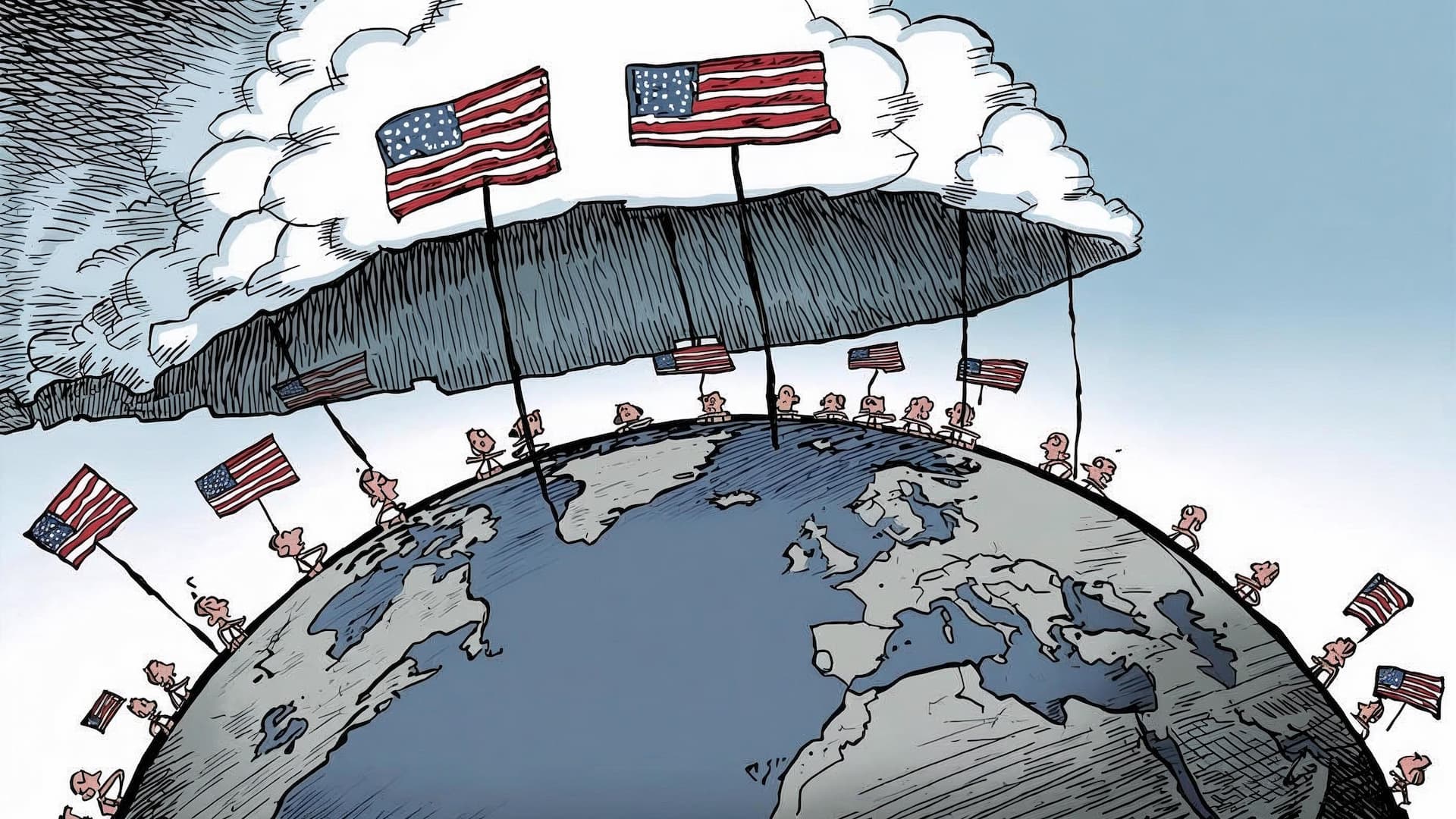
European technology leaders are increasingly questioning the long-held assumption that information technology operates outside politics, amid growing concerns about reliance on US cloud providers and digital infrastructure.
At HiPEAC 2026, Nextcloud chief executive Frank Karlitschek argued that software has become an instrument of power, warning that Europe’s dependence on American technology firms exposes organisations to legal uncertainty, rising costs, and geopolitical pressure.
He highlighted conflicts between EU privacy rules and US surveillance laws, predicting continued instability around cross-border data transfers and renewed risks of services becoming legally restricted.
Beyond regulation, Karlitschek pointed to monopoly power among major cloud providers, linking recent price increases to limited competition and warning that vendor lock-in strategies make switching increasingly difficult for European organisations.
He presented open-source and locally controlled cloud systems as a path toward digital sovereignty, urging stronger enforcement of EU competition rules alongside investment in decentralised, federated technology models.
Would you like to learn more about AI, tech, and digital diplomacy? If so, ask our Diplo chatbot!
The exposure of more than 50,000 children’s chat logs by AI toy company Bondu highlights serious gaps in child data protection. Sensitive personal information, including names, birth dates, and family details, was accessible through a poorly secured parental portal, raising immediate concerns about children’s privacy and safety.
The incident highlights the absence of mandatory security-by-design standards for AI products for children, with weak safeguards enabling unauthorised access and exposing vulnerable users to serious risks.
Beyond the specific flaw, the case raises wider concerns about AI toys used by children. Researchers warned that the exposed data could be misused, strengthening calls for stricter rules and closer oversight of AI systems designed for minors.
Concerns also extend to transparency around data handling and AI supply chains. Uncertainty over whether children’s data was shared with third-party AI model providers points to the need for clearer rules on data flows, accountability, and consent in AI ecosystems.
Finally, the incident has added momentum to policy discussions on restricting or pausing the sale of interactive AI toys. Lawmakers are increasingly considering precautionary measures while more robust child-focused AI safety frameworks are developed.
Would you like to learn more about AI, tech, and digital diplomacy? If so, ask our Diplo chatbot!
European data protection authorities recorded a sharp rise in GDPR violation reports in 2025, according to a new study by law firm DLA Piper, signalling growing regulatory pressure across the European Union.
Average daily reports surpassed 400 for the first time since the regulation entered force in 2018, reaching 443 incidents per day, a 22% increase compared with the previous year. The firm noted that expanding digital systems, new breach reporting laws, and geopolitical cyber risks may be driving the surge.
Despite the higher number of cases in the EU, total fines remained broadly stable at around €1.2 billion for the year, pushing cumulative GDPR penalties since 2018 to €7.1 billion, underlining regulators’ continued willingness to impose major sanctions.
Ireland once again led enforcement figures, with fines imposed by its Data Protection Commission totaling €4.04 billion, reflecting the presence of major technology firms headquartered there, including Meta, Google, and Apple.
Recent headline penalties included a €1.2 billion fine against Meta and a €530 million sanction against TikTok over data transfers to China, while courts across Europe increasingly consider compensation claims linked to GDPR violations.
Would you like to learn more about AI, tech, and digital diplomacy? If so, ask our Diplo chatbot!
ID Campus has opened in the French city of Angers as a new European hub dedicated to identity technologies and trust-based digital services. Led by sovereign provider iDAKTO, the initiative aims to bring together public institutions, startups, and researchers to advance secure online systems.
The campus will support innovation, training, pilot projects, and cross-sector collaboration. A key focus is the rollout of the European Digital Identity Wallet. Deeptech firms, research labs, and international delegations are expected to use the site for testing and cooperation.
The project’s development involved partnerships with public bodies in France, including France Titres, La Mission French Tech, and Angers Loire Metropole, reflecting a wider push to strengthen national and European authentication infrastructure.
The official launch brought together leaders from government and industry to discuss the rise in digital adoption and tightening regulatory frameworks across Europe, as secure digital identity systems become central to public services and cross-border transactions.
European digital sovereignty remains a core driver of the initiative, with policymakers seeking interoperable trust frameworks that reduce reliance on non-European technologies.
Would you like to learn more about AI, tech, and digital diplomacy? If so, ask our Diplo chatbot!
OpenAI has begun testing advertising placements inside ChatGPT, marking a shift toward monetising one of the world’s most widely used AI platforms. Sponsored content now appears below chatbot responses for free and low-cost users, integrating promotions directly into conversational queries.
Ads remain separate from organic answers, with OpenAI saying commercial content will not influence AI-generated responses. Users can see why specific ads appear, dismiss irrelevant placements, and disable personalisation. Advertising is excluded for younger users and sensitive topics.
Initial access is limited to enterprise partners, with broader availability expected later. Premium subscription tiers continue without ads, reflecting a freemium model similar to streaming platforms offering both paid and ad-supported options.
Pricing places ChatGPT ads among the most expensive digital formats. The value lies in reaching users at high-intent moments, such as during product research and purchase decisions. Measurement tools remain basic, tracking only impressions and clicks.
OpenAI’s move into advertising signals a broader shift as conversational AI reshapes how people discover information. Future performance data and targeting features will determine whether ChatGPT becomes a core ad channel or a premium niche format.
Would you like to learn more about AI, tech, and digital diplomacy? If so, ask our Diplo chatbot!
The European Commission has opened a formal investigation into Grok after the tool produced millions of sexualised images of women and children.
A scrutiny that centres on whether X failed to carry out adequate risk assessments before releasing the undressing feature in the European market. The case arrives as ministers, including Sweden’s deputy prime minister, publicly reveal being targeted by the technology.
Brussels is preparing to use its strongest digital laws instead of deferring to US pressure. The Digital Services Act allows the European Commission to fine major platforms or force compliance measures when systemic harms emerge.
Experts argue the Grok investigation represents an important test of European resolve, particularly as the bloc tries to show it can hold powerful companies to account.
Concerns remain about the willingness of the EU to act decisively. Reports suggest the opening of the probe was delayed because of a tariff dispute with Washington, raising questions about whether geopolitical considerations slowed the enforcement response.
Several lawmakers say the delay undermined confidence in the bloc’s commitment to protecting fundamental rights.
The investigation could last months and may have wider implications for content ranking systems already under scrutiny.
Critics say financial penalties may not be enough to change behaviour at X, yet the case is still viewed as a pivotal moment for European digital governance. Observers believe a firm outcome would demonstrate that emerging harms linked to synthetic media cannot be ignored.
Would you like to learn more about AI, tech and digital diplomacy? If so, ask our Diplo chatbot!
A global wave of deepfake abuse is spreading across Telegram as millions of users generate and share sexualised images of women without consent.
Researchers have identified at least 150 active channels offering AI-generated nudes of celebrities, influencers and ordinary women, often for payment. The widespread availability of advanced AI tools has turned intimate digital abuse into an industrialised activity.
Telegram states that deepfake pornography is banned and says moderators removed nearly one million violating posts in 2025. Yet new channels appear immediately after old ones are shut, enabling users to exchange tips on how to bypass safety controls.
The rise of nudification apps on major app stores, downloaded more than 700 million times, adds further momentum to an expanding ecosystem that encourages harassment rather than accountability.
Experts argue that the celebration of such content reflects entrenched misogyny instead of simple technological misuse. Women targeted by deepfakes face isolation, blackmail, family rejection and lost employment opportunities.
Legal protections remain minimal in much of the world, with fewer than 40% of countries having laws that address cyber-harassment or stalking.
Campaigners warn that women in low-income regions face the most significant risks due to poor digital literacy, limited resources and inadequate regulatory frameworks.
The damage inflicted on victims is often permanent, as deepfake images circulate indefinitely across platforms and are impossible to remove, undermining safety, dignity and long-term opportunities comprehensively.
Would you like to learn more about AI, tech and digital diplomacy? If so, ask our Diplo chatbot!
OpenAI has launched Prism, a cloud-based LaTeX workspace designed to streamline the drafting, collaboration, and publication of academic papers. The tool integrates writing, citation management, real-time collaboration, and AI assistance into a single environment to reduce workflow friction.
Built specifically for scientific use, Prism embeds GPT-5.2 directly inside documents rather than as a separate chatbot. Researchers can rewrite sections, verify equations, test arguments, and clarify explanations without leaving the editing interface, positioning AI as a background collaborator.
Users can start new LaTeX projects or upload existing files through prism.openai.com using a ChatGPT account. Co-authors can join instantly, enabling simultaneous editing while maintaining structured formatting for equations, references, and manuscript layout.
OpenAI says Prism supports academic search, converts handwritten formulas into clean LaTeX, and allows voice-driven edits for faster reviews. Completed papers export as publication-ready PDFs alongside full source files.
Initially available for free to personal ChatGPT users, the workspace will later expand to Business, Enterprise, and Education plans. The company frames the tool as a practical productivity layer rather than a research disruption platform.
Would you like to learn more about AI, tech, and digital diplomacy? If so, ask our Diplo chatbot!
Jason Stockwood, the UK investment minister, has suggested that a universal basic income could help protect workers as AI reshapes the labour market.
He argued that rapid advances in automation will cause disruptive shifts across several sectors, meaning the country must explore safety mechanisms rather than allowing sudden job losses to deepen inequality. He added that workers will need long-term retraining pathways as roles disappear.
Concern about the economic impact of AI continues to intensify.
Research by Morgan Stanley indicates that the UK is losing more jobs than it is creating because of automation and is being affected more severely than other major economies.
Warnings from London’s mayor, Sadiq Khan and senior global business figures, including JP Morgan’s chief executive Jamie Dimon, point to the risk of mass unemployment unless governments and companies step in with support.
Stockwood confirmed that a universal basic income is not part of formal government policy, although he said people inside government are discussing the idea.
He took up his post in September after a long career in the technology sector, including senior roles at Match.com, Lastminute.com and Travelocity, as well as leading a significant sale of Simply Business.
Additionally, Stockwood said he no longer pushes for stronger wealth-tax measures, but he criticised wealthy individuals who seek to minimise their contributions to public finances. He suggested that those who prioritise tax avoidance lack commitment to their communities and the country’s long-term success.
Would you like to learn more about AI, tech and digital diplomacy? If so, ask our Diplo chatbot!