
Croatia turns bus stops into AI-powered health stations

Croatia has introduced a groundbreaking public health campaign that uses AI and interactive billboards to tackle undiagnosed spinal issues. The initiative, led by Croatia Poliklinika, has provided over 100,000 free posture screenings and reached nearly 78% of the country’s population.

By converting bus stops into makeshift health stations, the project enables passers-by to receive posture checks via AI-powered digital billboards. The system analyses spine alignment at eight points and offers instant feedback, encouraging users to seek specialist help through a QR code.

The campaign has sparked immediate behavioural change, with 97% of people adjusting their posture during the scan. Since its launch, Croatia has seen a 46% rise in preventive spine check-ups, turning passive advertising spaces into tools for public well-being.

Croatia Poliklinika, which operates nine clinics nationwide, says the project demonstrates how digital infrastructure can reshape healthcare accessibility. The success is being hailed as a model for how technology can redefine public health engagement in everyday spaces.

Would you like to learn more about AI, tech and digital diplomacy? If so, ask our Diplo chatbot!
Amazon reaches one million warehouse robots

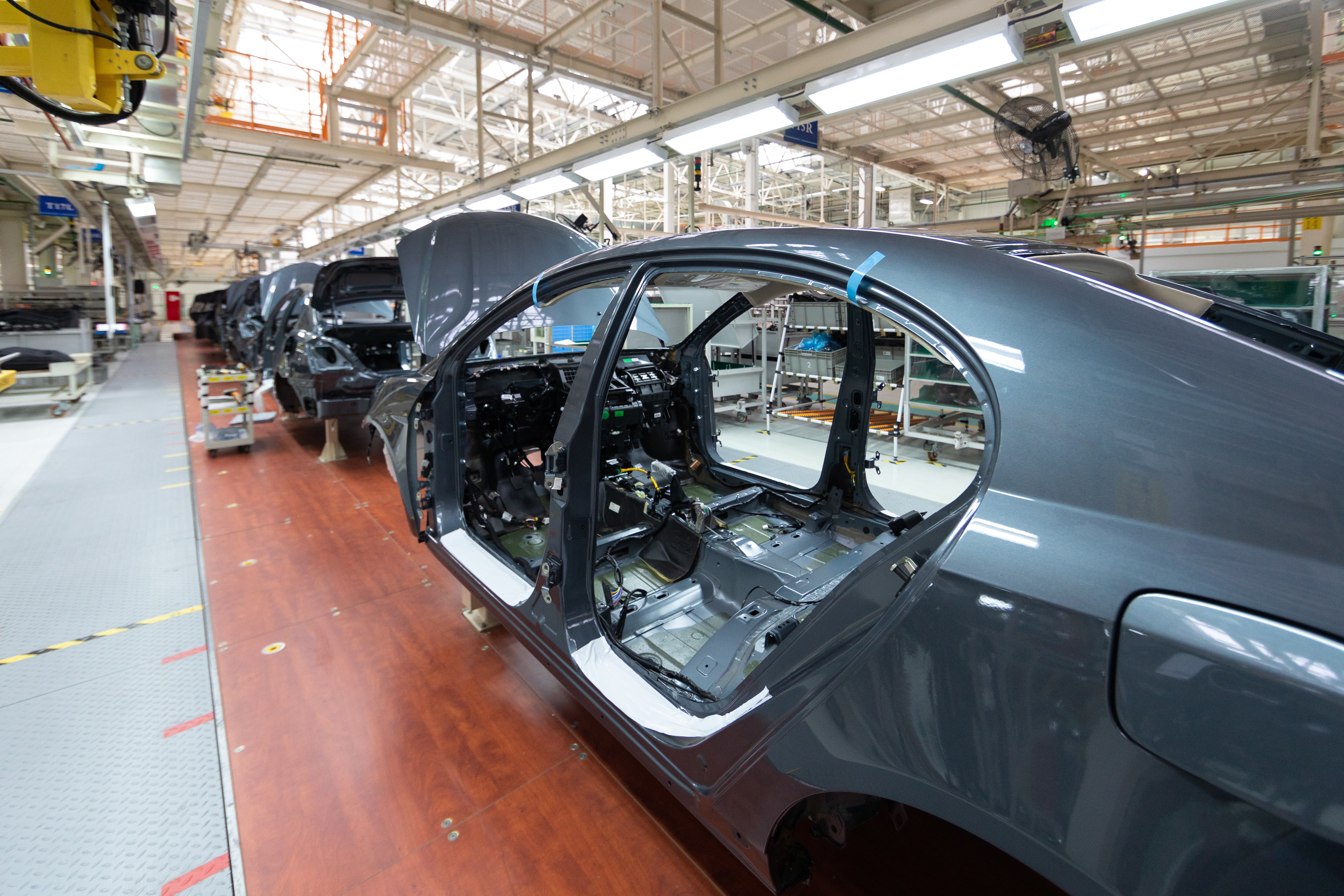
Amazon has reached a major milestone with over one million robots now operating in its warehouses.

The one millionth robot, recently deployed to a facility in Japan, marks 13 years since the tech giant began introducing automation through its acquisition of Kiva Systems in 2012.

The robotic presence is fast approaching parity with Amazon’s human workforce, according to The Wall Street Journal. Robots now assist in around 75% of the company’s global deliveries.

The company continues to upgrade its robotic fleet, recently unveiling Vulcan — a dual-armed model equipped with a suction grip and a sense of touch to handle items more delicately.

Amazon is also introducing DeepFleet, a new generative AI model built using Amazon SageMaker.

Designed to optimise robotic movement within fulfilment centres, DeepFleet is expected to improve fleet speed by 10%. The model is trained on Amazon’s operational data, making it highly tailored to the company’s logistical network.

The expansion comes as Amazon opens next-generation fulfilment centres featuring ten times more robots instead of relying solely on existing warehouse models. The first of these facilities opened in late 2024 in Shreveport, Louisiana, signalling a shift toward even greater automation.

Would you like to learn more about AI, tech and digital diplomacy? If so, ask our Diplo chatbot!

Grammarly invests in email with Superhuman acquisition

Grammarly announced on Tuesday that it has acquired email client Superhuman to expand its AI capabilities within its productivity suite.

Financial details of the deal were not disclosed by either company. Superhuman, founded by Rahul Vohra, Vivek Sodera and Conrad Irwin, has raised over $114 million from investors such as a16z and Tiger Global, with a last valuation of $825 million.

Grammarly CEO Shishir Mehrotra said the acquisition will enable the company to bring enhanced AI collaboration to millions more professionals, adding that email is not just another app but a crucial platform where users spend significant time.

Superhuman’s CEO Rahul Vohra and his team are joining Grammarly, promising to invest further in improving the Superhuman experience and building AI agents that collaborate across everyday communication tools.

Recently, Superhuman introduced AI-powered features like scheduling, replies and email categorisation. Grammarly aims to leverage the technology to build smarter AI agents for email, which remains a top use case for its customers.

The move follows Grammarly’s acquisition of productivity software Coda last year and the promotion of Shishir Mehrotra to CEO.

In May, Grammarly secured $1 billion from General Catalyst through a non-dilutive investment, repaid by a capped percentage of revenue generated using the funds instead of equity.

The Superhuman deal further signals Grammarly’s commitment to integrating AI deeply into professional communication.

Would you like to learn more about AI, tech and digital diplomacy? If so, ask our Diplo chatbot!

Cloudflare’s new tool lets publishers charge AI crawlers

Cloudflare, which powers 20% of the web, has launched a new marketplace called Pay per Crawl, aiming to redefine how website owners interact with AI companies.

The platform allows publishers to set a price for AI crawlers to access their content instead of allowing unrestricted scraping or blocking. Website owners can decide to charge a micropayment for each crawl, permit free access, or block crawlers altogether, gaining more control over their material.

Over the past year, Cloudflare introduced tools for publishers to monitor and block AI crawlers, laying the groundwork for the marketplace. Major publishers like Conde Nast, TIME and The Associated Press have joined Cloudflare in blocking AI crawlers by default, supporting a permission-based approach.

The company also now blocks AI bots by default on all new sites, requiring site owners to grant access.

Cloudflare’s data reveals that AI crawlers scrape websites far more aggressively than traditional search engines, often without sending equivalent referral traffic. For example, OpenAI’s crawler scraped sites 1,700 times for every referral, compared to Google’s 14 times.

As AI agents evolve to gather and deliver information directly, it raises challenges for publishers who rely on site visits for revenue.

Pay per Crawl could offer a new business model for publishers in an AI-driven world. Cloudflare envisions a future where AI agents operate with a budget to access quality content programmatically, helping users synthesise information from trusted sources.

For now, both publishers and AI companies need Cloudflare accounts to set crawl rates, with Cloudflare managing payments. The company is also exploring stablecoins as a possible payment method in the future.

Would you like to learn more about AI, tech and digital diplomacy? If so, ask our Diplo chatbot!

Qantas cyber attack sparks customer alert

Qantas is investigating a major data breach that may have exposed the personal details of up to six million customers.

The breach affected a third-party platform used by the airline’s contact centre to store sensitive data, including names, phone numbers, email addresses, dates of birth and frequent flyer numbers.

The airline discovered unusual activity on 30 June and responded by immediately isolating the affected system. While the full scope of the breach is still being assessed, Qantas expects the volume of stolen data to be significant.

However, it confirmed that no passwords, PINs, credit card details or passport numbers were stored on the compromised platform.

Qantas has informed the Australian Federal Police, the Cyber Security Centre and the Office of the Information Commissioner. CEO Vanessa Hudson apologised to customers and urged anyone concerned to call a dedicated support line. She added that airline operations and safety remain unaffected.

The incident follows recent cyber attacks on Hawaiian Airlines, WestJet and major UK retailers, reportedly linked to a group known as Scattered Spider. The breach adds to a growing list of Australian organisations targeted in 2025, in what privacy authorities describe as a worsening trend.

Would you like to learn more about AI, tech and digital diplomacy? If so, ask our Diplo chatbot!

Student builds AI app to help farmers tackle crop issues

A student is developing an AI-powered app designed to help farmers detect and address crop problems. Soj Gamayon, a communications technology management student at Ateneo de Manila University, was inspired by his family’s farming struggles and his experiences abroad to build AgriConnect PH.

The app uses smart sensors to monitor conditions such as water levels, moisture, and pests, then sends the data to the cloud where it is analysed by AI. Farmers receive real-time alerts with a colour-coded system indicating the severity of risks, helping them respond before crops are damaged.

Gamayon aims to move farmers from reactive responses to proactive management. With updates available at least twice a day and instant alerts for urgent threats, the system offers timely intervention to reduce losses.

Currently supporting cereal crops like rice and corn, the app is set to expand to vegetables and livestock. While the technology is still in development, Gamayon believes AI can revolutionise agriculture and provide Filipino farmers with better tools for resilience.

Would you like to learn more about AI, tech and digital diplomacy? If so, ask our Diplo chatbot!

Gemini AI suite expands to help teachers plan and students learn

Google has unveiled a major expansion of its Gemini AI tools tailored for classroom use, launching over 30 features to support teachers and students. These updates include personalised AI-powered lesson planning, content generation, and interactive study guides.

Teachers can now create custom AI tutors, known as ‘Gems’, to assist students with specific academic needs using their own teaching materials. Google’s AI reading assistant is also gaining real-time support features through the Read Along tool in Classroom, enhancing literacy development for younger users.

Students and teachers will benefit from wider access to Google Vids, the company’s video creation app, enabling them to create instructional content and complete multimedia assignments.

Additional features aim to monitor student progress, manage AI permissions, improve data security, and streamline classroom content delivery using new Class tools.

By placing AI directly into the hands of educators, Google aims to offer more engaging and responsive learning, while keeping its tools aligned with classroom goals and policies. The rollout continues Google’s bid to take the lead in the evolving AI-driven edtech space.

Would you like to learn more about AI, tech and digital diplomacy? If so, ask our Diplo chatbot!

Meta launches AI superintelligence lab to compete with rivals

Meta has launched a new division called Meta Superintelligence Labs to accelerate its AI ambitions and close the gap with rivals such as OpenAI and Google.

The lab will be led by Alexandr Wang, former CEO of Scale AI, following Meta’s $14.3 billion investment in the data-labeling company. Former GitHub CEO Nat Friedman and SSI co-founder Daniel Gross will also hold key roles in the initiative.

Mark Zuckerberg announced the new effort in an internal memo, stating that Meta is now focused on developing superintelligent AI systems capable of matching or even outperforming humans. He described this as the beginning of a new era and reaffirmed Meta’s commitment to leading the field.

The lab’s mission is to push AI to a point where it can solve complex tasks more effectively than current models.

To meet these goals, Meta has been aggressively recruiting AI researchers from top competitors. Reports suggest that OpenAI employees have been offered signing bonuses as high as $100 million to join Meta.

New hires include talent from Anthropic and Google, although Meta has reportedly avoided deeper recruitment from Anthropic due to concerns over culture fit.

Meta’s move comes in response to the lukewarm reception of its Llama 4 model and mounting pressure from more advanced AI products released by competitors.

The company hopes that by combining high-level leadership, fresh talent and massive investment, its new lab can deliver breakthrough results and reposition Meta as a serious contender in the race for AGI.

Would you like to learn more about AI, tech and digital diplomacy? If so, ask our Diplo chatbot!
Text-to-image and beyond: Alibaba launches Qwen VLo AI model

Alibaba Group has launched a new AI model called Qwen VLo, designed to generate and edit images based on text prompts and visual inputs. The model is an upgrade of the earlier Qwen2.5-VL and forms part of Alibaba’s expanding suite of AI services.

Qwen VLo introduces the ‘progressive generation’ feature, which allows users to watch as the image develops in real-time. Users can request creations with simple prompts such as ‘generate a picture of a dog’, or upload existing photos for editing.

According to a company blog post on GitHub, Qwen VLo is a unified multimodal understanding and generation model. It not only interprets visual and textual data, but also produces high-quality, context-aware image outputs.

Previous models had difficulty with semantic consistency, often misidentifying objects or altering key features like the shape or colour of a car. The new Qwen VLo corrects these issues, offering improved object recognition and detail retention.

Users can issue complex editing commands, such as ‘add a sun to the sky’ or ‘make this photo look like it’s from the 19th century’. The model supports traditional vision tasks like depth estimation, edge detection, and segmentation.

Multiple image tasks can be performed simultaneously, making Qwen VLo suitable for more advanced use cases. Thanks to the model’s multilingual capabilities, instructions can be given in several languages, including English and Chinese.

Alibaba, best known for its e-commerce services, has been steadily advancing its AI research and development. In February, CEO Eddie Wu said the company’s primary focus is now on artificial general intelligence—AI systems that match or exceed human-level cognition.

Would you like to learn more about AI, tech and digital diplomacy? If so, ask our Diplo chatbot!

Apple may use ChatGPT or Claude to power Siri

Apple is reportedly in talks with OpenAI and Anthropic as it considers outsourcing AI technology for its voice assistant, Siri.

The discussions are said to include the possibility of training versions of ChatGPT or Claude to run on Apple’s cloud infrastructure. According to Bloomberg’s Mark Gurman, Apple is currently leaning towards Anthropic’s Claude as a better fit for Siri, although no final decision has been made.

While Apple already allows users to access ChatGPT through its Apple Intelligence platform, the integration is currently optional and user-driven.

What is now under consideration would mark a significant shift, such as choosing a third-party model to power Siri directly. The initiative comes as the company struggles to keep pace in a rapidly advancing AI market dominated by Google, OpenAI, and others.

Apple is still developing its large language models under a project codenamed LLM Siri. However, these in-house systems are reportedly lagging behind leading models already available.

Should Apple proceed with a third-party integration, it would signal a rare admission that its internal AI efforts are not enough to compete at the highest level.

Once celebrated for breakthrough innovations like the iPhone, Apple has faced growing criticism for a lack of fresh ideas. With rivals embedding generative AI into everyday tools, the pressure is mounting.

If Siri remains limited — still unable to answer basic questions — Apple risks alienating even its most loyal users. Whether through partnership or internal progress, the company now faces a narrowing window to prove it still leads, instead of follows.

Would you like to learn more about AI, tech and digital diplomacy? If so, ask our Diplo chatbot!