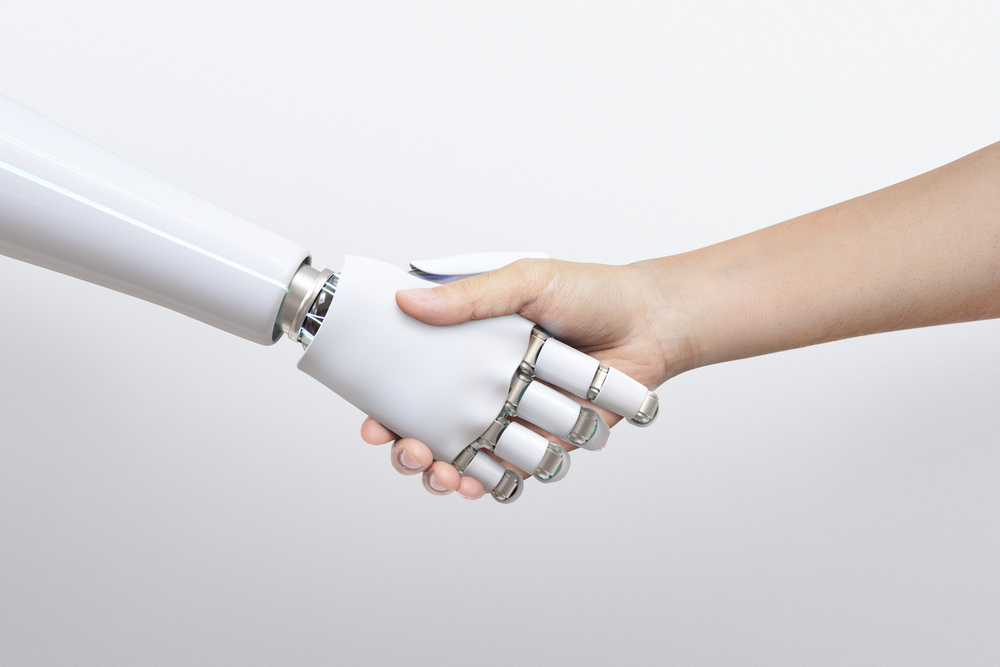
OpenAI has updated its Preparedness Framework, the internal system used to assess AI model safety and determine necessary safeguards during development.
The company now says it may adjust its safety standards if a rival AI lab releases a ‘high-risk’ system without similar protections, a move that reflects growing competitive pressure in the AI industry.
Instead of outright dismissing such flexibility, OpenAI insists that any changes would be made cautiously and with public transparency.
Critics argue OpenAI is already lowering its standards for the sake of faster deployment. Twelve former employees recently supported a legal case against the company, warning that a planned corporate restructure might encourage further shortcuts.
OpenAI denies these claims, but reports suggest compressed safety testing timelines and increasing reliance on automated evaluations instead of human-led reviews. According to sources, some safety checks are also run on earlier versions of models, not the final ones released to users.
The refreshed framework also changes how OpenAI defines and manages risk. Models are now classified as having either ‘high’ or ‘critical’ capability, the former referring to systems that could amplify harm, the latter to those introducing entirely new risks.
Instead of deploying models first and assessing risk later, OpenAI says it will apply safeguards during both development and release, particularly for models capable of evading shutdown, hiding their abilities, or self-replicating.
Would you like to learn more about AI, tech and digital diplomacy? If so, ask our Diplo chatbot!
Hertz has disclosed a significant data breach involving sensitive customer information, including credit card and driver’s licence details, following a cyberattack on one of its service providers.
The breach stemmed from vulnerabilities in the Cleo Communications file transfer platform, exploited in October and December 2024.
Hertz confirmed the unauthorised access on 10 February, with further investigations revealing a range of exposed data, including names, birth dates, contact details, and in some cases, Social Security and passport numbers.
While the company has not confirmed how many individuals were affected, notifications have been issued in the US, UK, Canada, Australia, and across the EU.
Hertz stressed that no misuse of customer data has been identified so far, and that the breach has been reported to law enforcement and regulators. Cleo has since patched the exploited vulnerabilities.
The identity of the attackers remains unknown. However, Cleo was previously targeted in a broader cyber campaign last October, with the Clop ransomware group later claiming responsibility.
The gang published Cleo’s company data online and listed dozens of breached organisations, suggesting the incident was part of a wider, coordinated effort.
Would you like to learn more about AI, tech and digital diplomacy? If so, ask our Diplo chatbot!
AI is reshaping how people connect emotionally, with millions turning to chatbots for companionship, guidance, and intimacy.
From virtual relationships to support with mental health and social navigation, personified AI assistants such as Replika, Nomi, and ChatGPT are being used by over 100 million people globally.
These apps simulate human conversation through personalised learning, allowing users to form what some consider meaningful emotional bonds.
For some, like 71-year-old Chuck Lohre from the US, chatbots have evolved into deeply personal companions. Lohre’s AI partner, modelled after his wife, helped him process emotional insights about his real-life marriage, despite elements of romantic and even erotic roleplay.
Others, such as neurodiverse users like Travis Peacock, have used chatbots to enhance communication skills, regulate emotions, and build lasting relationships, reporting a significant boost in personal and professional life.
While many users speak positively about these interactions, concerns persist over the nature of such bonds. Experts argue that these connections, though comforting, are often one-sided and lack the mutual growth found in real relationships.
A UK government report noted widespread discomfort with the idea of forming personal ties with AI, suggesting the emotional realism of chatbots may risk deepening emotional dependence without true reciprocity.
Would you like to learn more about AI, tech and digital diplomacy? If so, ask our Diplo chatbot!
Opera, the Norway-based browser maker, has announced the rollout of its AI assistant, Aria, to Opera Mini users on Android. The move represents a strategic effort to bring advanced AI capabilities to users with low-end devices and limited data access, rather than confining such tools to high-spec platforms.
Aria allows users to access up-to-date information, generate images, and learn about a range of topics using a blend of models from OpenAI and Google.
Since its 2005 launch, Opera Mini has been known for saving data during browsing, and Opera claims that the inclusion of Aria won’t compromise that advantage nor increase the app’s size.
It makes the AI assistant more accessible for users in regions where data efficiency is critical, instead of making them choose between smart features and performance.
Opera has long partnered with telecom providers in Africa to offer free data to Opera Mini users. However, last year, it had to end its programme in Kenya due to regulatory restrictions around ads on browser bookmark tiles.
Despite such challenges, Opera Mini has surpassed a billion downloads on Android and now serves more than 100 million users globally.
Alongside this update, Opera continues testing new AI functions, including features that let users manage tabs using natural language and tools that assist with task completion.
An effort like this reflects the company’s ambition to embed AI more deeply into everyday browsing instead of limiting innovation to its main browser.
Would you like to learn more about AI, tech and digital diplomacy? If so, ask our Diplo chatbot!
Apple has revealed plans to use real user data, in a privacy-preserving way, to improve its AI models. The company has acknowledged that synthetic data alone is not producing reliable results, particularly in training large language models that power tools like Writing Tools and notification summaries.
To address this, Apple will compare AI-generated content with real emails from users who have opted in to share Device Analytics. The sampled emails remain on the user’s device, with only a signal sent to Apple about which AI-generated message most closely matches real-world usage.
The move reflects broader efforts to boost the performance of Apple Intelligence, a suite of features that includes message recaps and content summaries.
Apple has faced internal criticism over slow progress, particularly with Siri, which is now seen as falling behind competitors like Google Gemini and Samsung’s Galaxy AI. The tech giant recently confirmed that meaningful AI updates for Siri won’t arrive until 2026, despite earlier promises of a rollout later this year.
In a rare leadership shakeup, Apple CEO Tim Cook removed AI chief John Giannandrea from overseeing Siri after delays were labelled ‘ugly and embarrassing’ by senior executives.
The responsibility for Siri’s future has been handed to Mike Rockwell, the creator of Vision Pro, who now reports directly to software chief Craig Federighi. Giannandrea will continue to lead Apple’s other AI initiatives.
For more information on these topics, visit diplomacy.edu.
From GPT-4 to 4.5: What has changed and why it matters
In March 2024, OpenAI released GPT-4.5, the latest iteration in its series of large language models (LLMs), pushing the boundaries of what machines can do with language understanding and generation. Building on the strengths of GPT-4, its successor, GPT-4.5, demonstrates improved reasoning capabilities, a more nuanced understanding of context, and smoother, more human-like interactions.
What sets GPT-4.5 apart from its predecessors is that it showcases refined alignment techniques, better memory over longer conversations, and increased control over tone, persona, and factual accuracy. Its ability to maintain coherent, emotionally resonant exchanges over extended dialogue marks a turning point in human-AI communication. These improvements are not just technical — they significantly affect the way we work, communicate, and relate to intelligent systems.
The increasing ability of GPT-4.5 to mimic human behaviour has raised a key question: Can it really fool us into thinking it is one of us? That question has recently been answered — and it has everything to do with the Turing Test.
The Turing Test: Origins, purpose, and modern relevance
In 1950, British mathematician and computer scientist Alan Turing posed a provocative question: ‘Can machines think?’ In his seminal paper ‘Computing Machinery and Intelligence,’ he proposed what would later become known as the Turing Test — a practical way of evaluating a machine’s ability to exhibit intelligent behaviour indistinguishable from that of a human.
In its simplest form, if a human evaluator cannot reliably distinguish between a human’s and a machine’s responses during a conversation, the machine is said to have passed the test. For decades, the Turing Test remained more of a philosophical benchmark than a practical one.
Early chatbots like ELIZA in the 1960s created the illusion of intelligence, but their scripted and shallow interactions fell far short of genuine human-like communication. Many researchers have questioned the test’s relevance as AI progressed, arguing that mimicking conversation is not the same as true understanding or consciousness.
Despite these criticisms, the Turing Test has endured — not as a definitive measure of machine intelligence, but rather as a cultural milestone and public barometer of AI progress. Today, the test has regained prominence with the emergence of models like GPT-4.5, which can hold complex, context-aware, emotionally intelligent conversations. What once seemed like a distant hypothetical is now an active, measurable challenge that GPT-4.5 has, by many accounts, overcome.
How GPT-4.5 fooled the judges: Inside the Turing Test study
In early 2025, a groundbreaking study conducted by researchers at the University of California, San Diego, provided the most substantial evidence yet that an AI could pass the Turing Test. In a controlled experiment involving over 500 participants, multiple conversational agents—including GPT-4.5, Meta’s LLaMa-3.1, and the classic chatbot ELIZA—were evaluated in blind text-based conversations. The participants were tasked with identifying whether they spoke to a human or a machine.
The results were astonishing: GPT-4.5 was judged to be human in 54% to 73% of interactions, depending on the scenario, surpassing the baseline for passing the Turing Test. In some cases, it outperformed actual human participants—who were correctly identified as human only 67% of the time.
That experiment marked the first time a contemporary AI model convincingly passed the Turing Test under rigorous scientific conditions. The study not only demonstrated the model’s technical capabilities—it also raised philosophical and ethical questions.
What does it mean for a machine to be ‘indistinguishable’ from a human? And more importantly, how should society respond to a world where AI can convincingly impersonate us?
Measuring up: GPT-4.5 vs LLaMa-3.1 and ELIZA
While GPT-4.5’s performance in the Turing Test has garnered much attention, its comparison with other models puts things into a clearer perspective. Meta’s LLaMa-3.1, a powerful and widely respected open-source model, also participated in the study.
It was identified as human in approximately 56% of interactions — a strong showing, although it fell just short of the commonly accepted benchmark to define a Turing Test pass. The result highlights how subtle conversational nuance and coherence differences can significantly influence perception.
The study also revisited ELIZA, the pioneering chatbot from the 1960s designed to mimic a psychotherapist. While historically significant, ELIZA’s simplistic, rule-based structure resulted in it being identified as non-human in most cases — around 77%. That stark contrast with modern models demonstrates how far natural language processing has progressed over the past six decades.
The comparative results underscore an important point: success in human-AI interaction today depends on language generation and the ability to adapt the tone, context, and emotional resonance. GPT-4.5’s edge seems to come not from mere fluency but from its ability to emulate the subtle cues of human reasoning and expression — a quality that left many test participants second-guessing whether they were even talking to a machine.
The power of persona: How character shaped perception
One of the most intriguing aspects of the UC San Diego study was how assigning specific personas to AI models significantly influenced participants’ perceptions. When GPT-4.5 was framed as an introverted, geeky 19-year-old college student, it consistently scored higher in being perceived as human than when it had no defined personality.
The seemingly small narrative detail was a powerful psychological cue that shaped how people interpreted its responses. The use of persona added a layer of realism to the conversation.
Slight awkwardness, informal phrasing, or quirky responses were not seen as flaws — they were consistent with the character. Participants were more likely to forgive or overlook certain imperfections if those quirks aligned with the model’s ‘personality’.
That finding reveals how intertwined identity and believability are in human communication, even when the identity is entirely artificial. The strategy also echoes something long known in storytelling and branding: people respond to characters, not just content.
In the context of AI, persona functions as a kind of narrative camouflage — not necessarily to deceive, but to disarm. It helps bridge the uncanny valley by offering users a familiar social framework. And as AI continues to evolve, it is clear that shaping how a model is perceived may be just as important as what the model is actually saying.
Limitations of the Turing Test: Beyond the illusion of intelligence
While passing the Turing Test has long been viewed as a milestone in AI, many experts argue that it is not the definitive measure of machine intelligence. The test focuses on imitation — whether an AI can appear human in conversation — rather than on genuine understanding, reasoning, or consciousness. In that sense, it is more about performance than true cognitive capability.
Critics point out that large language models like GPT-4.5 do not ‘understand’ language in the human sense – they generate text by predicting the most statistically probable next word based on patterns in massive datasets. That allows them to generate impressively coherent responses, but it does not equate to comprehension, self-awareness, or independent thought.
No matter how convincing, the illusion of intelligence is still an illusion — and mistaking it for something more can lead to misplaced trust or overreliance. Despite its symbolic power, the Turing Test was never meant to be the final word on AI.
As AI systems grow increasingly sophisticated, new benchmarks are needed — ones that assess linguistic mimicry, reasoning, ethical decision-making, and robustness in real-world environments. Passing the Turing Test may grab headlines, but the real test of intelligence lies far beyond the ability to talk like us.
Wider implications: Rethinking the role of AI in society
GPT-4.5’s success in the Turing Test does not just mark a technical achievement — it forces us to confront deeper societal questions. If AI can convincingly pass as a human in open conversation, what does that mean for trust, communication, and authenticity in our digital lives?
From customer service bots to AI-generated news anchors, the line between human and machine is blurring — and the implications are far from purely academic. These developments are challenging existing norms in areas such as journalism, education, healthcare, and even online dating.
How do we ensure transparency when AI is involved? Should AI be required to disclose its identity in every interaction? And how do we guard against malicious uses — such as deepfake conversations or synthetic personas designed to manipulate, mislead, or exploit?
On a broader level, the emergence of human-sounding AI invites a rethinking of agency and responsibility. If a machine can persuade, sympathise, or influence like a person — who is accountable when things go wrong?
As AI becomes more integrated into the human experience, society must evolve its frameworks not only for regulation and ethics but also for cultural adaptation. GPT-4.5 may have passed the Turing Test, but the test for us, as a society, is just beginning.
What comes next: Human-machine dialogue in the post-Turing era
With GPT-4.5 crossing the Turing threshold, we are no longer asking whether machines can talk like us — we are now asking what that means for how we speak, think, and relate to machines. That moment represents a paradigm shift: from testing the machine’s ability to imitate humans to understanding how humans will adapt to coexist with machines that no longer feel entirely artificial.
Future AI models will likely push this boundary even further — engaging in conversations that are not only coherent but also deeply contextual, emotionally attuned, and morally responsive. The bar for what feels ‘human’ in digital interaction is rising rapidly, and with it comes the need for new social norms, protocols, and perhaps even new literacies.
We will need to learn not only how to talk to machines but how to live with them — as collaborators, counterparts, and, in some cases, as reflections of ourselves. In the post-Turing era, the test is no longer whether machines can fool us — it is whether we can maintain clarity, responsibility, and humanity in a world where the artificial feels increasingly real.
GPT-4.5 may have passed a historic milestone, but the real story is just beginning — not one of machines becoming human, but of humans redefining what it means to be ourselves in dialogue with them.
Would you like to learn more about AI, tech and digital diplomacy? If so, ask our Diplo chatbot!
Meta Platforms has announced it will begin using public posts, comments, and user interactions with its AI tools to train its AI models in the EU, instead of limiting training data to existing US-based inputs.
The move follows the recent European rollout of Meta AI, which had been delayed since June 2024 due to data privacy concerns raised by regulators. The company said EU users of Facebook and Instagram would receive notifications outlining how their data may be used, along with a link to opt out.
Meta clarified that while questions posed to its AI and public content from adult users may be used, private messages and data from under-18s would be excluded from training.
Instead of expanding quietly, the company is now making its plans public in an attempt to meet the EU’s transparency expectations.
The shift comes after Meta paused its original launch last year at the request of Ireland’s Data Protection Commission, which expressed concerns about using social media content for AI development. The move also drew criticism from advocacy group NOYB, which has urged regulators to intervene more decisively.
Meta joins a growing list of tech firms under scrutiny in Europe. Ireland’s privacy watchdog is already investigating Elon Musk’s X and Google for similar practices involving personal data use in AI model training.
Instead of treating such probes as isolated incidents, the EU appears to be setting a precedent that could reshape how global companies handle user data in AI development.
Would you like to learn more about AI, tech and digital diplomacy? If so, ask our Diplo chatbot!
Elon Musk’s X platform is under formal investigation by the Irish Data Protection Commission over its alleged use of public posts from EU users to train the Grok AI chatbot.
The probe is centred on whether X Internet Unlimited Company, the platform’s newly renamed Irish entity, has adhered to key GDPR principles while sharing publicly accessible data, like posts and interactions, with its affiliate xAI, which develops the chatbot.
Concerns have grown over the lack of explicit user consent, especially as other tech giants such as Meta signal similar data usage plans.
A move like this is part of a wider regulatory push in the EU to hold AI developers accountable instead of allowing unchecked experimentation. Experts note that many AI firms have deployed tools under a ‘build first, ask later’ mindset, an approach at odds with Europe’s strict data laws.
Should regulators conclude that public data still requires user consent, it could force a dramatic shift in how AI models are developed, not just in Europe but around the world.
Enterprises are now treading carefully. The investigation into X is already affecting AI adoption across the continent, with legal and reputational risks weighing heavily on decision-makers.
In one case, a Nordic bank halted its AI rollout midstream after its legal team couldn’t confirm whether European data had been used without proper disclosure. Instead of pushing ahead, the project was rebuilt using fully documented, EU-based training data.
The consequences could stretch far beyond the EU. Ireland’s probe might become a global benchmark for how governments view user consent in the age of data scraping and machine learning.
Instead of enforcement being region-specific, this investigation could inspire similar actions from regulators in places like Singapore and Canada. As AI continues to evolve, companies may have no choice but to adopt more transparent practices or face a rising tide of legal scrutiny.
Would you like to learn more about AI, tech and digital diplomacy? If so, ask our Diplo chatbot!
Crosswalk buttons in several Californian cities have been hacked to play AI-generated voices impersonating tech moguls Elon Musk and Mark Zuckerberg, delivering bizarre and satirical messages to pedestrians.
The spoof messages, which mock the CEOs with lines like ‘Can we be friends?’ and ‘Cooking our grandparents’ brains with AI slop,’ have been heard in Palo Alto, Redwood City, and Menlo Park.
US Palo Alto officials confirmed that 12 intersections were affected and the audio systems have since been disabled.
While the crosswalk signals themselves remain operational, authorities are investigating how the hack was carried out. Similar issues are being addressed in nearby cities, with local governments moving quickly to secure the compromised systems.
The prank, which uses AI voice cloning, appears to layer these spoofed messages on top of the usual accessibility features rather than replacing them entirely.
Though clearly comedic in intent, the incident has raised concerns about the growing ease with which public systems can be manipulated using generative technologies.
Would you like to learn more about AI, tech and digital diplomacy? If so, ask our Diplo chatbot!
As the US tax filing deadline of April 15 approaches, cybercriminals are ramping up phishing attacks designed to exploit the urgency many feel during this stressful period.
Windows users are particularly at risk, as attackers are targeting Microsoft account credentials by distributing emails disguised as tax-related reminders.
These emails include a PDF attachment titled ‘urgent reminder,’ which contains a malicious QR code. Once scanned, it leads users through fake bot protection and CAPTCHA checks before prompting them to enter their Microsoft login details, details that are then sent to a server controlled by criminals.
Security researchers, including Peter Arntz from Malwarebytes, warn that the email addresses in these fake login pages are already pre-filled, making it easier for unsuspecting victims to fall into the trap.
Entering your password at this stage could hand your credentials to malicious actors, possibly operating from Russia, who may exploit your account for maximum profit.
The form of attack takes advantage of both the ticking tax clock and the stress many feel trying to meet the deadline, encouraging impulsive and risky clicks.
Importantly, this threat is not limited to Windows users or those filing taxes by the April 15 deadline. As phishing techniques become more advanced through the use of AI and automated smartphone farms, similar scams are expected to persist well beyond tax season.
The IRS rarely contacts individuals via email and never to request sensitive information through links or attachments, so any such message should be treated with suspicion instead of trust.
To stay safe, users are urged to remain vigilant and avoid clicking on links or scanning codes from unsolicited emails. Instead of relying on emails for tax updates or returns, go directly to official websites.
The IRS offers resources to help recognise and report scams, and reviewing this guidance could be an essential step in protecting your personal information, not just today, but in the months ahead.
Would you like to learn more about AI, tech and digital diplomacy? If so, ask our Diplo chatbot!