China now the top DDoS target, says Cloudflare

Cloudflare’s latest DDoS threat report reveals that business competitors initiate most known attacks. Of the customers who identified attackers, 63% blamed rivals, 21% pointed to state-linked actors, and 5% admitted self-inflicted disruptions caused by misconfigurations.

The Q2 report shows China as the most targeted country, followed by Brazil and Germany, while Ukraine, Singapore and Indonesia are listed among the top sources of DDoS traffic. Telecommunications, internet services and gaming are the industries most frequently targeted by attackers.

Cloudflare highlighted that the locations identified as sources often reflect the presence of botnets, proxies or VPNs, not the actual location of threat actors. Countries like the Netherlands appear high on the list due to favourable privacy laws and strong network infrastructure.

The company urged broader participation in its threat intelligence feed to help mitigate risks. Over 600 providers currently use Cloudflare’s data to remove abusive accounts and stop the spread of DDoS attacks across the internet.

Would you like to learn more about AI, tech and digital diplomacy? If so, ask our Diplo chatbot!

EU helps Vietnam prepare for cyber emergencies

The European Union and Vietnam have conducted specialised cyber‑defence training to enhance the resilience of key infrastructure sectors such as power, transportation, telecoms and finance.

Participants, including government officials, network operators and technology experts, engaged in interactive threat-hunting exercises and incident simulation drills designed to equip teams with practical cyber‑response skills.

This effort builds on existing international partnerships, including collaboration with the US Cybersecurity and Infrastructure Security Agency, to align Vietnam’s security posture with global standards.

Vietnam faces an alarming shortfall of more than 700,000 cyber professionals, with over half of organisations reporting at least one breach in recent years.

The training initiative addresses critical skills gaps and contributes to national digital security resilience.

Would you like to learn more about AI, tech and digital diplomacy? If so, ask our Diplo chatbot!

Trojanised Telegram APKs target Android users with Janus exploit

A large Android malware campaign has been uncovered, distributing trojanised versions of Telegram Messenger via more than 600 malicious domains. The operation uses phishing infrastructure and evasion techniques to deceive users and deliver infected APK files.

Domains exploit typosquatting, with names like ‘teleqram’ and ‘apktelegram’, and mimic Telegram’s website using cloned visuals and QR code redirects. Users are sent to zifeiji[.]asia, which hosts a fake Telegram site offering APK downloads between 60MB and 70MB.

The malware targets Android versions 5.0 to 8.0, exploiting the Janus vulnerability and bypassing security via legacy signature schemes. After installation, it establishes persistent access using socket callbacks, enabling remote control.

It communicates via unencrypted HTTP and FTP, and uses Android’s MediaPlayer component to trigger background activity unnoticed. Once installed, it requests extensive permissions, including access to all locally stored data.

Domains involved include over 300 on .com, with many registered through Gname, suggesting a coordinated and resilient campaign structure.

Researchers also found a JavaScript tracker embedded at telegramt.net, which collects browser and device data and sends it to dszb77[.]com. The goal appears to be user profiling and behavioural analysis.

Experts warn that the campaign’s scale and technical sophistication pose a significant risk to users running outdated Android systems.

Would you like to learn more about AI, tech and digital diplomacy? If so, ask our Diplo chatbot!

EU confirms AI Act rollout and releases GPAI Code of Practice

The European Commission has confirmed it will move forward with the EU AI Act exactly as scheduled, instead of granting delays requested by tech giants and businesses.

On 10 July 2025, it published the final General-Purpose AI (GPAI) Code of Practice alongside FAQs to guide organisations aiming to comply with the new law.

Rather than opting for a more flexible timetable, the Commission is standing firm on its regulatory goals. The GPAI Code of Practice, now in its final form, sets out voluntary but strongly recommended steps for companies that want reduced administrative burdens and clearer legal certainty under the AI Act.

The document covers transparency, copyright, and safety standards for advanced AI models, including a model documentation form for providers.

Key dates have already been set. From 2 August 2025, rules covering notifications, governance, and penalties will come into force. By February 2026, official guidelines on classifying high-risk AI systems are expected.

The remaining parts of the legislation will take effect by August 2026, instead of being postponed further.

With the publication of the GPAI Code of Practice, the EU takes another step towards building a unified ethical framework for AI development and deployment across Europe, focusing on transparency, accountability, and respect for fundamental rights.

Would you like to learn more about AI, tech and digital diplomacy? If so, ask our Diplo chatbot!
US moves to block Chinese tech in undersea Internet cables

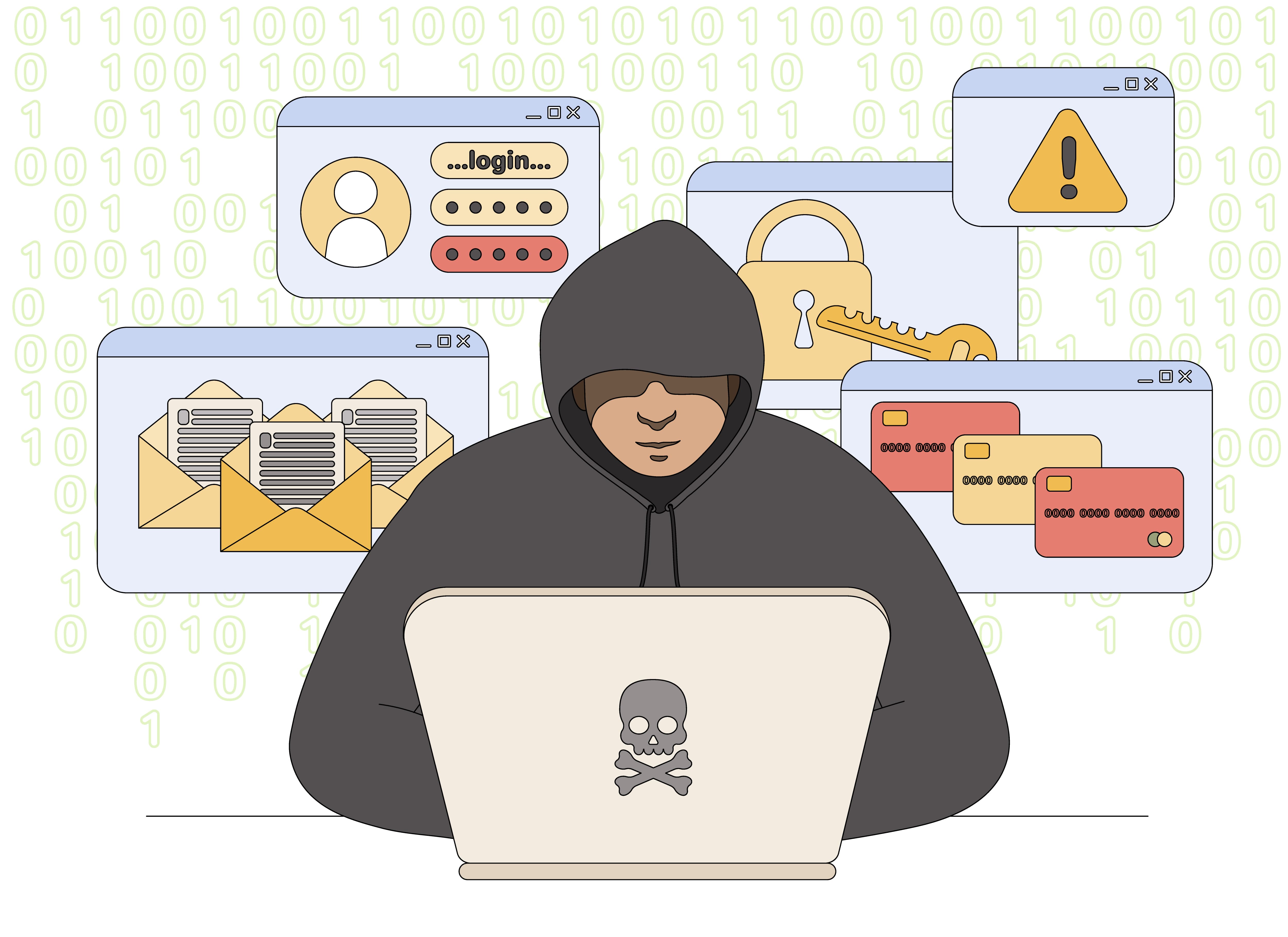
The United States is moving to strengthen the security of its digital infrastructure by proposing new regulations on undersea internet cables.

The Federal Communications Commission (FCC) plans to ban the connection of submarine cables to the US if they involve Chinese technology or equipment. It also aims to prohibit companies that are flagged as national security threats, including Huawei and ZTE.

Additionally, the FCC will seek public comments on further measures to protect undersea cable infrastructure, as part of an ongoing review of regulations overseeing the global network of submarine cables that carry 99% of international internet traffic.

These policy moves reflect US concerns over China’s role in internet infrastructure and potential espionage. Since 2020, regulators have blocked multiple cable projects linking the US to Hong Kong due to security risks.

Recent incidents, such as suspected sabotage in the Baltic Sea, Taiwan’s accusations of cable cutting by Chinese vessels, and Houthi-linked damage to cables in the Red Sea, highlight the growing vulnerability of global communications networks.

These steps guard against foreign adversary ownership, cyber threats, and physical sabotage.

Would you like to learn more about AI, tech and digital diplomacy? If so, ask our Diplo chatbot!

Salt Typhoon compromises critical US infrastructure

A US state’s Army National Guard network was thoroughly compromised by the Chinese cyberespionage group Salt Typhoon from March to December 2024. According to a confidential federal memo, hackers extracted highly sensitive information, including administrator credentials, network maps, and interstate communication data, raising alarm over data leaked across all 50 states and four US territories.

Security analysts caution that the breach goes beyond intelligence gathering. With access to National Guard systems, integral to state-level threat response and civilian support, the group is poised to exploit vulnerabilities in critical infrastructure, particularly during crises or conflict.

Salt Typhoon, linked to China’s Ministry of State Security, has a track record of penetrating telecommunications, energy grids, transport systems, and water utilities. Often leveraging known vulnerabilities in Cisco and Palo Alto equipment, the group has exfiltrated over 1,400 network configuration files from more than 70 US critical infrastructure providers.

Federal agencies, including DHS and CISA, are sounding the alarm: this deep infiltration presents a serious national security threat and indicates a strategic shift in cyber warfare. Navigating Sun Typhoon’s persistent access through local and federal networks is now a top priority in defending the critical systems on which communities rely.

Would you like to learn more about AI, tech and digital diplomacy? If so, ask our Diplo chatbot!

China deploys new malware tool for border phone searches

Chinese authorities reportedly use a powerful new malware tool called Massistant to extract data from seized Android phones. Developed by Xiamen Meiya Pico, the tool enables police to access messages, photos, locations, and app data once they have physical access to a device.

Cybersecurity firm Lookout revealed that Massistant operates via a desktop-connected tower, requiring unlocked devices but no advanced hacking techniques. Researchers said affected users include Chinese citizens and international travellers whose phones may be searched at borders.

The malware leaves traces on compromised phones, allowing for post-infection removal, but authorities already have the data by then. Forums in China have shown increasing user complaints about malware following police interactions.

Massistant is seen as the successor to an older tool, MSSocket, with Meiya Pico now controlling 40% of China’s digital forensics market. They previously sanctioned the firm for its surveillance tech links to the Chinese government’s use.

Would you like to learn more about AI, tech and digital diplomacy? If so, ask our Diplo chatbot!

AI Appreciation Day highlights progress and growing concerns

AI is marking another milestone as experts worldwide reflect on its rapid rise during AI Appreciation Day. From reshaping business workflows to transforming customer experiences, AI’s presence is expanding — but so are concerns over its long-term implications.

Industry leaders point to AI’s growing role across sectors. Patrick Harrington from MetaRouter highlights how control over first-party data is now seen as key instead of just processing large datasets.

Vall Herard of Saifr adds that successful AI implementations depend on combining curated data with human oversight rather than relying purely on machine-driven systems.

Meanwhile, Paula Felstead from HBX Group believes AI could significantly enhance travel experiences, though scaling it across entire organisations remains a challenge.

Voice AI is changing industries that depend on customer interaction, according to Natalie Rutgers from Deepgram. Instead of complex interfaces, voice technology is improving communication in restaurants, hospitals, and banks.

At the same time, experts like Ivan Novikov from Wallarm stress the importance of securing AI systems and the APIs connecting them, as these form the backbone of modern AI services.

While some celebrate AI’s advances, others raise caution. SentinelOne’s Ezzeldin Hussein envisions AI becoming a trusted partner through responsible development rather than unchecked growth.

Naomi Buckwalter from Contrast Security warns that AI-generated code could open security gaps instead of fully replacing human engineering, while Geoff Burke from Object First notes that AI-powered cyberattacks are becoming inevitable for businesses unable to keep pace with evolving threats.

Would you like to learn more about AI, tech and digital diplomacy? If so, ask our Diplo chatbot!
Air Serbia suffers deep network compromise in July cyberattack

Air Serbia delayed issuing June payslips after a cyberattack disrupted internal systems, according to internal memos obtained by The Register. A 10 July note told staff: ‘Given the ongoing cyberattacks, for security reasons, we will postpone the distribution of June 2025 payslips.’

The IT department is reportedly working to restore operations, and payslips will be emailed once systems are secure again. Although salaries were paid, staff could not access their payslip PDFs due to the disruption.

HR warned employees not to open suspicious emails, particularly those appearing to contain payslips or that seemed self-addressed. ‘We kindly ask that you act responsibly given the current situation,’ said one memo.

Air Serbia first informed staff about the cyberattack on 4 July, with IT teams warning of possible disruptions to operations. Managers were instructed to activate business continuity plans and adapt workflows accordingly.

By 7 July, all service accounts had been shut down, and staff were subjected to company-wide password resets. Security-scanning software was installed on endpoints, and internet access was restricted to selected airserbia.com pages.

A new VPN client was deployed due to security vulnerabilities, and data centres were shifted to a demilitarised zone. On 11 July, staff were told to leave their PCs locked but running over the weekend for further IT intervention.

An insider told The Register that the attack resulted in a deep compromise of Air Serbia’s Active Directory environment. The source claims the attackers may have gained access in early July, although exact dates remain unclear due to missing logs.

Staff reportedly fear that the breach could have involved personal data, and that the airline may not disclose the incident publicly. According to the insider, attackers had been probing Air Serbia’s exposed endpoints since early 2024.

The airline also faced several DDoS attacks earlier this year, although the latest intrusion appears far more severe. Malware, possibly an infostealer, is suspected in the breach, but no ransom demands had been made as of 15 July.

Infostealers are often used in precursor attacks before ransomware is deployed, security experts warn. Neither Air Serbia nor the government of Serbia responded to media queries by the time of publication.

Air Serbia had a record-breaking year in 2024, carrying 4.4 million passengers — a 6 percent increase over the previous year. Cybersecurity experts recently warned of broader attacks on the aviation industry, with groups such as Scattered Spider under scrutiny.

Would you like to learn more about AI, tech and digital diplomacy? If so, ask our Diplo chatbot!

Google pushes urgent Chrome update before 23 July

Google has confirmed that attackers have exploited a high-risk vulnerability in its Chrome browser. Users have been advised to update their browsers before 23 July, with cybersecurity agencies stressing the urgency.

The flaw, CVE-2025-6554, involves a type confusion issue in Chrome’s V8 JavaScript engine. The US Cybersecurity and Infrastructure Security Agency (CISA) has made the update mandatory for federal departments and recommends all users take immediate action.

Although Chrome updates are applied automatically, users must restart their browsers to activate the security patches. Many fail to do so, leaving them exposed despite downloading the latest version.

CISA highlighted that timely updates are essential for reducing vulnerability to attacks, especially for organisations managing critical infrastructure. Enterprises are at risk if patching delays allow attackers to exploit known weaknesses.

Would you like to learn more about AI, tech and digital diplomacy? If so, ask our Diplo chatbot!