
Public consultation: EU clarifies how DMA and GDPR work together

The European Commission and European Data Protection Board have jointly published long-awaited guidelines clarifying how the Digital Markets Act aligns with the GDPR. It aims to remove uncertainty for large online platforms over consent requirements, data sharing amongst other things.

Under the new interpretation, gatekeepers must obtain specific and separate consent when combining user data across different services, including when using it for AI training. They cannot rely on legitimate interest or contractual necessity for such processing, closing a loophole long debated in EU privacy law.

The Guidelines also set limits on how often consent can be re-requested, prohibiting repeated or slightly altered requests for the same purpose within a year. In addition, they make clear that offering users a binary choice between accepting tracking or paying a fee will rarely qualify as freely given consent.

The Guidance also introduces a practical standard for anonymisation, requiring platforms to prevent re-identification using technical and organisational safeguards. Consultation on the Guidelines runs until 4 December 2025, after which they are expected to shape future enforcement.

Would you like to learn more about AI, tech and digital diplomacy? If so, ask our Diplo chatbot

AI Infrastructure Partnership and BlackRock consortium acquire Aligned Data Centers

A consortium comprising the Artificial Intelligence Infrastructure Partnership, MGX, and BlackRock’s Global Infrastructure Partners has announced the acquisition of Aligned Data Centers for an estimated forty billion dollars.

The move marks a major step towards expanding the infrastructure underpinning global AI and cloud growth.

Aligned, headquartered in Dallas, operates more than fifty campuses and five gigawatts of capacity across the US and Latin America. The company is known for its patented air, liquid, and hybrid cooling systems that enhance efficiency and sustainability, particularly in high-density AI environments.

Under the consortium, Aligned will accelerate the development of scalable and energy-efficient data facilities to meet rising global demand.

The Artificial Intelligence Infrastructure Partnership was founded by BlackRock, GIP, MGX, Microsoft, and NVIDIA to advance large-scale AI infrastructure investment.

Backed by sovereign wealth funds from Kuwait and Singapore, it aims to mobilise thirty billion dollars in equity and up to one hundred billion, including debt.

The Aligned acquisition represents its first major investment and positions the company as a cornerstone of the group’s strategy.

Executives from BlackRock, MGX, and GIP said the deal reflects a shared commitment to building sustainable, resilient infrastructure for the AI era.

Aligned CEO Andrew Schaap added that the partnership would strengthen the company’s global reach and innovation capacity, redefining standards for digital infrastructure in an increasingly AI-driven economy.

Would you like to learn more about AI, tech and digital diplomacy? If so, ask our Diplo chatbot!
Starcloud launches data centres into space

A new era in data technology is emerging as Starcloud, a member of NVIDIA’s Inception startup program, prepares to send its first AI-driven satellite into orbit next month.

The mission marks the debut of NVIDIA’s H100 GPU in space and represents a decisive step toward the creation of large-scale orbital data centres designed to meet the planet’s soaring demand for AI.

By operating data centres in space, Starcloud aims to cut energy costs by tenfold and significantly reduce carbon emissions. The vacuum of space will serve as a natural cooling system, while constant exposure to solar energy will eliminate the need for batteries or backup power.

According to CEO Philip Johnston, the only environmental cost will come from the launch itself, resulting in substantial carbon savings over the data centre’s lifetime.

Starcloud’s technology could transform how Earth observation data is processed. Instead of transmitting raw information back to the ground, satellites will analyse it in real time, improving responses to wildfires, weather changes, and agricultural needs.

The company plans to run Google’s open AI model Gemma on its satellite and eventually integrate NVIDIA’s next-generation Blackwell GPUs, boosting computing power even further.

Johnston predicts that within a decade, most new data centres will be built in orbit. If achieved, Starcloud’s innovation could mark the beginning of a sustainable digital revolution powered by the stars instead of the grid.

Would you like to learn more about AI, tech and digital diplomacy? If so, ask our Diplo chatbot!

Teenagers turn to AI for learning but struggle to spot false information

A new Oxford University Press (OUP) report has found that most teenagers are using AI for schoolwork but many cannot tell when information is false. Over 2,000 students aged 13 to 18 took part, with many finding it hard to verify AI content.

Around eight in ten pupils admitted using AI for homework or revision, often treating it as a digital tutor. However, many are simply copying material without being able to check its accuracy.

Assistant headteacher Dan Williams noted that even teachers sometimes struggle to identify AI-generated content, particularly in videos.

Despite concerns about misinformation, most pupils view AI positively. Nine in ten said they had benefited from using it, particularly in improving creative writing, problem-solving and critical thinking.

To support schools, OUP has launched an AI and Education Hub to help teachers develop confidence with the technology, while the Department for Education has released guidance on using AI safely in classrooms.

Would you like to learn more about AI, tech and digital diplomacy? If so, ask our Diplo chatbot!
Abu Dhabi deploys AI-first systems with NVIDIA and Oracle

Oracle and NVIDIA have joined forces to advance sovereign AI, supporting Abu Dhabi’s vision of becoming an AI-native government by 2027.

The partnership combines the computing platforms of NVIDIA with Oracle Cloud Infrastructure to create secure, high-performance systems that deliver next-generation citizen services, including multilingual AI assistants, automatic notifications, and intelligent compliance solutions.

The Government Digital Strategy 2025-2027 of Abu Dhabi, backed by a 13-billion AED investment, follows a phased ‘crawl, walk, run’ approach. The initiative has already gone live across 25 government entities, enabling over 15,000 daily users to access AI-accelerated services.

Generative AI applications are now integrated into human resources, procurement, and financial reporting, while advanced agentic AI and autonomous workflows will further enhance government-wide operations.

The strategy ensures full data sovereignty while driving innovation and efficiency across the public sector.

Partnerships with Deloitte and Core42 provide infrastructure and compliance support, while over 200 AI-powered capabilities are deployed to boost digital skills, economic growth, and employment opportunities.

By 2027, the initiative is expected to contribute more than 24 billion AED to Abu Dhabi’s GDP and create over 5,000 jobs, demonstrating a global blueprint for AI-native government transformation.

Would you like to learn more about AI, tech and digital diplomacy? If so, ask our Diplo chatbot!

Oxford scientists achieve quantum teleportation milestone

Scientists at the University of Oxford have achieved quantum teleportation between two quantum computers, marking a major step toward distributed quantum computing. The experiment successfully transmitted a quantum algorithm wirelessly between processors using quantum entanglement.

Rather than moving physical matter, the process transferred data instantaneously by linking qubits, the basic units of quantum information. The two computers, though separated by two metres, shared data as if operating as one, greatly enhancing their combined computing power.

The British breakthrough demonstrates how multiple quantum systems could one day work together as a single global supercomputer. Researchers say the approach could enable quantum networks and lay the groundwork for a future quantum internet capable of unprecedented speeds and security.

Quantum teleportation works by using pairs of entangled particles that remain connected across any distance. While humans and objects cannot yet teleport, the technology could soon allow scientists to connect remote machines into unified, ultra-powerful computing systems.

Would you like to learn more about AI, tech and digital diplomacy? If so, ask our Diplo chatbot

OpenAI and Broadcom unite to deploy 10 gigawatts of AI accelerators

The US firm, OpenAI, has announced a multi-year collaboration with Broadcom to design and deploy 10 gigawatts of custom AI accelerators.

The partnership will combine OpenAI’s chip design expertise with Broadcom’s networking and Ethernet technologies to create large-scale AI infrastructure. The deployment is expected to begin in the second half of 2026 and be completed by the end of 2029.

A collaboration that enables OpenAI to integrate insights gained from its frontier models directly into the hardware, enhancing efficiency and performance.

Broadcom will develop racks of AI accelerators and networking systems across OpenAI’s data centres and those of its partners. The initiative is expected to meet growing global demand for advanced AI computation.

Executives from both companies described the partnership as a significant step toward the next generation of AI infrastructure. OpenAI CEO Sam Altman said it would help deliver the computing capacity needed to realise the benefits of AI for people and businesses worldwide.

Broadcom CEO Hock Tan called the collaboration a milestone in the industry’s pursuit of more capable and scalable AI systems.

The agreement strengthens Broadcom’s position in AI networking and underlines OpenAI’s move toward greater control of its technological ecosystem. By developing its own accelerators, OpenAI aims to boost innovation while advancing its mission to ensure artificial general intelligence benefits humanity.

Would you like to learn more about AI, tech and digital diplomacy? If so, ask our Diplo chatbot!
Vodafone and Samsung expand Open RAN deployment across Europe

Samsung Electronics has been chosen by Vodafone as a primary partner to deploy virtualised RAN and Open RAN networks in Germany and several European countries. The agreement builds on previous collaborations and represents one of the largest Open RAN projects in Europe.

Germany will serve as the first and main market, with thousands of sites planned, including a full deployment in Wismar by early 2026. The rollout will expand across Europe over five years, beginning with a live site already operating in Hannover.

Samsung will provide its virtualised RAN solutions supporting 2G, 4G and 5G, as well as O-RAN compliant radios, Massive MIMO equipment and AI-powered management tools. The company will also integrate its CognitiV Network Operations Suite to improve performance, efficiency and automation.

Partners such as Dell Technologies, Intel and Wind River will contribute hardware and cloud platforms to ensure interoperability and large-scale integration.

Vodafone’s Chief Network Officer Alberto Ripepi said Open RAN is essential for building flexible, future-ready networks and expanding connectivity across Europe.

Samsung’s Networks Business President Woojune Kim highlighted the project as a major step in developing software-based and autonomous networks designed for the AI era. Both companies view the partnership as a means to advance digital transformation and enhance network efficiency.

The collaboration also promotes energy efficiency and shared infrastructure. Samsung’s AI Energy Saving Manager will monitor traffic to reduce power consumption during low-use periods. The company’s radio systems will support RAN sharing, helping operators cut costs and deliver consistent coverage.

Analysts consider Vodafone’s decision a validation of Samsung’s leadership in open and virtualised network technology.

Would you like to learn more about AI, tech and digital diplomacy? If so, ask our Diplo chatbot!

Netherlands safeguards economic security through Nexperia intervention

The Dutch Minister of Economic Affairs has invoked the Goods Availability Act in response to serious governance issues at semiconductor manufacturer Nexperia.

The measure, announced on 30 September 2025, seeks to ensure the continued availability of the company’s products in the event of an emergency. Nexperia, headquartered in Nijmegen, will be allowed to maintain its normal production activities.

A decision that follows recent indications of significant management deficiencies and actions within Nexperia that could affect the safeguarding of vital technological knowledge and capacity in the Netherlands and across Europe.

Authorities view these capabilities as essential for economic security, as Nexperia supplies chips for the automotive sector and consumer electronics industries.

Under the order, the Minister of Economic Affairs may block or reverse company decisions considered harmful to Nexperia’s long-term stability or to the preservation of Europe’s semiconductor value chain.

The Netherlands government described the use of the Goods Availability Act as exceptional, citing the urgency and scale of the governance concerns.

Officials emphasised that the action applies only to Nexperia and does not target other companies, sectors, or countries. The decision may be contested through the courts.

Would you like to learn more about AI, tech and digital diplomacy? If so, ask our Diplo chatbot!
Microsoft attracts tech pioneers to build the next era of AI

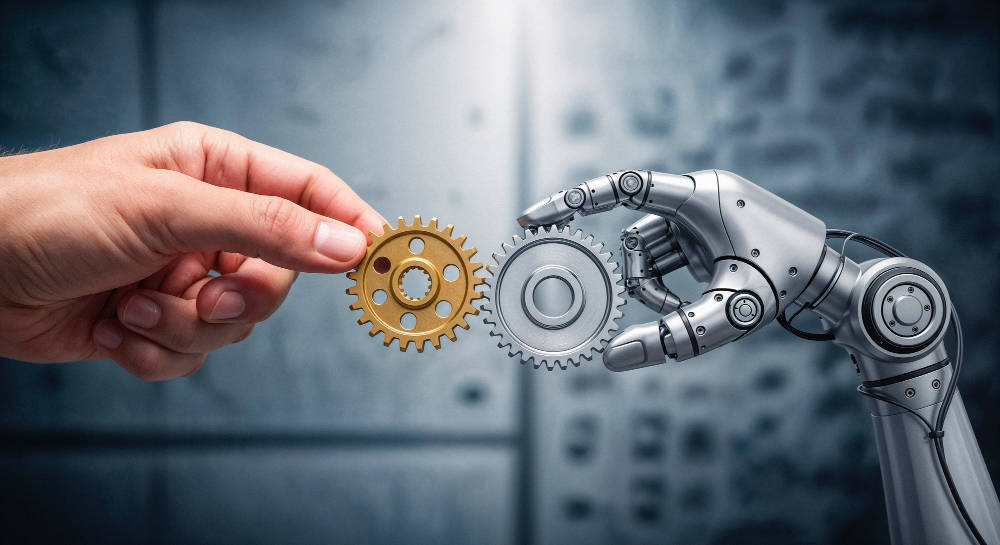
Some of the world’s most influential technologists (the creators of Python, Kubernetes, Google Docs, Google Lens, RSS feeds and ONNX) are now helping Microsoft shape the next era of AI.

Drawn by the company’s scale, openness to collaboration, and long-term investment in AI, they are leading projects that span infrastructure, productivity, responsible innovation and reasoning systems.

R.V. Guha, who invented RSS feeds, is developing NLWeb, a project that lets users converse directly with websites.

Brendan Burns, co-creator of Kubernetes, focuses on improving AI tools that simplify developers’ work. At the same time, Aparna Chennapragada, the mind behind Google Lens, now leads efforts to build intelligent AI agents and enhance productivity through Microsoft 365 Copilot.

Sarah Bird, who helped create the ONNX framework, leads Microsoft’s responsible AI division, ensuring that emerging systems are safe, secure and reliable.

Meanwhile, Sam Schillace, co-creator of Google Docs, explores ways AI can collaborate with people more naturally. Python’s creator, Guido van Rossum, works on systems to strengthen AI’s long-term memory across conversations.

Together, these innovators illustrate how Microsoft has become a magnet for the pioneers who defined modern computing, and they are now united in advancing the next stage of AI’s evolution.

Would you like to learn more about AI, tech and digital diplomacy? If so, ask our Diplo chatbot!