Private backing for UK AI companies has reached £2.9 billion, with average deals of £5.9 million, driving record growth across the sector. Ministers say investment is spreading regionally, with the number of firms in the Midlands, Yorkshire, Wales, and the North West doubling in just three years.
At Mansion House, Technology Secretary Peter Kyle urged industry to cut red tape, expand data centres, and attract global talent. He emphasised that public trust, supported by AI assurance measures, is crucial for growth.
The assurance roadmap aims to add billions to the economy by creating a dedicated profession to review AI systems for safety, ethics, and accountability. Independent experts will be tasked with certifying systems, while a consortium of professional bodies develops a code of ethics to guide standards.
Further initiatives include £2.7m to boost regulator capacity and AI projects for Ofgem, the Civil Aviation Authority, and the Office for Nuclear Regulation, covering energy, aviation, and nuclear waste.
Officials say these measures will help position the UK as a world leader in AI innovation, while ensuring growth is matched with robust oversight and public confidence in the technology.
Would you like to learn more about AI, tech, and digital diplomacy? If so, ask our Diplo chatbot!
A new study by the European Travel Commission shows that national tourism organisations (NTOs) are experimenting with AI but are facing gaps in strategy and skills.
Marketing teams are leading the way, applying AI in content generation and workflow streamlining, whereas research departments primarily view the tools as exploratory. Despite uneven readiness, most staff show enthusiasm, with little resistance reported.
The survey highlights challenges, including limited budgets, sparse training, and the absence of a clear roadmap. Early adopters report tangible productivity gains, but most NTOs are still running small pilots rather than embedding AI across operations.
Recommendations include ring-fencing time for structured experiments, offering role-specific upskilling, and scaling budgets aligned with results. The report also urges the creation of shared learning spaces and providing practical support to help organisations transition from testing to sustained adoption.
ETC President Miguel Sanz said AI offers clear opportunities for tourism boards, but uneven capacity means shared tools and targeted investment will be essential to ensure innovation benefits all members.
Would you like to learn more about AI, tech, and digital diplomacy? If so, ask our Diplo chatbot!
According to people familiar with the plans, Chinese startup DeepSeek is developing an AI model with enhanced agent features to compete with US firms such as OpenAI.
The Hangzhou-based company intends for the system to perform multi-step tasks with limited input and adapt from its previous actions.
Founder Liang Wenfeng has urged his team to prepare the release before the end of 2025. The project follows DeepSeek’s earlier success with R1, a reasoning-focused model launched in January that attracted attention for its low development costs.
Since then, DeepSeek has delivered only incremental updates while rivals in China and the US have accelerated new product launches.
The shift towards AI agents reflects a broader industry move to develop tools capable of managing complex real-world tasks, from research to coding, with less reliance on users. OpenAI, Anthropic, Microsoft, and Manus AI have already introduced similar projects.
Most systems still require significant oversight, highlighting the challenges of building fully autonomous agents.
Starbucks will deploy an AI-powered inventory system across all North American stores. Built with NomadGo, it automatically scans shelves using AR and computer vision to flag low stock.
Counts that once took an hour now take about 15 minutes, enabling up to eight counts weekly. The system frees staff to focus on service while providing real-time data for more intelligent supply chain decisions.
The rollout follows other digital upgrades, including a Shift Marketplace for scheduling, Green Dot Assist for AI support, and a new point-of-sale system. Together, these tools show Starbucks’ growing reliance on AI.
Competitors like McDonald’s and Chick-fil-A are also turning to AI for back-of-house operations. From accuracy scales to computer vision food checks, fast-food chains are betting heavily on automation to boost efficiency.
For Starbucks, success will be judged by fewer shortages, consistent customer experiences, and staff reinvested in service. AI-driven accuracy could become a defining advantage in an industry built on trust.
Would you like to learn more about AI, tech, and digital diplomacy? If so, ask our Diplo chatbot!
Hisense will debut AI-powered innovations at IFA 2025 under the theme ‘AI Your Life,’ showcasing entertainment, smart homes, and climate-friendly technologies. The company aims to make AI seamless and personal.
Entertainment highlights include the 116-inch RGB-MiniLED UX TV with 8,000 nits brightness, plus new laser projectors offering IMAX-level clarity and portability for home cinema and gaming.
Appliances get smarter with the PureFlat refrigerator, featuring a 21-inch screen for cooking, streaming, and AI art. ConnectLife agents will optimise chores and energy use in daily routines.
The U8 S Pro Air Conditioner brings presence detection, AI voice controls, and air purification, while Hisense expands into smart buildings, energy systems, and automotive climate solutions.
Combining advanced display technologies with next-gen appliances, Hisense says its innovations will empower people to live more freely and confidently across global markets.
Would you like to learn more about AI, tech, and digital diplomacy? If so, ask our Diplo chatbot!
Language technology company Tilde has released an open AI framework designed for all European languages.
The model, named ‘TildeOpen’, was developed with the support of the European Commission and trained on the Lumi supercomputer in Finland.
According to Tilde’s head Artūrs Vasiļevskis, the project addresses a key gap in US-based AI systems, which often underperform for smaller European languages such as Latvian. By focusing on European linguistic diversity, the framework aims to provide better accessibility across the continent.
Vasiļevskis also suggested that Latvia has the potential to become an exporter of AI solutions. However, he acknowledged that development is at an early stage and that current applications remain relatively simple. The framework and user guidelines are freely accessible online.
Would you like to learn more aboutAI, tech and digital diplomacy? If so, ask our Diplo chatbot!
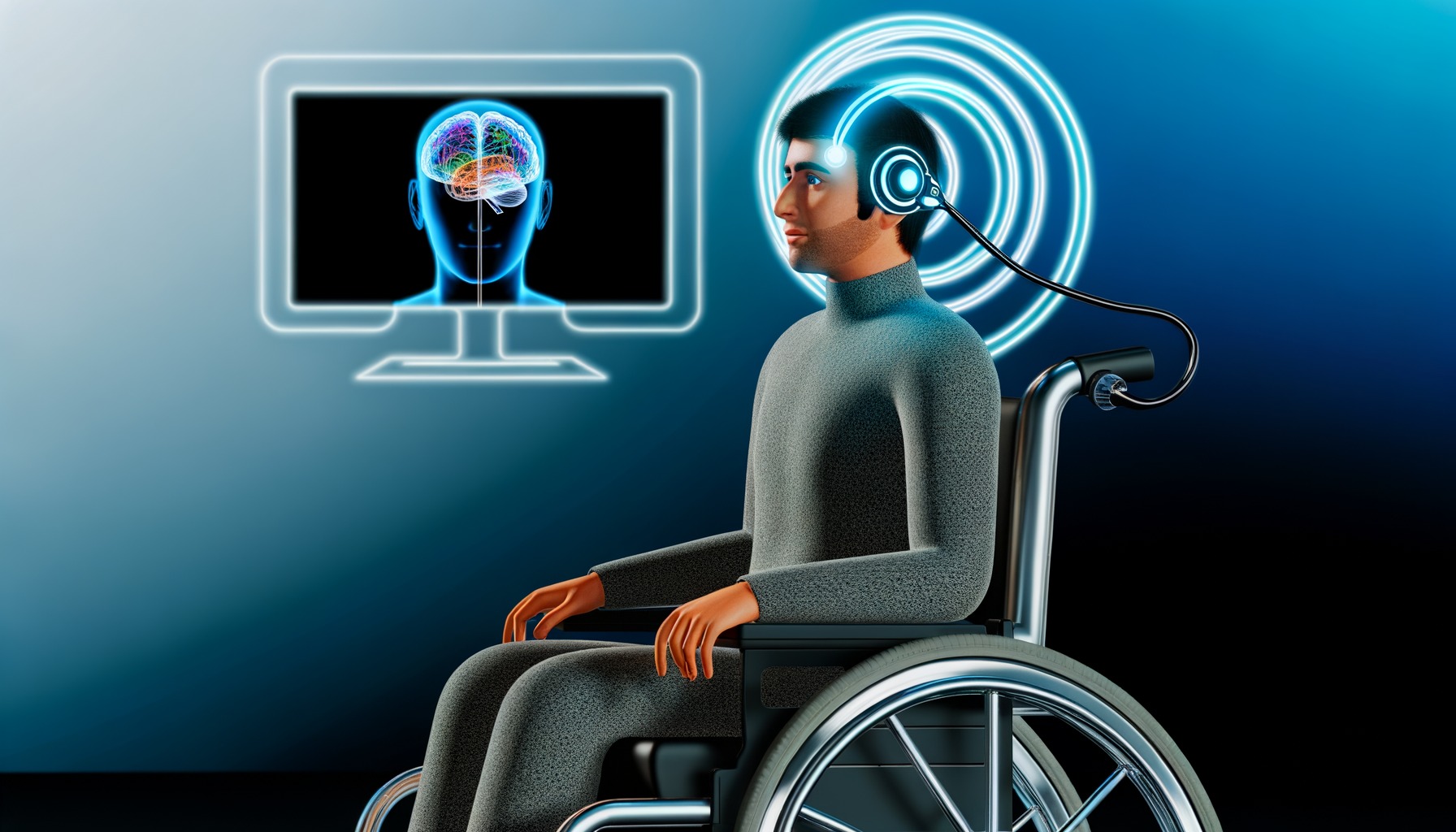
A new AI system named DreamConnect can now translate a person’s brain activity into images and then edit those mental pictures using natural language commands.
Instead of merely reconstructing thoughts from fMRI scans, the breakthrough technology allows users to reshape their imagined scenes actively. For instance, an individual visualising a horse can instruct the system to transform it into a unicorn, with the AI accurately modifying the relevant features.
The system employs a dual-stream framework that interprets brain signals into rough visuals and then refines them based on text instructions.
Developed by an international team of researchers, DreamConnect represents a fundamental shift from passive brain decoding to interactive visual brainstorming.
It marks a significant advance at the frontier of human-AI interaction, moving beyond simple reconstruction to active collaboration.
Potential applications are wide-ranging, from accelerating creative design to offering new tools for therapeutic communication.
However, the researchers caution that such powerful technology necessitates robust ethical safeguards to prevent misuse and protect the privacy of an individual’s most personal data, their thoughts.
Would you like to learn more aboutAI, tech and digital diplomacy? If so, ask our Diplo chatbot!
Statsig, founded in 2021, provides tools for developers to test and manage new features. Upon completion of the deal, Statsig’s founder and CEO, Vijaye Raji, will join OpenAI as the new chief technology officer (CTO) for applications.
Raji will report to OpenAI Applications CEO Fidji Simo and lead product engineering for key products such as ChatGPT.
The acquisition is part of a broader trend of significant deals for the AI company this year, which recently concluded a £6.5 billion all-stock acquisition of an AI device startup. OpenAI’s expanding valuation, which reached £300 billion following a March funding round, has supported this growth.
The company is reportedly discussing a further share sale that could increase its valuation to £500 billion. The completion of the Statsig deal is subject to regulatory approval, after which the company will continue to operate independently from its Seattle office, with its employees joining the OpenAI team.
Other leadership changes at OpenAI include the appointment of Srinivas Narayanan as CTO for B2B applications and Kevin Weil’s move to a new team focused on AI for Science.
Would you like to learn more about AI, tech and digital diplomacy? If so, ask our Diplo chatbot!
The regulatory approaches to AI in the EU and Australia are diverging significantly, creating a complex challenge for the global tech sector.
Instead of a unified global standard, companies must now navigate the EU’s stringent, risk-based AI Act and Australia’s more tentative, phased-in approach. The disparity underscores the necessity for sophisticated cross-border legal expertise to ensure compliance in different markets.
In the EU, the landmark AI Act is now in force, implementing a strict risk-based framework with severe financial penalties for non-compliance.
Conversely, Australia has yet to pass binding AI-specific laws, opting instead for a proposal paper outlining voluntary safety standards and 10 mandatory guardrails for high-risk applications currently under consultation.
It creates a markedly different compliance environment for businesses operating in both regions.
For tech companies, the evolving patchwork of international regulations turns AI governance into a strategic differentiator instead of a mere compliance obligation.
Understanding jurisdictional differences, particularly in areas like data governance, human oversight, and transparency, is becoming essential for successful and lawful global operations.
Would you like to learn more aboutAI, tech and digital diplomacy? If so, ask our Diplo chatbot!
Named RBAPubChat, the tool is trained on the central bank’s knowledge base of nearly 20,000 internal and external analytical documents spanning four decades. It aims to help employees ask policy-relevant questions and get useful summaries of existing information.
Speaking at the Shann memorial lecture in Perth, Governor Michele Bullock said that the AI is not being used to formulate or set monetary policy. Instead, it is intended to improve efficiency and amplify the impact of staff efforts.
A separate tool using natural language processing has also been developed to analyse over 22,000 conversations from the bank’s business liaison programme. The Reserve Bank of Australia has noted that this tool has already shown promise, helping to forecast wage growth more accurately than traditional models.
The RBA has also acquired its first enterprise-grade graphics processing unit to support developing and running advanced AI-driven tools.
The bank’s internal coding community is now a well-established part of its operations, with one in four employees using coding as a core part of their daily work. Governor Bullock stressed that the bank’s approach to technology is one of “deliberate, well-managed evolution” rather than disruption.
Would you like to learn more about AI, tech and digital diplomacy? If so, ask our Diplo chatbot!