After its announcement in May, Opera has started rolling out Neon, its first AI-powered browser. Unlike traditional browsers, Neon is designed for professionals who want AI to simplify complex online workflows.
The browser introduces Tasks, which act like self-contained workspaces. AI can understand context, compare sources, and operate across multiple tabs simultaneously to manage projects more efficiently.
Neon also features cards and reusable AI prompts that users can customise or download from a community store, streamlining repeated actions and tasks.
Its standout tool, Neon Do, performs real-time on-screen actions such as opening tabs, filling forms, and gathering data, while keeping everything local. Opera says no data is shared, and all information is deleted after 30 days.
Neon is available by subscription at $19.90 per month. Invitations are limited during rollout, but Opera promises broader availability soon.
Would you like to learn more about AI, tech, and digital diplomacy? If so, ask our Diplo chatbot!
YouTube has agreed to a $24.5 million settlement to resolve a lawsuit filed by President Donald Trump, stemming from the platform’s decision to suspend his account after the 6 January 2021 Capitol riot.
The lawsuit was part of a broader legal push by Trump against major tech companies over what he calls politically motivated censorship.
As part of the deal, YouTube will donate $22 million to the Trust for the National Mall on Trump’s behalf, funding a new $200 million White House ballroom project. Another $2.5 million will go to co-plaintiffs, including the American Conservative Union and author Naomi Wolf.
The settlement includes no admission of wrongdoing by YouTube and was intended to avoid further legal costs. The move follows similar multimillion-dollar settlements by Meta and X, which also suspended Trump’s accounts post-January 6.
Critics argue the settlement signals a retreat from consistent content moderation. Media scholar Timothy Koskie warned it sets a troubling precedent for global digital governance and selective enforcement.
Would you like to learn more about AI, tech, and digital diplomacy? If so, ask our Diplo chatbot!
On 12 September 2025, the European Data Protection Board (EDPB) adopted draft guidelines detailing how online platforms should reconcile requirements under the GDPR and the Digital Services Act (DSA). The draft is now open for public consultation through 31 October.
The guidelines address key areas of tension, including proactive investigations, notice-and-action systems, deceptive design, recommender systems, age safety and transparency in advertising. They emphasise that DSA obligations must be implemented in ways consistent with GDPR principles.
For instance, the guidelines suggest that proactive investigations of illegal content should generally be grounded on ‘legitimate interests’, include safeguards for accuracy, and avoid automated decisions with legal effects.
The guidance also clarifies that the DSA does not override the GDPR. Platforms subject to both must ensure lawful, fair and transparent processing while integrating risk analysis and privacy by design. The draft guidelines include practical examples and cross-references to existing EDPB documents.
Would you like to learn more about AI, tech and digital diplomacy? If so, ask our Diplo chatbot!
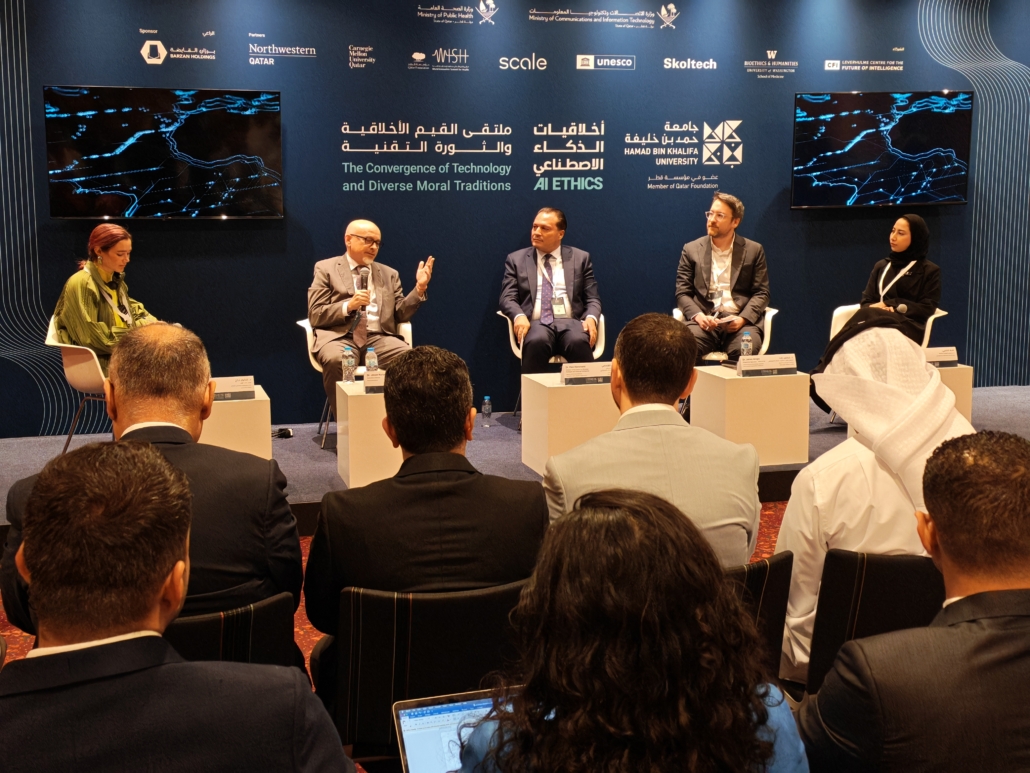
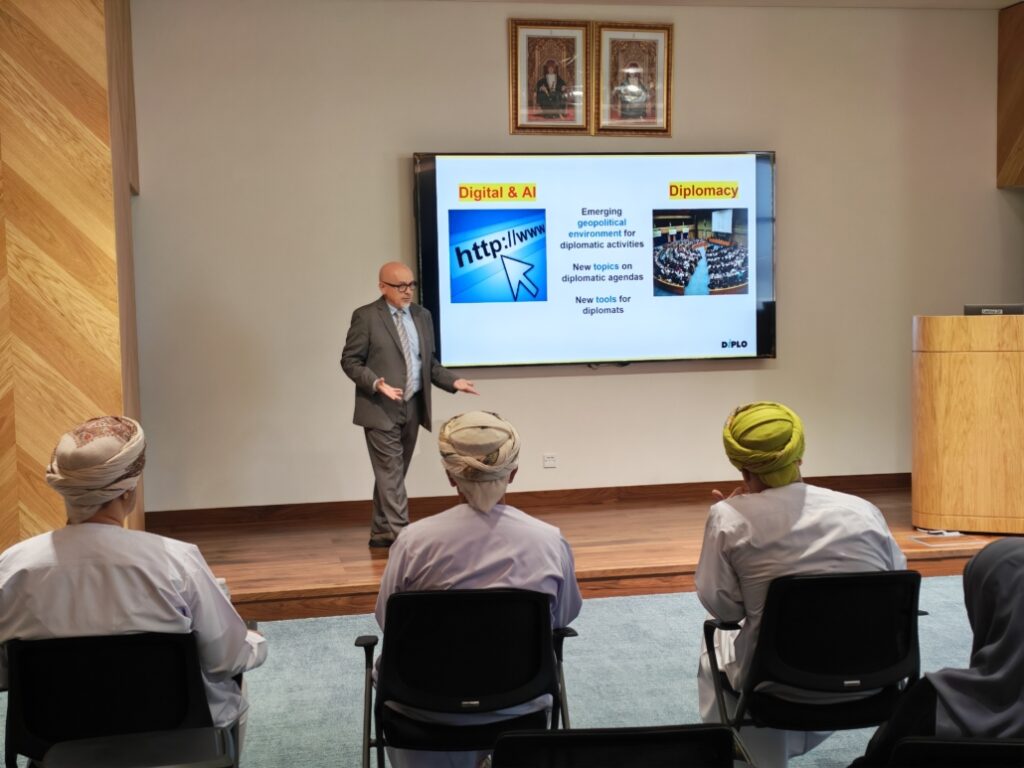
DiploFoundation has taken its work on AI and governance to the Gulf, with engagements in Oman and Qatar focused on how AI is reshaping diplomacy and policymaking. In Muscat, Jovan Kurbalija delivered a lecture on AI’s geopolitical implications, led a workshop on the future of digital diplomacy, and met with institutions advancing Oman’s National AI Strategy and innovation ecosystem.
The Gulf engagements highlighted the need to balance innovation with responsibility. Discussions focused on equipping government staff with AI expertise, ensuring technology is integrated into governance that reflects cultural values, and shaping diplomatic practice around collaboration with tech companies.
Diplo’s programme builds on its long-standing research into how Arabic and Islamic philosophical traditions can enrich global debates on AI. The initiative aims to advance inclusive, practical, and ethical approaches to AI in international policy and diplomacy by bringing these perspectives to the table.
Would you like to learn more about AI, tech, and digital diplomacy? If so, ask our Diplo chatbot!
Apple is internally testing its upcoming Siri upgrade with a chatbot-style tool called Veritas, according to a report by Bloomberg. The app enables employees to experiment with new capabilities and provide structured feedback before a public launch.
Veritas enables testers to type questions, engage in conversations, and revisit past chats, making it similar to ChatGPT and Gemini. Apple is reportedly using the feedback to refine Siri’s features, including data search and in-app actions.
The tool remains internal and is not planned for public release. Its purpose is to make Siri’s upgrade process more efficient and guide Apple’s decision on future chatbot-like experiences.
Apple executives have said they prefer integrating AI into daily tasks instead of offering a separate chatbot. Craig Federighi confirmed at WWDC that Apple is focused on natural task assistance rather than a standalone product.
Bloomberg reports that the new Siri will use Apple’s own AI models alongside external systems like Google’s Gemini, with a launch expected next spring.
Would you like to learn more about AI, tech, and digital diplomacy? If so, ask our Diplo chatbot!
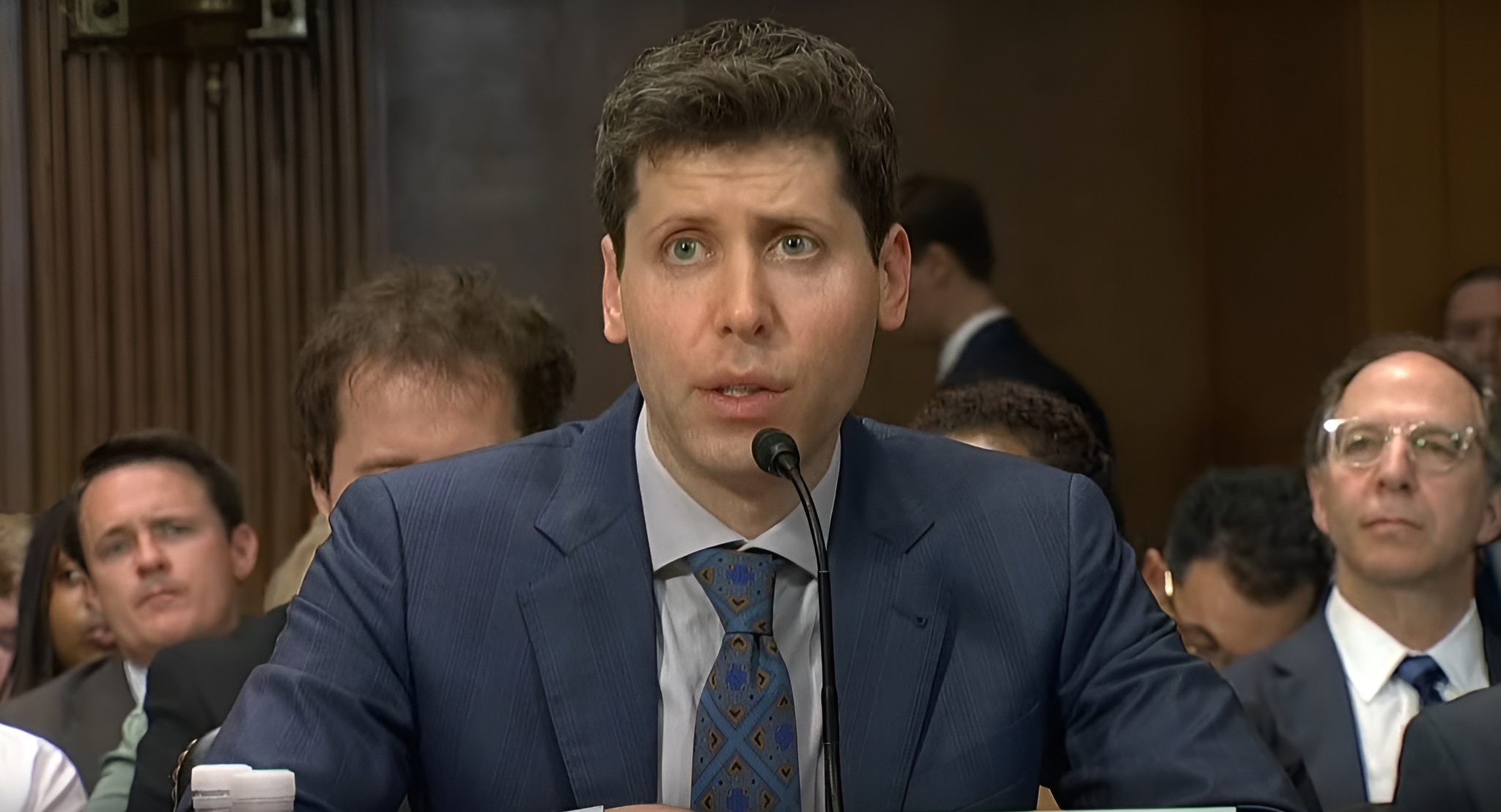
OpenAI CEO Sam Altman has warned that AI could soon automate up to 40 percent of the tasks humans currently perform. He made the remarks in an interview with German newspaper Die Welt, highlighting the potential economic shift AI will trigger.
Altman described OpenAI’s latest model, GPT-5, as the most advanced yet and claimed it is ‘smarter than me and most people’. He said artificial general intelligence (AGI), capable of outperforming humans in all areas, could arrive before 2030.
Instead of focusing on job losses, Altman suggested examining the percentage of tasks that AI will automate. He predicted that 30 to 40 per cent of tasks currently carried out by humans may soon be completed by AI systems.
These comments contribute to the growing debate about the societal impact of AI, with mass layoffs already being linked to automation. Altman emphasised that this wave of change will reshape economies and workplaces, requiring businesses and governments to prepare for disruption.
As AGI approaches, Altman urged individuals to focus on acquiring in-demand skills to stay relevant in an AI-enabled economy. The relationship between humans and machines, he said, will be permanently reshaped by these developments.
Would you like to learn more about AI, tech and digital diplomacy? If so, ask our Diplo chatbot!
A new malware campaign targets WordPress sites, utilising steganography and persistent backdoors to maintain unauthorised admin access. It uses two components that work together to maintain control.
The attack begins with malicious files disguised as legitimate WordPress components. These files are heavily obfuscated, create administrator accounts with hardcoded credentials, and bypass traditional detection tools. However, this ensures attackers can retain access even after security teams respond.
Researchers say the malware exploits WordPress plugin infrastructure and user management functions to set up redundant access points. It then communicates with command-and-control servers, exfiltrating system data and administrator credentials to attacker-controlled endpoints.
This campaign can allow threat actors to inject malicious code, redirect site visitors, steal sensitive data, or deploy additional payloads. Its persistence and stealth tactics make it difficult to detect, leaving websites vulnerable for long periods.
The main component poses as a fake plugin called ‘DebugMaster Pro’ with realistic metadata. Its obfuscated code creates admin accounts, contacts external servers, and hides by allowing known admin IPs.
Would you like to learn more about AI, tech, and digital diplomacy? If so, ask our Diplo chatbot!
Google has unveiled two new robotics models, Gemini Robotics 1.5 and Gemini Robotics-ER 1.5, designed to help robots better perceive, plan, and act in complex environments. The models aim to enable more capable robots to complete multi-step tasks efficiently and transparently.
Gemini Robotics 1.5 converts visual information and instructions into actions, letting robots think before acting and explain their reasoning. Gemini Robotics-ER 1.5 acts as a high-level planner, reasoning about the physical world and using tools like Google Search to support decisions.
Together, the models form an ‘agentic’ framework. ER 1.5 orchestrates a robot’s activities, while Robotics 1.5 carries them out, enabling the machines to tackle semantically complex tasks. The pairing strengthens generalisation across diverse environments and longer missions.
Google said Gemini Robotics-ER 1.5 is now available to developers through the Gemini API in Google AI Studio, while Gemini Robotics 1.5 is currently open to select partners. Both models advance robots’ reasoning, spatial awareness, and multi-tasking capabilities.
Would you like to learn more about AI, tech and digital diplomacy? If so, ask our Diplo chatbot!
Spotify announced new measures to address AI risks in music, aiming to protect artists’ identities and preserve trust on the platform. The company said AI can boost creativity but also enable harmful content like impersonations and spam that exploit artists and cut into royalties.
A new impersonation policy has been introduced, clarifying that AI-generated vocal clones of artists are only permitted with explicit authorisation. Spotify is strengthening processes to block fraudulent uploads and mismatches, giving artists quicker recourse when their work is misused.
The platform will launch a new spam filter this year to detect and curb manipulative practices like mass uploads and artificially short tracks. The system will be deployed cautiously, with updates added as new abuse tactics emerge, in order to safeguard legitimate creators.
In addition, Spotify will back an industry standard for AI disclosures in music credits, allowing artists and rights holders to show how AI was used in production. The company said these steps show its commitment to protecting artists, ensuring transparency, and fair royalties as AI reshapes the music industry.
Would you like to learn more about AI, tech and digital diplomacy? If so, ask our Diplo chatbot!
US cybersecurity officials have issued an emergency directive after hackers breached a federal agency by exploiting critical flaws in Cisco appliances. CISA warned the campaign poses a severe risk to government networks.
Experts told CNN they believe the hackers are state-backed and operating out of China, raising alarm among officials. Hundreds of compromised devices are reportedly in use across the federal government, CISA stated, issuing a directive to rapidly assess the scope of this major breach.
Cisco confirmed it was urgently alerted to the breaches by US government agencies in May and quickly assigned a specialised team to investigate. The company provided advanced detection tools, worked intensely to analyse compromised environments, and examined firmware from infected devices.
Cisco stated that the attackers exploited multiple zero-day flaws and employed advanced evasion techniques. It suspects a link to the ArcaneDoor campaign reported in early 2024.
CISA has withheld details about which agencies were affected or the precise nature of the breaches, underscoring the gravity of the situation. Investigations are currently underway to contain the ongoing threat and prevent further exploitation.
Would you like to learn more about AI, tech, and digital diplomacy? If so, ask our Diplo chatbot!