Digital ID arrives for Apple users

Apple has introduced Digital ID, a new feature that lets users create an identification card in Apple Wallet using information from a US passport.

The feature launches in beta at Transportation Security Administration checkpoints across more than two hundred and fifty airports for domestic travel, instead of relying solely on physical documentation.

It offers an alternative for users who lack a Real ID-compliant card while not replacing a physical passport for international journeys.

Users set up a Digital ID by scanning the passport’s photo page, reading the chip on the back of the document, and completing facial movements for verification.

Once added, the ID can be presented with an iPhone or Apple Watch by holding the device near an identity reader and confirming the request with Face ID or Touch ID. New verification options for in-person checks at selected businesses, apps and online platforms are planned.

The company highlights privacy protection by storing passport data only on the user’s device, instead of Apple’s servers. Digital ID information is encrypted and cannot be viewed by Apple, and biometric authentication ensures that only the owner can present the identity.

Only the required information is shared during each transaction, and the user must approve it before it is released.

The launch expands Apple Wallet’s existing support for driver’s licences and state IDs, which are already available in twelve states and Puerto Rico. Recent months have added Montana, North Dakota and West Virginia, and Japan adopted the feature with the My Number Card.

Apple expects Digital ID to broaden secure personal identification across more services over time.

Would you like to learn more about AI, tech and digital diplomacy? If so, ask our Diplo chatbot!

EU investigates Google over potential Digital Markets Act breach

The European Commission has opened an investigation into whether Google may be breaching the Digital Markets Act by unfairly demoting news publishers in search results.

An inquiry that centres on Google’s ‘site reputation abuse policy’, which appears to lower rankings for publishers that host content from commercial partners, even when those partnerships support legitimate ways of monetising online journalism.

The Commission is examining whether Alphabet’s approach restricts publishers from conducting business, innovating, and cooperating with third-party content providers. Officials highlighted concerns that such demotions may undermine revenue at a difficult moment for the media sector.

These proceedings do not imply a final decision; instead, they allow the EU to gather evidence and assess Google’s practices in detail.

If the Commission finds evidence of non-compliance, it will present preliminary findings and request corrective measures. The investigation is expected to conclude within 12 months.

Under the DMA, infringements can lead to fines of up to ten percent of a company’s worldwide turnover, rising to twenty percent for repeated violations, alongside possible structural remedies.

Senior Commissioners stressed that gatekeepers must offer fair and non-discriminatory access to their platforms. They argued that protecting publishers’ ability to reach audiences supports media pluralism, innovation, and democratic resilience.

Google Search, designated as a core platform service under the DMA, has been required to comply fully with the regulation since March 2024.

Would you like to learn more about AI, tech and digital diplomacy? If so, ask our Diplo chatbot!

New York Times lawsuit prompts OpenAI to strengthen privacy protections

OpenAI says a New York Times demand to hand over 20 million private ChatGPT conversations threatens user privacy and breaks with established security norms. The request forms part of the Times’ lawsuit over alleged misuse of its content.

The company argues the demand would expose highly personal chats from people with no link to the case. It previously resisted broader requests, including one seeking more than a billion conversations, and says the latest move raises similar concerns about proportionality.

OpenAI says it offered privacy-preserving alternatives, such as targeted searches and high-level usage data, but these were rejected. It adds that chats covered by the order are being de-identified and stored in a secure, legally restricted environment.

The dispute arises as OpenAI accelerates its security roadmap, which includes plans for client-side encryption and automated systems that detect serious safety risks without requiring broad human access. These measures aim to ensure private conversations remain inaccessible to external parties.

OpenAI maintains that strong privacy protections are essential as AI tools handle increasingly sensitive tasks. It says it will challenge any attempt to make private conversations public and will continue to update users as the legal process unfolds.

Would you like to learn more about AI, tech, and digital diplomacy? If so, ask our Diplo chatbot!

New AI platforms approved for Surrey Schools classrooms

Surrey Schools has approved MagicSchool, SchoolAI, and TeachAid for classroom use, giving teachers access through the ONE portal with parental consent. The district says the tools are intended to support instruction while maintaining strong privacy and safety safeguards.

Officials say each platform passes rigorous reviews covering educational value, data protection, and technical security before approval. Teachers receive structured guidance on appropriate use, supported by professional development aligned with wider standards for responsible AI in education.

A two-year digital literacy programme helps staff explore online identity, digital habits, and safe technology use as AI becomes more common in lessons. Students use AI to generate ideas, check code, and analyse scientific or mathematical problems, reinforcing critical reasoning.

Educators stress that pupils are taught to question AI outputs rather than accept them at face value. Leaders argue this approach builds judgment and confidence, preparing young people to navigate automated systems with greater agency beyond school settings.

Families and teachers can access AI safety resources through the ONE platform, including videos, podcasts and the ‘Navigating an AI Future’ series. Materials include recordings from earlier workshops and parent sessions, supporting shared understanding of AI’s benefits and risks across the community.

Would you like to learn more about AI, tech, and digital diplomacy? If so, ask our Diplo chatbot!

AI credentials grow as AWS launches practical training pathway

AWS is launching four solutions to help close the AI skills gap as demand rises and job requirements shift. The company positions the new tools as a comprehensive learning journey, offering structured pathways that progress from foundational knowledge to hands-on practice and formal validation.

AWS Skill Builder now hosts over 220 free AI courses, ranging from beginner introductions to advanced topics in generative and agentic AI. The platform enables learners to build skills at their own pace, with flexible study options that accommodate work schedules.

Practical experience anchors the new suite. The Meeting Simulator helps learners explain AI concepts to realistic personas and refine communication with instant feedback. Cohorts Studio offers team-based training through study groups, boot camps, and game-based challenges.

AWS is expanding its credential portfolio with the AWS Certified Generative AI Developer – Professional certification. The exam helps cloud practitioners demonstrate proficiency in foundation models, RAG architectures, and responsible deployment, supported by practice tasks and simulated environments.

Learners can validate hands-on capability through new microcredentials that require troubleshooting and implementation in real AWS settings. Combined credentials signal both conceptual understanding and task-ready skills, with Skill Builder’s more expansive library offering a clear starting point for career progression.

Would you like to learn more about AI, tech, and digital diplomacy? If so, ask our Diplo chatbot!

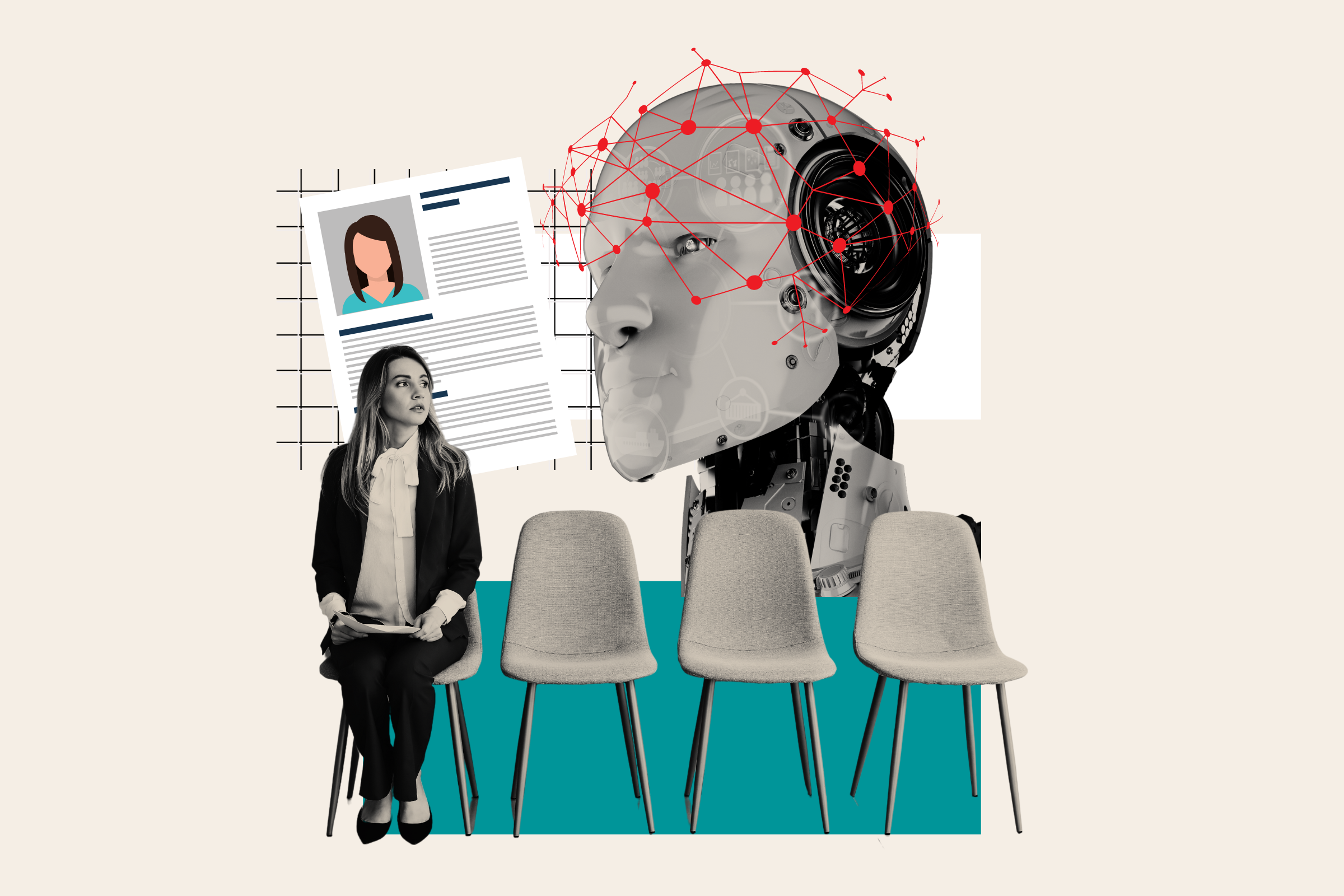
AI could cut two-thirds of UK retail jobs

Automation and AI could drastically reduce jobs at one of the UK’s largest online retailers. Buy It Direct, which employs over 800 staff, predicts more than 500 positions may be lost within three years, as AI and robotics take over office and warehouse roles.

Chief executive Nick Glynne cited rising national living wage and insurance contributions as factors accelerating the company’s shift towards automation.

The firm has already started outsourcing senior roles overseas, including accountants, managers and IT specialists, in response to higher domestic costs.

HM Treasury defended its policies, highlighting reforms in business rates and international trade deals, alongside a capped corporation tax at 25%.

Meanwhile, concerns are growing across the UK about AI replacing jobs, with graduates in fields such as graphic design and computer science facing increasing competition from technological advancements.

Would you like to learn more about AI, tech and digital diplomacy? If so, ask our Diplo chatbot

Irish regulator opens DSA probe into X

Ireland’s media watchdog has opened a formal investigation into X under the EU’s Digital Services Act. Regulators will assess appeal rights and internal complaint handling after reports of inaccessible processes for users.

Irish officials will examine whether users can challenge refusals to remove reported content and receive clear outcomes. Potential penalties reach up to 6% of global turnover for confirmed breaches.

The case stems from ongoing supervision, a user complaint, and information from HateAid, marking the first such probe by Ireland. Wider EU scrutiny continues across huge platforms.

Other services, including Meta and TikTok, have faced DSA actions, underscoring tighter enforcement across the bloc. Remedial measures and transparency improvements could follow if non-compliance is found.

Would you like to learn more about AI, tech and digital diplomacy? If so, ask our Diplo chatbot

Hidden freeze controls uncovered across major blockchains

Bybit’s Lazarus Security Lab says 16 major blockchains embed fund-freezing mechanisms. An additional 19 could adopt them with modest protocol changes, according to the study. The review covered 166 networks using an AI-assisted scan plus manual validation.

Whilst using AI, researchers describe three models: hardcoded blacklists, configuration-based freezes, and on-chain system contracts. Examples cited include BNB Chain, Aptos, Sui, VeChain and HECO in different roles. Analysts argue that emergency tools can curb exploits yet concentrate control.

Case studies show freezes after high-profile attacks and losses. Sui validators moved to restore about 162 million dollars post-Cetus hack, while BNB Chain halted movement after a 570 million bridge exploit. VeChain blocked 6.6 million in 2019.

New blockchain debates centre on transparency, governance and user rights when freezes occur. Critics warn about centralisation risks and opaque validator decisions, while exchanges urge disclosure of intervention powers.

Would you like to learn more about AI, tech and digital diplomacy? If so, ask our Diplo chatbot

Microsoft links datacentres into an AI superfactory

Microsoft has opened Fairwater, a new class of AI datacentres networked across the US. Atlanta began operating in October and links with the Wisconsin build to act as a single superfactory. The design targets faster training for models used by Microsoft, OpenAI and Copilot.

Fairwater sites pack hundreds of thousands of advanced GPUs with liquid cooling. Company materials highlight near-zero operational water use at Atlanta’s system and efficiency improvements in Wisconsin. Coverage confirms multi-site networking intended to accelerate model development.

Residents and experts voice concern over noise, power demand and water risks near proposed AI hubs. Georgia communities have pursued restrictions, citing environmental strain and rising utility bills, while Wisconsin groups demand transparency.

Microsoft expanded its Wisconsin investment and cancelled a separate Caledonia plan after severe local pushback. The Mount Pleasant project continues, with commitments on infrastructure costs and efficient cooling noted in filings and reports.

Would you like to learn more about AI, tech and digital diplomacy? If so, ask our Diplo chatbot

AI tools deployed to set tailored attendance goals for English schools

England will introduce AI-generated attendance targets for each school, setting tailored improvement baselines based on the context and needs of each school. Schools with higher absence rates will be paired with strong performers for support. Thirty-six new Attendance and Behaviour Hubs will help drive the rollout.

Education Secretary Bridget Phillipson said raising attendance is essential for opportunity. She highlighted the progress made since the pandemic, but noted that variation remains too high. The AI targets aim to disseminate effective practices across all schools.

A new toolkit will guide schools through key transition points, such as the transition from Year 7 to Year 8. CHS South in Manchester is highlighted for using summer family activities to ease anxiety. Officials say early engagement can stabilise attendance.

CHS South Deputy Head Sue Burke said the goal is to ensure no pupil feels left out. She credited the attendance team for combining support with firm expectations. The model is presented as a template for broader adoption.

The policy blends AI analysis with pastoral strategies to address entrenched absence. Ministers argue that consistent attendance drives long-term outcomes. The UK government expects personalised targets and shared practice to embed lasting improvement.

Would you like to learn more about AI, tech, and digital diplomacy? If so, ask our Diplo chatbot!