US government and New Mexico team up on quantum computing

A new partnership between the federal government and New Mexico’s state and local businesses aims to establish the state as a leader in quantum computing.

The initiative will see the Defence Advanced Research Projects Agency (DARPA) working alongside local researchers and companies to develop and commercialise next-generation technology. A total of up to $120 million could be invested in the project over four years.

New Mexico’s selection for the project is due to its long history of innovation, its two national defence labs, and a high concentration of leading scientists in the field.

The goal is to harness the ‘brainpower’ of the state to build computers that can solve currently impossible problems, such as developing materials that resist corrosion or finding cures for diseases. One of the project’s aims is to test the technology and differentiate between genuine breakthroughs and mere hype.

Roadrunner Venture Studios will be assisting in developing new quantum computing businesses within the state. A successful venture would bring economic gains and jobs and position New Mexico to lead the nation in solving some of its most pressing challenges.

Would you like to learn more about AI, tech and digital diplomacy? If so, ask our Diplo chatbot!

ChatGPT hit by widespread outage: ‘Our work partner is down’

A significant outage has struck ChatGPT, leaving many users unable to receive responses from the popular AI chatbot. Instead of generating answers, the service failed to react to prompts, causing widespread frustration, particularly during the busy morning work period.

Owner OpenAI has officially launched an investigation into the mysterious malfunction of ChatGPT after its status page confirmed a problem was detected.

Over a thousand complaints were registered on the outage tracking site Down Detector. Social media was flooded with reports from affected users, with one calling it an unprecedented event and another joking that their ‘work partner is down’.

Instead of a full global blackout, initial tests suggested the issue might be limited to some users, as functionality remained for others.

If you find ChatGPT is unresponsive, you can attempt several fixes instead of simply waiting. First, verify the outage is on your end by checking OpenAI’s official status page or Down Detector instead of assuming your connection is at fault.

If the service is operational, try switching to a different browser or an incognito window to rule out local cache issues. Alternatively, use the official ChatGPT mobile app to access it.

For a more thorough solution, clear your browser’s cache and cookies, or as a last resort, consider using an alternative AI service like Microsoft Copilot or Google Gemini to continue your work without interruption.

OpenAI is working to resolve the problem. The company advises users to check its official service status page for updates, rather than relying solely on social media reports.

The incident highlights the growing dependence on AI tools for daily tasks and the disruption caused when such a centralised service experiences technical difficulties.

Would you like to learn more about AI, tech and digital diplomacy? If so, ask our Diplo chatbot!

Salesforce cuts 4,000 support jobs as AI handles half of customer queries

Salesforce CEO Marc Benioff has confirmed that the company cut 4,000 customer support positions in 2025 after deploying its Agentforce AI agents. Support staff numbers fell from 9,000 to roughly 5,000.

Agentforce AI now conducts approximately 50 percent of customer interactions and has helped Salesforce reconnect with over 100 million previously neglected sales leads. The move enabled rebalancing of headcount and increased capacity for sales operations.

This development follows earlier claims that AI would augment rather than replace human roles. The company emphasises that AI handles standard cases while humans oversee complex or ambiguous ones, likening the interaction to a ‘self-driving’ model where the human steps in when needed.

Would you like to learn more about AI, tech and digital diplomacy? If so, ask our Diplo chatbot!
OpenAI eyes India for large-scale AI infrastructure

According to Bloomberg, OpenAI is weighing partnerships in India to build a data centre of at least 1 gigawatt capacity as part of its Stargate project. Such a facility would represent one of Asia’s most significant AI infrastructure investments.

The company recently registered as a legal entity in India and is recruiting a local team. It also announced plans in August to open its first office in New Delhi later this year, highlighting the importance of India’s second-largest market by user base.

The prospective data centre is linked to Stargate, a private-sector AI investment programme valued at up to $500 billion and backed by SoftBank, OpenAI and Oracle. The project was first introduced in January by US President Donald Trump.

Details on the timing and location of the Indian facility remain unclear. Reports suggest that OpenAI chief executive Sam Altman could provide further information during a visit to India in September.

Would you like to learn more about AI, tech and digital diplomacy? If so, ask our Diplo chatbot

Human behaviour remains weak link in cyber defence

Cyber security specialists warn that human behaviour remains the most significant vulnerability in digital defence, despite billions invested in AI and advanced systems.

Experts note that in the Gulf, many cybersecurity breaches in 2025 still originate from human error, often triggered by social engineering attacks. Phishing emails, false directives from executives, or urgent invoice requests exploit psychological triggers such as authority, fear and habit.

Analysts argue that building resilience requires shifting workplace culture. Security must be seen not just as the responsibility of IT teams but embedded in everyday decision-making. Staff should feel empowered to question, report and learn without fear of reprimand.

AI-driven threats, from identity-based breaches to ransomware campaigns, are growing more complex across the region. Organisations are urged to focus on digital trust, investing in awareness programmes and user-centred protocols so employees become defenders rather than liabilities.

Would you like to learn more about AI, tech and digital diplomacy? If so, ask our Diplo chatbot

Kazakhstan supports China’s global AI cooperation plan

Kazakhstan has announced its support for China’s proposal to establish a Global Organisation for Cooperation in AI, highlighting its ambition to strengthen digital ties with Beijing.

President Kassym-Jomart Tokayev voiced his backing during the Kazakh-Chinese Business Council meeting in Beijing, following his participation in the Shanghai Cooperation Organisation summit in Tianjin.

Tokayev stressed that joint efforts in AI were vital as experts predict the global market could reach $5 trillion by 2033, accounting for nearly one-third of the technology sector. He praised China’s digital achievements and urged bilateral collaboration in emerging technologies.

Kazakhstan has taken notable steps to position itself as a regional digital hub, launching Central Asia’s first supercomputer and the AlemAI International Centre for AI earlier this year.

Tokayev added that partnerships with Chinese firms, including a major construction agreement, would accelerate the development of Alatau City as a separate innovation ecosystem.

Would you like to learn more about AI, tech and digital diplomacy? If so, ask our Diplo chatbot

Quantum and supercomputing converge in IBM-AMD initiative

IBM has announced plans to develop next-generation computing architectures by integrating quantum computers with high-performance computing, a concept it calls quantum-centric supercomputing.

The company is working with AMD to build scalable, open-source platforms that combine IBM’s quantum expertise with AMD’s strength in HPC and AI accelerators. The aim is to move beyond the limits of traditional computing and explore solutions to problems that classical systems cannot address alone.

Quantum computing uses qubits governed by quantum mechanics, offering a far richer computational space than binary bits. In a hybrid model, quantum machines could simulate atoms and molecules, while supercomputers powered by CPUs, GPUs, and AI manage large-scale data analysis.

Arvind Krishna, IBM’s CEO, said the approach represents a new way of simulating the natural world. AMD’s Lisa Su described high-performance computing as foundational to tackling global challenges, noting the partnership could accelerate discovery and innovation.

An initial demonstration is planned for later this year, showing IBM quantum computers working with AMD technologies. Both companies say open-source ecosystems like Qiskit will be crucial to building new algorithms and advancing fault-tolerant quantum systems.

Would you like to learn more about AI, tech, and digital diplomacy? If so, ask our Diplo chatbot!

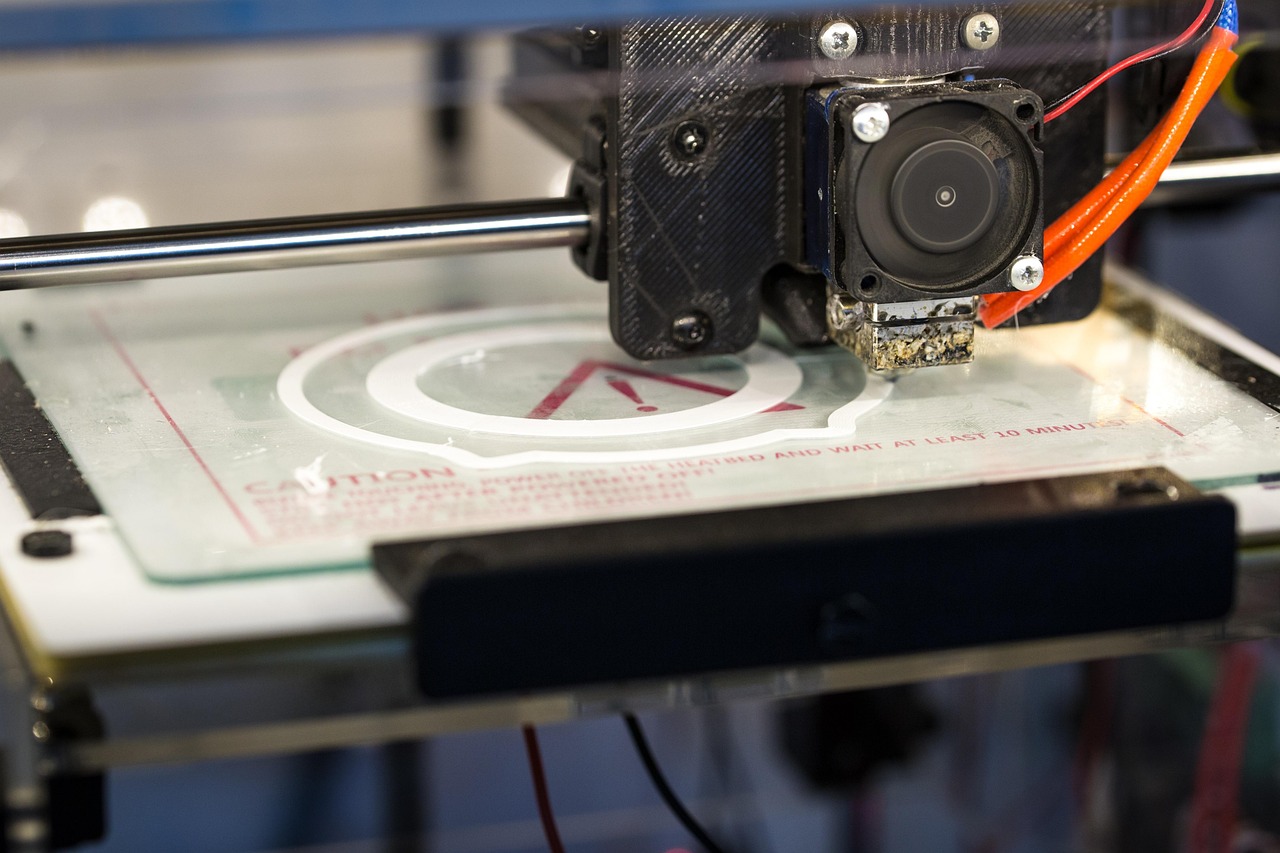
Rapid Fusion unveils AI assistant for 3D printing

Exeter technology firm Rapid Fusion has introduced an AI-powered print assistant to enhance its robotic additive manufacturing systems. Known as Bob, the system has been in development for eight months and is now being rolled out to clients.

The AI aims to simplify machine operation, provide greater control and reduce downtime through predictive maintenance.

It is compatible with the company’s Apollo, Zeus and Medusa models, including the first UK large-format hybrid 3D gantry printer.

Rapid Fusion’s chief technology officer, Martin Jewell, said the system represents a breakthrough in making complex 3D printing more accessible. A standard version will be released in early 2026, while select partners and universities will act as super users to refine future updates.

Would you like to learn more about AI, tech and digital diplomacy? If so, ask our Diplo chatbot

Apple creates Asa chatbot for staff training

Apple is moving forward with its integrated approach to AI by testing an internal chatbot designed for retail training. The company focuses on embedding AI into existing services rather than launching a consumer-facing chatbot like Google’s Gemini or ChatGPT.

The new tool, Asa, is being tested within Apple’s SEED app, which offers training resources for store employees and authorised resellers. Asa is expected to improve learning by allowing staff to ask open-ended questions and receive tailored responses.

Screenshots shared by analyst Aaron Perris show Asa handling queries about device features, comparisons, and use cases. Although still in testing, the chatbot is expected to expand across Apple’s retail network in the coming weeks.

The development occurs amid broader AI tensions, as Elon Musk’s xAI sued Apple and OpenAI for allegedly colluding to limit competition. Apple’s focus on internal AI tools like Asa contrasts with Musk’s legal action, highlighting disputes over AI market dominance and platform integration.

Would you like to learn more about AI, tech and digital diplomacy? If so, ask our Diplo chatbot!

Walmart rolls out AI agents to transform shopping and operations

Walmart has unveiled four AI agents to ease the workloads of shoppers, employees, and suppliers. The tools, revealed at the company’s Retail Rewired event, include Marty for suppliers, Sparky for customers, an Associate Agent for staff, and a Developer Agent.

The retailer is leaning on AI as inflation, tariffs, and policy pressures weigh on consumer spending. Its agents cover payroll, time-off requests, merchandising, and personalised shopping recommendations.

Sparky is set to eventually handle automatic reordering of staples, aiming to simplify everyday restocking for households.

Walmart is also investing in ‘digital twins,’ virtual replicas of stores that allow early detection of operational issues. The company says this technology cut emergency alerts by 30% last year and reduced refrigeration maintenance costs by nearly a fifth.

Machine learning is further being applied to improve delivery-time predictions, helping to boost efficiency and customer satisfaction.

Rival retailers are making similar moves. Amazon reported a surge in generative AI use during its Prime Day sales, while Google Cloud AI has partnered with Lush to cut training costs.

Analysts suggest such tools could reshape the retail experience as companies search for ways to hold margins in a tighter economy.

Would you like to learn more about AI, tech and digital diplomacy? If so, ask our Diplo chatbot