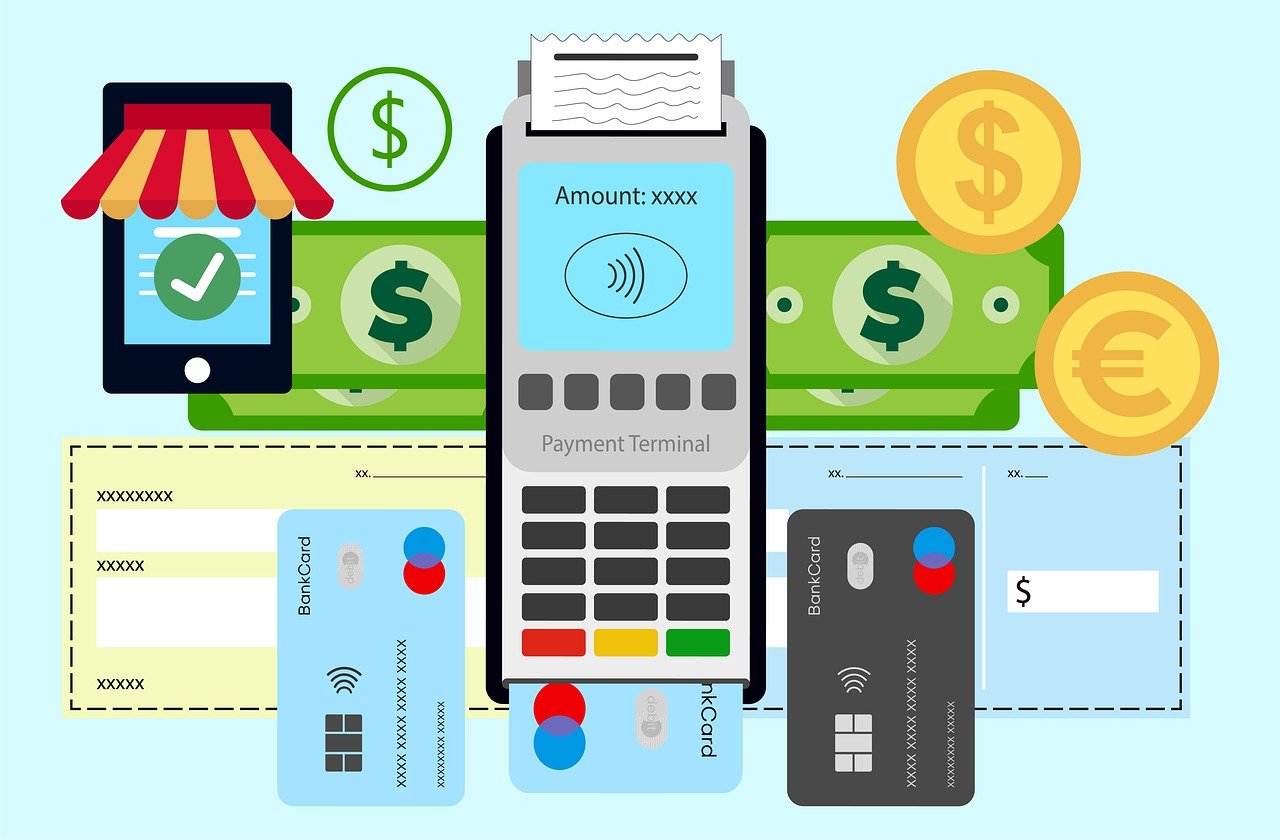
Brazil’s banking sector saw significant profitability improvements in the first half of 2024, led by digital lenders. The central bank’s Financial Stability Report revealed a rise in return on equity (ROE) to 15.11% by June, up from 14.23% at the end of 2023. Digital banks outperformed, achieving a ROE of 19.1%, a sharp jump from 11.45% six months earlier. These gains reflect operational efficiency and reduced provisioning costs.
Institutions like Nubank, Banco Inter, and C6 Bank played a pivotal role in driving digital banking success. Improved credit models and monetisation strategies have helped digital banks outperform traditional lenders, according to the central bank. Years of fostering innovation and competition in the sector have paid off, ensuring digital players maintain robust operational frameworks.
Upcoming regulatory changes in January aim to align financial accounting standards with global norms. The central bank expects provisions to increase by approximately 38 billion reais, though this adjustment will not impact profits or credit issuance. Only a small number of banks have voiced concerns, with the central bank committing to case-by-case support during the transition.
Brazil’s central bank anticipates continued profitability growth across the sector. Aided by stable provisioning costs and effective expense controls, lenders are well-positioned to sustain revenue expansion. Discussions are also underway to explore fresh funding mechanisms for real estate and potential adjustments to reserve requirements.
As the US prepares for Donald Trump’s second term, China is significantly increasing its semiconductor imports from the US, anticipating potential sanctions. In October, China imported $1.11 billion worth of microchips, a 60% rise from the previous year, and has already imported $9.61 billion in the first ten months of 2024, marking a 42.5% year-on-year increase. This surge reflects China’s growing demand for US semiconductors, particularly CPU-based processors and chips for storage and signal amplification, which align with its AI ambitions.
Despite these imports, China faces hurdles in advancing its chip technology. US sanctions have crippled Huawei’s ability to develop competitive AI chips, with the company’s upcoming processors lagging years behind NVIDIA’s offerings. This setback is largely due to restrictions on access to advanced lithography equipment, such as ASML’s EUV tools, essential for creating cutting-edge chips.
Meanwhile, China has been ramping up its chip manufacturing efforts, investing $25 billion in equipment in the first half of 2024, surpassing spending by Korea, Taiwan, and the US. However, as one-third of global semiconductor demand, China’s position remains critical for the industry. The impact of Trump’s potential tech restrictions, whether broad or selective, will likely influence the global semiconductor market, requiring careful balancing of US production and Chinese demand.
US federal authorities have broken up a significant cryptocurrency-based money laundering operation tied to international drug cartels. Nine individuals have been indicted in Florida for conspiring to launder money and running an unlicensed money-transmitting business, following a multi-agency investigation.
The network, active between 2020 and 2023, reportedly moved illicit funds from the US to drug cartels in Mexico and Colombia. Participants allegedly used cryptocurrencies, including mixers and black-market exchanges, to obscure transactions. Some acted as couriers, transporting cash across US cities before converting it into crypto.
Cryptocurrencies have increasingly been exploited for laundering cartel funds, leveraging their global reach and transaction anonymity. Authorities noted a rise in such schemes using crypto exchanges and shell companies to disguise illegal activities.
This case adds to a growing list of crypto-related laundering incidents, including a 2021 case involving $4 million in cartel funds and other operations tied to major crypto platforms. Regulators worldwide are intensifying efforts to tackle these abuses, emphasising the need for stricter oversight.
South Korean police have confirmed that hackers linked to North Korea’s military intelligence agency were behind a 2019 Ethereum cryptocurrency theft valued at 58 billion won ($41.5 million at the time). Hackers infiltrated a crypto exchange and stole 342,000 Ethereum tokens, which are now worth over 1.4 trillion won ($1 billion).
The stolen funds were laundered through three hacker-controlled crypto exchanges and 51 other platforms, according to South Korea’s National Police Agency. While the exchange targeted was not officially named, South Korea-based Upbit had reported a similar transfer to an unidentified wallet during the incident. The investigation, conducted with the FBI, used IP address analysis and asset tracking to trace the theft to groups reportedly tied to North Korea’s Reconnaissance General Bureau.
This marks the first confirmed instance of North Korean hackers targeting a South Korean crypto exchange. Previously, a UN report linked North Korea to nearly $3.6 billion in crypto heists from 2017 to 2024. South Korean investigators recovered a small fraction of the stolen assets, equivalent to 600 million won, which were returned to the exchange. North Korea denies involvement in such activities despite mounting evidence to the contrary.
A significant step in financial regulation will see major tech companies processing over 13 billion transactions annually subject to closer oversight. The US Consumer Financial Protection Bureau (CFPB) has finalised a rule bringing digital wallets and payment apps under the same scrutiny as banks. The move aims to enhance consumer privacy protections, combat fraud, and ensure fair account management.
The rule, targeting services like Apple Wallet, Google Pay, and Venmo, signals a shift in recognising digital payments as essential consumer tools. CFPB Director Rohit Chopra emphasised the need for oversight that reflects the growing reliance on these services. The measure, first proposed a year ago, has undergone substantial revisions to refine its scope and application.
Only companies processing over 50 million transactions annually will fall under the rule, a change from the initially proposed threshold of 5 million. Moreover, the regulation focuses solely on transactions in US dollars, excluding digital assets from its purview. Critics, including the Financial Technology Association, argue that the rule lacks a clear justification, though some in the banking industry support its introduction.
Set to take effect 30 days after its publication in the Federal Register, the rule has sparked debate over its future under a changing regulatory landscape. With the growing role of digital payments in daily life, the rule marks a pivotal moment for the industry and consumer protections alike.
Retail investors continue to dominate Bitcoin’s ownership, accounting for 88.07% of the circulating supply, according to The Block. Despite fears of institutional dominance, whales and institutions hold just 1.26% and 10.68% of Bitcoin, respectively, highlighting the strong grassroots presence in the market.
Adding momentum to Bitcoin, the historic launch of BlackRock’s Bitcoin ETF saw $1.9 billion in notional value traded on its debut day. This milestone signals growing institutional interest but also lowers barriers for everyday investors, ensuring Bitcoin remains accessible to the masses.
Bitcoin’s ownership distribution reflects its decentralised nature, with significant holdings by entities like Coinbase and even governments, though the bulk lies with retail holders. Critics arguing that Bitcoin is becoming centralised are contradicted by data showing financial products like ETFs increase accessibility while maintaining Bitcoin’s democratic ethos.
As Bitcoin edges closer to the $100,000 mark, its ownership by retail investors underscores its alignment with Satoshi Nakamoto’s vision for a decentralised financial future.
Gary Gensler, the chair of the US Securities and Exchange Commission (SEC), will step down on 20 January 2025, coinciding with President-elect Donald Trump’s inauguration. Gensler, who led the agency since 2021, is known for his stringent regulatory approach towards cryptocurrency. Under his leadership, the SEC pursued over 100 enforcement actions against crypto firms, aiming to bring compliance to what he described as an industry of 10,000 unregistered securities.
Trump, who has pledged to transform the US into the “crypto capital of the world,” plans to appoint more crypto-friendly regulators, including a new SEC chair. Summer Mersinger, a Republican CFTC commissioner advocating for leniency in crypto policies, is a potential candidate for a top regulatory position. Reports also suggest that Trump is considering establishing a White House post focused on cryptocurrency policy.
Gensler’s departure follows the earlier resignation of Gurbir Grewal, the SEC’s chief enforcer known for his rigorous oversight of the crypto sector. With Trump’s pro-crypto agenda, the leadership shake-up signals a potential regulatory shift, aiming to foster innovation and growth in the digital asset space.
Amazon is likely to face an EU investigation next year into allegations that it favours its own brand products on its online marketplace, according to sources familiar with the matter. If found in violation of the EU’s Digital Markets Act (DMA), Amazon could face a fine of up to 10% of its global revenue.
The potential investigation will be overseen by Teresa Ribera, the incoming EU antitrust chief, who will take office next month. Amazon has denied any wrongdoing, stating it complies with the DMA and treats all products equally in its ranking algorithms. The company has been in ongoing discussions with the European Commission about its practices.
The DMA, implemented last year, aims to curb the dominance of Big Tech by prohibiting preferential treatment of their products and services. Alongside Amazon, other tech giants such as Apple, Google, and Meta are also under scrutiny. Amazon shares fell 3% following reports of the possible investigation.
OpenAI is reportedly considering developing a web browser integrated with its chatbot and is in talks to enhance search features for platforms like Conde Nast, Redfin, and Priceline, according to The Information. These moves could position OpenAI as a competitor to Google in both the browser and search markets, further challenging the tech giant’s dominance.
OpenAI, led by Sam Altman, has already dipped into the search market with SearchGPT and has explored AI-powered collaborations with Samsung, a key Google partner, and Apple for its “Apple Intelligence” features. Meanwhile, Google faces increasing pressure, with the US Department of Justice suggesting it divest its Chrome browser to curb its search monopoly.
Although OpenAI’s browser plans remain in the early stages, the potential competition highlights a shift in the AI landscape, with Google and OpenAI vying to lead the generative AI race. Alphabet shares fell sharply following the report, reflecting market concerns about Google’s ability to maintain its stronghold.
The United Kingdom is set to finalise a draft regulatory framework for crypto assets by early next year, according to Economic Secretary to the Treasury, Tulip Siddiq. Speaking at the Tokenisation Summit in London on 21 November, Siddiq outlined plans for a streamlined approach to regulating stablecoins, staking services, and cryptocurrencies. The new Labour government, under Prime Minister Keir Starmer, will present the framework, replacing earlier Conservative-led initiatives disrupted by a general election.
Siddiq emphasised the importance of removing legal uncertainties, particularly around staking services, which the government does not intend to classify as “collective investment schemes.” This move aims to avoid unnecessary restrictions. Stablecoin legislation, which began in 2023, will also be part of the new framework, though it was never anticipated before 2025.
The UK faces mounting pressure to establish itself as a competitive crypto hub, especially with the European Union’s MiCA regulations taking full effect this year and the US expected to adopt a more crypto-friendly stance under President-elect Donald Trump. Critics have often blamed the Financial Conduct Authority for the UK’s perceived regulatory hurdles, but the upcoming framework seeks to enhance clarity and foster innovation in the growing crypto sector.