A prominent technology trade group has urged the Biden administration to reconsider a proposed rule that would restrict global access to US-made AI chips, warning that the measure could undermine America’s leadership in the AI sector. The Information Technology Industry Council (ITI), representing major companies like Amazon, Microsoft, and Meta, expressed concerns that the restrictions could unfairly limit US companies’ ability to compete globally while allowing foreign rivals to dominate the market.
The proposed rule, expected to be released as soon as Friday, is part of the Commerce Department’s broader strategy to regulate AI chip exports and prevent misuse, particularly by adversaries like China. The restrictions aim to curb the potential for AI to enhance China’s military capabilities. However, in a letter to Commerce Secretary Gina Raimondo, ITI CEO Jason Oxman criticised the administration’s urgency in finalising the rule, warning of ‘significant adverse consequences’ if implemented hastily. Oxman called for a more measured approach, such as issuing a proposed rule for public feedback rather than enacting an immediate policy.
Industry leaders have been vocal in their opposition, describing the draft rule as overly broad and damaging. The Semiconductor Industry Association raised similar concerns earlier this week, and Oracle’s Executive Vice President Ken Glueck slammed the measure as one of the most disruptive ever proposed for the US tech sector. Glueck argued the rule would impose sweeping regulations on the global commercial cloud industry, stifling innovation and growth.
While the administration has yet to comment on the matter, the growing pushback highlights the tension between safeguarding national security and maintaining US dominance in the rapidly evolving field of AI.
Telegram, the popular messaging app, has fulfilled 900 requests from US authorities for personal information about its users in 2024, with a significant rise in inquiries following the arrest of CEO Pavel Durov in France. A report from 404 Media, published on 7 January, revealed that the platform provided 14 requests for IP addresses and phone numbers between January and September 2024. However, most of these requests were made after October, affecting over 2,000 users.
The increase in requests came after French authorities arrested Durov on 24 August, accusing Telegram of enabling criminal activity. Durov has stated that since 2018, Telegram has been providing user information like IP addresses and phone numbers to law enforcement authorities when requested. The policy, which is mentioned in Telegram’s privacy guidelines, continues to be a source of controversy.
Despite the ongoing legal issues, with Durov still barred from leaving France, Telegram remains a key platform, especially within the cryptocurrency community, where it has more than 950 million monthly active users.
Bitcoin has once again breached the $100,000 mark, trading at $101,700 as of 7 January, showing a strong resurgence after weeks of hovering between $92,000 and $98,000. This sharp rise is further fuelled by a massive surge in $120,000 call options, with over $1.56 billion in open interest, suggesting that traders are betting on a rally to new all-time highs. With the market showing renewed optimism, attention is shifting to upcoming changes in US crypto policy under President-elect Donald Trump, which could have a major impact on Bitcoin’s future.
As Trump prepares for his 20 January inauguration, many in the crypto industry are hopeful that his administration will bring a more crypto-friendly regulatory environment. A key change could be the resignation of SEC Chair Gary Gensler, a figure many crypto advocates view as an obstacle to the sector’s growth. His replacement, crypto-friendly Paul Atkins, may usher in a more supportive stance, especially regarding regulations for decentralized finance. Trump’s administration is also expected to explore initiatives like establishing a US Bitcoin reserve, further boosting the industry’s outlook.
Alongside these political developments, Bitcoin’s price performance is also influenced by broader macroeconomic factors. Economic reports in early January, including job creation and consumer sentiment data, could shape investor confidence, particularly if inflation concerns drive more interest in Bitcoin as a hedge against the dollar’s declining purchasing power. The Federal Reserve’s stance on interest rates will be pivotal, with the market expecting a neutral approach but keeping an eye on any unexpected policy shifts.
As Bitcoin pushes towards the $120,000 mark, analysts are divided on its short-term prospects. Some suggest the market is still in a “buy zone”, with potential for significant gains in the coming months, while others caution that market sentiment remains cautious. Regardless, the market is positioned for a potentially exciting year, with Bitcoin’s role as a key reserve asset likely to grow amidst shifting regulatory landscapes and economic conditions.
Apple remains unable to sell its iPhone 16 in Indonesia despite agreeing to build a production facility in the country, according to Indonesia’s industry minister, Agus Gumiwang Kartasasmita. The ban stems from regulations requiring smartphones sold domestically to include at least 35% locally-made components—a threshold Apple has not met.
While Apple plans to invest $1 billion in a facility on Batam island to produce its Airtag tracking devices, the industry ministry clarified that this does not qualify as contributing to iPhone production. Kartasasmita emphasised that only phone components would satisfy the local content rules necessary for certification to sell iPhones in Indonesia.
Apple, which lacks manufacturing facilities in the country, has maintained its presence through application developer academies since 2018. Despite two days of discussions between Kartasasmita and Apple’s vice president of global government affairs, Nick Ammann, the company’s proposals for ‘innovative investment’ failed to meet Indonesia’s regulatory standards for smartphone sales.
The planned Batam facility, expected to launch operations next year, underscores Apple’s interest in expanding its footprint in Indonesia, a nation of 280 million people. However, the iPhone 16’s path to market in the region remains uncertain.
Banco de Investimentos Globais (BiG), one of Portugal’s largest banks, has started blocking fiat transfers to cryptocurrency platforms. The decision, revealed in a notification shared by Delphi Labs co-founder José Maria Macedo, comes as part of BiG’s efforts to comply with guidelines from the European Central Bank (ECB), the European Banking Authority (EBA), and the Bank of Portugal. These regulations focus on the risks linked to digital assets, particularly money laundering and terrorism financing.
BiG, which reported assets under management of nearly €7 billion in 2023, justified the move as necessary to align with Portugal’s legal framework. However, this action appears to be limited to BiG for now, as users have reported that fiat transfers to crypto platforms remain unaffected when using Portugal’s largest bank, Caixa Geral de Depósitos.
Macedo criticised BiG’s decision, claiming that such measures would drive more people to decentralised platforms, declaring, ‘Crypto is inevitable, banks are dead, and these abuses of power will only red pill more ppl into moving their wealth on-chain.’ His comments reflect a growing frustration with traditional financial institutions as they respond to increasing pressure from regulators.
This decision aligns with a broader, mixed stance within the EU regarding digital assets. While some ECB officials, like Jürgen Schaaf, have raised concerns over Bitcoin’s volatility and environmental impact, others, such as Piero Cipollone, advocate for the adoption of digital assets to help tackle market fragmentation. The future of cryptocurrency regulations in Europe remains uncertain, with ongoing debates about the potential benefits and risks.
Amazon Web Services (AWS) has announced a $11 billion investment to build new data centres in Georgia, aiming to support the growing demand for cloud computing and AI technologies. The facilities, located in Butts and Douglas counties, are expected to create at least 550 high-skilled jobs and position Georgia as a leader in digital innovation.
The move highlights a broader trend among tech giants investing heavily in AI-driven advancements. Last week, Microsoft revealed an $80 billion plan for fiscal 2025 to expand data centres for AI training and cloud applications. These facilities are critical for supporting resource-intensive AI technologies like machine learning and generative models, which require vast computational power and specialised infrastructure.
The surge in AI infrastructure has also raised concerns about energy consumption. A report from the Electric Power Research Institute suggests data centres could account for up to 9% of US electricity usage by 2030. To address this, Amazon has secured energy supply agreements with utilities like Talen Energy in Pennsylvania and Entergy in Mississippi, ensuring reliable power for its expanding operations.
Amazon’s commitment underscores the growing importance of AI and cloud services, as companies race to meet the demands of a rapidly evolving technological landscape.
Bitfinex Derivatives, the derivatives arm of the crypto exchange, has secured a Digital Asset Service Providers (DASP) licence to operate in El Salvador. The move marks a significant shift for the company, which will relocate from Seychelles to the Central American nation. Paolo Ardoino, Bitfinex Derivatives’ chief technology officer, praised El Salvador’s growing prominence as a global financial hub and its commitment to creating robust crypto frameworks.
The approval aligns with El Salvador’s ongoing efforts to develop its crypto infrastructure, especially after the country introduced its Digital Assets Securities Law in January 2023. This regulation simplifies tokenisation, allowing companies to raise capital by issuing tokens tied to assets like debt, equity, and real estate.
Bitfinex has already benefitted from the country’s legal framework, with Bitfinex Securities securing a local DASP licence in April 2023. However, the company faced challenges when it had to refund investors in a tokenisation effort for a Hilton hotel project due to failing to meet the minimum fundraising target. Despite this setback, the move to El Salvador signals a positive outlook for the country’s growing role in the crypto world.
The White House unveiled a new label, the Cyber Trust Mark, for internet-connected devices like smart thermostats, baby monitors, and app-controlled lights. This new shield logo aims to help consumers evaluate the cybersecurity of these products, similar to how Energy Star labels indicate energy efficiency in appliances. Devices that display the Cyber Trust Mark will have met cybersecurity standards set by the US National Institute of Standards and Technology (NIST).
As more household items, from fitness trackers to smart ovens, become internet-connected, they offer convenience but also present new digital security risks. Anne Neuberger, US Deputy National Security Advisor for Cyber, explained that each connected device could potentially be targeted by cyber attackers. While the label is voluntary, officials hope consumers will prioritise security and demand the Cyber Trust Mark when making purchases.
The initiative will begin with consumer devices like cameras, with plans to expand to routers and smart meters. Products bearing the Cyber Trust Mark are expected to appear on store shelves later this year. Additionally, the Biden administration plans to issue an executive order by the end of the president’s term, requiring the US government to only purchase products with the label starting in 2027. The program has garnered bipartisan support, officials said.
AI startup Anthropic is reportedly in advanced discussions to secure $2 billion in funding, potentially valuing the company at $60 billion. The funding round is being led by venture capital firm Lightspeed Venture Partners, according to sources cited by the Wall Street Journal. The company, known for its Claude chatbot, was valued at around $18 billion in 2024 following a fundraising round led by Menlo Ventures.
Investor interest in Anthropic has grown significantly, with Amazon doubling its investment in the company to $8 billion last year as part of its push into generative AI. Alphabet has also pledged up to $2 billion in backing, further reinforcing the startup’s position as a key player in the AI sector. The company was founded by former OpenAI executives Dario and Daniela Amodei, who left the firm to develop their own AI models.
Competition in the AI industry remains fierce, with OpenAI, backed by Microsoft, leading the charge after launching ChatGPT in 2022. OpenAI recently secured $6.6 billion in funding, bringing its valuation to an estimated $157 billion. The race to dominate the AI market has intensified, with major tech firms investing heavily in developing next-generation AI models.
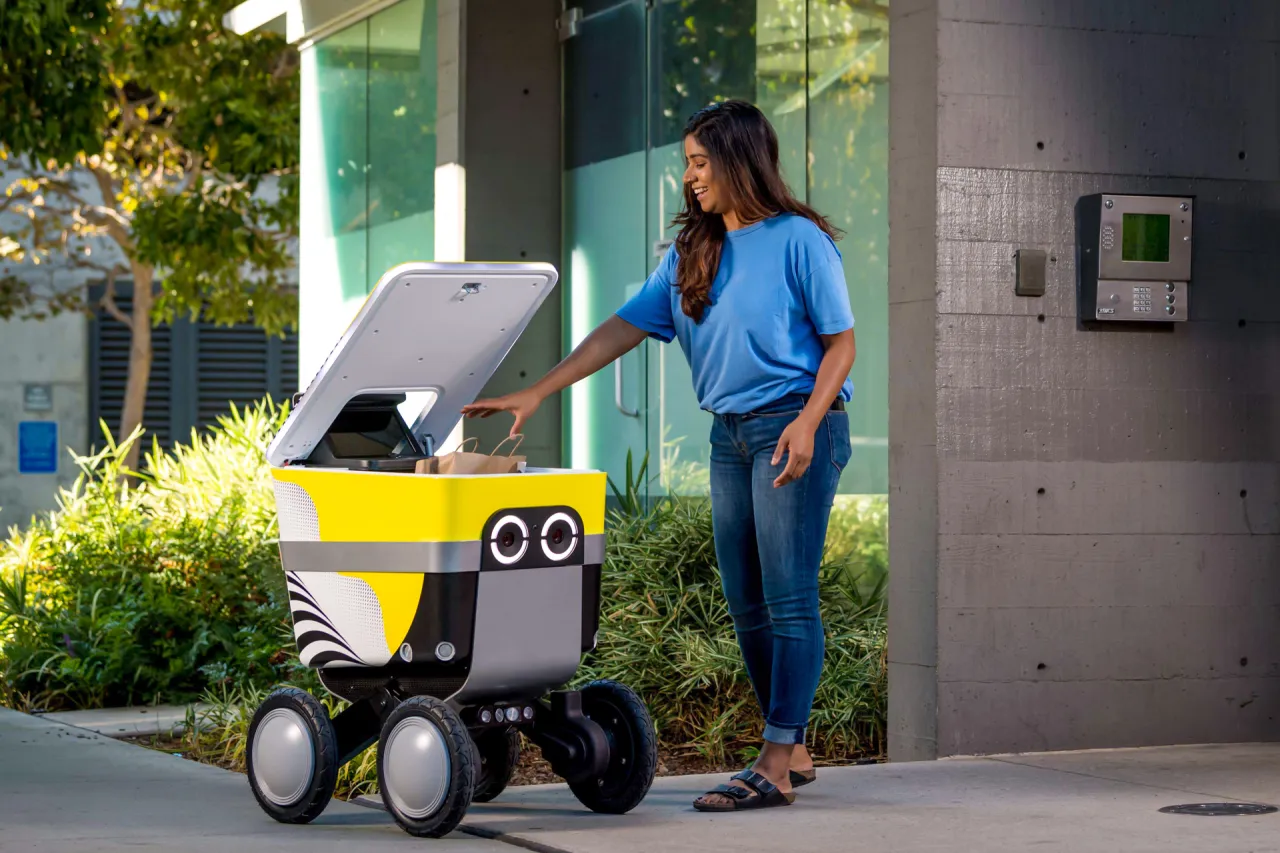
Serve Robotics, backed by Nvidia and Uber, has secured $80 million through a direct stock offering to institutional investors. The funding will support the expansion of its autonomous delivery robot fleet, with plans to scale from 100 robots in Los Angeles to 2,000 across multiple US cities by the end of 2025. CFO Brian Read stated that the investment is intended for long-term growth rather than short-term expenditure, positioning the company for sustained financial stability beyond 2026.
The fresh capital follows $86 million raised in December 2024, bringing Serve’s total funding to over $247 million in the past year. The company aims to use its reserves to self-finance equipment investments, reducing reliance on external financing and improving cash flow. Read highlighted that full ownership of the robots would provide greater financial flexibility and lower operational costs as the fleet expands.
Currently, Serve operates around 100 robots in Los Angeles, delivering for Uber Eats and 7-Eleven. A trial in Dallas, launched in partnership with Wing, is exploring hybrid drone and sidewalk robot deliveries. The company plans to deploy 250 additional robots in Los Angeles in early 2025, with the goal of achieving cash-flow positivity once the 2,000-robot fleet reaches full utilisation.