STMicroelectronics unveils new AI chip for data centres

STMicroelectronics has announced the launch of a new computer chip aimed at the rapidly expanding AI data centre market. Developed in collaboration with Amazon Web Services (AWS), the photonics chip uses light rather than electricity, which helps increase speed and reduce power consumption in AI data centres. These chips are expected to be used in transceivers, which are crucial components in data centre infrastructure.

As top US software companies plan to invest $500 billion into AI infrastructure, there is rising demand for specialised chips, not only for computing but also for memory, power, and communications applications. ST’s new chip targets the communications sector, with a focus on improving the efficiency of transceivers, which are essential in AI data centres. The company also has a collaboration agreement with AWS to deploy this technology in their infrastructure later this year.

ST is working with a leading provider of optical solutions, although the company’s name has not been disclosed, to integrate the new chip into next-generation transceivers. The market for such devices, valued at $7 billion in 2024, is expected to grow significantly, reaching $24 billion by 2030. ST will begin mass production of these chips at its facility in Crolles, France.

For more information on these topics, visit diplomacy.edu.

AI chip boom drives Lam Research’s latest tool innovations

Lam Research has introduced two new chipmaking tools designed to support the growing demand for advanced AI semiconductors. The company unveiled ALTUS Halo, a deposition tool that applies molybdenum layers to chips, enhancing their performance and enabling further scaling for next-generation devices.

Micron Technology has already adopted the tool, bringing molybdenum into mass production, according to executive Mark Kiehlbauch.

Alongside ALTUS Halo, Lam launched Akara, an etching tool that removes excess material from semiconductor wafers, creating precise chip structures essential for complex AI applications.

These innovations position Lam to compete with major players in wafer fabrication equipment, including Applied Materials, ASML, and KLA Corp.

As AI-driven semiconductor demand surges, major clients like Micron, Samsung Electronics, and Taiwan Semiconductor Manufacturing Co (TSMC) are relying on advanced manufacturing tools.

TSMC executive Y.J. Mii highlighted the need for innovative solutions to develop more powerful chip architectures. In January, Lam reported a strong third-quarter revenue forecast, signalling positive growth amid the AI chip boom.

For more information on these topics, visit diplomacy.edu.

Microsoft partners with Ninja Theory on AI project

Microsoft has introduced an AI model, named Muse, designed to assist in generating visuals and actions for video games. Developed in collaboration with Ninja Theory, part of Xbox Game Studios, Muse aims to streamline game development as rising costs and economic uncertainty challenge the industry.

The tool is already being used to create a real-time playable AI model, trained using data from other first-party games.

The gaming sector has faced increasing pressure as production expenses soar and players gravitate towards familiar titles. Microsoft’s move into AI-driven game design seeks to reduce development costs while enhancing creativity for both players and developers.

Muse could simplify complex game creation tasks, allowing studios to focus more on storytelling and gameplay innovation.

Fatima Kardar, corporate vice president for gaming AI at Microsoft, highlighted the broader potential of Muse, suggesting that it could eventually benefit both gamers and creators.

The company sees AI as a key tool in evolving game design and tackling industry challenges, positioning Muse as a step towards more efficient and imaginative game development.

For more information on these topics, visit diplomacy.edu.

Kraken prepares for return to the Indian market

Kraken is gearing up to re-enter the Indian market after being banned in 2024 for breaching anti-money laundering regulations. The exchange is working closely with local authorities to obtain the necessary approvals and has appointed Vishesh Khurana, a prominent industry figure, to lead its expansion efforts. Kraken’s co-CEO, Arjun Sethi, is also expected to play a key role in shaping its strategy in India.

India’s Financial Intelligence Unit blacklisted Kraken and eight other offshore exchanges last year for failing to comply with anti-money laundering laws. To operate legally, exchanges must register with the FIU, adhere to Know-Your-Customer requirements, and report suspicious transactions. Some firms may also need to settle outstanding tax obligations before resuming operations. Binance and KuCoin have already secured approval, raising expectations that Kraken may soon follow suit.

Despite its global success, Kraken is under scrutiny over its ties to Dave Portnoy, the controversial founder of Barstool Sports. Portnoy has been linked to memecoin schemes and accused of market manipulation, with critics arguing his actions undermine trust in the sector. Many in the crypto community have questioned Kraken’s continued support for him, with some openly criticising the exchange for backing someone they believe is harming the industry’s reputation.

For more information on these topics, visit diplomacy.edu

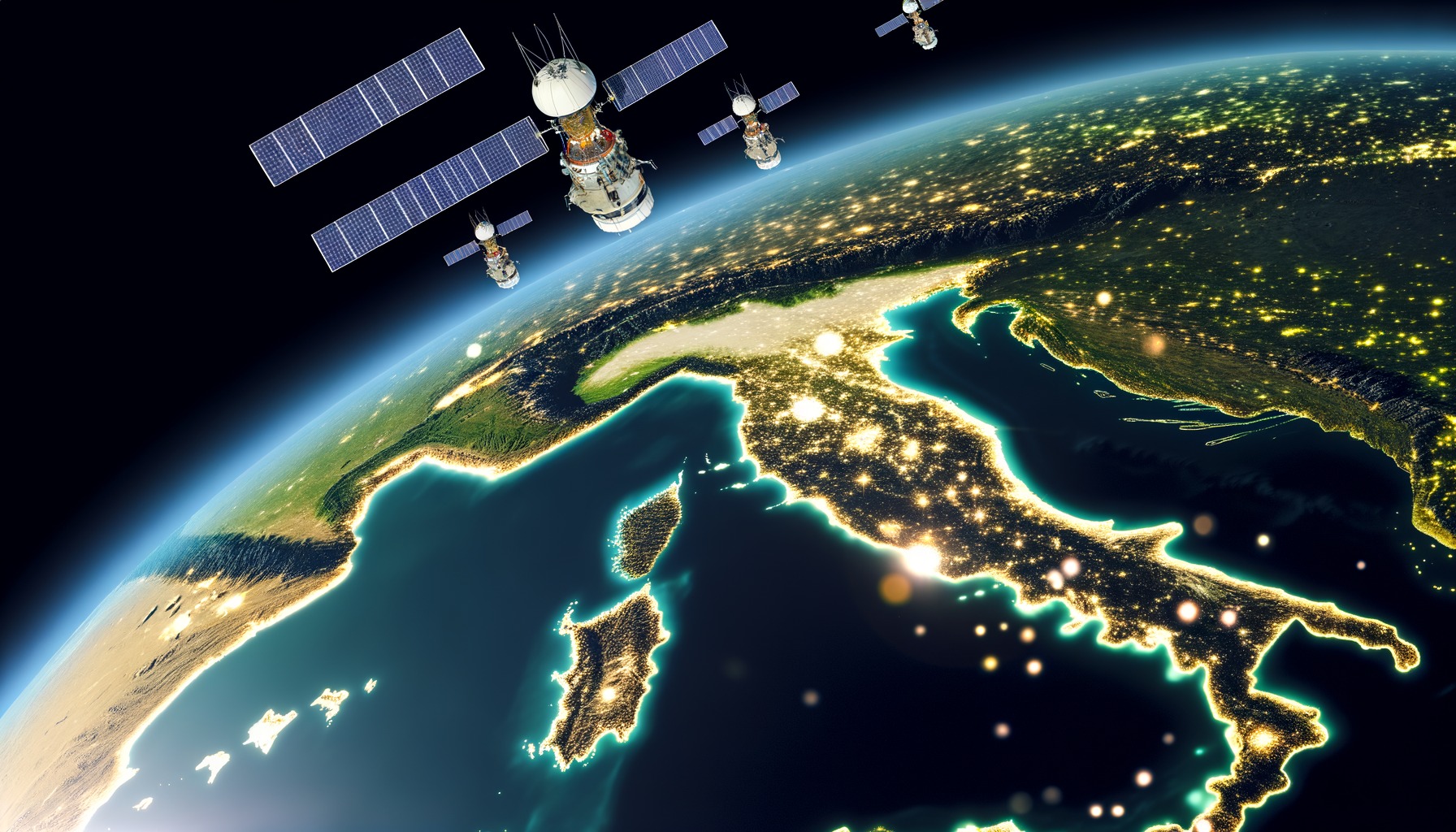
Italy eyes local alternative to Elon Musk’s Starlink

Italy is planning to develop its own low-orbit satellite system to secure government communications, aiming to reduce reliance on foreign providers like Elon Musk’s Starlink. Industry Minister Adolfo Urso announced the initiative, positioning it as a competitive alternative to global networks and a step towards greater national security.

The project will involve leading Italian companies, with the national space agency conducting a feasibility study to guide development.

The move comes after the government previously considered using Starlink for encrypted communications in high-risk zones. However, the idea sparked criticism from opposition figures who raised concerns about national security and questioned the wisdom of involving a foreign entrepreneur closely tied to US interests.

Though Musk expressed willingness to collaborate with Italy, Defence Minister Guido Crosetto confirmed that no formal agreement had been made.

By building its own satellite network, Italy hopes to safeguard sensitive communications and strengthen its technological independence in the long term.

For more information on these topics, visit diplomacy.edu.
TikTok lays off staff in trust and safety restructuring

TikTok is reportedly laying off staff from its trust and safety unit, which is responsible for content moderation, as part of a restructuring effort. The layoffs began on Thursday, affecting teams in Asia, Europe, the Middle East, and Africa. Adam Presser, TikTok’s operations head, sent a memo to staff informing them of the decision, though the company has not yet commented on the move.

The layoffs come at a time when TikTok’s future is uncertain. The app, used by nearly half of all Americans, faced a brief outage last month, followed by a law that came into effect in January, requiring its Chinese owner ByteDance to either sell TikTok or face a national security-related ban. TikTok CEO Shou Chew had previously testified before Congress about the company’s trust and safety measures, pledging to invest more than $2 billion in these efforts.

In line with a shift towards AI-driven content moderation, TikTok had already made significant layoffs in October, including staff in Malaysia. The company currently employs 40,000 trust and safety professionals globally, but the full scope of the recent cuts remains unclear.

For more information on these topics, visit diplomacy.edu.

CNB governor calls for Bitcoin research in banking

The Czech National Bank (CNB) is exploring Bitcoin’s potential as part of its reserve management strategy, according to Governor Aleš Michl. He emphasised that Bitcoin should not be dismissed outright and urged central bankers to study its underlying technology. While the CNB has not committed to buying Bitcoin, its board has approved an analysis of new asset classes, including the cryptocurrency.

Michl acknowledged Bitcoin’s extreme volatility and clarified that this initiative is not an endorsement but an effort to understand its risks and benefits. If CNB were to allocate even a small portion of its €140 billion reserves to Bitcoin, it could become the first Western central bank to invest in the asset publicly. However, sources suggest that potential exposure would be minimal, likely below 1% of total reserves.

Other European central bankers remain sceptical despite Michl’s openness to financial innovation. German central bank governor Joachim Nagel compared Bitcoin to the 17th-century tulip bubble, calling it neither safe nor liquid. European Central Bank President Christine Lagarde also dismissed Bitcoin as a reserve asset, stating that it fails to meet the ECB’s criteria for stability and transparency. However, Michl remains committed to diversifying CNB’s investments, including increasing its holdings in US stocks.

For more information on these topics, visit diplomacy.edu

EU approves 10 stablecoin issuers, Tether left out

The European Union has approved ten stablecoin issuers under its Markets in Crypto-Assets (MiCA) framework, allowing them to operate within the region. Notable names include Circle, Crypto.com, and Societe Generale, with issued stablecoins pegged to both the euro and the US dollar. However, Tether, the issuer of USDT and the world’s largest stablecoin, has been left out, raising concerns over regulatory barriers limiting market participation.

With MiCA rules coming into full effect, some crypto platforms have already delisted USDT for EU users, cutting access to non-compliant stablecoins. Tether criticised these moves as premature and unnecessary, arguing that the regulatory framework remains unclear. Critics warn that the EU’s strict approach may discourage foreign firms from entering the market while pushing local crypto businesses to relocate elsewhere.

Regulatory experts suggest that while the MiCA framework provides clarity, it could come at the cost of innovation and competitiveness. Some argue that excessive red tape is hindering economic growth, with firms possibly looking beyond the EU for more favourable conditions. However, uncertainty in the UK’s crypto regulations makes it unclear where companies might seek new opportunities.

For more information on these topics, visit diplomacy.edu

Apple rejects UK plans for mobile browser controls

Apple has pushed back against proposed remedies from the UK’s competition watchdog, arguing they could hinder innovation in the mobile browser market. The Competition and Markets Authority (CMA) is investigating Apple and Google’s dominance in browser engines and cloud gaming distribution through app stores, with potential regulatory measures under consideration.

In its response, Apple stated that mandating free access to future WebKit updates or iOS features used by Safari would be unfair, given the significant resources required to develop them. The company warned this could lead to ‘free-riding’ by third parties and discourage further investment in browser technologies.

The UK CMA’s investigation aims to increase competition in the mobile browser space, where Apple’s WebKit engine is a key player. However, Apple insists that the proposed changes would harm its ability to innovate and could ultimately reduce the quality of browser experiences for users. The regulator is expected to continue assessing industry feedback before making a final decision.

For more information on these topics, visit diplomacy.edu.

Australian kids overlook social media age checks

A recent report by Australia’s eSafety regulator reveals that children in the country are finding it easy to bypass age restrictions on social media platforms. The findings come ahead of a government ban, set to take effect at the end of 2025, that will prevent children under the age of 16 from using these platforms. The report highlights data from a national survey on social media use among 8 to 15-year-olds and feedback from eight major services, including YouTube, Facebook, and TikTok.

The report shows that 80% of Australian children aged 8 to 12 were using social media in 2024, with YouTube, TikTok, Instagram, and Snapchat being the most popular platforms. While most platforms, except Reddit, require users to enter their date of birth during sign-up, the report indicates that these systems rely on self-declaration, which can be easily manipulated. Despite these weaknesses, 95% of teens under 16 were found to be active on at least one of the platforms surveyed.

While some platforms, such as TikTok, Twitch, and YouTube, have introduced tools to proactively detect underage users, others have not fully implemented age verification technologies. YouTube remains exempt from the upcoming ban, allowing children under 13 to use the platform with parental supervision. However, eSafety Commissioner Julie Inman Grant stressed that there is still significant work needed to enforce the government’s minimum age legislation effectively.

The report also noted that most of the services surveyed had conducted research to improve their age verification processes. However, as the law approaches, there are increasing calls for app stores to take greater responsibility for enforcing age restrictions.

For more information on these topics, visit diplomacy.edu.