Thailand strengthens cybersecurity with Google Cloud

Thailand’s National Cyber Security Agency (NCSA) has joined forces with Google Cloud to strengthen the country’s cyber resilience, using AI-based tools and shared threat intelligence instead of relying solely on traditional defences.

The collaboration aims to better protect public agencies and citizens against increasingly sophisticated cyber threats.

A key part of the initiative involves deploying Google Cloud Cybershield for centralised monitoring of security events across government bodies. Instead of having fragmented monitoring systems, this unified approach will help streamline incident detection and response.

The partnership also brings advanced training for cybersecurity personnel in the public sector, alongside regular threat intelligence sharing.

Google Cloud Web Risk will be integrated into government operations to automatically block websites hosting malware and phishing content, instead of relying on manual checks.

Google further noted the impact of its anti-scam technology in Google Play Protect, which has prevented over 6.6 million high-risk app installation attempts in Thailand since its 2024 launch—enhancing mobile safety for millions of users.

For more information on these topics, visit diplomacy.edu.

TikTok deal stalled amid US-China trade tensions

Negotiations to divest TikTok’s US operations have been halted following China’s indication that it would not approve the deal. The development came after President Donald Trump announced increased tariffs on Chinese imports.

The proposed arrangement involved creating a new US-based company to manage TikTok’s American operations, with US investors holding a majority stake and ByteDance retaining less than 20%. This plan had received approvals from existing and new investors, ByteDance, and the US government.

In response to the stalled negotiations, President Trump extended the deadline for ByteDance to sell TikTok’s US assets by 75 days, aiming to allow more time for securing necessary approvals.

He emphasised the desire to continue collaborating with TikTok and China to finalise the deal, expressing a preference to avoid shutting the app in the US.

The future of TikTok in the US remains unpredictable as geopolitical tensions and trade disputes continue to influence the negotiations.

On one side, such a reaction from the Chinese government could have been expected in exchange for the increase of US tariffs on Chinese products; on the other side, by extending the deadline, Trump would be able to maintain his protectionist policy while collecting sympathies from 170 million US citizens using the app, which now is a victim in their eyes as it faces potential banning if the US-China trade war doesn’t calm down and a resolution is not reached within the extended timeframe.

For more information on these topics, visit diplomacy.edu.

Meta unveils Llama 4 models to boost AI across platforms

Meta has launched Llama 4, its latest and most advanced family of open-weight AI models, aiming to enhance the intelligence of Meta AI across services like WhatsApp, Instagram, and Messenger.

Instead of keeping these models cloud-restricted, Meta has made them available for download through its official Llama website and Hugging Face, encouraging wider developer access.

Two models, Llama 4 Scout and Maverick, are now publicly available. Scout, the lighter model with 17 billion active parameters, supports a 10 million-token context window and can run on a single Nvidia H100 GPU.

It outperforms rivals like Google’s Gemma 3 and Mistral 3.1 in benchmark tests. Maverick, the more capable model, uses the same number of active parameters but with 128 experts, offering competitive performance against GPT-4o and DeepSeek v3 while being more efficient.

Meta also revealed the Llama 4 Behemoth model, still in training, which serves as a teacher for the rest of the Llama 4 line. Instead of targeting lightweight use, Behemoth focuses on heavy multimodal tasks with 288 billion active parameters and nearly two trillion in total.

Meta claims it outpaces GPT-4.5, Claude Sonnet 3.7, and Gemini 2.0 Pro in key STEM-related evaluations.

These open-weight AI models allow local deployment instead of relying on cloud APIs, though some licensing limits may apply. With Scout and Maverick already accessible, Meta is gradually integrating Llama 4 capabilities into its messaging and social platforms worldwide.

For more information on these topics, visit diplomacy.edu.

US stock markets lose $11 trillion since February amid tariff concerns

Since February 19, US stock markets have suffered a massive $11 trillion loss, with the downturn worsening after President Donald Trump announced his new tariff policy.

The market lost $3.25 trillion on 4 April alone. The amount surpassed the entire global cryptocurrency market valuation, which stood at $2.68 trillion at the time.

Major tech stocks were among the hardest hit, with Tesla falling 10.42%, and Nvidia and Apple dropping 7.36% and 7.29%. The broad sell-off pushed the Nasdaq 100 down 6%, officially entering bear market territory.

Analysts have pointed to Trump’s 2 April tariff policy as a key factor. They warned that continued tariffs could lead to an unavoidable recession. The new tariffs include a 10% levy on imports and reciprocal tariffs to address trade imbalances.

While traditional markets are reeling, Bitcoin has shown resilience. Some analysts view Bitcoin’s stability as a potential hedge against macroeconomic instability.

Bitcoin commentator Anthony Pompliano suggested the Trump administration might be causing market turmoil. It is seen as an effort to pressure the Federal Reserve into lowering interest rates, crucial for managing US debt.

For more information on these topics, visit diplomacy.edu

Google’s Wiz acquisition propels Israel’s tech sector to new heights

Israel’s high-tech sector surged into 2025 with remarkable momentum, instead of continuing the two-year slump in funding.

According to new figures from Startup Nation Central, private Israeli tech firms raised $3.2 billion through 185 deals in the first quarter, rather than declining as in previous periods. This marked a 12% rise from the previous quarter and a 14% increase year on year.

The most striking figure came from mergers and acquisitions, which reached a record-breaking $35.9 billion across 38 deals.

It was driven by Google’s $32 billion acquisition of cybersecurity firm Wiz—the biggest tech exit in Israeli history and one of the largest globally, instead of a more modest transaction typical of previous years.

Even excluding the Wiz acquisition, the M&A volume still hit $3.9 billion—its highest since the third quarter of 2023. Instead of reflecting a single outlier, the strong figures suggest a broader resurgence in investor confidence and corporate activity.

It signals that global interest in Israel’s innovation sector is gaining strength again, instead of continuing to wane as seen over the past two years.

For more information on these topics, visit diplomacy.edu.

CryptoQuant CEO warns of prolonged Bitcoin bear market

Bitcoin has been struggling throughout April, with its price falling to a three-week low of $77,077. According to Ki Young Ju, CEO of CryptoQuant, this stagnation reflects a longer-term bearish trend.

On-chain data shows that capital inflows are rising. However, there is no corresponding increase in Bitcoin’s price, suggesting the market is in a bear phase.

Ju explained that a key indicator of a bear market is the divergence between market cap and realised cap. Realised cap tracks actual money flowing into Bitcoin through wallet movements. Market cap, on the other hand, reflects the most recent price on exchanges.

Ju pointed out that, historically, Bitcoin’s price does not experience a true reversal within a short period. He predicts that the current bear market could last at least six months, making a rapid recovery unlikely.

Global market instability, triggered by Trump’s new tariffs, has increased volatility and raised doubts about Bitcoin’s role as a haven.

For more information on these topics, visit diplomacy.edu

Ackman urges tariff freeze as crypto markets tumble

Prominent hedge fund manager Bill Ackman has called for a 90-day pause on upcoming US tariffs. He warned that the current policy direction could spark an ‘economic nuclear winter’.

A strong supporter of Donald Trump, Ackman expressed deep concern over the sweeping tariff measures announced last week. These include a 25% levy on all foreign-made vehicles and a 10% minimum import tariff.

Ackman cautioned that such drastic steps risk eroding global business confidence, halting investment, and causing mass layoffs. He called the administration’s approach simplistic and harmful.

Treating allies and adversaries alike, he said, damages the US’s reputation as a trading partner.

Markets have responded swiftly, with Bitcoin falling 7.6% to $77,300, wiping out around $70 billion in value. Ethereum dropped even further, losing 14% in a single day.

Analysts warn that if sentiment continues to slide, Bitcoin could fall as low as $52,000 by summer. Ethereum may face a more significant downside due to broader structural challenges.

For more information on these topics, visit diplomacy.edu

Taiwan warns of economic impact after US tariff decision

The United States has imposed a 32 per cent tariff on Taiwanese exports, with semiconductors notably exempt from the new trade restrictions.

Taiwan, a major supplier of advanced electronics, has strongly condemned the move, calling it unfair and harmful to economic ties. Nearly a quarter of Taiwan’s exports go directly to the United States, with electronic components and consumer devices making up a significant share.

President Donald Trump has previously criticised Taiwan’s dominance in the semiconductor industry and threatened tariffs on the sector. While chips remain untouched for now, industry experts warn that tariffs could still be introduced in the future.

Taiwan Semiconductor Manufacturing Company (TSMC) recently pledged a $100 billion investment in the US to expand its Arizona operations, a move praised by Trump. Other chipmakers, including South Korea’s Samsung and SK Hynix, are also being urged to increase their investments in American facilities.

Government officials and businesses in Taiwan are now working to mitigate the impact of the tariffs. President Lai Ching-te has signalled interest in expanding trade ties with the US, including potential purchases of natural gas.

The Taiwanese government has lodged a formal protest with Washington, arguing that the tariffs undermine economic cooperation. Analysts suggest that Taiwan may have underestimated Trump’s hard-line trade policies, expecting more favourable treatment after recent investment commitments.

For more information on these topics, visit diplomacy.edu.
Arthur Hayes predicts tariffs will boost Bitcoin’s price

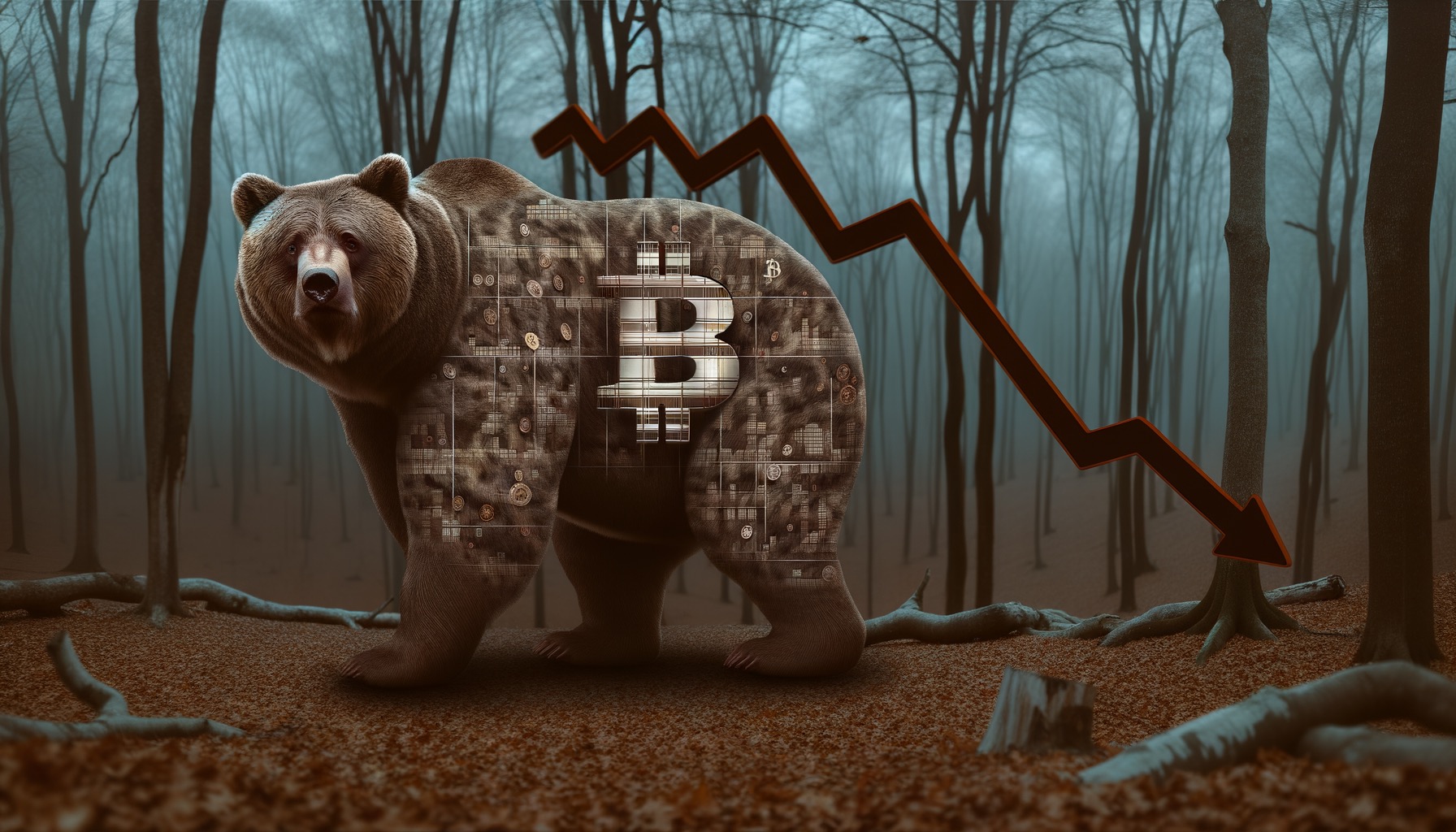
Arthur Hayes, the co-founder of BitMEX, believes that the tariffs introduced by US President Donald Trump could benefit Bitcoin to benefit. Bitcoin sees this impact occurring in the medium term.

He argues that while the tariffs may disrupt the global economy, the resulting financial imbalances would ultimately be corrected. The correction would come with printed money, which bodes well for Bitcoin’s price.

Hayes made his comments following the announcement of a 10% tariff on all countries, with certain nations like China facing even higher rates.

According to Hayes, these tariffs will weaken the US Dollar Index (DXY), as foreign investors sell off US stocks and repatriate their funds. The situation could push investors towards Bitcoin and other safe-haven assets like gold.

Hayes also predicts that tariffs on China could lead to a devaluation of the yuan. Furthermore, Hayes suggests that the Federal Reserve may need to implement easing measures. It could include rate cuts in response to the economic impacts of the tariffs.

Hayes’ stance aligns with Jeff Park of Bitwise Invest. He also believes that Trump’s tariffs could ultimately send Bitcoin’s price soaring.

For more information on these topics, visit diplomacy.edu.
OpenAI backs Adaptive Security in the battle against AI threats

AI-driven cyber threats are on the rise, making it easier than ever for hackers to deceive employees through deepfake scams and phishing attacks.

OpenAI, a leader in generative AI, has recognised the growing risk and made its first cybersecurity investment in New York-based startup Adaptive Security. The company has secured $43 million in Series A funding, co-led by OpenAI’s startup fund and Andreessen Horowitz.

Adaptive Security helps companies prepare for AI-driven cyberattacks by simulating deepfake calls, texts, and emails. Employees may receive a phone call that sounds like their CTO, asking for sensitive information, but in reality, it is an AI-generated test.

The platform identifies weak points in a company’s security and trains staff to recognise potential threats. Social engineering scams, which trick employees into revealing sensitive data, have already led to massive financial losses, such as the $600 million Axie Infinity hack in 2022.

CEO Brian Long, a seasoned entrepreneur, says the funding will go towards hiring engineers and improving the platform to keep pace with evolving AI threats.

The investment comes amid a surge in cybersecurity funding, with companies like Cyberhaven, Snyk, and GetReal also securing major investments.

As cyber risks become more advanced, Long advises employees to take simple precautions, including deleting voicemails to prevent hackers from cloning their voices.

For more information on these topics, visit diplomacy.edu.