Kazakhstan weighs adding crypto to national reserves

Kazakhstan may soon join the list of nations incorporating crypto into their national reserves. The National Bank may convert part of its gold and currency reserves into digital assets under a broader alternative investment strategy.

Timur Suleimenov, head of the National Bank, stated that crypto remains a volatile but potentially high-return investment. Inspired by international trends, including the rise of crypto ETFs and treasury firms, Kazakhstan has not ruled out allocating funds to crypto in the near future.

Plans are also underway to establish a national crypto treasury, which would store digital assets seized by law enforcement. To support this, the country will develop secure infrastructure, possibly involving cold wallet storage.

Authorities are even considering state-led crypto mining, where a portion of mined coins would be directed into national reserves. However, the government still intends to impose strong regulations, particularly against grey market activity not subject to taxation or oversight.

Would you like to learn more about AI, tech and digital diplomacy? If so, ask our Diplo chatbot

US House passes NTIA cyber leadership bill after Salt Typhoon hacks

The US House of Representatives has passed legislation that would officially designate the National Telecommunications and Information Administration (NTIA) as the federal lead for cybersecurity across communications networks.

The move follows last year’s Salt Typhoon hacking spree, described by some as the worst telecom breach in US history.

The National Telecommunications and Information Administration Organization Act, introduced by Representatives Jay Obernolte and Jennifer McClellan, cleared the House on Monday and now awaits Senate approval.

The bill would rebrand an NTIA office to focus on both policy and cybersecurity, while codifying the agency’s role in coordinating cybersecurity responses alongside other federal departments.

Lawmakers argue that recent telecom attacks exposed major gaps in coordination between government and industry.

The bill promotes public-private partnerships and stronger collaboration between agencies, software developers, telecom firms, and security researchers to improve resilience and speed up innovation across communications technologies.

With Americans’ daily lives increasingly dependent on digital services, supporters say the bill provides a crucial framework for protecting sensitive information from cybercriminals and foreign hacking groups instead of relying on fragmented and inconsistent measures.

Pentagon awards AI contracts to xAI and others after Grok controversy

The US Department of Defence has awarded contracts to four major AI firms, including Elon Musk’s xAI, as part of a strategy to boost military AI capabilities.

Each contract is valued at up to $200 million and involves developing advanced AI workflows for critical national security tasks.

Alongside xAI, Anthropic, Google, and OpenAI have also secured contracts. Pentagon officials said the deals aim to integrate commercial AI solutions into intelligence, business, and defence operations instead of relying solely on internal systems.

Chief Digital and AI Officer Doug Matty states that these technologies will help maintain the US’s strategic edge over rivals.

The decision comes as Musk’s AI company faces controversy after its Grok chatbot was reported to have published offensive content on social media. Critics, including Democratic lawmakers, have raised ethical concerns about awarding national security contracts to a company under public scrutiny.

xAI insists its Grok for Movement platform will help speed up government services and scientific innovation.

Despite political tensions and Musk’s past financial support for Donald Trump’s campaign, the Pentagon has formalised its relationship with xAI and other AI leaders instead of excluding them due to reputational risks.

Would you like to learn more about AI, tech and digital diplomacy? If so, ask our Diplo chatbot!

Nvidia to restart China AI chip sales after US talks

Nvidia has announced plans to resume sales of its H20 AI chip in China, following meetings between CEO Jensen Huang and US President Donald Trump in Beijing.

The move comes after US export controls previously banned sales of the chip on national security grounds, costing Nvidia an estimated $15 billion in lost revenue.

The company confirmed it is filing for licences with the US government to restart deliveries of the H20 graphics processing unit, expecting approval shortly.

Nvidia also revealed a new RTX Pro GPU designed specifically for China, compliant with US export rules, offering a lower-cost alternative instead of risking further restrictions.

Huang, attending a supply chain expo in Beijing, described China as essential to Nvidia’s growth, despite rising competition from local firms like Huawei.

Chinese companies remain highly dependent on Nvidia’s CUDA platform, while US lawmakers have raised concerns about Nvidia engaging with Chinese entities linked to military or intelligence services.

Nvidia’s return to the Chinese market comes as Washington and Beijing show signs of easing trade tensions, including relaxed rare earth export rules from China and restored chip design services from the US.

Analysts note, however, that Chinese firms are likely to keep diversifying suppliers instead of relying solely on US chips for supply chain security.

Would you like to learn more about AI, tech and digital diplomacy? If so, ask our Diplo chatbot!

Zuckerberg unveils Meta’s multi-gigawatt AI data clusters

Meta Platforms is building several of the world’s largest data centres to power its AI ambitions, with the first facility expected to go online in 2026.

Chief Executive Mark Zuckerberg revealed on Threads that the site, called Prometheus, will be the first of multiple ‘titan clusters’ designed to support AI development instead of relying on existing infrastructure.

Frustrated by earlier AI efforts, Meta is investing heavily in talent and technology. The company has committed up to $72 billion towards AI and data centre expansion, while Zuckerberg has personally recruited high-profile figures from OpenAI, DeepMind, and Apple.

That includes appointing Scale AI’s Alexandr Wang as chief AI officer through a $14.3 billion stake deal and securing Ruoming Pang with a compensation package worth over $200 million.

The facilities under construction will have multi-gigawatt capacity, placing Meta ahead of rivals such as OpenAI and Oracle in the race for large-scale AI infrastructure.

One supercluster in Richland Parish, Louisiana, is said to cover an area nearly the size of Manhattan instead of smaller conventional data centre sites.

Zuckerberg confirmed that Meta is prepared to invest ‘hundreds of billions of dollars’ into building superintelligence capabilities, using revenue from its core advertising business on platforms like Facebook and Instagram to fund these projects instead of seeking external financing.

Would you like to learn more about AI, tech and digital diplomacy? If so, ask our Diplo chatbot!

Czech central bank enters crypto equity market

The Czech National Bank has taken a notable step towards digital asset exposure by acquiring over 51,000 shares in Coinbase. Details emerged in a recent US filing, which also showed a larger stake in Palantir, an AI firm with government data contracts.

Both assets now form part of the central bank’s evolving investment profile.

Coinbase has performed strongly in 2025, rising by more than 40% in the first half of the year. Market enthusiasm has been fuelled by renewed institutional confidence, as well as regulatory clarity in the United States following the approval of physically backed Bitcoin exchange-traded funds in 2024.

Palantir, meanwhile, has seen its shares soar by 80% over the same period, driven by investor interest in its AI capabilities and defence-sector contracts.

Despite the high-growth nature of these equities, analysts suggest the Czech National Bank’s positioning is less speculative and more aligned with index-tracking principles. Coinbase joined the S&P 500 in May 2025, while Palantir was added in late 2024.

The purchases may therefore reflect efforts to mirror benchmark indices rather than express bold investment convictions.

The presence of crypto and AI-linked firms within a conservative central bank’s portfolio underlines shifting attitudes towards emerging technologies. As institutions reassess growth and risk, previously fringe assets are becoming mainstream in central bank portfolios.

Would you like to learn more about AI, tech and digital diplomacy? If so, ask our Diplo chatbot!

Foreign cybercrime cells thrive in Nigeria

Nigeria’s anti-fraud agency had 194 foreign nationals in custody in 2024, prosecuting 146 for their roles in cyber-enabled financial crimes, highlighting a robust response to a growing threat.

December alone saw nearly 800 arrests in Lagos, targeting romance and cryptocurrency investment scams featuring foreign ringleaders from China and the Philippines. In one case, 148 Chinese and 40 Filipino suspects were detained.

These groups established complex fraud operations in major Nigerian cities, using fake identities and training local recruits, often unaware of the ultimate scheme. Investigations also flagged cryptocurrency-fuelled money laundering and arms trafficking, pointing to wider national security risks.

EFCC chairman Ola Olukoyede warned that regulatory failures, such as visa oversight and unchecked office space leasing, facilitated foreign crime cells.

National and continental collaboration, tighter visa control, and strengthened cybercrime frameworks will be key to dismantling these networks and securing Nigeria’s digital economy.

Would you like to learn more about AI, tech and digital diplomacy? If so, ask our Diplo chatbot!

Bitcoin reaches new all time high at $122,000

Bitcoin reached a record high of $122,000 on Coinbase in the early hours of 14 July, extending its July gains to 13% and marking a third consecutive month in the green. The rally is fuelled by institutional demand, led by BlackRock’s IBIT ETF, which now holds over 700,000 BTC and exceeds $83 billion in assets.

BlackRock’s ETF has become the fastest in history to reach that milestone, outpacing previous records held by gold and equity ETFs. Analysts see this as a sign of growing confidence among major investors.

Despite the rally, on-chain indicators suggest that Bitcoin has not yet entered an overheated phase. The Long-Term Holder Net Unrealised Profit/Loss metric remains below the historical threshold associated with market tops.

Network activity continues to rise steadily. Average daily transactions have climbed to 364,000, still below previous cycle peaks, indicating a calm and composed market. Meanwhile, accumulation wallets have been increasing their holdings, now holding 250,000 BTC—the highest level recorded in 2024.

Data from CryptoQuant shows a 71% jump in 30-day demand, highlighting strong conviction from long-term holders. With no signs of mass profit-taking and institutional momentum growing, many analysts believe Bitcoin could push higher in the coming weeks.

Would you like to learn more about AI, tech and digital diplomacy? If so, ask our Diplo chatbot

EU sets privacy defaults to shield minors

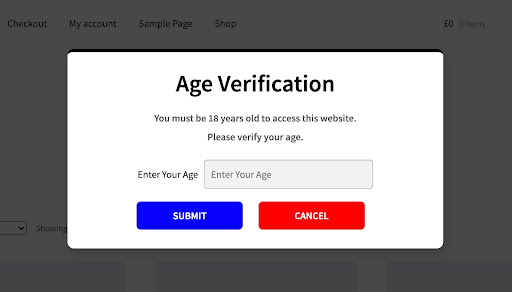
The European Commission has published new guidelines to help online platforms strengthen child protection, alongside unveiling a prototype age verification app under the Digital Services Act (DSA). The guidance addresses a broad range of risks to minors, from harmful content and addictive design features to unwanted contact and cyberbullying, urging platforms to set children’s accounts to the highest privacy level by default and limit risky functions like geo-location.

Officials stressed that the rules apply to platforms of all sizes and are based on a risk-based approach. Websites dealing with alcohol, drugs, pornography, or gambling were labelled ‘high-risk’ and must adopt the strictest verification methods. While parental controls remain optional, the Commission emphasised that any age assurance system should be accurate, reliable, non-intrusive, and non-discriminatory.

Alongside the guidelines, the Commission introduced a prototype age verification app, which it calls a ‘gold standard’ for online age checks. Released as open-source code, the software is designed to confirm whether a user is above 18, but can be adapted for other age thresholds.

The prototype will be tested in Denmark, France, Greece, Italy, and Spain over the coming months, with flexibility for countries to integrate it into national systems or offer it as a standalone tool. Both the guidelines and the app will be reviewed in 12 months, as the EU continues refining its approach to child safety online.

Would you like to learn more about AI, tech and digital diplomacy? If so, ask our Diplo chatbot!

How AI agents are reshaping the marketing landscape

Marketers have weathered many disruptions, but a bigger shift is emerging—AI agents are starting to make purchasing decisions. As machines begin choosing what to buy, brands must rethink how they build visibility and relevance in this new landscape.

AI agents do not shop like humans. They use logic, structured data, and performance signals—not emotion, nostalgia or storytelling. They compare price, reviews, and specs. Brand loyalty and lifestyle marketing may carry less weight when decisions are made algorithmically.

According to Salesforce, 24% of people are open to AI shopping on their behalf—rising to 32% among Gen Z. Agents interpret products as data tables. Structured information, such as features and sentiment analysis, guide choices—not impulse or advertising flair.

Even long-trusted household brands may be evaluated solely on objective criteria, not reputation or emotional attachment. Marketers must adapt by preparing product data for machine interpretation—structured content, live feeds, and transparent performance metrics.

AI agents may also disguise themselves, interacting via email or traditional channels. Systems will need to detect and respond accordingly. Machine-to-machine buying is likely to rise, requiring cross-team coordination to align digital, data and marketing strategies.

Winning with AI agents means making products visible, verifiable, and understandable to machines—without compromising human trust. Those who act now will lead in a market where machines increasingly choose what consumers consume.

Would you like to learn more about AI, tech and digital diplomacy? If so, ask our Diplo chatbot!