Space operators face strict cybersecurity obligations under EU plan

The European Commission has unveiled a new draft law introducing cybersecurity requirements for space infrastructure, aiming to protect ground and orbital systems.

Operators must implement rigorous cyber risk management measures, including supply chain oversight, encryption, access control and incident response systems. A notable provision places direct accountability on company boards, which could be held personally liable for failures to comply.

The proposed law builds on existing EU regulations such as NIS 2 and DORA, with additional tailored obligations for the space domain. Non-EU firms will also fall within scope unless their home jurisdictions are recognised as offering equivalent regulatory protections.

Fines of up to 2% of global revenue are foreseen, with member states and the EU’s space agency EUSPA granted inspection and enforcement powers. Industry stakeholders are encouraged to engage with the legislative process and align existing cybersecurity frameworks with the Act’s provisions.

Would you like to learn more about AI, tech and digital diplomacy? If so, ask our Diplo chatbot!

Microsoft and Salesforce use AI to cut costs and reshape workforce

Microsoft is reporting substantial productivity improvements across its operations, thanks to the growing integration of AI tools in daily workflows.

Judson Althoff, the company’s chief commercial officer, stated during a recent presentation that AI contributed to savings of over $500 million in Microsoft’s call centres last year alone.

The technology has reportedly improved employee and customer satisfaction while supporting operations in sales, customer service, and software engineering. Microsoft is also now using AI to handle interactions with smaller clients, streamlining engagement without significantly expanding headcount.

The developments follow Microsoft’s decision to lay off over 9,000 employees last week, marking the third round of cuts in 2024 and bringing the total to around 15,000.

Although it remains unclear whether automation directly replaced job losses, CEO Satya Nadella has previously stated that AI now generates 20 to 30 percent of the code in Microsoft repositories.

Similar shifts occur at Salesforce, where CEO Marc Benioff has openly acknowledged AI’s growing role in company operations and resource planning.

During a recent analyst call, Robin Washington, Salesforce’s CFO and COO confirmed that hiring has slowed, and 500 customer service roles have been reassigned internally.

The adjustment is expected to result in cost savings of $50 million, as the company focuses on optimising operations through digital transformation. Benioff also disclosed that AI performs between 30 and 50 percent of work previously handled by staff, contributing to workforce realignment.

Companies across the tech sector are rapidly adopting AI to improve efficiency, even as the broader implications for employment and labour markets continue to emerge.

Would you like to learn more about AI, tech and digital diplomacy? If so, ask our Diplo chatbot!
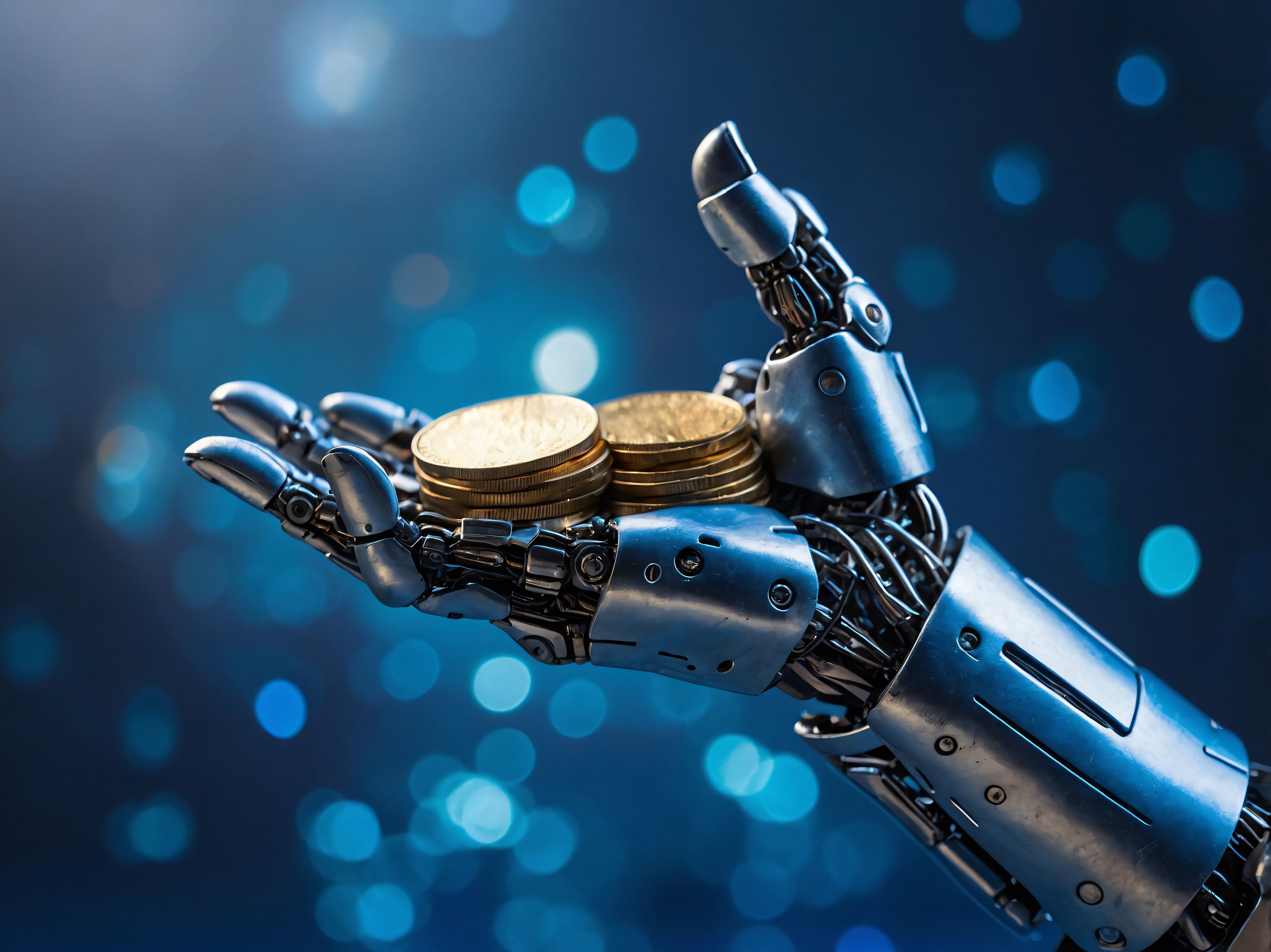
Germany’s top banks move into crypto with regulated services

Some of Germany’s largest banks are set to enter the crypto market with fully regulated custody and trading services.

Deutsche Bank, Sparkassen-Finanzgruppe, and Volksbanken Raiffeisenbanken are building platforms aimed at institutional and retail clients, signalling a significant shift for conservative institutions.

These developments follow the EU’s Markets in Crypto‑Assets Regulation (MiCA), which took effect in 2025 and provides clear legal frameworks across Europe.

Deutsche Bank is developing an institutional crypto custody service with Bitpanda and Taurus compliant with BaFin and MiCA regulations. Meanwhile, Sparkassen-Finanzgruppe plans to embed retail crypto trading within its Sparkasse app, reaching nearly 50 million users by mid-2026.

Volksbanken Raiffeisenbanken are piloting compliant trading and custody services through collaborations with Börse Stuttgart Digital and Atruvia.

Deutsche Bank is also developing Project DAMA 2, an Ethereum layer-2 solution for tokenising assets and future bank-issued stablecoins. As major banks adopt crypto, Germany could lead an EU-wide shift to regulated digital assets, ending crypto’s unregulated early phase.

Would you like to learn more about AI, tech and digital diplomacy? If so, ask our Diplo chatbot

Qantas hacked as airline cyber threats escalate

Qantas Airways has confirmed that personal data from 5.7 million customers was stolen in a recent cyberattack, including names, contact details and meal preferences. The airline stated that no financial or login credentials were accessed, and frequent flyer accounts remain secure.

An internal investigation found the data breach involved various levels of personal information, with 2.8 million passengers affected most severely. Meal preferences were the least common data stolen, while over a million customers lost addresses or birth dates.

Qantas has contacted affected passengers and says it offers support while monitoring the situation with cybersecurity experts. Under pressure to manage the crisis effectively, CEO Vanessa Hudson assured the public that extra security steps had been taken.

The breach is the latest in a wave of attacks targeting airlines, with the FBI warning that the hacking group Scattered Spider may be responsible. Similar incidents have recently affected carriers in the US and Canada.

Would you like to learn more about AI, tech and digital diplomacy? If so, ask our Diplo chatbot!

M&S still rebuilding after April cyber incident

Marks & Spencer has revealed that the major cyberattack it suffered in April stemmed from a sophisticated impersonation of a third-party user.

The breach began on 17 April and was detected two days later, sparking weeks of disruption and a crisis response effort described as ‘traumatic’ by Chairman Archie Norman.

The retailer estimates the incident will cost it £300 million in operating profit and says it remains in rebuild mode, although customer services are expected to normalise by month-end.

Norman confirmed M&S is working with UK and US authorities, including the National Crime Agency, the National Cyber Security Centre, and the FBI.

While the ransomware group DragonForce has claimed responsibility, Norman declined to comment on whether any ransom was paid. He said such matters were better left to law enforcement and not in the public interest to discuss further.

The company expects to recover some of its losses through insurance, although the process may take up to 18 months. Other UK retailers, including Co-op and Harrods, were also targeted in similar attacks around the same time, reportedly using impersonation tactics to bypass internal security systems.

Would you like to learn more about AI, tech and digital diplomacy? If so, ask our Diplo chatbot!

Hong Kong eyes over 40 firms for stablecoin licences

Hong Kong is processing enquiries from more than 40 companies ahead of the implementation of its Stablecoin Bill on 1 August. The Hong Kong Monetary Authority will start accepting stablecoin licence applications under the new regulatory framework.

Notable firms preparing to apply include JD.com, Ant Group, Standard Chartered, and Circle. Industry insiders say most applicants are large mainland Chinese companies, while smaller firms often lack the operational and technical capacity required.

Use cases under consideration range from stablecoin issuance to settlement infrastructure and wallet tools enabling fiat conversion.

Hong Kong’s approach focuses on formal oversight and compliance, unlike crypto-native models used in Singapore, Japan, and the EU. Experts note that transaction costs associated with stablecoins—accounting for exchange fees, on-chain processing, and compliance—may still reach around one percent.

The city’s licensing process could set a benchmark for Asian financial centres, balancing innovation and regulatory control.

Would you like to learn more about AI, tech and digital diplomacy? If so, ask our Diplo chatbot

Meta offers $200 million to top AI talent as superintelligence race heats up

Meta has reportedly offered over $200 million in compensation to Ruoming Pang, a former senior AI engineer at Apple, as it escalates its bid to dominate the AI arms race.

The offer, which includes long-term stock incentives, far exceeded Apple’s willingness to match and is seen as one of Silicon Valley’s most aggressive poaching efforts.

The move is part of Meta’s broader campaign to build a world-class team under its new Meta Superintelligence Lab (MSL), which is focused on developing artificial general intelligence (AGI).

The division has already attracted prominent names, including ex-GitHub CEO Nat Friedman, AI investor Daniel Gross, and Scale AI co-founder Alexandr Wang, who joined as Chief AI Officer through a $14.3 billion stake deal.

Most compensation offers in the MSL reportedly rival CEO packages at global banks, but they are heavily performance-based and tied to long-term equity vesting.

Meta’s mix of base salary, signing bonuses, and high-value stock options is designed to attract and retain elite AI talent amid a fierce talent war with OpenAI, Google, and Anthropic.

OpenAI CEO Sam Altman recently claimed Meta has dangled bonuses up to $100 million to lure staff away, though he insists many stayed for cultural reasons.

Still, Meta has already hired more than 10 researchers from OpenAI and poached talent from Google DeepMind, including principal researcher Jack Rae.

The AI rivalry could come to a head as Altman and Zuckerberg meet at the Sun Valley conference this week.

Would you like to learn more about AI, tech and digital diplomacy? If so, ask our Diplo chatbot!

OpenAI to release Chromium-based AI browser competing with Chrome

OpenAI is preparing to launch an AI-powered web browser that could challenge Google Chrome’s dominant market position. The browser is expected to debut in the coming weeks and aims to change how users interact with the web fundamentally.

The new browser will reportedly integrate AI capabilities directly into the browsing experience, allowing for more intelligent and task-driven user interactions. Instead of simply directing users to websites, the browser is designed to keep many interactions within a native ChatGPT-style interface.

If adopted by ChatGPT’s 500 million weekly users, the browser could seriously threaten Google’s ad-driven ecosystem. Chrome is critical in Alphabet’s advertising revenue, accounting for nearly three-quarters of the company’s income by collecting user data and directing traffic to Google Search.

By building its browser, OpenAI would gain more direct access to user behaviour data, improving its AI models and enabling new forms of web engagement. However, this move is part of OpenAI’s broader strategy to integrate its services into users’ personal and professional lives.

The browser will reportedly support AI ‘agents’ capable of performing tasks such as making reservations or filling out web forms automatically. These agents could operate directly within websites, making the browsing experience more seamless and productive.

While OpenAI declined to comment, sources suggest the browser is built on Google’s open-source Chromium codebase—the same foundation behind Chrome, Edge, and Opera. However, this allows OpenAI to maintain compatibility while customising user experience and data control.

Competition in the AI-powered browser space is heating up. Startups like Perplexity and Brave have already launched intelligent browsers, and The Browser Company continues to develop features for AI-driven navigation and summarisation.

Despite Chrome’s 3-billion-strong user base and over two-thirds of the browser market share, OpenAI sees an opportunity to disrupt the space. Apple’s Safari holds second place with just 16% of the global share, leaving room for new challengers.

Last year, OpenAI hired two senior Google engineers from the original Chrome team, fueling speculation that the company was eyeing the browser space. One executive even testified that OpenAI would consider buying Chrome if it were made available through antitrust divestiture.

Instead, OpenAI built its browser from the ground up, allowing greater autonomy over features, data collection, and AI integration. A source told Reuters this approach ensures better alignment with OpenAI’s goal of embedding AI across user experiences.

In addition to hardware acquisitions and agent-based interfaces, the browser represents a crucial link in OpenAI’s strategy to deepen user engagement. The company recently acquired the AI hardware firm io, co-founded by Apple’s former design chief Jony Ive, for $6.5 billion.

The browser could become the gateway for OpenAI’s AI agents like ‘Operator,’ enhancing productivity by turning passive browsing into interactive assistance. Such integration could give OpenAI a competitive edge in the evolving consumer AI landscape.

Meanwhile, Google faces legal challenges over Chrome’s central role in its ad monopoly. A US judge ruled that Google maintains an unlawful hold over online search, prompting the Department of Justice to push for divestiture of key assets, including Chrome.

OpenAI’s entry could spark a broader shift in how consumers, businesses, and advertisers engage with the internet as the browser race intensifies. With built-in AI capabilities and task automation, browsing may become a different experience.

Would you like to learn more about AI, tech and digital diplomacy? If so, ask our Diplo chatbot!

Sanctions proposed on Bukele amid El Salvador’s crypto controversy

A group of US Democratic senators has proposed legislation seeking sanctions against El Salvador’s President Nayib Bukele and members of his government. The El Salvador Accountability Act targets alleged human rights abuses and Bitcoin misuse during the state of exception.

The bill calls for measures including freezing US-held assets, visa restrictions, and suspending financial aid to Bukele, his cabinet, and other government-linked individuals. It requires the US president to give annual updates on sanctions and a detailed report on El Salvador’s crypto activities.

The report must detail public Bitcoin spending, exchanges used, wallet addresses, and potential gaps enabling corruption or sanctions evasion.

President Bukele rejected the sanctions proposal, mocking the lawmakers on social media and pointing to his growing cooperation with US President Donald Trump. Their collaboration includes efforts against gangs and shared support for crypto initiatives.

Bukele’s dismissal underscores tensions between US lawmakers and El Salvador’s leadership amid ongoing geopolitical and financial debates.

Would you like to learn more about AI, tech and digital diplomacy? If so, ask our Diplo chatbot

AI that serves communities, not the other way round

At the WSIS+20 High-Level Event in Geneva, a vivid discussion unfolded around how countries in the Global South can build AI capacity from the ground up, rooted in local realities rather than externally imposed models. Organised by Diplo, the Permanent Mission of Kenya to the UN in Geneva, Microsoft, and IT for Change, the session used the fictional agricultural nation of ‘Landia’ to spotlight the challenges and opportunities of community-centred AI development.

With weak infrastructure, unreliable electricity, and fragmented data ecosystems, Landia embodies the typical constraints many developing nations face as they navigate the AI revolution.

UN Under-Secretary-General and Special Envoy for Digital and Emerging Technologies Amandeep Singh Gill presented a forthcoming UN report proposing a five-tiered framework to guide countries from basic AI literacy to full development capacity. He stressed the need for tailored, coordinated international support—backed by a potential global AI fund—to avoid the fragmented aid pitfalls seen in climate and health sectors.

WSIS

Microsoft’s Ashutosh Chadha echoed that AI readiness is not just a tech issue but fundamentally a policy challenge, highlighting the importance of data governance, education systems, and digital infrastructure as foundations for meaningful AI use.

Civil society voices, particularly from IT4Change’s Anita Gurumurthy and Nandini Chami, spoke about ‘regenerative AI’—AI that is indigenous, inclusive, and modular. They advocated for small-scale models that can run on local data and infrastructures, proposing creative use of community media archives and agroecological knowledge.

Speakers stressed that technology should adapt to community needs, not the reverse, and that AI must augment—not displace—traditional practices, especially in agriculture where livelihoods are at stake.

WSIS

Ultimately, the session crystallised around a core principle: AI must be developed with—not for—local communities. Participants called for training unemployed youth to support rural farmers with accessible AI tools, urged governments to invest in basic infrastructure alongside AI capacity, and warned against replicating inequalities through automation.

The session concluded with optimism and a commitment to continue this global-local dialogue beyond Geneva, ensuring AI’s future in the Global South is not only technologically viable, but socially just.

Track key events from the WSIS+20 High-Level Event 2025 on our dedicated page.