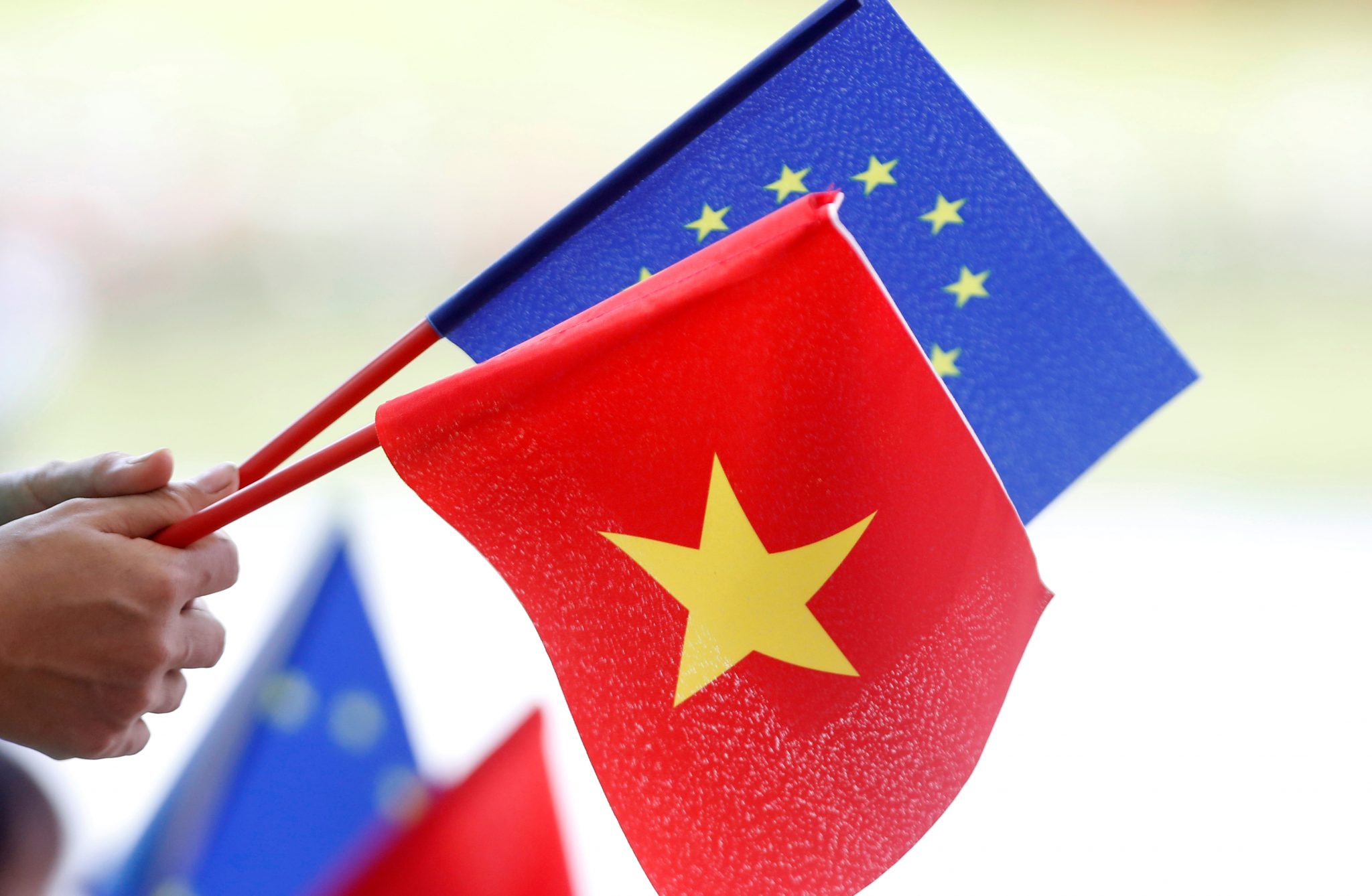
China’s State Administration for Market Regulation (SAMR) has issued a preliminary finding that Nvidia violated antitrust lawlinked to its 2020 acquisition of Mellanox Technologies. The deal was approved with restrictions, including a ban on bundling and ‘unreasonable trading conditions’ in China.
SAMR now alleges that Nvidia breached those terms. A full investigation is underway. Nvidia shares fell 2.4% in pre-market trading after the announcement. According to the Financial Times, SAMR delayed releasing the findings to gain leverage in trade talks with the USA, currently taking place in Madrid.
At the same time, US export controls on advanced chips remain a challenge for Nvidia. Licensing for its China-specific H20 chips is still under review, affecting Nvidia’s access to the Chinese market.
Would you like to learn more about AI, tech and digital diplomacy? If so, ask our Diplo chatbot!

Australia’s Year 12 students are the first to complete their final school years with widespread access to AI tools such as ChatGPT.
Educators warn that while the technology can support study, it risks undermining the core skills of independent thinking and writing. In English, the only compulsory subject, critical thinking is now viewed as more essential than ever.
Trials in New South Wales and South Australia use AI programs designed to guide rather than provide answers, but teachers remain concerned about how to verify work and ensure students value their own voices.
Experts argue that exams, such as the VCE English paper in October, highlight the reality that AI cannot sit assessments. Students must still practise planning, drafting and reflecting on ideas, skills which remain central to academic success.
Would you like to learn more about AI, tech and digital diplomacy? If so, ask our Diplo chatbot!

The United States and China have reached a tentative ‘framework’ deal on the future of TikTok’s American operations, US Treasury Secretary Scott Bessent confirmed during trade talks in Madrid. The agreement, which still requires the approval of Presidents Donald Trump and Xi Jinping, is aimed at resolving a looming deadline that could see the video-sharing app banned in the US unless its Chinese owner ByteDance sells its American division.
US officials say the framework addresses national security concerns by paving the way for US ownership of TikTok’s operations, while China insists any final deal must not undermine its companies’ interests. The Biden administration has long argued that the app’s access to US user data poses significant risks, while ByteDance maintains its American arm operates independently and respects user privacy.
The law mandating a sale or ban, upheld by the Supreme Court earlier this year, is due to take effect on 17 September. Although the framework marks progress, key details remain unresolved, particularly over whether TikTok’s recommendation algorithm and user data will be fully transferred, stored, and protected in the US.
Experts warn that unless strict safeguards are included, the deal may solve ownership issues without closing potential ‘backdoors’ for Beijing. Concerns also remain over how much influence China retains, with negotiators linking TikTok’s fate to wider tariff discussions between the two powers.
If fully implemented, the agreement could represent a breakthrough in both trade relations and tech governance. But with ByteDance among China’s most powerful AI firms, the stakes go far beyond social media, touching on questions of global competition, national security, and digital sovereignty.
Would you like to learn more aboutAI, tech and digital diplomacy? If so, ask our Diplo chatbot!
The rise of quantum computing is sparking fresh concerns over the long-term security of Bitcoin. Unlike classical systems, quantum machines could eventually break the cryptography protecting digital assets.
Experts warn that Shor’s algorithm, once run on a sufficiently powerful quantum computer, could recover private keys from public ones in hours, leaving exposed funds vulnerable. Analysts see the mid-to-late 2030s as the key period for cryptographically relevant breakthroughs.
ChatGPT-5’s probability model indicates less than a 5% chance of Bitcoin being cracked before 2030, but risk rises to 45–60% between 2035 and 2039, and nearly certainty by 2050. Sudden progress in large-scale, fault-tolerant qubits or government directives could accelerate the timeline.
Mitigation strategies include avoiding key reuse, auditing exposed addresses, and gradually shifting to post-quantum or hybrid cryptographic solutions. Experts suggest that critical migrations should be completed by the mid-2030s to secure the Bitcoin network against future quantum threats.
Would you like to learn more about AI, tech and digital diplomacy? If so, ask our Diplo chatbot!
Google has unveiled VaultGemma, a new large language model built to offer cutting-edge privacy through differential privacy. The 1-billion-parameter model is based on Google’s Gemma architecture and is described as the most powerful differentially private LLM to date.
Differential privacy adds mathematical noise to data, preventing the identification of individuals while still producing accurate overall results. The method has long been used in regulated industries, but has been challenging to apply to large language models without compromising performance.
VaultGemma is designed to eliminate that trade-off. Google states that the model can be trained and deployed with differential privacy enabled, while maintaining comparable stability and efficiency to non-private LLMs.
This breakthrough could have significant implications for developers building privacy-sensitive AI systems, ranging from healthcare and finance to government services. It demonstrates that sensitive data can be protected without sacrificing speed or accuracy.
Google’s research teams say the model will be released with open-source tools to help others adopt privacy-preserving techniques. The move comes amid rising regulatory and public scrutiny over how AI systems handle personal data.
Would you like to learn more about AI, tech, and digital diplomacy? If so, ask our Diplo chatbot!
South Australian public schools will soon gain access to EdChat, a ChatGPT-style app developed by Microsoft in partnership with the state government. Education Minister Blair Boyer said the tool will roll out next term across public high schools following a successful trial.
Safeguards have been built into EdChat to protect student data and alert moderators if students type concerning prompts, such as those related to self-harm or other sensitive topics. Boyer said student mental health was a priority during the design phase.
Teachers report that students use EdChat to clarify instructions, get maths solutions explained, and quiz themselves on exam topics. Adelaide Botanic High School principal Sarah Chambers described it as an ‘education equaliser’ that provides students with access to support throughout the day.
While many educators in Australia welcome the rollout, experts warn against overreliance on AI tools. Toby Walsh of UNSW said students must still learn how to write essays and think critically, while others noted that AI could actually encourage deeper questioning and analysis.
RMIT computing expert Michael Cowling said generative AI can strengthen critical thinking when used for brainstorming and refining ideas. He emphasised that students must learn to critically evaluate AI output and utilise the technology as a tool, rather than a substitute for learning.
Would you like to learn more about AI, tech, and digital diplomacy? If so, ask our Diplo chatbot!
Bitcoin climbed nearly 4.42% over the past week, trading at $116,031 on Monday as investor optimism grows ahead of an expected US rate cut. Analysts say the rally is driven by technical factors and expectations of a 25bps Fed rate cut.
Edul Patel, CEO of Mudrex, highlighted that Bitcoin is holding above $115,400, with $117,100 acting as key resistance and $113,500 providing strong support.
Other cryptocurrencies are showing mixed trends, with Solana breaking out at $242 and potentially reaching $261 if buying momentum continues, while Ethereum consolidates around $4,600–$4,700.
The broader crypto market capitalisation stood at roughly $4.06 trillion, with institutional flows via ETH ETFs and shrinking exchange reserves tightening sell-side pressure. Analysts warn that high long-term Treasury yields may limit gains despite rising speculative demand ahead of the Fed decision.
Would you like to learn more about AI, tech and digital diplomacy? If so, ask our Diplo chatbot!
The maritime industry faces rising cyber threats, with Nigerian gangs among the most active attackers of shipping firms. HFW lawyers say ‘man-in-the-middle’ frauds are now common, letting hackers intercept communications and steal sensitive financial or operational data.
Costs from cyber attacks are rising sharply, with average mitigation expenses for shipping firms doubling to $550,000 (£410,000) between 2022 and 2023. In cases where hackers remain embedded, ransom payments can reach $3.2m.
The rise in attacks coincides with greater digitisation, satellite connectivity such as Starlink, and increased use of onboard sensors.
Threats now extend beyond financial extortion, with GPS jamming and spoofing posing risks to navigation. Incidents such as the grounding of MSC Antonia in the Red Sea illustrate potential physical damage from cyber interference.
Industry regulators are responding, with the International Maritime Organization introducing mandatory cyber security measures into ship management systems. Experts say awareness has grown, and shipping firms are gradually strengthening defences against criminal and state cyber threats.
Would you like to learn more about AI, tech and digital diplomacy? If so, ask our Diplo chatbot!
The 2026 Adwanted Media Research Awards will feature a new category for Best Use of AI in Research Projects, reflecting the growing importance of this technology in the industry.
Head judge Denise Turner of IPA said AI should be viewed as a tool to expedite workflows, not replace human insight, emphasising that researchers remain essential to interpreting results and posing the right questions.
Route CEO Euan Mackay said AI enables digital twins, synthetic data, and clean-room integrations, shifting researchers’ roles from survey design to auditing and ensuring data integrity in an AI-driven environment.
OMD’s Laura Rowe highlighted AI’s ability to rapidly process raw data, transcribe qualitative research, and extend insights across strategy and planning — provided ethical oversight remains in place.
ITV’s Neil Mortensen called this the start of a ‘gold rush’, urging the industry to use AI to automate tedious tasks while preserving rigorous methods and enabling more time for deep analysis.
Would you like to learn more about AI, tech, and digital diplomacy? If so, ask our Diplo chatbot!
A few months after Ghibli-style AI images went viral, a new Instagram trend is sweeping users: 1990s Bollywood-style saree portraits generated through Google’s Gemini Nano Banana tool.
Known as the ‘Banana AI saree’ edit, the feature allows users to turn ordinary selfies into nostalgic retro-style images. The edits evoke classic cinema with chiffon sarees, grainy textures, bold make-up, and jasmine-adorned hair, often styled under golden sunlight for a vintage glow.
The tool has quickly become a social media hit. Users can experiment with sarees, retro sherwanis, or even traditional dhotis by adjusting prompts to personalise their look. The trend follows earlier viral edits such as hyper-realistic 3D figurine portraits.
With its popularity soaring, Google Gemini has now topped the Apple App Store’s free apps chart in both India and the US, outpacing competitors like ChatGPT and Grok. Google DeepMind’s chief, Demis Hassabis, praised the Gemini team, calling it ‘just the start’.
Would you like to learn more about AI, tech and digital diplomacy? If so, ask our Diplo chatbot!