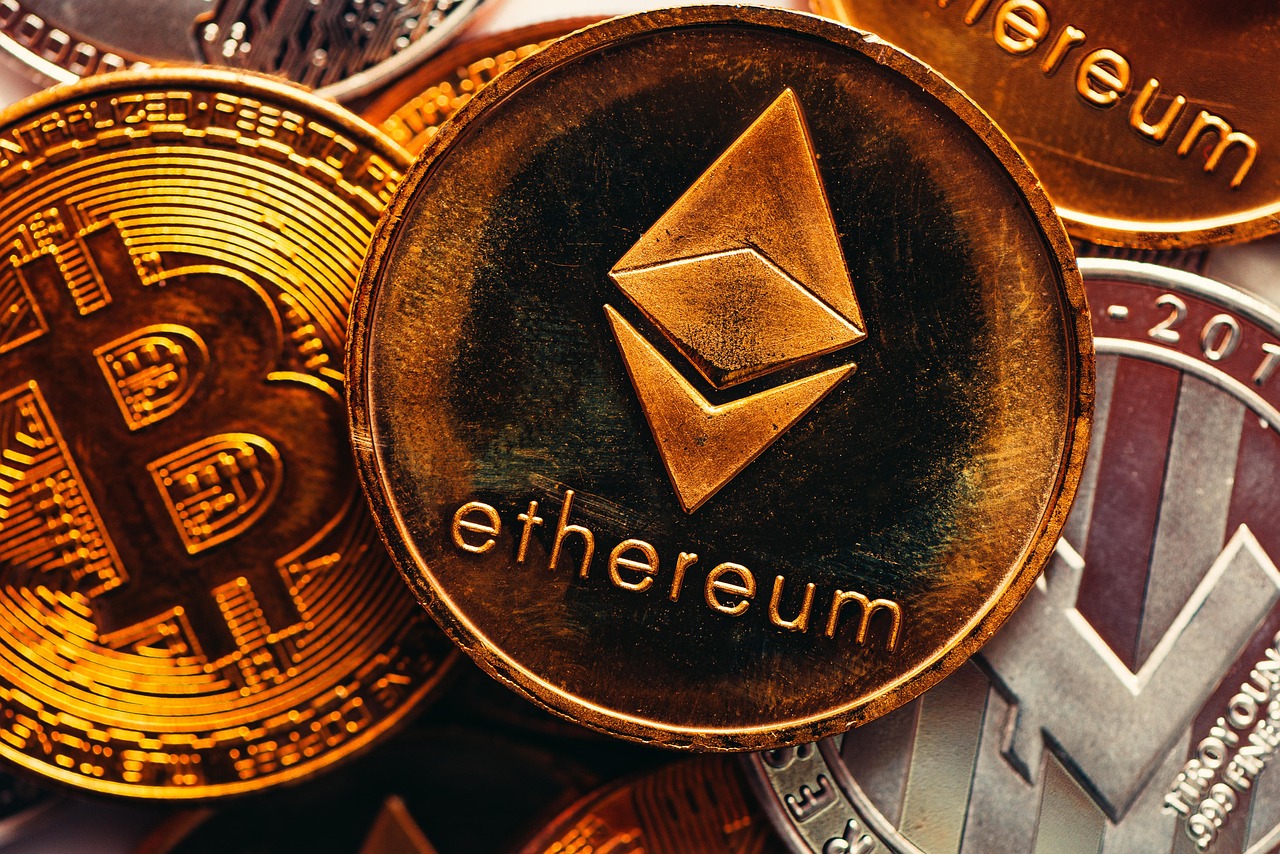
UK to enforce strict crypto transaction reporting

Crypto firms operating in the United Kingdom will be required to report detailed customer transaction data from 1 January 2026. The move is part of the government’s wider plan to improve tax transparency in the crypto sector by aligning with international reporting standards.

Firms must collect and submit information on each transaction, including the user’s name, address, tax ID, the crypto used, and the amount transferred. Transactions involving companies, trusts, and charities must also be reported.

Penalties of up to £300 per user may apply for non-compliance or incorrect reporting.

The measures are part of the UK’s adoption of the OECD’s Cryptoasset Reporting Framework, aiming to support innovation while reducing fraud and abuse. Authorities have urged firms to begin gathering data now, although full guidance will be issued later.

While the UK’s approach focuses on integrating crypto into existing regulations, it differs from the EU’s MiCA rules. Unlike the EU, the UK will not require foreign stablecoin issuers to register or limit their transaction volumes.

Would you like to learn more about AI, tech and digital diplomacy? If so, ask our Diplo chatbot!

Coinbase hit by breach and SEC probe ahead of S&P 500 entry

Cryptocurrency exchange Coinbase has disclosed a potential financial impact of $180 million to $400 million following a cyberattack that compromised customer data, according to a regulatory filing on Thursday.

The company said it received an email from an unidentified threat actor on Sunday, claiming to possess internal documents and account data for a limited number of customers.

Although hackers gained access to personal information such as names, addresses, and email addresses, Coinbase confirmed that no login credentials or passwords were compromised.

Coinbase stated it would reimburse users who were deceived into transferring funds to the attackers. It also revealed that multiple contractors and support staff outside the US had provided information to the hackers. Those involved have been terminated, the company said.

In parallel, the US Securities and Exchange Commission (SEC) is reportedly investigating whether Coinbase previously misrepresented its verified user figures.

Two sources familiar with the matter told Reuters that the SEC inquiry is ongoing, though it does not focus on know-your-customer (KYC) compliance or Bank Secrecy Act obligations. Coinbase has denied any such investigation into its compliance practices.

The SEC declined to comment. Coinbase’s chief legal officer, Paul Grewal, characterised the probe as a continuation of a past investigation into a user metric the company stopped reporting over two years ago. He said Coinbase is cooperating with the SEC but believes the inquiry should be closed.

The news comes ahead of Coinbase’s upcoming addition to the S&P 500 index, potentially overshadowing what had been viewed as a major milestone for the industry. Shares fell 7.2% following the disclosure.

Coinbase has rejected a $20 million ransom demand from the attackers and is cooperating with law enforcement. It has also offered a $20 million reward for information leading to the identification of the hackers.

The firm is opening a new US-based support hub and taking further measures to strengthen its cybersecurity framework.

The cyberattack adds to broader concerns about digital asset platform vulnerabilities. In 2024, hacks have resulted in over $2.2 billion in stolen funds, according to Chainalysis. Bybit alone reported a $1.5 billion theft in February, the largest on record.

Coinbase is also facing a lawsuit filed in the Southern District of New York, alleging the company failed to protect personal data belonging to millions of current and former customers.

Would you like to learn more about AI, tech and digital diplomacy? If so, ask our Diplo chatbot!

Tron surpasses Ethereum in USDT supply

Tether has minted $1 billion in USDT on the Tron blockchain, pushing its authorised supply beyond Ethereum’s. The move signals a new phase in the competition between the two networks for stablecoin dominance.

According to Tether’s transparency data, Tron’s authorised USDT now exceeds $74.7 billion, overtaking Ethereum’s $74.5 billion. In terms of actual circulating supply, Tron also leads with $73.6 billion compared to Ethereum’s $71.8 billion.

Tether’s CEO Paolo Ardoino explained that such mints help maintain inventory and meet future issuance demands. By pre-minting tokens, the firm ensures liquidity for swaps and transfers across blockchains.

As the stablecoin market grows, networks like Solana and Avalanche continue to trail behind, with authorised supplies of $2.3 billion and $1.8 billion respectively.

Tether now commands 61% of the stablecoin market, with $150 billion in circulation. Rival Circle holds 24.6%, maintaining $60.4 billion in stablecoins across blockchains.

Would you like to learn more about AI, tech and digital diplomacy? If so, ask our Diplo chatbot

JP Morgan backs Bitcoin’s upside over gold

JP Morgan analysts believe Bitcoin holds more upside potential than gold for the remainder of 2025, citing a range of crypto-specific catalysts. The bank highlighted corporate treasury allocations, state crypto laws, and a growing derivatives market as key growth drivers.

Bitcoin recently surged past $104,500—just shy of its January peak—leading a broader return to risk assets. While some still view it as a safe-haven investment, JP Morgan analysts stressed that Bitcoin continues to behave more like a risk-on asset, closely tracking equities.

The investment bank also highlighted major acquisitions signalling crypto’s evolution. Coinbase’s Deribit takeover, Kraken’s acquisition of NinjaTrader, and Gemini’s new EU derivatives licence show growing regulatory oversight and institutional interest.

Analysts expect this will boost confidence and participation from traditional investors.

Despite gold climbing amid tariff uncertainty with China, Bitcoin has consistently outperformed over the past year. ETF inflows reflect this trend, with Bitcoin ETFs now outpacing gold alternatives as interest shifts to digital assets.

Would you like to learn more about AI, tech and digital diplomacy? If so, ask our Diplo chatbot!

Ukraine plans new national Bitcoin reserve

Ukrainian authorities are preparing to establish a National Bitcoin Reserve alongside upcoming local crypto regulations. Lawmaker Yaroslav Zhelezniak is finalising draft legislation to support the initiative, signalling a major shift in adoption.

The move echoes recent efforts by the US to create a similar reserve and coincides with expectations of a price rally.

Efforts to regulate digital assets have progressed throughout 2025, with the Finance, Tax and Customs Policy Committee approving a draft bill earlier this year. Although the bill was later withdrawn due to challenges, discussions of a Strategic Bitcoin Reserve mark significant progress.

Debates continue over which agency would oversee crypto enforcement, including proposals for a new regulatory body or existing institutions like the National Bank.

Binance and other major crypto firms have welcomed the initiative. Kiril Khomyakov, Head of Binance in Central Asia, CEE, and Africa, highlighted the need for legislative changes and praised the potential for clearer crypto regulations in Ukraine.

The growing global support for digital assets, including from the US, has boosted institutional interest and market optimism.

Would you like to learn more about AI, tech and digital diplomacy? If so, ask our Diplo chatbot

Russian Central Bank data shows Bitcoin as top performer

Bitcoin has emerged as Russia’s top-performing investment over the past year, beating out gold, stocks, and bonds, according to the Central Bank of Russia. The report shows that Bitcoin generated a 38% return over 12 months, placing it ahead of all other assets evaluated.

Despite a sharp dip of 18.6% between January and April 2025, Bitcoin recovered strongly in April with an 11.2% gain. It regained the top spot while traditional markets struggled.

Over the longer term, Bitcoin delivered a cumulative return of 121.3% since 2022—far outpacing other asset classes, including the S&P 500.

The bank’s findings reflect Bitcoin’s shift from a niche speculation to a serious contender in global finance. Bitcoin’s rise from under $20,000 to nearly $110,000 was driven by regulation, adoption, and political backing.

Donald Trump’s pro-crypto stance has helped drive this momentum, with several governments and firms now eyeing Bitcoin as a potential reserve asset or financial tool.

Would you like to learn more about AI, tech and digital diplomacy? If so, ask our Diplo chatbot

Mastercard partners with MoonPay to boost stablecoin payments

Mastercard is expanding its digital asset services through a new collaboration with MoonPay to simplify stablecoin payments worldwide. The partnership will let 150 million businesses accept stablecoin payments, advancing Mastercard’s push to mainstream cryptocurrency.

Central to this initiative is MoonPay’s Iron technology, which offers stablecoin payment APIs. These allow merchants and fintech companies to quickly add crypto payment options using virtual Mastercards.

MoonPay, acquired by Mastercard earlier this year, aims to boost stablecoin adoption by making crypto payments as easy as traditional card transactions.

Stablecoins have grown into a $245 billion market, with transfer volumes in 2024 reaching $27.6 trillion—surpassing combined Visa and Mastercard transactions.

Meanwhile, regulatory progress continues in the US, where Congress considers two bills aimed at stabilising the stablecoin market. Despite ongoing classification uncertainties, recent regulatory actions suggest growing acceptance of the sector.

Would you like to learn more about AI, tech and digital diplomacy? If so, ask our Diplo chatbot

Pi Network launches $100 million fund to back startups

Pi Network has launched a $100 million venture fund to boost its ecosystem and promote real-world adoption of its crypto. The fund, named Pi Network Ventures, aims to invest in startups that integrate Pi tokens or use Pi Network technology.

It targets a broad range of sectors including generative AI, gaming, fintech, ecommerce, payments, marketplaces, and social networks.

Operating like a traditional Silicon Valley venture capital firm, the fund will follow standard sourcing, selection, and vetting processes. Investments will cover startups at all stages, from early seed rounds to later Series B and beyond.

However, unlike most funds focused solely on profit, Pi Network Ventures emphasises value creation and ecosystem utility.

The initiative aims to drive demand for the Pi token by supporting projects that add real-world value and foster innovation. Pi Network hopes to expand its reach beyond purely crypto-native companies and grow adoption across multiple industries.

Would you like to learn more about AI, tech and digital diplomacy? If so, ask our Diplo chatbot

Tether unveils new AI platform to challenge Big Tech

Tether challenges Big Tech’s AI control with QVAC, a platform that runs AI agents on personal devices. Unlike traditional AI using centralised data centres, QVAC runs directly on devices like smartphones and brain-computer interfaces.

The company plans to release an open-source software development kit later this year to support developers.

Named after the AI in Isaac Asimov’s 1956 story The Last Question, QVAC aims to create a decentralised AI ecosystem. Tether’s CEO Paolo Ardoino said the platform gives users control over their data and computation, not large corporations.

The system can potentially support trillions of AI agents functioning autonomously and transacting in Bitcoin and USDT.

Tether positions QVAC as a framework to break the centralised dominance of tech giants such as Google and Meta.

The release date and price are unknown, but Ardoino says QVAC aims to be an ‘infinite intelligence platform’ that runs independently, boosts privacy, and ushers in a new AI era.

Would you like to learn more about AI, tech and digital diplomacy? If so, ask our Diplo chatbot

BlackRock flags quantum computing risk in Bitcoin ETF filing

BlackRock has highlighted quantum computing as a potential risk to Bitcoin’s long-term security in its recent Bitcoin ETF filing. The inclusion marks a rare mention of quantum risk in mainstream finance.

Bitcoin has been trading strongly, recently surpassing $105,000 before a slight pullback to around $103,000.

Quantum computing could theoretically break the cryptography that protects Bitcoin wallets, but experts stress this threat remains decades away. Bitcoin developers have been preparing for quantum resistance with upgrades like Taproot, and emerging cryptographic alternatives are already under testing.

The risk disclosure by BlackRock mainly follows SEC filing requirements rather than signalling imminent danger.

Bitcoin’s price momentum remains robust after breaking key resistance levels near $97,700. However, technical indicators like the RSI suggest the asset is approaching overbought conditions, which might lead to a short-term correction.

Would you like to learn more about AI, tech and digital diplomacy? If so, ask our Diplo chatbot