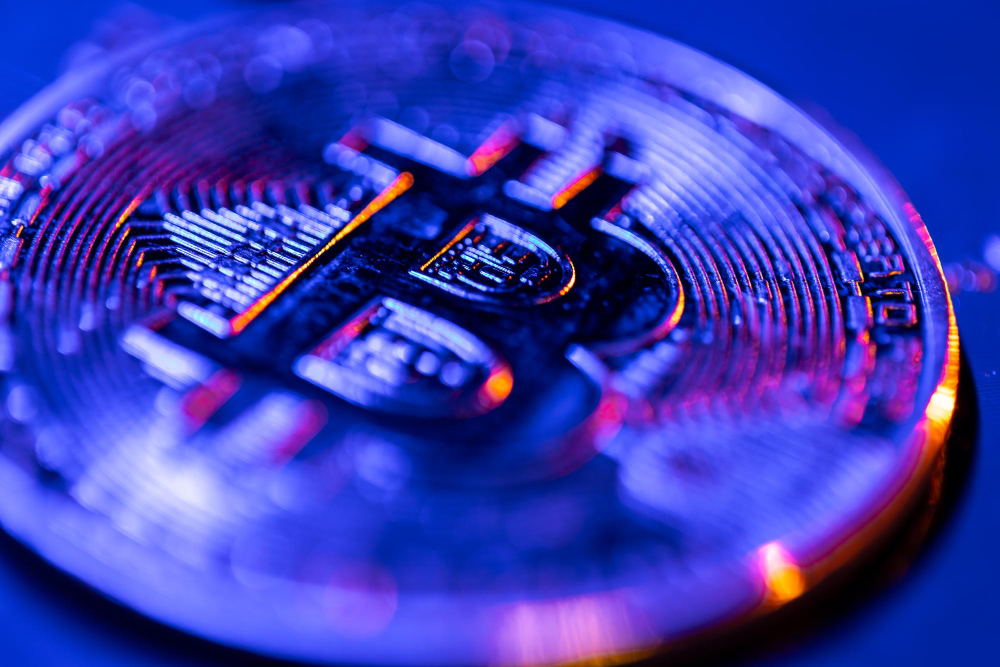
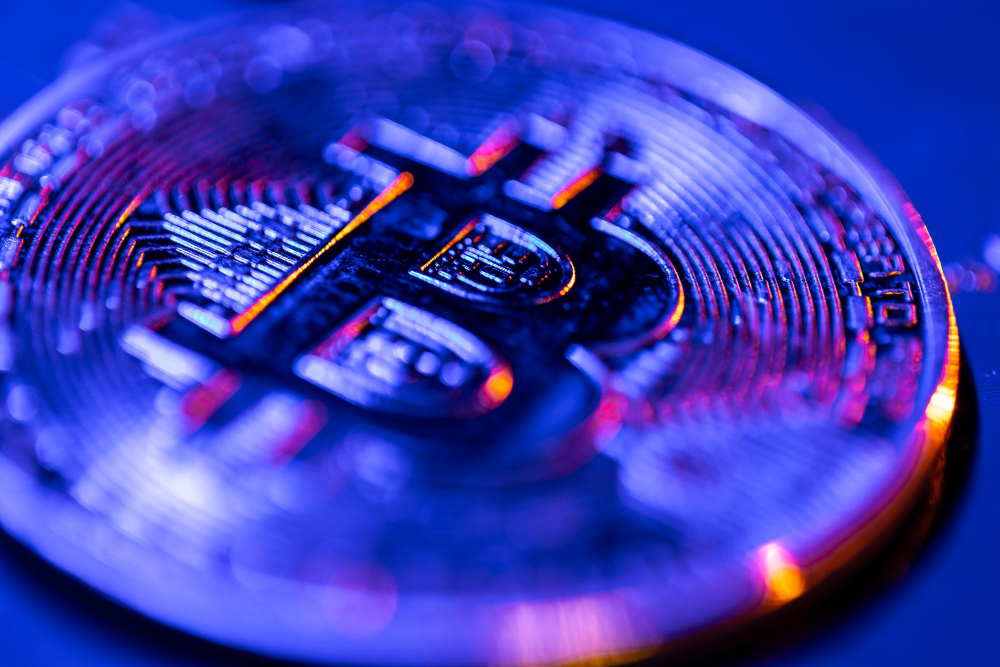
Quantum money might sound like science fiction, yet it is rapidly emerging as one of the most compelling frontiers in modern digital finance. Initially a theoretical concept, it was far ahead of the technology of its time, making practical implementation impossible. Today, thanks to breakthroughs in quantum computing and quantum communication, scientists are reviving the idea, investigating how the principles of quantum physics could finally enable unforgeable quantum digital money.
Comparisons between blockchain and quantum money are frequent and, on the surface, appear logical, yet can these two visions of new-generation cash genuinely be measured by the same yardstick?
Origins of quantum money
Quantum money was first proposed by physicist Stephen Wiesner in the late 1960s. Wiesner envisioned a system in which each banknote would carry quantum particles encoded in specific states, known only to the issuing bank, making the notes inherently secure.
Due to the peculiarities of quantum mechanics, these quantum states could not be copied, offering a level of security fundamentally impossible with classical systems. At the time, however, quantum technologies were purely theoretical, and devices capable of creating, storing, and accurately measuring delicate quantum states simply did not exist.
For decades, Wiesner’s idea remained a fascinating thought experiment. Today, the rise of functional quantum computers, advanced photonic systems, and reliable quantum communication networks is breathing new life into the concept, allowing researchers to explore practical applications of quantum money in ways that were once unimaginable.
The no-cloning theorem: The physics that makes quantum money impossible to forge
At the heart of quantum money lies the no-cloning theorem, a cornerstone of quantum mechanics. The principle establishes that it is physically impossible to create an exact copy of an unknown quantum state. Any attempt to measure a quantum state inevitably alters it, meaning that copying or scanning a quantum banknote destroys the very information that ensures its authenticity.
The unique property makes quantum money exceptionally secure: unlike blockchain, which relies on cryptographic algorithms and distributed consensus, quantum money derives its protection directly from the laws of physics. In theory, a quantum banknote cannot be counterfeited, even by an attacker with unlimited computing resources, which is why quantum money is considered one of the most promising approaches to unforgeable digital currency.
How quantum money works in theory
Quantum money schemes are typically divided into two main types: private and public.
In private quantum money systems, a central authority- such as a bank- creates quantum banknotes and remains the only entity capable of verifying them. Each note carries a classical serial number alongside a set of quantum states known solely to the issuer. The primary advantage of this approach is its absolute immunity to counterfeiting, as no one outside the issuing institution can replicate the banknote. However, such systems are fully centralised and rely entirely on the security and infrastructure of the issuing bank, which inherently limits scalability and accessibility.
Public quantum money, by contrast, pursues a more ambitious goal: allowing anyone to verify a quantum banknote without consulting a central authority. Developing this level of decentralisation has proven exceptionally difficult. Numerous proposed schemes have been broken by researchers who have managed to extract information without destroying the quantum states. Despite these challenges, public quantum money remains a major focus of quantum cryptography research, with scientists actively pursuing secure and scalable methods for open verification.
Beyond theoretical appeal, quantum money faces substantial practical hurdles. Quantum states are inherently fragile and susceptible to decoherence, meaning they can lose their information when interacting with the surrounding environment.
Maintaining stable quantum states demands highly specialised and costly equipment, including photonic processors, quantum memory modules, and sophisticated quantum error-correction systems. Any error or loss could render a quantum banknote completely worthless, and no reliable method currently exists to store these states over long periods. In essence, the concept of quantum money is groundbreaking, yet real-world implementation requires technological advances that are not yet mature enough for mass adoption.
Bitcoin solves the duplication problem differently
While quantum money relies on the laws of physics to prevent counterfeiting, Bitcoin tackles the duplication problem through cryptography and distributed consensus. Each transaction is verified across thousands of nodes, and SHA-256 hash functions secure the blockchain against double spending without the need for a central authority.
Unlike elliptic curve cryptography, which could eventually be vulnerable to large-scale quantum attacks, SHA-256 has proven remarkably resilient; even quantum algorithms such as Grover’s offer only a marginal advantage, reducing the search space from 2256 to 2128– still far beyond any realistic brute-force attempt.
Bitcoin’s security does not hinge on unbreakable mathematics alone but on a combination of decentralisation, network verification, and robust cryptographic design. Many experts therefore consider Bitcoin effectively quantum-proof, with most of the dramatic threats predicted from quantum computers likely to be impossible in practice.
Software-based and globally accessible, Bitcoin operates independently of specialised hardware, allowing users to send, receive, and verify value anywhere in the world without the fragility and complexity inherent in quantum systems. Furthermore, the network can evolve to adopt post-quantum cryptographic algorithms, ensuring long-term resilience, making Bitcoin arguably the most battle-hardened digital financial instrument in existence.
Could quantum money be a threat to Bitcoin?
In reality, quantum money and Bitcoin address entirely different challenges, meaning the former is unlikely to replace the latter. Bitcoin operates as a global, decentralised monetary network with established economic rules and governance, while quantum money represents a technological approach to issuing physically unforgeable tokens. Bitcoin is not designed to be physically unclonable; its strength lies in verifiability, decentralisation, and network-wide trust.
However, SHA-256- the hashing algorithm that underpins Bitcoin mining and block creation- remains highly resistant to quantum threats. Quantum computers achieve only a quadratic speed-up through Grover’s algorithm, which is insufficient to break SHA-256 in practical terms. Bitcoin also retains the ability to adopt post-quantum cryptographic standards as they mature, whereas quantum money is limited by rigid physical constraints that are far harder to update.
Quantum money also remains too fragile, complex, and costly for widespread use. Its realistic applications are limited to state institutions, military networks, or highly secure financial environments rather than everyday payments. Bitcoin, by contrast, already benefits from extensive global infrastructure, strong market adoption, and deep liquidity, making it far more practical for daily transactions and long-term digital value transfer.
Where quantum money and blockchain could coexist
Although fundamentally different, quantum money and blockchain technologies have the potential to complement one another in meaningful ways. Quantum key distribution could strengthen the security of blockchain networks by protecting communication channels from advanced attacks, while quantum-generated randomness may enhance cryptographic protocols used in decentralised systems.
Researchers have also explored the idea of using ‘quantum tokens’ to provide an additional privacy layer within specialised blockchain applications. Both technologies ultimately aim to deliver secure and verifiable forms of digital value. Their coexistence may offer the most resilient future framework for digital finance, combining the physics-based protection of quantum money with the decentralisation, transparency, and global reach of blockchain technology.
Quantum physics meets blockchain for the future of secure currency
Quantum money remains a remarkable concept, originally decades ahead of its time, and now revived by advances in quantum computing and quantum communication. Although it promises theoretically unforgeable digital currency, its fragility, technical complexity, and demanding infrastructure make it impractical for large-scale use.
Bitcoin, by contrast, stands as the most resilient and widely adopted model of decentralised digital money, supported by a mature global network and robust cryptographic foundations.
Quantum money and Bitcoin stand as twin engines of a new digital finance era, where quantum physics is reshaping value creation, powering blockchain innovation, and driving next-generation fintech solutions for secure and resilient digital currency.
Would you like to learn more about AI, tech and digital diplomacy? If so, ask our Diplo chatbot!