Fireblocks and Chainlink Labs have announced a new partnership aimed at helping banks issue and manage regulated stablecoins. The collaboration, revealed in a press release on 17 September, will provide a comprehensive solution for stablecoin issuers, covering everything from minting and custody to distribution. The strategic alliance enhances tokenisation capabilities and offers a real-time view of stablecoin reserves, market value, and total supply across various blockchains.
Angie Walker, Chainlink Labs’ global head of banking and capital markets, highlighted that this partnership will not only improve transparency for stablecoin users but also enhance the stablecoin’s role as a secure payment method and trading tool in digital asset markets. Although the specific banks involved in issuing stablecoins have not yet been disclosed, both companies previously supported Wenia, a division of Colombia’s largest bank, Bancolombia, in launching its COPW stablecoin.
The collaboration comes amid growing interest in stablecoins, which settled $3.7 trillion in transactions in 2023 and are projected to reach $5.28 trillion by 2024. According to a recent survey by Castle Island Ventures and Brevan Howard Digital, stablecoins are increasingly being used as a general-purpose digital dollar rather than just trading collateral.
Last week, Dogecoin saw a significant increase in activity, processing 1.93 million transactions, the highest weekly total since early July. Although this figure is still below February’s peak, the rise suggests renewed interest in DOGE and potential future developments as more users engage with the network.
Data from CoinGlass shows a 1.37% rise in open interest for Dogecoin, reaching $463.16 million. This increase in outstanding derivative contracts points to heightened speculative activity, with investors anticipating significant price movements for DOGE shortly. Veteran investor Ted has expressed optimism on Twitter, noting that past Dogecoin rallies have often led to broader altcoin surges. He identifies a fractal pattern in DOGE’s current performance similar to one seen in 2021, which could signal another major alt season.
Ted’s views align with those of crypto analyst Crypto Anbu, who has noted that Dogecoin’s current technical indicators suggest a potential altcoin surge. These insights from prominent analysts support the idea that Dogecoin’s recent performance might be a precursor to significant movements in the broader cryptocurrency market.
Dogecoin is currently trading at approximately $0.1007, showing a slight 0.08% increase over the past 24 hours. The coin appears to be stabilising, which often occurs before substantial price changes.
Stablecoin operator Circle has expanded its services into Latin America, allowing users in Brazil and Mexico to settle payments using its USDC token. The new feature enables the direct conversion between USDC and the Brazilian real or Mexican peso, removing the need for users to first convert their local currencies into US dollars before acquiring the stablecoin. Circle aims to streamline cross-border transactions for businesses and individuals, reducing both time and cost.
The company is now integrated with Brazil’s PIX and Mexico’s SPEI, the respective real-time payment systems, allowing local bank transfers to convert into USDC within minutes, rather than the typical days required for international wire transfers. That development is expected to free up capital and make stablecoin use more efficient in these growing markets.
Circle’s expansion into Brazil and Mexico follows its decision to relocate its global headquarters from Ireland to New York City. Now based in One World Trade Center, the company is positioning itself closer to Wall Street, and there are reports it may be preparing for an initial public offering (IPO), potentially becoming the first stablecoin operator to go public.
A new report reveals that 134 countries, representing nearly the entire global economy, are now exploring central bank digital currencies (CBDCs). This marks a significant rise from just 35 nations investigating the technology in 2020. According to the US-based Atlantic Council, over 65 countries, including major economies like India, Australia, and Brazil, are in advanced stages, either developing, piloting, or preparing to launch their CBDCs.
The G20 nations are particularly active, with 19 countries pushing ahead in their exploration of digital currencies. However, only three countries – The Bahamas, Jamaica, and Nigeria – have fully launched CBDCs, and each is working to expand the reach of these currencies within their borders. The report highlights the geopolitical dimensions of this digital push, especially among BRICS nations, which are piloting CBDCs as an alternative to the US dollar in international payments.
Since Russia’s invasion of Ukraine and the subsequent G7 sanctions, the number of cross-border CBDC projects has more than doubled. Several of these initiatives aim to connect banking systems across countries like China, Thailand, and the UAE, further driving global interest in digital currency solutions.
Australia’s central bank, the Reserve Bank of Australia (RBA), has shifted its focus towards developing a wholesale central bank digital currency (CBDC), citing fewer challenges and greater benefits compared to a retail CBDC. Assistant Governor Brad Jones, in a speech on 18 September, emphasised that a wholesale CBDC would serve as an evolutionary upgrade to existing financial systems rather than a revolutionary change. This type of CBDC is expected to enhance Australia’s financial infrastructure by leveraging new technologies such as programmability and atomic settlement.
The RBA is launching a three-year research initiative to explore the potential of wholesale CBDC and tokenised commercial bank deposits. Jones highlighted the central bank’s collaboration with industry leaders to assess the viability of these innovations and their ability to streamline the nation’s financial markets. Meanwhile, the benefits of a retail CBDC remain uncertain, with Jones stating that such a shift could introduce significant challenges to the current financial landscape.
Although the RBA remains open to considering a retail CBDC in the future, any decision would require legislative changes and government approval. As Jones pointed out, the Australian Government would ultimately be responsible for determining whether to introduce a retail CBDC, in line with international practices.
Prager Metis, the former auditor for collapsed cryptocurrency exchange FTX, has agreed to pay $1.95 million to settle two cases brought by the US Securities and Exchange Commission (SEC). The settlement resolves allegations of negligence in auditing the exchange under the leadership of Sam Bankman-Fried, who has since been convicted of fraud. The SEC accused the New York-based firm of providing inaccurate audit reports for FTX in 2021 and 2022, failing to meet accepted auditing standards.
The audit firm was found to have misunderstood FTX’s operations, particularly its relationship with Alameda Research, a hedge fund tied to Bankman-Fried. Alameda suffered significant financial losses, prompting Bankman-Fried to misappropriate $8 billion from FTX customers to cover them. FTX’s sudden collapse in November 2022 led to its bankruptcy filing, leaving many investors defrauded and billions in losses.
As part of the settlement, Prager Metis will pay $1.75 million in civil fines alongside disgorged profits and interest, though the firm did not admit any wrongdoing. Additionally, the SEC settlement included charges related to auditor independence violations between 2017 and 2020. Prager Metis’ legal representative stated that the firm was also a victim of FTX’s internal fraud.
Meanwhile, Bankman-Fried is appealing his conviction and 25-year prison sentence. Caroline Ellison, former chief executive of Alameda and Bankman-Fried’s former girlfriend, pleaded guilty and testified against him. Her sentencing is set for later this month, and she is requesting leniency from the court.
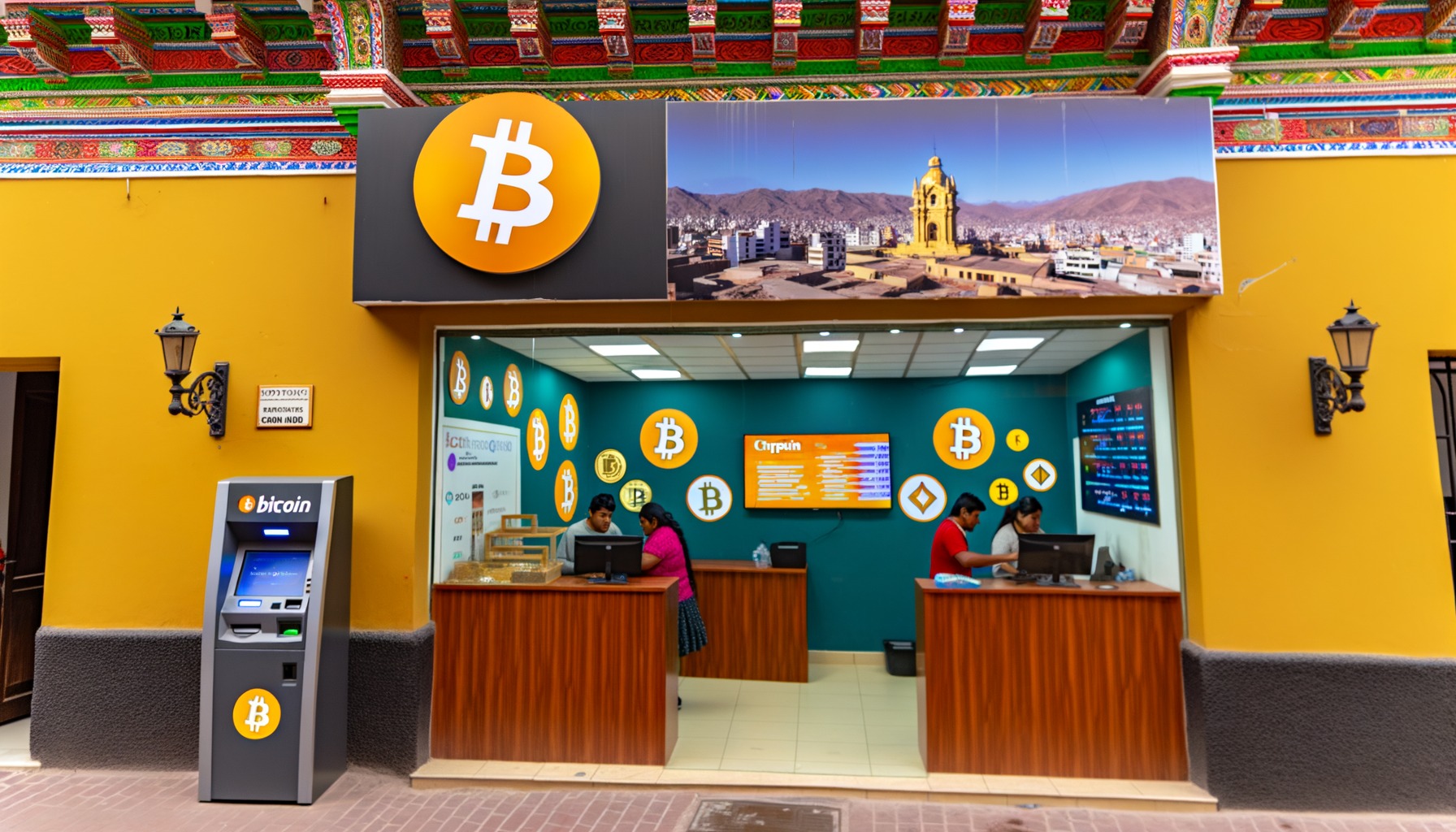
Cryptocurrency adoption is on the rise in Peru, with Bitcoin purchases becoming increasingly common in physical locations. US-based platform Nemo Latam recently opened a physical office in Lima, offering face-to-face services to build customer trust. A personal approach allows users to interact with trained staff, a move aimed at making cryptocurrency more accessible and reducing the uncertainty often associated with the digital finance sector. Nemo Latam is particularly focused on inclusion, with most of its staff comprising Peruvian women.
The initiative is not unique in Peru. Platforms like 9780Bitcoin.com have been offering in-person cryptocurrency services for years, even expanding into Brazil. These efforts reflect a broader goal to promote the continued growth of cryptocurrency usage in Peru, where interest in digital assets has surged. According to a study by Sherlock Communications, Peru ranks as one of the top 50 countries for cryptocurrency adoption and sits 42nd globally for cryptocurrency use, based on Chainalysis data.
The increasing adoption is driven by the need for financial alternatives as Peruvians face rising living costs and economic challenges. Bitcoin has particularly gained traction among Indigenous communities, helping residents manage their finances independently for the first time. With more companies attracted to Peru’s growing crypto market, the government is now exploring the launch of a digital sol, a central bank digital currency (CBDC), to compete with cryptocurrencies.
Google Cloud has introduced a Blockchain Remote Procedure Call (RPC) service designed to help crypto developers interact more easily with blockchain data and improve the performance of decentralised applications (DApps). Initially supporting Ethereum’s mainnet and testnet, Google plans to expand to other blockchains in the future. The service offers a free tier with significant capacity, allowing up to one million requests per day and supporting Ethereum’s JSON-RPC standard, simplifying integration for developers.
The new service aims to address reliability issues that developers have faced with blockchain RPCs. Delays or errors can severely impact the performance of DApps, particularly during periods of high network activity. Issues like those seen in June with Ethereum’s layer-2 ZKsync network underscore the importance of reliable RPC services for transaction processing.
Google Cloud’s move into blockchain comes after the launch of its Web3 Portal in April, which offers blockchain developers a range of resources. However, this earlier product was met with mixed feedback, with some critics pointing to a poor user interface and a lack of support for key blockchain ecosystems such as Bitcoin.
Binance founder Changpeng Zhao, better known as CZ, is due to be released from a US prison on 29th September. Zhao, 47, has been serving a four-month sentence for breaching US anti-money laundering and sanctions laws, particularly for allowing transactions with sanctioned countries such as Iran and Cuba. His legal troubles started in November 2023 when Binance and Zhao admitted to multiple charges, resulting in a substantial $4.3 billion fine for the company and a personal penalty of $50 million for Zhao.
Initially facing a potential three-year term, Zhao’s sentence was significantly reduced after US District Judge Richard Jones determined there was insufficient evidence to prove his direct involvement. The judge also considered Zhao’s personal history and character as mitigating factors. As part of the settlement, Zhao agreed to step down as Binance’s CEO.
Although Zhao’s legal woes have rattled Binance, the exchange continues to operate. Following his release, there is speculation about his future role in the crypto world. Earlier in 2024, Zhao hinted at launching a new venture, Giggle Academy, a free educational platform for underprivileged children, signalling his intent to leave a legacy beyond cryptocurrency.
Ethereum has declined, hitting its lowest value against Bitcoin since April 2021. The cryptocurrency has fallen over 55% from its peak in 2021, now trading at 0.039 BTC, down 24% this year and 35% from its yearly high. Ethereum has also dropped to $2,300 in US dollar terms, marking its lowest price since February.
The downturn is largely due to a lack of interest from institutional investors, with Ether-focused ETFs seeing outflows of $581 million. This sharply contrasts with Bitcoin spot funds, which have attracted $18 billion in inflows. Meanwhile, Ethereum has faced competition from layer-2 networks like Base and Polygon, which offer faster transactions at lower costs.
Further contributing to the drop are large-scale sales from key figures like Vitalik Buterin and the Ethereum Foundation. High-profile investors, including Jump Trading, have also reduced or completely liquidated their Ether holdings, further fuelling concerns about Ethereum’s future.