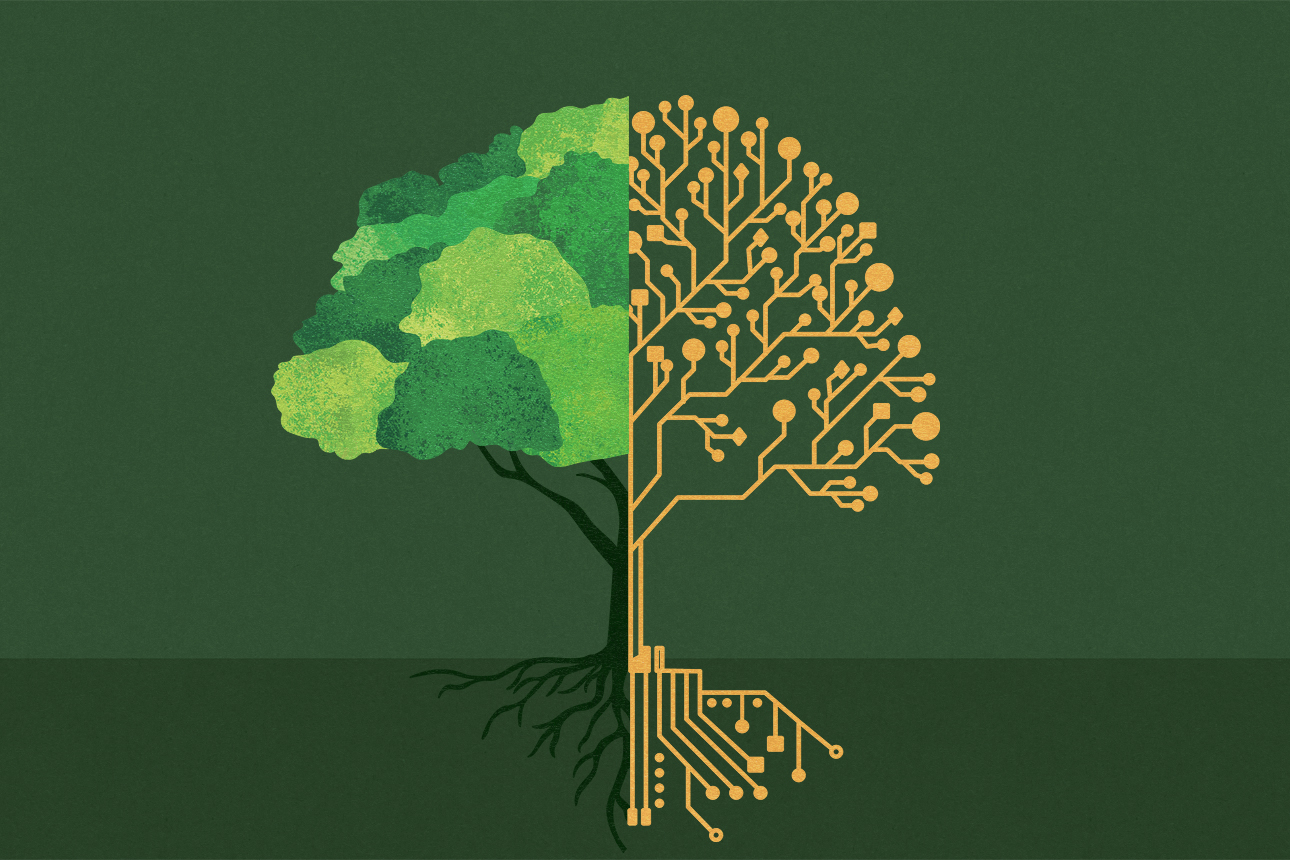
How cultural heritage can go green through digital preservation

A Europe-wide survey has exposed how cultural heritage institutions (CHIs) protect humanity’s legacy digitally while unintentionally harming the environment.

Instead of focusing only on efficiency, the Europeana Climate Action Community recommends a shift towards environmentally sustainable and regenerative digital preservation.

Led by the Environmental Sustainability Practice Task Force, the survey collected input from 108 organisations across 24 EU countries. While 80% of CHIs recognise environmental responsibility, just 42% follow formal environmental strategies and a mere 14% measure carbon footprints.

Many maintain redundant data backups without assessing the ecological cost, and most lack policies for retiring digital assets responsibly.

The report suggests CHIs develop community-powered archives, adopt hardware recycling and repair, and prioritise sufficiency instead of maximising digital volume. Interviews with institutions such as the National Library of Finland and the POLIN Museum revealed good practices alongside common challenges.

With digital preservation increasingly essential, the Europeana Initiative calls for immediate action. By moving from isolated efficiency efforts to collective regeneration strategies, CHIs can protect cultural memory while reducing environmental impact for future generations.

Would you like to learn more about AI, tech and digital diplomacy? If so, ask our Diplo chatbot!

Huang says Chinese AI science is world class

NVIDIA’s CEO has praised China’s open-source AI work during a high-profile visit to Beijing, spotlighting DeepSeek as an example of world-class science and engineering.

At the International Supply Chain Expo, Huang highlighted the global value of Chinese contributions to AI research.

He told former Alibaba executive Wang Jian that Chinese researchers publish more AI papers than any other nation, calling their output A-plus in both science and engineering. Huang named DeepSeek, Alibaba, Tencent, MiniMax, and Baidu’s Ernie Bot globally significant AI leaders.

The visit coincides with a policy shift by the US government allowing Nvidia to resume H20 chip exports to China. Huang confirmed that export licenses are expected soon, potentially unlocking billions in lost revenue.

Industry watchers see this development as pivotal for Nvidia, which had paused shipments under earlier restrictions. The chipmaker’s renewed access to China’s semiconductor market could reshape global AI infrastructure over the next year.

Would you like to learn more about AI, tech and digital diplomacy? If so, ask our Diplo chatbot!

Google expands AI tools in Search with new subscriber perks

Google has begun rolling out new AI features in Search, introducing AI-powered phone calling to help users gather business information instead of contacting places manually.

The service, free for everyone in the US, allows people to search for businesses and have Google’s AI check pricing and availability on their behalf.

Subscribers to Google AI Pro and AI Ultra receive additional exclusive capabilities. These include access to Gemini 2.5 Pro, Google’s most advanced AI model, which supports complex queries such as coding or financial analysis.

Users can enable Gemini 2.5 Pro through the AI Mode tab instead of relying on the default model. Google is also launching Deep Research tools through Deep Search for in-depth investigations related to work, studies, or major life decisions.

Rather than rolling everything out all at once, Google is phasing in the features gradually. AI-powered calling is now available to all Search users in the US, while Gemini 2.5 Pro and Deep Research are becoming available specifically to AI Pro and AI Ultra subscribers.

With these updates, Google aims to position Search as more than a simple information tool by transforming it into an active digital assistant capable of handling everyday tasks and complex research instead of merely providing quick answers.

Would you like to learn more about AI, tech and digital diplomacy? If so, ask our Diplo chatbot!

South Korea’s new Science Minister pledges AI-led national transformation

South Korea’s new Science and ICT Minister, Bae Kyung-hoon, has pledged to turn the nation into one of the world’s top three AI powerhouses.

Instead of following outdated methods, Bae outlined a bold national strategy centred on AI, science and technology, aiming to raise Korea’s potential growth rate to 3 per cent and secure a global economic leadership position.

Bae, a leading AI expert and former president of LG AI Research, officially assumed office on Thursday.

Drawing from experience developing hyperscale AI models like LG’s Exaone, he emphasised the need to build a unique competitive advantage rooted in AI transformation, talent development and technological innovation.

Rather than focusing only on industrial growth, Bae’s policy agenda targets a broad AI ecosystem, revitalised research and development, world-class talent nurturing, and addressing issues affecting daily life.

His plans include establishing AI-centred universities, enhancing digital infrastructure, promoting AI semiconductors, restoring grassroots research funding, and expanding consumer rights in telecommunications.

With these strategies, Bae aims to make AI accessible to all citizens instead of limiting it to large corporations or research institutes. His vision is for South Korea to lead in AI development while supporting social equity, cybersecurity, and nationwide innovation.

Would you like to learn more about AI, tech and digital diplomacy? If so, ask our Diplo chatbot!

EU confirms AI Act rollout and releases GPAI Code of Practice

The European Commission has confirmed it will move forward with the EU AI Act exactly as scheduled, instead of granting delays requested by tech giants and businesses.

On 10 July 2025, it published the final General-Purpose AI (GPAI) Code of Practice alongside FAQs to guide organisations aiming to comply with the new law.

Rather than opting for a more flexible timetable, the Commission is standing firm on its regulatory goals. The GPAI Code of Practice, now in its final form, sets out voluntary but strongly recommended steps for companies that want reduced administrative burdens and clearer legal certainty under the AI Act.

The document covers transparency, copyright, and safety standards for advanced AI models, including a model documentation form for providers.

Key dates have already been set. From 2 August 2025, rules covering notifications, governance, and penalties will come into force. By February 2026, official guidelines on classifying high-risk AI systems are expected.

The remaining parts of the legislation will take effect by August 2026, instead of being postponed further.

With the publication of the GPAI Code of Practice, the EU takes another step towards building a unified ethical framework for AI development and deployment across Europe, focusing on transparency, accountability, and respect for fundamental rights.

Would you like to learn more about AI, tech and digital diplomacy? If so, ask our Diplo chatbot!

Netherlands urges EU to reduce reliance on US cloud providers

The Dutch government has released a policy paper urging the European Union to take coordinated action to reduce its heavy dependence on non-EU cloud providers, especially from the United States.

The document recommends that the European Commission introduce a clearer and harmonized approach at the EU level.

Key proposals include creating a consistent definition of ‘cloud sovereignty,’ adjusting public procurement rules to allow prioritizing sovereignty, promoting open-source technologies and standards, setting up a common European decision-making framework for cloud choices, and ensuring sufficient funding to support the development and deployment of sovereign cloud technologies.

These measures aim to strengthen the EU’s digital independence and protect public administrations from external political or economic pressures.

A recent investigation found that over 20,000 Dutch institutions rely heavily on US cloud services, with Microsoft holding about 60% of the market.

The Dutch government warned this dependence risks national security and fundamental rights. Concerns escalated after Microsoft blocked the ICC prosecutor’s email following US sanctions, sparking political outrage.

In response, the Dutch parliament called for reducing reliance on American providers and urged the government to develop a roadmap to protect digital infrastructure and regain control.

Would you like to learn more about AI, tech and digital diplomacy? If so, ask our Diplo chatbot!

Broadcom challenges Nvidia with Tomahawk Ultra AI networking chip

Broadcom has introduced a new networking chip designed to boost AI data centre performance, positioning itself against Nvidia in the AI hardware race.

Called Tomahawk Ultra, the chip helps link hundreds of processors within close range, ensuring fast communication vital for large AI models.

Instead of using Nvidia’s proprietary NVLink system, Broadcom’s Tomahawk Ultra operates on an accelerated version of Ethernet and connects up to four times more chips within a server rack.

The chip acts as a traffic controller, enabling what the industry refers to as ‘scale-up’ computing — where AI models tap into combined computing power from tightly grouped chips.

According to Broadcom senior vice president Ram Velaga, it took engineers around three years to design the Tomahawk Ultra, which was originally aimed at high-performance computing but adapted for AI workloads as demand surged.

Taiwan Semiconductor Manufacturing Company (TSMC) is producing the processors using its five-nanometre process, and the chips are already shipping to customers.

Rather than requiring major hardware overhauls, the Tomahawk Ultra offers a scalable, Ethernet-based alternative for AI firms looking to build faster, more flexible data centres.

Would you like to learn more about AI, tech and digital diplomacy? If so, ask our Diplo chatbot!

AI tool uses walking patterns to detect early signs of dementia

Fujitsu and Acer Medical are trialling an AI-powered tool to help identify early signs of dementia and Parkinson’s disease by analysing patients’ walking patterns. The system, called aiGait and powered by Fujitsu’s Uvance skeleton recognition technology, converts routine movements into health data.

Initial tests are taking place at a daycare centre linked to Taipei Veterans Hospital, using tablets and smartphones to record basic patient movements. The AI compares this footage with known movement patterns associated with neurodegenerative conditions, helping caregivers detect subtle abnormalities.

The tool is designed to support early intervention, with abnormal results prompting follow-up by healthcare professionals. Acer Medical plans to expand the service to elderly care centres across Taiwan by the end of the year.

Fujitsu’s AI was originally developed for gymnastics scoring and adapted to analyse real-world gait data with high accuracy using everyday mobile devices. Both companies hope to extend the technology’s use to paediatrics, sports science, and rehabilitation in future.

Would you like to learn more about AI, tech and digital diplomacy? If so, ask our Diplo chatbot!

South Korean firm unveils faster AI data centre architecture with CXL-over-Xlink

South Korean company Panmnesia has introduced a new architecture for AI data centres aimed at improving speed and efficiency.

Instead of using only PCIe or RDMA-based systems, its CXL-over-Xlink approach combines Compute Express Link (CXL) with fast accelerator links such as UALink and NVLink.

The company claims this design can deliver up to 5.3 times faster AI training and reduce inference latency sixfold. By allowing CPUs and GPUs to access large shared memory pools via the CXL fabric, AI workloads are no longer restricted by the fixed memory limits inside each GPU.

It will enable data centres to scale compute and memory independently, adapting to changing workload demands without hardware overprovisioning.

Panmnesia’s system also reduces communication overhead using accelerator-optimised links for CXL traffic, helping maintain high throughput with sub-100ns latency.

The architecture incorporates a hierarchical memory model blending local high-bandwidth memory with pooled CXL memory, alongside scalable CXL 3.1 switches that connect hundreds of devices efficiently without bottlenecks.

Would you like to learn more about AI, tech and digital diplomacy? If so, ask our Diplo chatbot!

China deploys new malware tool for border phone searches

Chinese authorities reportedly use a powerful new malware tool called Massistant to extract data from seized Android phones. Developed by Xiamen Meiya Pico, the tool enables police to access messages, photos, locations, and app data once they have physical access to a device.

Cybersecurity firm Lookout revealed that Massistant operates via a desktop-connected tower, requiring unlocked devices but no advanced hacking techniques. Researchers said affected users include Chinese citizens and international travellers whose phones may be searched at borders.

The malware leaves traces on compromised phones, allowing for post-infection removal, but authorities already have the data by then. Forums in China have shown increasing user complaints about malware following police interactions.

Massistant is seen as the successor to an older tool, MSSocket, with Meiya Pico now controlling 40% of China’s digital forensics market. They previously sanctioned the firm for its surveillance tech links to the Chinese government’s use.

Would you like to learn more about AI, tech and digital diplomacy? If so, ask our Diplo chatbot!