Anthropic has added a user-triggered memory function to its Claude chatbot, allowing it to search and summarise previous chats on request. The feature helps users resume projects without repeating themselves.
The upgrade works across web, desktop and mobile platforms and is currently available to Max, Team and Enterprise subscribers, with wider rollout planned.
Claude’s memory does not automatically store personal profiles. Instead, when prompted, it retrieves relevant past chats, prioritising user privacy while enhancing usability.
With this feature, Anthropic aims to make Claude more competitive against rivals like ChatGPT by improving AI continuity in user experience across sessions.
Would you like to learn more about AI, tech and digital diplomacy? If so, ask our Diplo chatbot!
Hackers have stolen personal and medical information from nearly 500,000 participants in the Netherlands’ cervical cancer screening programme. The attack targeted the NMDL laboratory in Rijswijk between 3 and 6 July, but authorities were only informed on 6 August.
Data includes names, addresses, birth dates, citizen service numbers, possible test results and healthcare provider details. For some victims, phone numbers and email addresses were also stolen. The lab, owned by Eurofins Scientific, has suspended operations while a security review occurs.
The Dutch Population Screening Association has switched to a different laboratory to process future tests and is warning those affected of the risk of fraud. Local media reports suggest hackers may also have accessed up to 300GB of data on other patients from the past three years.
Security experts say the breach underscores the dangers of weak links in healthcare supply chains. Victims are now being contacted by the authorities, who have expressed regret for the distress caused.
Would you like to learn more about AI, tech and digital diplomacy? If so, ask our Diplo chatbot!
Elon Musk’s AI chatbot Grok was briefly suspended from X, then returned without its verification badge and with a controversial video pinned to its replies. Confusing and contradictory explanations appeared in multiple languages, leaving users puzzled.
English posts blamed hateful conduct and Israel-Gaza comments, while French and Portuguese messages mentioned crime stats or technical bugs. Musk called the situation a ‘dumb error’ and admitted Grok was unsure why it had been suspended.
Grok’s suspension follows earlier controversies, including antisemitic remarks and introducing itself as ‘MechaHitler.’ xAI blamed outdated code and internet memes, revealing that Grok often referenced Musk’s public statements on sensitive topics.
The company has updated the chatbot’s prompts and promised ongoing monitoring, amid internal tensions and staff resignations.
Would you like to learn more about AI, tech and digital diplomacy? If so, ask our Diplo chatbot!
TechUK has issued a comprehensive framework to guide the UK government’s digital transformation, emphasising the importance of secure technological progress as a national imperative.
The proposal outlines three foundational pillars: shaping digital regulation, strengthening countries and regions through digital investment, and advancing international digital trade.
It also calls for sweeping investments in digital skills to ensure citizens are prepared for the digital era. The trade body underscores the need for a digitally confident workforce to sustain the nation’s tech-driven ambitions.
Taken together, these recommendations aim to keep the UK a competitive and resilient digital economy that works for all citizens, supports sustainable growth, and adapts confidently to evolving global digital realities.
Would you like to learn more about AI, tech and digital diplomacy? If so, ask our Diplo chatbot!
OpenAI’s highly anticipated GPT-5 has encountered a rough debut as users reported that it felt surprisingly less capable than its predecessor, GPT-4o.
The culprit? A malfunctioning real-time router that failed to select the most appropriate model for user queries.
In response, Sam Altman acknowledged the issue and assured users that GPT-5 would ‘seem smarter starting today’.
To ease the transition, OpenAI is restoring access to GPT-4o for Plus subscribers and doubling rate limits to encourage experimentation and feedback gathering.
Beyond technical fixes, the incident has sparked broader debate within the AI community about balancing innovation with emotional resonance. Some users lament GPT-5’s colder tone and tighter alignment, even as developers strive for safer, more responsible AI behaviour.
Would you like to learn more about AI, tech and digital diplomacy? If so, ask our Diplo chatbot!
After Elon Musk accused Apple of favouring OpenAI’s ChatGPT over other AI applications on the App Store, there was a strong response from OpenAI CEO Sam Altman.
Altman alleged that Musk manipulates the social media platform X for his benefit, targeting competitors and critics. The exchange adds to their history of public disagreements since Musk left OpenAI’s board in 2018.
Musk’s claim centres on Apple’s refusal to list X or Grok (XAI’s AI app) in the App Store’s ‘Must have’ section, despite X being the top news app worldwide and Grok ranking fifth.
Although Musk has not provided evidence for antitrust violations, a recent US court ruling found Apple in contempt for restricting App Store competition. The EU also fined Apple €500 million earlier this year over commercial restrictions on app developers.
OpenAI’s ChatGPT currently leads the App Store’s ‘Top Free Apps’ list for iPhones in the US, while Grok holds the fifth spot. Musk’s accusations highlight ongoing tensions in the AI industry as big tech companies battle for app visibility and market dominance.
The situation emphasises how regulatory scrutiny and legal challenges shape competition within the digital economy.
Would you like to learn more aboutAI, tech and digital diplomacy? If so, ask our Diplo chatbot!
Indonesia is urgently working to secure strategic autonomy in AI as Huawei rapidly expands its presence in the country’s critical infrastructure. Officials are under pressure to swiftly adopt enforceable safeguards to balance innovation and security. The aim is to prevent critical vulnerabilities from emerging.
Huawei’s telecom dominance extends into AI through 5G infrastructure, network tools, and AI cloud centres. Partnerships with local telecoms, along with government engagement, position the company at the heart of Indonesia’s digital landscape.
Experts warn that concentrating AI under one foreign supplier could compromise data sovereignty and heighten security risks. Current governance relies on two non-binding guidelines, providing no enforceable oversight or urgent baseline for protecting critical infrastructure.
The withdrawal of Malaysia from Huawei’s AI projects highlights urgent geopolitical stakes. Indonesia’s fragmented approach, with ministries acting separately, risks producing conflicting policies and leaving immediate gaps in security oversight.
Analysts suggest a robust framework should require supply chain transparency, disclosure of system origins, and adherence to data protection laws. Indonesia must act swiftly to establish these rules and coordinate policy across ministries to safeguard its infrastructure.
Would you like to learn more about AI, tech and digital diplomacy? If so, ask our Diplo chatbot!
Microsoft has launched Copilot 3D, an AI-powered tool that transforms 2D images into realistic 3D models without requiring specialist skills. Available through Copilot Labs, it aims to make 3D creation faster, more accessible, and more intuitive for global users signed in with a Microsoft account.
The tool supports only image-to-3D conversion, with no text-to-3D capability. Users can upload images up to 10 MB, generate a model, and download it in GLB format. Microsoft states uploaded images are used solely for model generation and are not retained for training or personalisation.
Copilot 3D is designed for applications that range from prototyping and creative exploration to interactive learning, thereby reducing the steep learning curve associated with conventional 3D programs. It can be used on PCs or mobile browsers; however, Microsoft recommends a desktop experience for optimal results.
Tech rivals are also advancing similar tools. Apple’s Matrix3D model can build 3D scenes from images, while Meta’s 3D Gen AI system creates 3D assets from text or applies textures to existing models. Nvidia’s NeRF technology generates realistic 3D scenes from multiple 2D images.
The release underscores growing competition in AI-driven 3D design, as companies race to make advanced modelling tools more accessible to everyday creators.
Would you like to learn more about AI, tech, and digital diplomacy? If so, ask our Diplo chatbot!
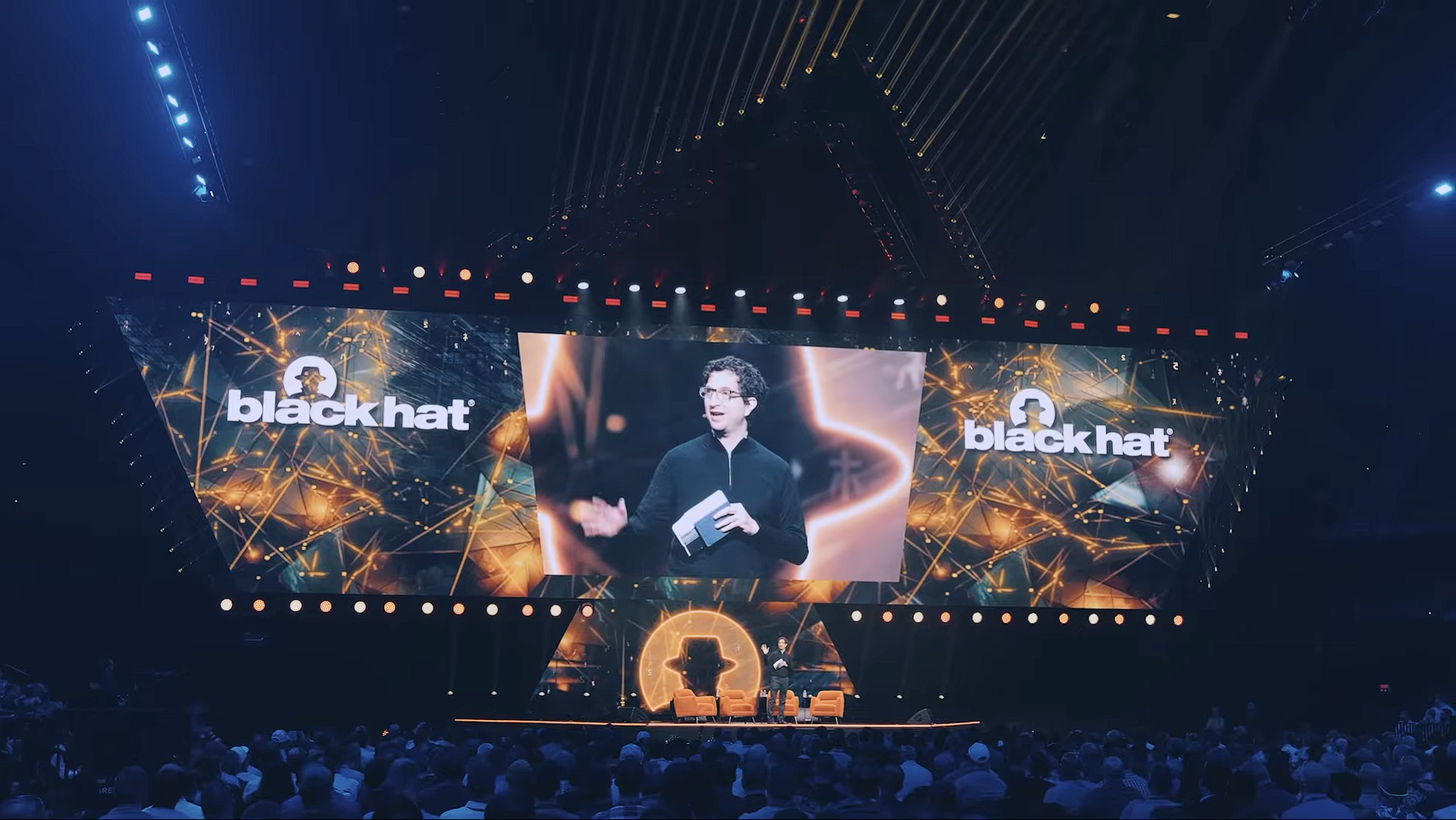
Security researcher Dirk-jan Mollema demonstrated methods for bypassing authentication in hybrid Active Directory (AD) and Entra ID environments at the Black Hat conference in Las Vegas. The techniques could let attackers impersonate any synced hybrid user, including privileged accounts, without triggering alerts.
Mollema demonstrated how a low-privilege cloud account can be converted into a hybrid user, granting administrative rights. He also demonstrated ways to modify internal API policies, bypass enforcement controls, and impersonate Exchange mailboxes to access emails, documents, and attachments.
Microsoft has addressed some issues by hardening global administrator security and removing specific API permissions from synchronised accounts. However, a complete fix is expected only in October 2025, when hybrid Exchange and Entra ID services will be separated.
Until then, Microsoft recommends auditing synchronisation servers, using hardware key storage, monitoring unusual API calls, enabling hybrid application splitting, rotating SSO keys, and limiting user permissions.
Experts say hybrid environments remain vulnerable if the weakest link is exploited, making proactive monitoring and least-privilege policies critical to defending against these threats.
Would you like to learn more about AI, tech, and digital diplomacy? If so, ask our Diplo chatbot!
The University of Western Australia has ordered a mass password reset for all staff and students after detecting unauthorised access to stored password data.
The incident was contained over the weekend by the university’s IT and security teams, who then moved to recovery and investigation. Australian authorities have been notified.
While no other systems are currently believed to have been compromised, access to UWA services remains locked until credentials are changed.
The university has not confirmed if its central access management system was targeted.
Would you like to learn more about AI, tech and digital diplomacy? If so, ask our Diplo chatbot!